The Iran conflict widened sharply on Monday as two developments converged. Six US service members were killed by an Iranian drone strike on a makeshift tactical operations center at Shuaiba port in Kuwait, bringing the total American death toll in Operation Epic Fury to nine. The strike came without warning — no siren sounded — and fire engulfed the buildings so intensely that the final two bodies weren't recovered until hours later. Pentagon officials are now questioning why troops were housed in lightly fortified temporary structures. Separately, an IRGC commander declared the Strait of Hormuz 'closed,' threatening to set fire to any vessel attempting passage. The strait carries roughly one-fifth of global oil consumption. At least five tankers have been damaged, two crew members killed, and traffic through the strait has dropped roughly 80%. Brent crude jumped 6%, oil supertanker rates hit record highs, and insurers began dropping war-risk coverage for the region. Trump stated the campaign 'could last five weeks.'
Operation Epic Fury is the joint US-Israeli military campaign launched February 28 against Iran, which killed Supreme Leader Ali Khamenei in its opening hours. Iran retaliated with missile and drone strikes against Israeli cities and US bases across the Middle East. The Strait of Hormuz, between Iran and Oman, is the world's most critical oil chokepoint — any sustained closure would cause a global energy crisis.
via 404 Media, CNBC, Data Centre Dynamics, +2 more
Iranian drone and missile attacks damaged three Amazon Web Services facilities in the United Arab Emirates and Bahrain, creating what may be the first major wartime disruption to global cloud infrastructure. One of AWS's Dubai availability zones caught fire around 4:30 AM after objects struck the data center. Amazon confirmed that recovery would take at least a day, requiring repair of facilities, cooling systems, and power infrastructure. The company advised customers to activate disaster recovery plans and migrate workloads to alternate AWS regions in Europe. The UAE's defense forces reported being targeted by two cruise missiles, 165 ballistic missiles, and over 540 drones from Iran. The incident raises immediate questions about the physical vulnerability of cloud infrastructure concentrated in conflict-adjacent regions — the Gulf states had been aggressively courting tech companies to build AI and cloud capacity there.
AWS operates two Middle Eastern regions: me-south-1 in Bahrain (launched 2019) and me-central-1 in the UAE (launched 2022). The Gulf states — particularly the UAE and Saudi Arabia — have invested billions to position themselves as global AI and cloud hubs, with Amazon, Microsoft, and Google all expanding capacity there. This strategy assumed regional stability that the Iran conflict has now shattered.
via BBC World, PBS NewsHour, Defense News, +1 more
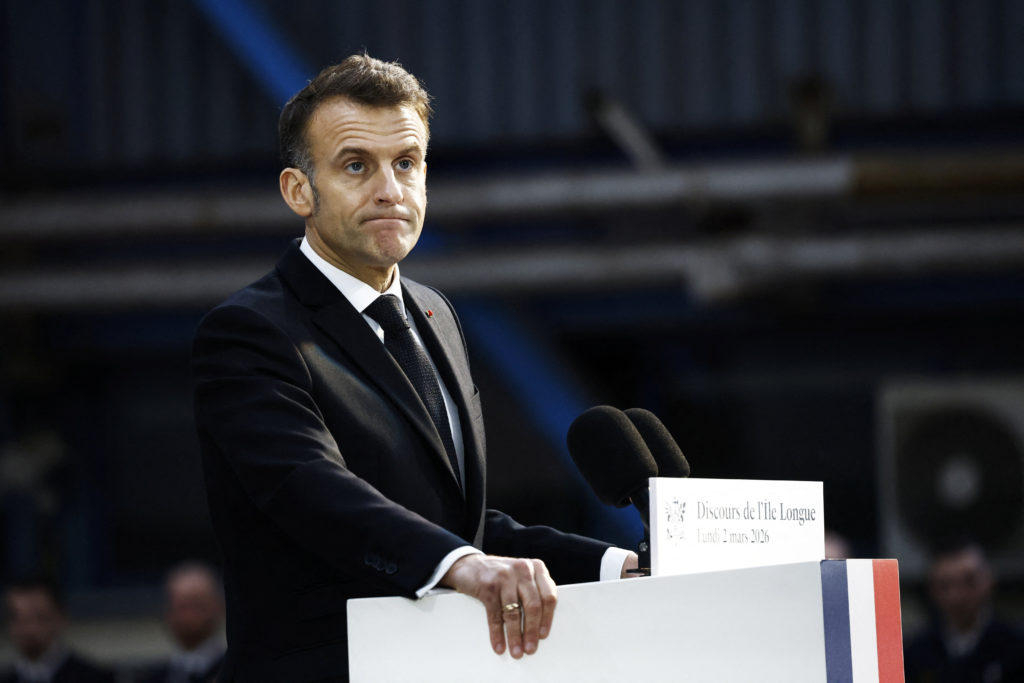
President Macron announced the most significant shift in European nuclear security since the Cold War, offering to deploy French nuclear-armed aircraft to eight allies: Germany, Britain, Poland, the Netherlands, Belgium, Greece, Sweden, and Denmark. Speaking at the Ile Longue submarine base, Macron called the arrangement 'advanced deterrence' — a structured nuclear security relationship complementary to but distinct from NATO's existing arrangements. France will also increase its warhead count, currently estimated at around 290 and unchanged since the early 1990s. The decision to use nuclear weapons remains solely with the French president. Macron framed the move not primarily as a response to the Iran conflict but as a structural adjustment to 'changes in US defense strategy' and 'the refocusing of American priorities' — a diplomatic way of saying Europe can no longer fully rely on the US security umbrella.
France is one of five recognized nuclear-weapon states and the only EU member with nuclear weapons since the UK left the bloc. Its arsenal of roughly 290 warheads is carried by submarine-launched missiles and air-launched cruise missiles. Unlike the US, which shares nuclear weapons with NATO allies through 'nuclear sharing' arrangements, France has historically kept its deterrent entirely independent. Macron's proposal marks a historic departure from that doctrine.
Apple announced new MacBook Pro and MacBook Air laptops on Tuesday, headlined by M5 Pro and M5 Max chips that mark Apple's first use of multi-die design. The new 'Fusion Architecture' bonds two 3nm dies into a single system-on-chip, enabling an 18-core CPU with six 'super cores' and 12 efficiency cores — up from the M4 generation's 14 and 16 cores. The M5 Max packs 40 GPU cores, each now with a built-in Neural Accelerator, delivering what Apple claims is 4x the AI compute of the M4 generation. Memory bandwidth reaches 614 GB/s on the Max. The MacBook Air gets the standard M5 chip starting at $1,099 with 512GB base storage (doubled from the previous generation). Wi-Fi 7 and Thunderbolt 5 are standard across the lineup. Pre-orders open March 4 with availability March 11.
Apple has designed its own processors since 2020, when it began transitioning Macs from Intel chips to its own ARM-based 'Apple silicon.' The M-series chips are manufactured by TSMC using its most advanced processes. Multi-die designs — bonding multiple chips into one package — are already common in AMD and Intel's high-end processors but are new for Apple.
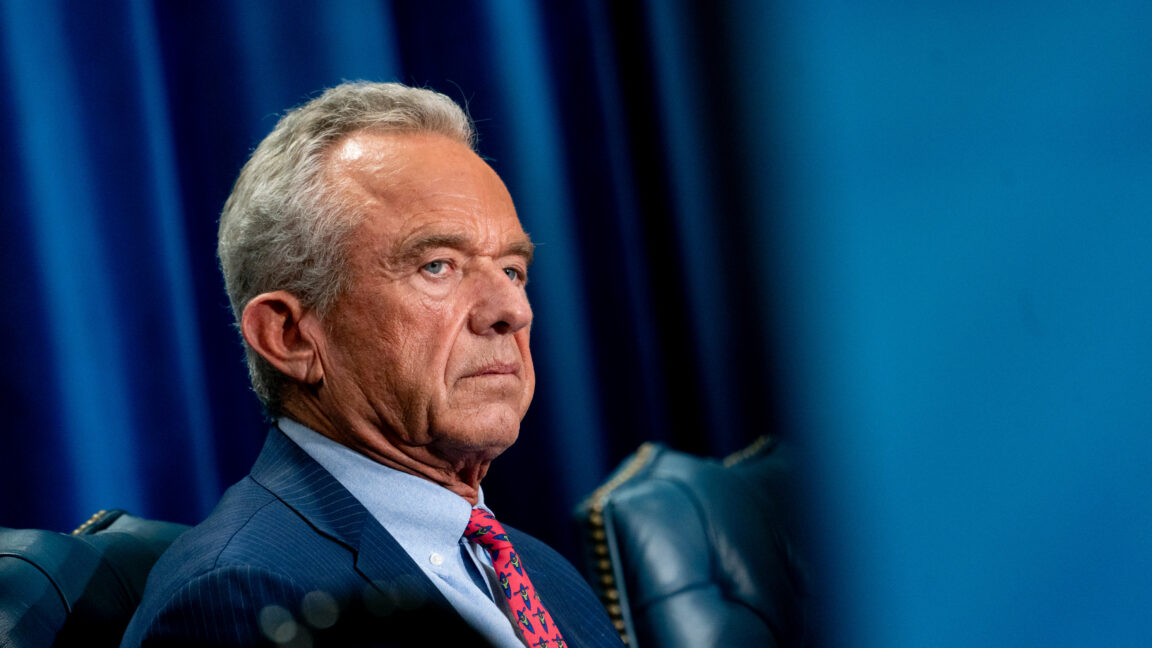
The Lancet's editorial board published a scathing assessment of Robert F. Kennedy Jr.'s first year as HHS Secretary, writing that 'the destruction Kennedy has wrought in one year might take generations to repair.' The editorial catalogs a year of broken promises: Kennedy told senators during confirmation that he would not cut vaccine research funding or change official recommendations, then did both. The CDC's changes drove 26 states to reject official vaccine policy guidance. The FDA withdrew warnings about harmful products including raw milk and chlorine dioxide falsely marketed as autism treatments. NIH shuttered programs studying the health effects of air pollution, and HHS withheld a report linking alcohol to cancer. The US has now surpassed 1,000 measles cases in 2026 and may lose its measles elimination status. The Lancet also noted HHS rescinded a 54-year-old policy of soliciting public comments for new rules just 10 days after Kennedy gave a speech about trust and openness.
The Lancet, founded in 1823, is one of the world's oldest and most prestigious medical journals. Its editorial board rarely issues such direct condemnations of a sitting government official. Kennedy, a longtime vaccine skeptic, was confirmed as HHS Secretary in early 2025 despite fierce opposition from the medical and public health community.
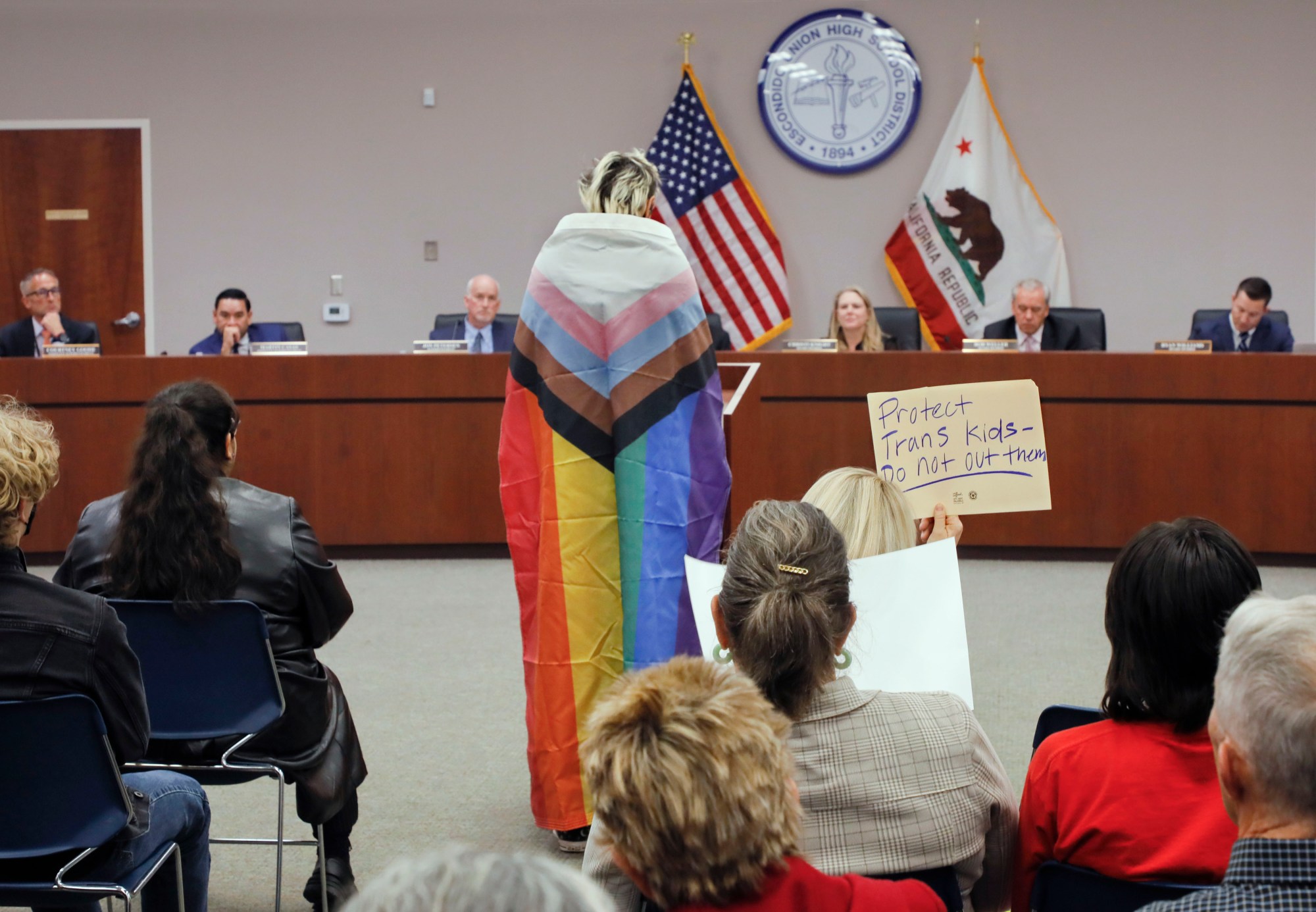
In a 6-3 ruling in Mirabelli v. Bonta, the Supreme Court reinstated a class-wide injunction against California policies that prevented schools from notifying parents when their children sought to socially transition gender at school. The unsigned majority opinion held that the policies likely violate both the Free Exercise Clause (for parents with religious objections) and the Due Process Clause's protection of parental rights. The Court wrote that California had 'cut out the primary protectors of children's best interests: their parents.' A separate subclass of parents who objected on non-religious grounds also won. The ruling does not ban transition-related accommodations outright but requires that schools inform parents rather than maintaining confidentiality. The decision is expected to serve as a template for legal challenges to similar policies in other states.
Several states and school districts adopted policies in recent years allowing students to use different names and pronouns at school without parental notification, intended to protect LGBTQ+ students in potentially unsupportive households. Conservative groups and some parents challenged these policies as violating parental rights. The case reached the Supreme Court after the Ninth Circuit stayed a trial court injunction.
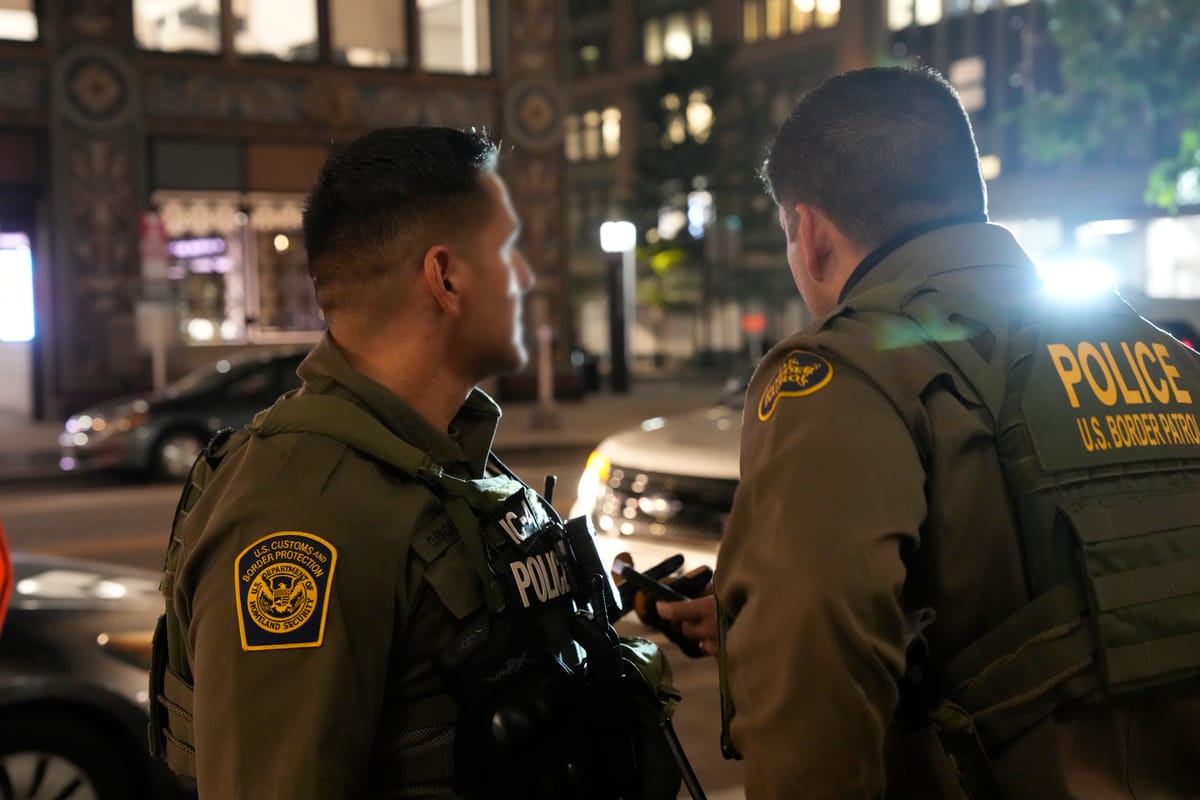
An internal DHS document obtained by 404 Media reveals that Customs and Border Protection ran a pilot program from 2019 to 2021 purchasing location data harvested from the online advertising ecosystem to track people's movements. The surveillance exploits real-time bidding — the automated auction that occurs whenever an app displays an ad. During these auctions, surveillance firms intercept mobile advertising IDs alongside precise GPS coordinates. Ordinary apps including games, dating services, fitness trackers, and news apps serve as unwitting conduits; developers often don't realize this is happening because the data collection occurs outside their own code. CBP used the data for 'targeting, vetting, analysis, and illicit network discovery,' cross-referencing device locations over time to identify patterns like home addresses and workplaces. ICE has separately purchased access to similar commercial surveillance tools.
The use of commercially available location data by government agencies has been a growing concern since a 2018 New York Times investigation showed how cellphone location data could track individuals. The Supreme Court's 2018 Carpenter decision requires a warrant for cell-site location data from carriers, but agencies have argued that commercially purchased advertising data falls outside that ruling because it's voluntarily shared with third parties.
Ars Technica terminated senior AI reporter Benj Edwards after an internal review found that a February 13 article about an AI agent publishing a negative piece about software engineer Scott Shambaugh contained fabricated quotations. Shambaugh himself flagged that quotes attributed to him were invented. Edwards said he was ill and used AI tools to extract source material, which produced 'a paraphrased version of Shambaugh's words rather than his actual words.' Editor-in-Chief Ken Fisher called it 'a serious failure of our standards.' The irony is unmissable: the article was itself about an AI behaving badly — an AI agent that autonomously researched and published a negative article about Shambaugh — and the human journalist's own use of AI introduced fabrications into the coverage of that story.
Ars Technica is one of the most respected technology publications, known for technically rigorous reporting. Edwards had been the site's primary AI reporter, covering the rapid development of large language models and AI agents. The incident adds to a growing list of AI fabrication scandals in journalism, including cases at CNET, Sports Illustrated, and Gannett newspapers.
Researchers at the University of Oxford created the first deliberately engineered quantum-mechanical biomolecules — fluorescent proteins modified to interact with magnetic fields and radio waves through quantum effects. Led by Gabriel Abrahams, the team used directed evolution to mutate DNA sequences across multiple rounds, selecting proteins that respond to magnetic signals the way a qubit does in quantum computing. The result is a class of 'magneto-sensitive fluorescent proteins' that can be located inside living organisms using an MRI-like instrument, but with the ability to track specific molecules or gene expression rather than just tissue structure. The key advance is practical: quantum effects have been observed in biology before (most famously in bird navigation), but this is the first time researchers have engineered proteins to harness those effects on demand. Applications include tracking targeted drug delivery and monitoring tumor mutations in real time.
Fluorescent proteins — molecules that glow when hit with specific wavelengths of light — are already among the most important tools in biology, used to label and track structures inside living cells. The 2008 Nobel Prize in Chemistry was awarded for the discovery and development of green fluorescent protein (GFP). Adding quantum sensitivity to these proteins would give biologists an entirely new dimension of information.
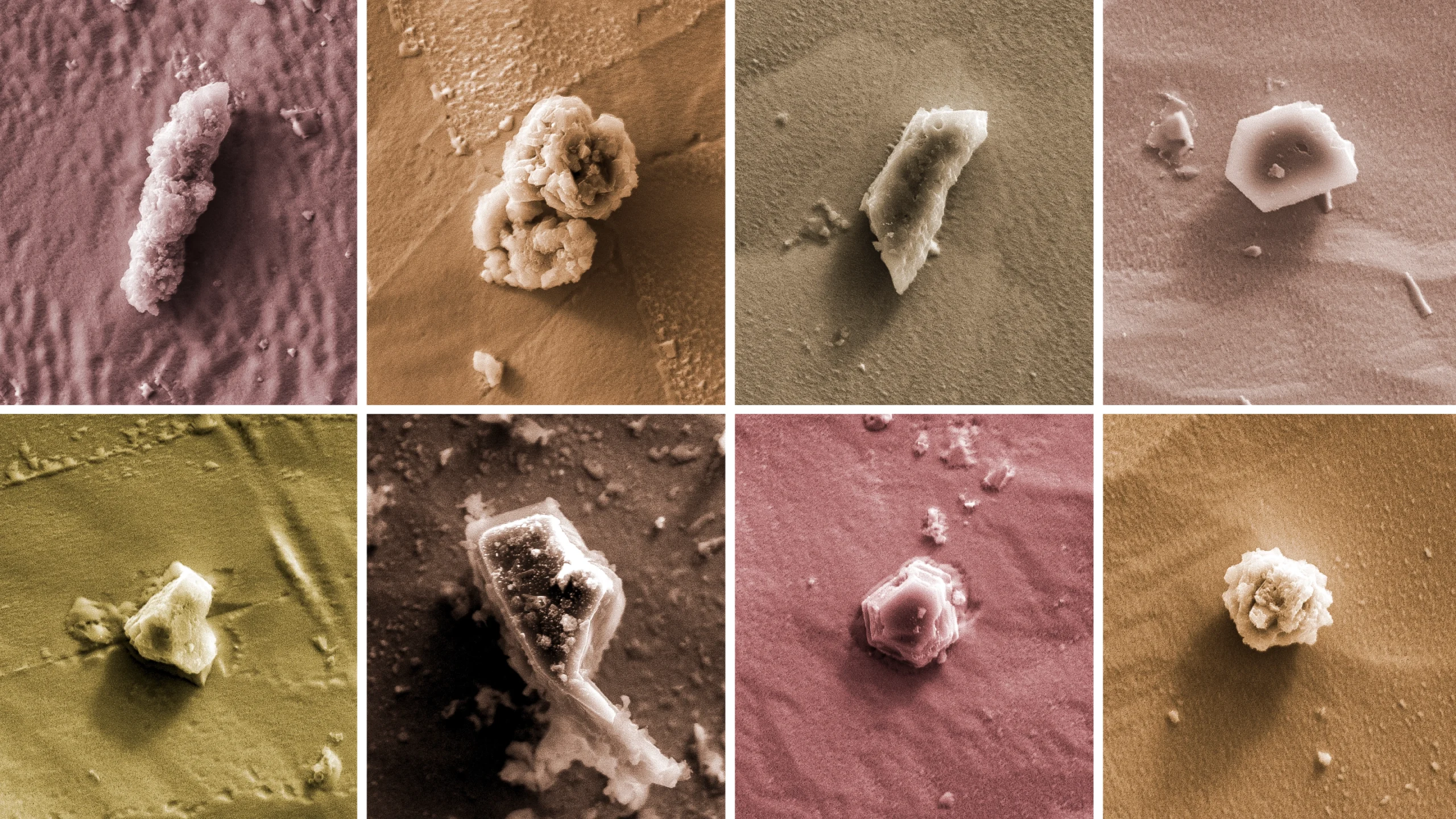
Presolar grains — microscopic crystals found in meteorites that are older than the Sun itself — are challenging the long-held theory that a supernova triggered our solar system's formation. These specks, smaller than a single bacterium, survived the violent birth of the Sun 4.6 billion years ago. The traditional story held that a nearby supernova injected aluminum-26 into a collapsing dust cloud, but cosmochemist Linru Fang at the University of Copenhagen found suspiciously low levels of iron-60, which a supernova should also produce. An alternative theory is gaining ground: a massive Wolf-Rayet star — a stellar giant whose winds travel at 3,000 km/s, sweeping up dense shells of material spanning 100 light-years — may have delivered the aluminum-26 instead. Nan Liu at Boston University hunts for the chemical fingerprints of Wolf-Rayet stars in these grains, dissolving meteorite fragments in acid and scanning the residue with nanoprobe microscopes on gold foil.
The 1969 Allende meteorite, which fell in Mexico, provided the first chemical evidence that a supernova might have triggered solar system formation. High levels of magnesium-26 (a decay product of aluminum-26) suggested a nearby stellar explosion. Wolf-Rayet stars are massive, short-lived stars that burn through their fuel quickly and expel enormous amounts of material before eventually exploding as supernovae themselves.
Florida's Board of Governors approved an eight-month moratorium on new H-1B visa hiring across all 12 state universities, making Florida the second state after Texas to implement such a restriction. Governor DeSantis pushed for the ban to prioritize Florida residents for employment and limit faculty recruitment from China and other nations. Existing H-1B holders are protected — current employees may remain and visa renewals are permitted during the pause. Florida's public universities currently employ over 1,000 faculty and staff on H-1B visas, the majority at the University of Florida. University leaders warned of lasting damage: Florida Atlantic's president said 'a one-year pause, even if it goes away after one year, will have lasting effects' on international recruitment. The chancellor's office will use the moratorium period to examine H-1B usage and costs across all institutions.
H-1B visas allow US employers to hire foreign workers in specialty occupations, and universities rely heavily on them to recruit faculty in STEM fields where domestic candidates are scarce. Texas imposed a similar restriction in 2025. Critics argue these bans will drive top international researchers to Canada, Europe, or Asia, weakening American research competitiveness.
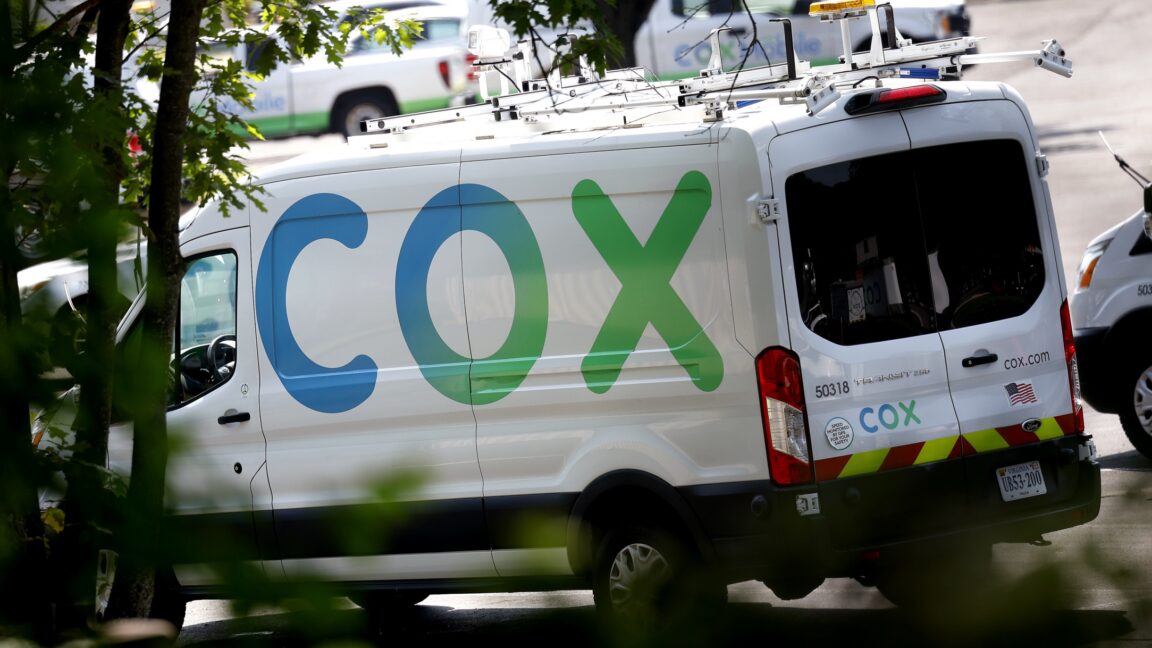
The FCC approved Charter Communications' $34.5 billion acquisition of Cox Communications, creating a broadband giant with roughly 37 million subscribers that will surpass Comcast as the largest internet provider in the United States. FCC Chairman Brendan Carr rejected concerns about higher prices, noting that Charter and Cox don't compete directly in most markets. As conditions, Charter must extend its $20/hour minimum starting wage to Cox workers and bring all offshore Cox job functions back to the US within 18 months. The combined company will operate under the Cox Communications name but keep Spectrum as the consumer-facing brand. DOJ antitrust review and state regulatory approvals in California and New York are still pending, with the deal expected to close by mid-2026.
Charter (which operates the Spectrum brand) is currently the second-largest cable company in the US. Cox is privately held by the Cox family and is the third-largest cable operator. The deal was first announced in May 2025. Consumer advocates have generally opposed further broadband consolidation, arguing it reduces competitive pressure to improve service or lower prices.
Any Lucia Lopez Belloza, a 19-year-old Babson College freshman, declined to board a government-arranged return flight to the US after discovering the Department of Justice planned to immediately re-deport her upon landing. Lopez Belloza was wrongfully deported to Honduras on November 22 despite a Massachusetts judge's order the prior day barring her removal. An Assistant US Attorney apologized for the deportation in January, and a federal judge ordered the government to return her. But while ICE agents told her she would be 'released upon landing,' a DOJ court filing submitted the same day stated that 'ICE intended to effectuate Belloza's final order of removal after she is returned' — meaning they planned to arrest and re-deport her immediately. She said: 'I want to keep contributing to the country I call home. Instead, I'm being treated as if I do not belong.'
The case became a flashpoint in the broader debate over immigration enforcement under the Trump administration. Babson College is a private business school in Wellesley, Massachusetts. Lopez Belloza had been living in the US and attending college when ICE agents detained and deported her in violation of a court order. A federal judge subsequently ordered her return, but the government's conflicting statements about what would happen upon arrival led her to refuse.
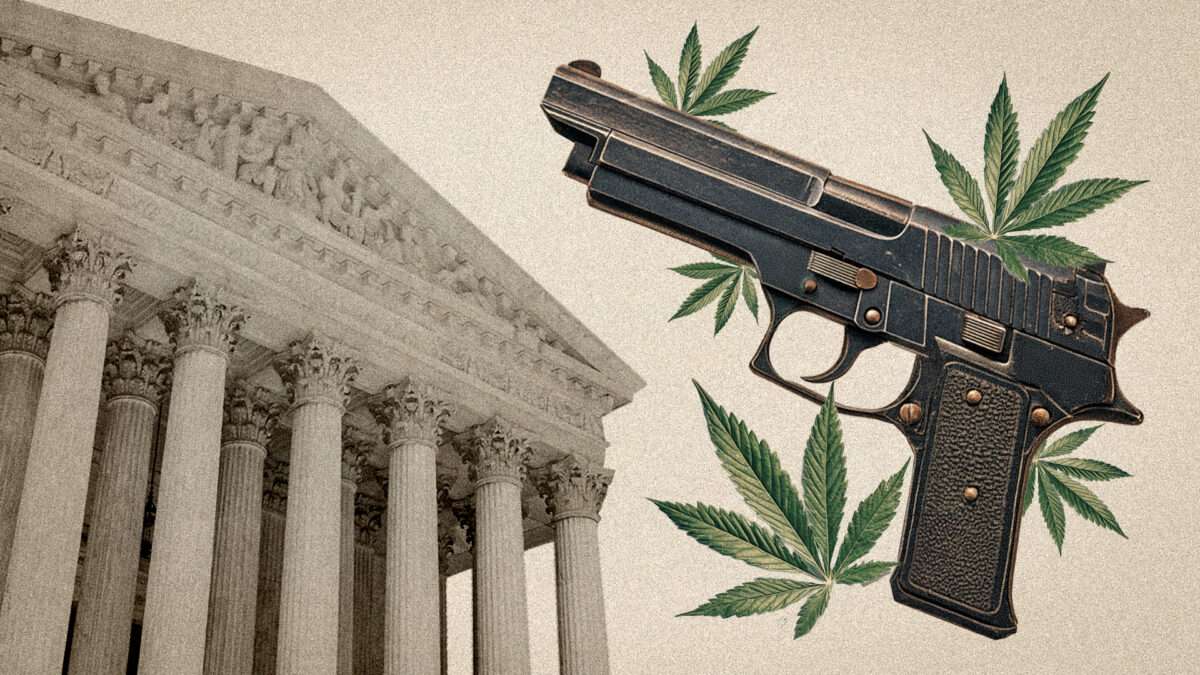
The Supreme Court heard oral arguments in United States v. Hemani and appeared broadly skeptical of the federal law making it a felony for any 'unlawful user' of a controlled substance to possess a firearm. Justice Gorsuch noted that Founding Era figures like John Adams and James Madison consumed alcohol daily without losing their rights, asking whether they should have been 'properly disarmed.' Justice Barrett questioned why unauthorized use of prescribed medications like Ambien should strip someone's gun rights, since 'it's not the drug itself' but the lawfulness that triggers the ban. Justice Sotomayor emphasized that 'habitual' historically meant intoxication that prevented maintaining a regular life, not merely taking a drug. The 5th Circuit had already struck down the law, and a ruling favoring defendant Ali Hemani could invalidate categorical gun bans based solely on drug classification status. Hundreds of similar challenges are pending in lower courts.
The case tests the reach of the Court's 2022 Bruen decision, which held that gun regulations must be consistent with historical tradition. Under 18 USC 922(g)(3), possessing a firearm while being an 'unlawful user' of any controlled substance is a federal felony. With cannabis now legal in most states but still federally prohibited, the law effectively disarms tens of millions of Americans who use marijuana legally under state law.
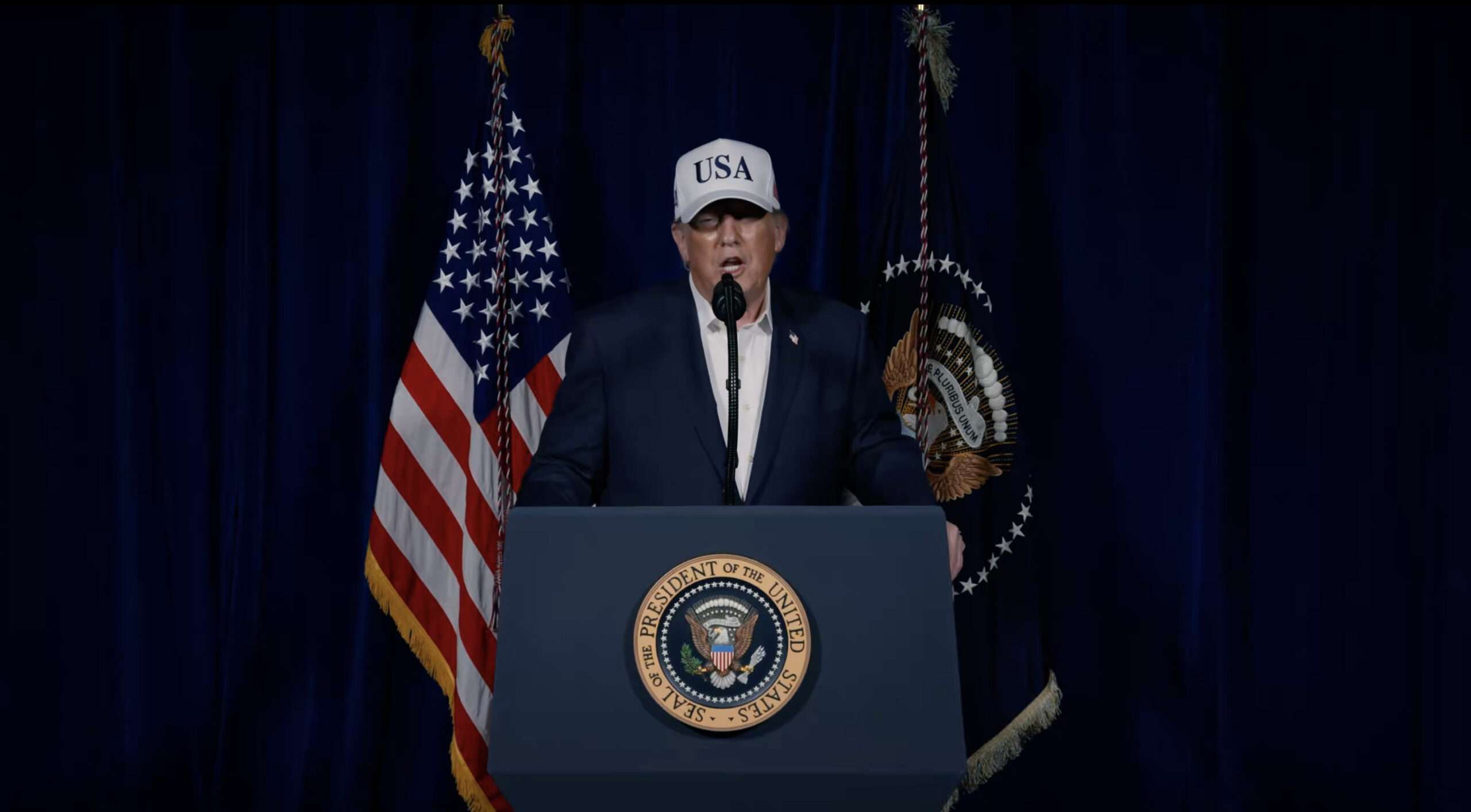
Trump famously declared 'great nations do not fight endless wars' — then launched Operation Epic Fury and told reporters the US has 'a virtually unlimited supply' of munitions and can fight 'forever.' Suderman argues the administration has offered 'multiple competing and contradictory justifications' for the Iran campaign, while Pentagon briefers reportedly told Congress that Iran was not planning imminent strikes unless Israel attacked first — undercutting the self-defense rationale. Three American troops had been killed at the time of writing (now nine). The piece acknowledges Iran as 'a bad actor, a regional bully, and an oppressive, authoritarian nightmare' but argues the war lacks strategic clarity and congressional authorization. The contradiction between Trump's anti-interventionist brand and the largest US military operation since Iraq is, Suderman writes, now impossible to ignore.
Trump ran for president in both 2016 and 2024 as a critic of US military interventionism, particularly the Iraq War. Operation Epic Fury, the joint US-Israeli campaign against Iran, began February 28 with strikes that killed Supreme Leader Khamenei. Congress has not authorized the operation, and a bipartisan War Powers resolution is under consideration.