Washington shifted from advisories to transport logistics Tuesday, warning Americans in parts of the Middle East to leave immediately on commercial routes when possible while also positioning military aircraft for assisted departures. The move reflects a practical change in risk: officials are no longer treating the conflict as a tightly bounded strike campaign and are planning for spillover threats around airports, shipping lanes, and partner-base infrastructure. Diplomatically, evacuation planning also signals to allies that the US expects continued volatility rather than a near-term de-escalation. Even before large-scale civilian movement begins, this kind of posture tends to tighten insurance terms, raise carrier costs, and reduce private airline willingness to operate in the region, which can quickly make exits harder for ordinary travelers and dual nationals.
The US and Israel launched Operation Epic Fury on February 28, 2026, triggering direct Iranian retaliation and a wider regional security response. In modern conflicts, evacuation advisories often change in stages: warning notices first, then assisted transport when commercial capacity thins out. That progression matters because once insurers, airlines, and port operators tighten operations, civilians can become effectively stranded even before formal border closures.
Global markets moved into risk-off mode as traders priced in a more durable Middle East shock rather than a brief military flare-up. Energy benchmarks climbed while major stock indexes fell, with transport, airlines, and import-exposed sectors taking the first hit. The core fear is not only production losses but persistent disruption to shipping insurance, tanker routing, and refinery planning if the conflict keeps threatening Gulf transit routes. For consumers, the path from geopolitical shock to household pain is usually fuel first, then freight, then broader goods inflation. Central banks now face a familiar dilemma: growth is slowing while energy-driven price pressure rises, making rate-policy decisions harder. If volatility in oil and shipping persists through March, the next inflation prints could arrive at the same time real activity weakens.
The Strait of Hormuz carries a large share of globally traded oil and LNG, so even partial disruption can move prices quickly. Markets often react to expected logistics and insurance constraints before physical shortages appear. In past Gulf crises, energy spikes fed through to shipping and food costs within weeks, then became a broader inflation problem for countries far from the conflict zone.
A new allied fracture opened inside the Western coalition after Spain reportedly denied use of key facilities for Iran strike operations, prompting President Trump to threaten trade retaliation. The dispute matters beyond bilateral politics: base-access fights can disrupt sortie planning, tanker support, and logistics timing even when military goals remain unchanged. It also raises a broader question for Europe and NATO partners, many of whom support deterrence but not open-ended regional escalation. Using trade threats to force security cooperation may produce short-term concessions, but it also increases long-term distrust around burden sharing and command coordination. With evacuation plans already underway and markets pricing prolonged instability, public splits among allies add another layer of uncertainty to both diplomatic and military planning.
US operations in and around the Mediterranean have long depended on allied basing and overflight arrangements, including Spanish facilities. These agreements are politically sensitive because host governments face domestic pressure over escalation risk. Even temporary access disputes can force rerouting that increases mission costs and response times, especially when regional tensions are already stretching logistics.
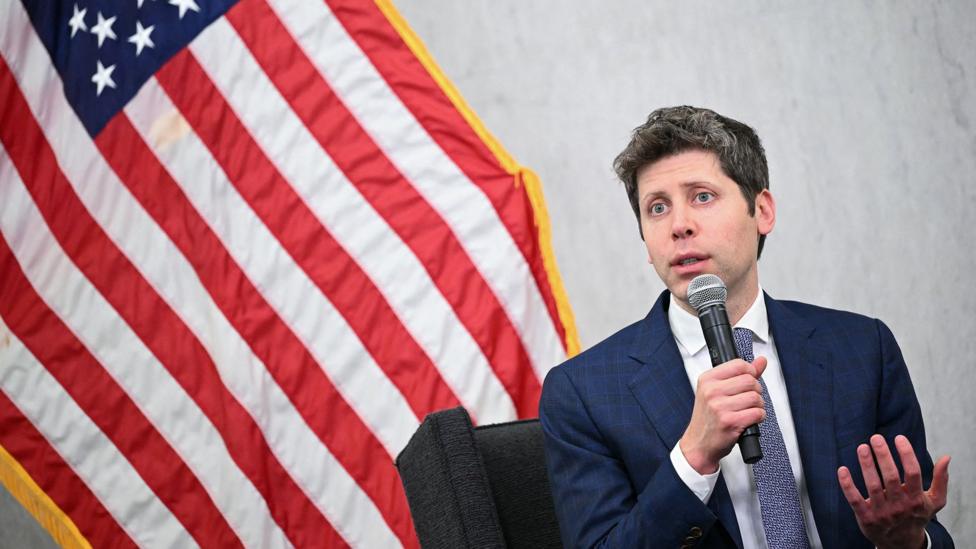
OpenAI said it revised terms tied to US military work after criticism that its earlier framing could enable surveillance uses that crossed public red lines. Sam Altman said updated restrictions bar using the company’s systems to spy on Americans, a change intended to separate battlefield, logistics, and analysis applications from domestic intelligence monitoring. The policy shift is significant because the commercial AI sector is now negotiating, in public, where dual-use boundaries actually sit. Investors and government buyers want capability; employees and civil-liberties groups want enforceable limits. The unresolved issue is implementation: guardrails in contracts matter only if auditing, logging, and procurement oversight can verify compliance. Expect this to become a model fight for every major model provider selling to defense and intelligence customers.
Tensions over AI defense contracts have grown since 2024 as labs moved from broad safety messaging to direct government partnerships. The core policy problem is dual-use ambiguity: the same model can support benign tasks, combat operations, or surveillance workflows depending on deployment. Recent public backlash has pushed labs to define explicit prohibited uses instead of relying on broad principles.
An FBI official said AI is becoming a "game changer" for remote access operations, confirming that the bureau is actively integrating model-driven tooling into offensive and investigative workflows. In practical terms, AI can accelerate target triage, automate parts of exploit development, and help analysts process large device or network datasets faster than manual methods. That can improve law-enforcement speed in high-risk cases, but it also lowers the technical barrier for intrusive operations and raises the stakes for oversight. The disclosure is notable because agencies have mostly spoken in generalities about AI adoption; this statement directly links AI to hacking capability. As with commercial surveillance markets, the central policy question is no longer whether the tools exist, but what legal boundaries and reporting requirements govern their use.
US agencies have used remote access techniques for years under existing warrant and national-security authorities. AI changes the scale and speed of those operations, which can outpace traditional transparency mechanisms such as delayed court disclosures and inspector-general review cycles. That mismatch is now a recurring issue in debates over digital privacy and state power.
X announced it will cut monetization for accounts that share AI-generated conflict footage without labeling it, an attempt to reduce the financial incentive behind viral synthetic war clips. The policy acknowledges a core platform-design problem: recommendation and payout systems can reward emotionally intense misinformation faster than fact-checking can catch up, especially during real military crises. Demonetization is not a full solution, but it can change uploader behavior by making unlabeled synthetic content less profitable. The challenge is enforcement at speed and scale, where borderline edits, repost chains, and cross-platform laundering can blur what counts as disclosure. If implemented consistently, the rule could become a template for other social networks under pressure to limit algorithmic amplification of fabricated battlefield media.
Synthetic war imagery has circulated since early deepfake tools, but recent model improvements made realistic short-form video cheaper and faster to produce. During live conflicts, mislabeled clips can influence public sentiment and policy debates before verification arrives. Platforms increasingly use a mix of labels, ranking penalties, and payout restrictions because outright removal alone often comes too late.
New research highlighted by Ars Technica finds that large language models can infer real identities behind pseudonymous accounts with better-than-expected accuracy by combining writing style, topic patterns, and cross-platform clues. The result is less about a single breakthrough attack and more about automation: work that once required determined human investigators can now be run at scale against huge corpora of posts. That creates direct risk for whistleblowers, activists, researchers, and ordinary users who rely on pseudonyms for safety rather than secrecy. It also challenges common moderation assumptions that removing obvious metadata is enough. The policy implication is clear: platforms and privacy tools need stronger protections against stylometric and contextual linkage attacks, not just account-level anonymization.
Deanonymization has long existed through stylometry and data brokerage, but LLMs reduce the cost of running those methods repeatedly across massive datasets. Pseudonymity remains useful for reducing casual exposure, yet it is increasingly weak against well-resourced actors. Privacy experts have argued for years that anonymity should be treated as probabilistic protection, not an absolute shield.
Electricity rates rose nationally again in 2025, and the increase was broad rather than regional, according to newly compiled data reviewed by Ars Technica. Utilities face a stacked cost structure: aging transmission infrastructure needs replacement, extreme-weather resilience upgrades are expensive, fuel costs remain volatile, and demand growth from electrification plus data-center buildout keeps pushing capacity planning. Consumers mostly experience this as a monthly surprise, but the drivers are structural, not one-off pricing spikes. That means relief is likely to be uneven and slower than headline inflation trends suggest. The political challenge is that almost every proposed fix, from faster grid permitting to new generation and storage investment, requires upfront spending that can itself raise near-term rates before longer-term benefits appear.
US power systems were designed around slower demand growth and different generation mixes. Rapid additions of renewables, electrified transport, and compute-heavy infrastructure require transmission expansion and modernization that often lag due to permitting and local opposition. When upgrades are delayed, congestion and reliability costs increase, and those costs eventually flow through to retail bills.
South Korean police acknowledged a major operational failure after officers reportedly exposed credentials for a seized cryptocurrency wallet, allowing thieves to drain roughly $5 million in assets. The incident is an unusually clear example of a basic key-management error defeating otherwise sophisticated asset seizure work. Law enforcement agencies increasingly hold digital assets during investigations, but many still rely on ad hoc procedures that were designed for bank records and physical evidence, not bearer instruments that move instantly once a key leaks. Beyond the immediate financial loss, the case could complicate prosecutions and forfeiture claims if defense teams argue mishandled custody. It also underscores that cybercrime enforcement now depends as much on institutional security discipline as on technical investigative capability.
Unlike frozen bank accounts, many crypto assets can be transferred irreversibly with a single private key. Agencies that seize digital funds usually need hardened custody workflows, including hardware storage, split-key controls, and strict publication safeguards. Several jurisdictions are still building those protocols, and high-profile losses have become a recurring warning about immature operational practices.
Two space companies unveiled concepts for electric lunar harvesting vehicles aimed at digging and moving regolith in support of future moon infrastructure. The near-term goal is not consumer mining hype but practical logistics: clearing landing zones, constructing berms for radiation and blast protection, and eventually processing material for oxygen, water extraction, or construction feedstock. The announcements matter because hardware planning is starting to track real mission constraints rather than distant commercialization narratives. If these machines can operate autonomously through extreme temperature swings and communication delays, they could reduce the number of risky astronaut surface tasks and lower mission costs. The hard part remains proving reliability in actual lunar conditions, where dust abrasion, power cycles, and maintenance limits have historically defeated elegant prototypes.
NASA’s Artemis-era planning shifted attention from flags-and-footprints missions to sustained operations, which require surface construction and material handling. Lunar regolith is abrasive and electrostatically clingy, complicating moving parts and seals. Past rover and lander missions showed that dust management can become a mission-limiting problem, so robust excavation hardware is a key enabling technology for longer stays.
India’s top court criticized a junior judge after fabricated, AI-generated legal references appeared in case documents, adding to a growing set of courtroom incidents where generative tools introduced fake authority. The danger in legal settings is not just factual error but procedural contamination: once bogus citations enter filings or orders, opposing parties and judges spend time validating fiction, and case timelines can derail. The episode reinforces a pattern seen in other countries, where AI assistance is being adopted faster than court-specific safeguards. Expect stricter local rules on verification, attorney certifications, and possibly sanctions for unvetted machine-generated citations. The broader lesson is institutional, not technical: high-stakes professions need workflow controls for AI outputs, not merely guidance that users should "double-check" results.
Courts in multiple countries have reported AI-hallucinated citations in filings since 2023, including cases where attorneys submitted nonexistent precedents. Legal systems depend on traceable authority chains, so fabricated references cause disproportionate damage compared with ordinary drafting mistakes. Judicial bodies are increasingly responding with explicit disclosure and verification requirements for AI-assisted submissions.
A Georgia jury found Colin Gray guilty in a landmark parental-responsibility prosecution tied to a 2024 high school shooting carried out by his teenage son. Prosecutors argued Gray ignored warning signs and failed to secure firearm access, making the attack foreseeable and preventable. The verdict could shape how US jurisdictions define criminal liability for adults whose negligence enables youth gun violence, especially as states debate safe-storage mandates and red-flag enforcement. Supporters say the ruling recognizes the practical chain of responsibility in household gun access; critics warn it could blur lines between moral blame and legal causation. Either way, the case is likely to be cited in future prosecutions and legislative proposals as courts test how far accountability can extend upstream from the shooter.
US prosecutors have recently pursued parents in several school shooting cases, arguing that ignoring explicit warning signs and failing to secure weapons can meet criminal standards. These prosecutions are still relatively new and legally contested, but they are becoming a major part of the policy debate over prevention, especially in states where broad firearm ownership and uneven storage rules coexist.
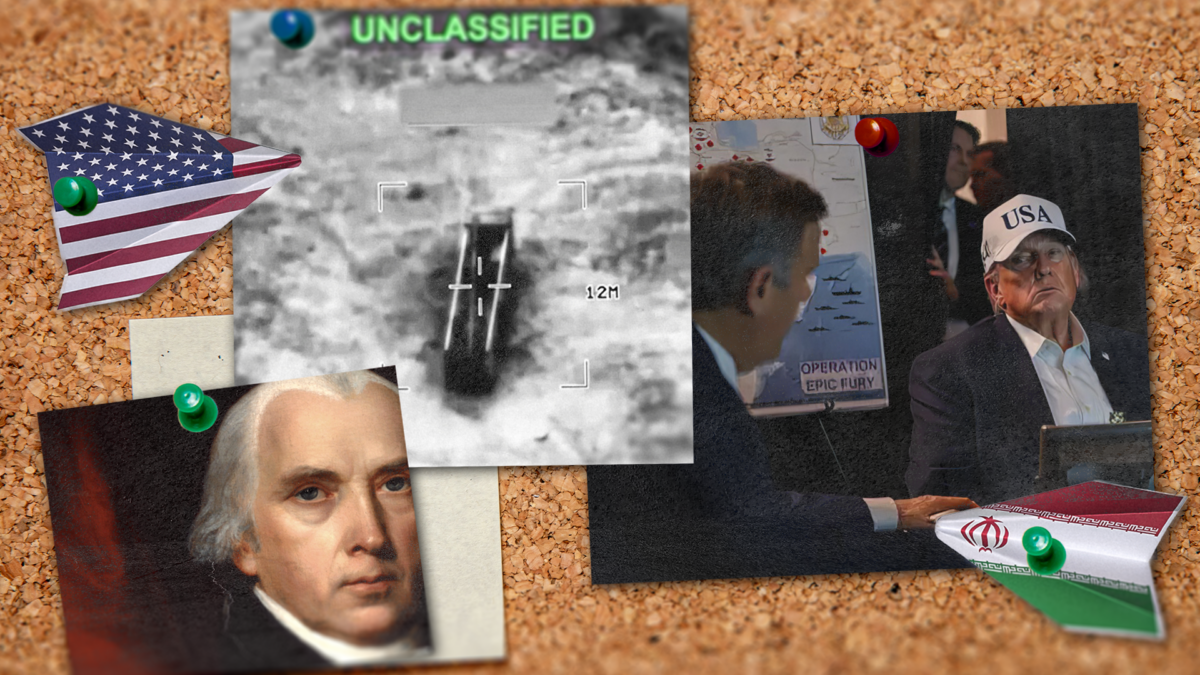
The central constitutional claim is straightforward: absent a congressional declaration of war or similarly explicit authorization, the president cannot lawfully initiate a sustained war against Iran. The argument concedes that presidents retain defensive authority against imminent threats, but says that standard does not justify a broad, open-ended campaign with shifting objectives and no clear legislative mandate. It also argues that post-9/11 authorizations were written for specific groups and theaters, not for a new state-to-state conflict decades later. Framed this way, the current operation is not just a strategic gamble but a structural power grab that further erodes Congress’s war-making role. The warning is less partisan than institutional: once emergency logic becomes routine, constitutional limits become ceremonial.
The Constitution gives Congress the power to declare war, while presidents serve as commander in chief. In practice, modern conflicts often begin without formal declarations, relying on broad authorizations and executive claims of inherent authority. War Powers debates recur whenever operations expand beyond immediate self-defense. Recent administrations of both parties have stretched these boundaries, making precedent and political incentives harder to unwind.