European governments are sending naval and air-defense support to Cyprus after a drone attack near Britain’s RAF Akrotiri base, a key logistics node for operations in the eastern Mediterranean. Cypriot officials said they suspect Hezbollah involvement, linking the incident to the wider regional blowback from the US-Israel campaign against Iran. London said it is dispatching the Type 45 destroyer HMS Dragon and counter-drone capable helicopters, while France and Greece announced additional naval and air assets. The operational meaning is straightforward: allies now treat Cyprus as a potential front-line support zone rather than a rear-area platform. That increases the chance that infrastructure tied to evacuations, intelligence, and refueling will need active protection, and it signals expectations of sustained cross-border drone pressure rather than a short-lived exchange.
RAF Akrotiri sits on a British sovereign base area in Cyprus and has long been used for Middle East operations. Because Cyprus is close to both the Levant and Suez routes, disruptions there can affect military movement, evacuation planning, and maritime security in a single step.
Hezbollah launched rockets and drones into Israel for a second day, prompting expanded Israeli strikes across southern Lebanon, the Bekaa Valley, and Beirut’s southern suburbs, areas closely tied to Hezbollah’s support base. The group framed the attacks as retaliation linked to the killing of Iran’s supreme leader, but the immediate result inside Lebanon has been another wave of displacement and political anger from residents who say the country is being dragged into a broader regional fight it cannot absorb. Israeli forces also said they widened ground activity in the south, raising the risk that tit-for-tat exchanges harden into a longer campaign. In practical terms, Lebanon now faces the familiar combination of civilian flight, infrastructure damage, and shrinking room for de-escalation diplomacy as multiple conflicts overlap.
A 2024 ceasefire ended an earlier Israel-Hezbollah war but did not resolve core border and militia issues. Hezbollah remains a major armed and political force in Lebanon, backed by Iran. That makes Lebanon highly exposed whenever Iran-Israel tensions spike.
Sen. John Cornyn and Attorney General Ken Paxton advanced to a May 26 Republican runoff for Texas’s Senate nomination, setting up a prolonged and likely expensive intraparty fight after Rep. Wesley Hunt finished third. Early returns showed a much tighter race than many forecasts, with both camps already escalating spending and attack messaging. The runoff now becomes a national proxy contest over the future of Texas Republican politics: Cornyn’s institutional wing versus Paxton’s insurgent base. President Trump had stayed neutral during the three-way phase, and his eventual positioning could heavily shape turnout in the second round. The winner will face the Democratic nominee in November, in a race Democrats view as one of their few credible statewide opportunities in Texas despite the GOP’s long winning streak.
Texas requires a majority in party primaries, so top finishers move to a runoff when no one clears 50%. Runoffs usually draw lower turnout but can reward highly mobilized factions. Democrats have not won a statewide Texas race in decades, but still target open pathways when GOP primaries turn divisive.
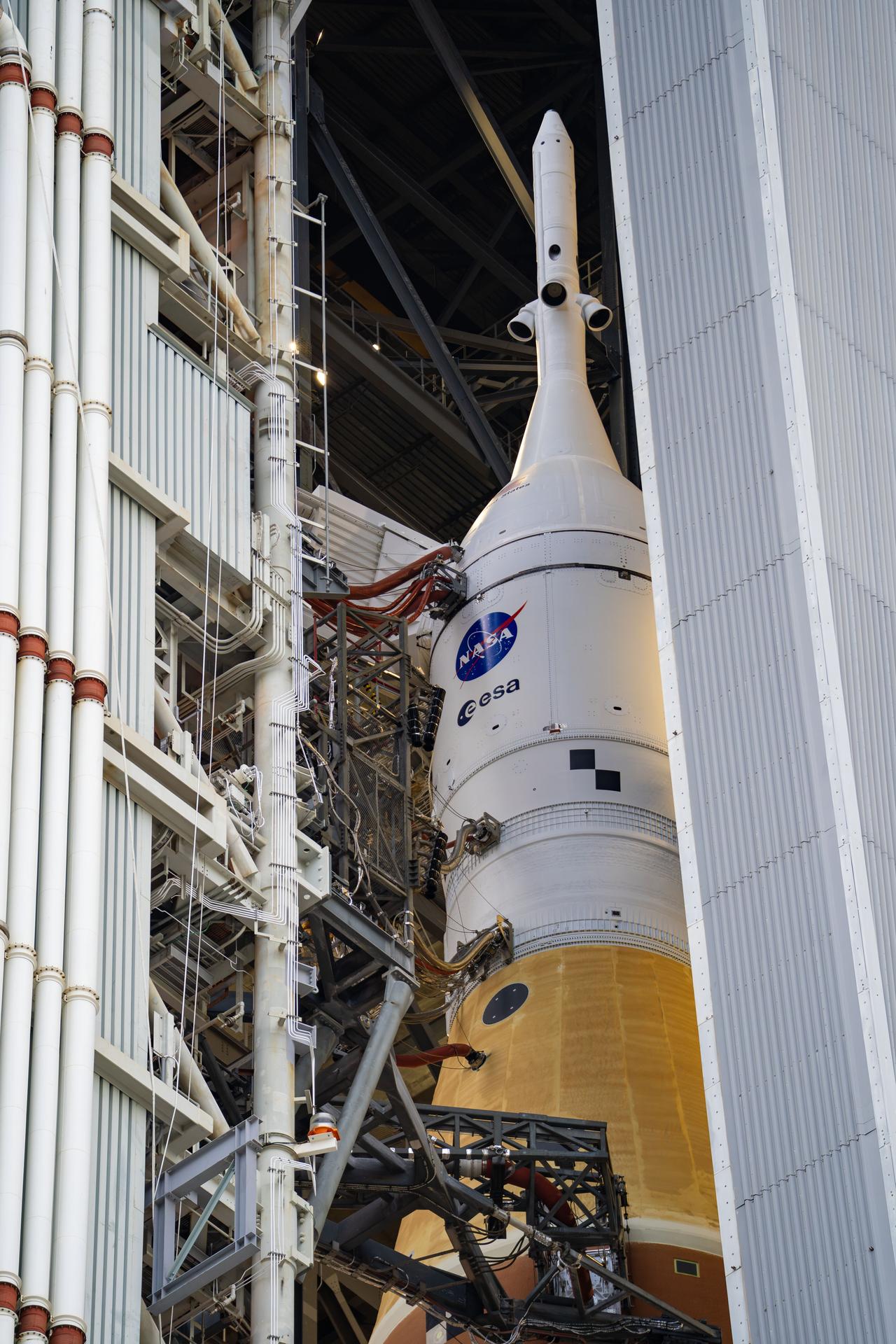
NASA says Artemis II is now tracking toward an April 1 launch after engineers repaired the upper-stage helium quick-disconnect issue that forced the Space Launch System rocket off the pad in late February. A fueling test on February 21 had gone largely to plan, but teams later found a dislodged seal that blocked helium flow through umbilical lines that cannot be serviced at the launch pad. After rollback to the Vehicle Assembly Building, technicians reassembled the connection and began validation runs at reduced flow before full re-test. If the remaining checks hold, the stack will return to Kennedy Space Center’s launch complex in time for final countdown operations. Artemis II would be NASA’s first crewed lunar mission since Apollo, carrying astronauts on a flyby rather than a landing.
Artemis II is the second mission in NASA’s Artemis program and is designed as a full systems test with crew aboard Orion. The mission will orbit the Moon and return to Earth, clearing the way for a later landing attempt in Artemis III if hardware and schedule milestones stay on track.
TikTok told the BBC it will not roll out end-to-end encryption for direct messages, arguing that the feature could make harmful content and abuse harder to detect. That puts TikTok out of step with rivals such as WhatsApp, Messenger, and Instagram, which have expanded encrypted messaging as a default privacy protection. The company’s position reopens a long-running tradeoff: privacy-by-design for ordinary users versus platform and law-enforcement visibility into illegal activity. In TikTok’s case, the debate is politically sharper because the platform has faced persistent US concerns over data governance and state influence. Refusing E2EE may reduce some moderation blind spots, but it also means TikTok is choosing platform-readable DMs at a moment when user expectations are moving in the opposite direction.
End-to-end encryption means only sender and recipient can read message contents. Regulators and child-safety groups often argue this can hinder abuse detection, while privacy advocates treat it as a baseline security requirement. Most major messaging platforms now support E2EE in at least some channels.
The Justice Department and a coalition of 40 state and district attorneys general opened their antitrust case against Live Nation-Ticketmaster, arguing the company used control over promotion, venue access, and ticketing contracts to lock in market power. Prosecutors said the business could punish venues or artists that tried to route around Ticketmaster, while maintaining exclusive arrangements that competitors struggled to break. Live Nation’s defense argued that its scale improves reliability and that alternative ticketing options still exist. The trial now moves from broad public frustration over fees to a narrower legal test: whether the government can prove monopoly maintenance and anticompetitive conduct under US antitrust standards. A ruling against the company could lead to structural remedies, including potential separation of core businesses.
Live Nation and Ticketmaster merged in 2010, combining artist promotion, venue operations, and ticket sales in one company. The DOJ sued in 2024, saying that vertical integration allowed exclusionary behavior. Ticket pricing controversies have made the case one of the most visible antitrust fights in US consumer markets.
Google introduced Gemini 3.1 Flash-Lite in preview for developers and enterprises, positioning it as the fastest and cheapest model in its Gemini 3 family for high-volume workloads. Google listed pricing at $0.25 per million input tokens and $1.50 per million output tokens, with deployment through AI Studio and Vertex AI. The company pitches the model for tasks like translation, moderation pipelines, and large-scale routing where latency and unit economics matter more than frontier-level reasoning depth. Strategically, the release deepens the ongoing pricing race among foundation model providers: instead of only competing on raw benchmark peaks, vendors are now separating product lines around throughput, response time, and cost predictability for production systems. For buyers, model selection is increasingly an operations decision, not just a capability decision.
Most AI deployments use multiple model classes: heavier models for difficult reasoning and lighter models for frequent routine steps. Low-latency tiers can dominate total billable usage in production. That is why pricing and throughput disclosures often matter more to enterprises than single benchmark leaderboards.
Linn County, Iowa approved unusually strict zoning rules for hyperscale data centers, including limits tied to siting, water impact, and local infrastructure safeguards, as residents in Palo pushed officials to slow unchecked expansion. County leaders framed the ordinance as a way to keep some economic upside while preventing large projects from overwhelming local resources. Residents said the core concern is long-run water demand and ecological stress near the Cedar River basin, especially in a community with vivid flood history and limited margin for infrastructure mistakes. The vote reflects a broader shift in US local politics: AI-era data centers are now viewed not just as tax-base opportunities but as land-use and utility burdens that require up-front governance. Similar fights are spreading from major metro edges into smaller counties.
Data centers can bring construction jobs and property-tax revenue, but they also require large, continuous electricity and water flows. Local permitting frameworks were often written before hyperscale AI infrastructure, so counties are rewriting zoning codes to address noise, cooling demand, backup generation, and emergency planning.
Google is preparing to require identity verification and fees for developers distributing apps outside the Play Store, with stronger install warnings or blocks for unverified software. Google frames the move as a security upgrade against malware campaigns that often use sideload channels. Critics argue the policy could erode one of Android’s defining differences from iOS by raising friction for independent, open-source, and niche developers who avoid centralized store economics. The tension is real: Android’s openness has enabled experimentation and alternative ecosystems, but that same openness has also been exploited by fraud operators. The new policy shifts power toward Google’s gatekeeping layer even when apps are not distributed through Play, and the rollout may become a key test of how much “open” remains in Android’s next phase.
Android historically allowed broad sideloading, unlike Apple’s tightly controlled model. Over time, Google introduced more checks such as Play Protect and permission controls. Developer verification extends that logic beyond the store itself, signaling a platform-wide move toward identity-based trust enforcement.
MIT researchers reported early success with injectable mini-liver grafts designed to provide temporary support when a patient’s own liver is failing. In mouse studies, the implanted cells remained viable for at least two months and produced key liver enzymes and proteins, suggesting they could supplement organ function without replacing the native liver immediately. The team describes the approach as a “satellite liver” concept: distributed booster tissue that buys time for recovery or for a later transplant decision. If the method translates to humans, it could help patients who are too unstable for transplant surgery or who face long waits for donor organs. The work remains preclinical, but it offers a concrete path between drug-only treatment and full organ replacement.
More than 10,000 people in the US are typically on liver transplant waiting lists, and many others are not eligible for surgery. Bridge therapies that restore enough metabolic function to stabilize patients are a long-standing goal in regenerative medicine and transplant care.
CATL says its upcoming sodium-ion battery platform can charge and discharge more reliably in subfreezing conditions than typical lithium-ion packs, targeting one of the most visible consumer EV pain points: winter range collapse. Vehicles using the chemistry are expected to reach the Chinese market in 2026 through partner automakers, giving the industry its first large-scale field test outside lab claims. Sodium-ion cells usually trade lower energy density for potentially better cold-weather behavior, lower material-cost volatility, and less dependence on lithium and nickel supply chains. The open question is real-road performance over time, including cycle life and degradation under mixed climates. If the chemistry delivers acceptable durability, it could become a complementary battery tier for price-sensitive and cold-region segments rather than a full lithium replacement.
CATL is the world’s largest EV battery maker by market share, so its chemistry decisions can rapidly influence global supply chains. Sodium is abundant and cheap, but sodium-ion battery systems are newer and less proven at mass-market automotive scale than lithium-ion families.
Astronomers reported a compact four-star system, TIC 120362137, in which three Sun-like stars orbit each other in an unusually tight arrangement while a fourth circles farther out. The entire architecture appears compressed enough to fit within roughly the span of Jupiter’s orbit around the Sun, making it one of the densest known systems of its type. Systems this crowded are valuable because they stress-test star-formation and long-term orbital stability models: small gravitational perturbations can destabilize them, so surviving configurations constrain how they likely formed and migrated. The discovery also expands the catalog of multi-star environments relevant to exoplanet science, where orbital complexity can strongly shape whether planets form, survive, or remain dynamically calm enough for long-term climate stability.
Binary stars are common in the Milky Way, but stable high-order systems with very tight spacing are rarer and scientifically useful. They offer natural laboratories for testing celestial mechanics, resonance behavior, and the boundary between stable and chaotic orbital evolution.
Indiana lawmakers approved Senate Bill 199, which would require state officials to review public college programs whose graduates earn below the average pay of a typical high school diploma holder, currently around $39,000 in state estimates. If signed, the law could pressure institutions to justify, restructure, or phase out programs that fail wage benchmarks. Supporters say the measure gives families clearer return-on-investment signals and aligns public funding with workforce outcomes. Critics counter that a narrow earnings metric undervalues fields such as education, social services, and the arts, where compensation can lag despite public importance. The bill fits a broader national trend in which legislatures are moving from general accountability language to explicit earnings thresholds as a tool for shaping university program portfolios.
States increasingly tie higher-education oversight to labor-market outcomes, but metrics differ on whether they track early-career salary, long-term wage growth, or social impact indicators. Debates usually center on whether public colleges should prioritize direct job-market alignment or maintain broader disciplinary missions.
via Inside Higher Ed, The Chronicle of Higher Education
The National Student Clearinghouse ended its 13-year partnership with Tufts University’s National Study of Learning, Voting and Engagement (NSLVE), a widely used project that gave colleges campus-level data on student turnout and voting patterns. The move followed pressure from the Trump administration, which alleged privacy-law concerns around how education and election records were linked for analysis. NSLVE has been used by roughly 1,000 institutions to benchmark civic participation and design interventions before election cycles, so the break threatens continuity in one of the largest longitudinal datasets on college voting behavior. Even if alternative data channels emerge, institutions now face a gap in standardized measurement at a politically sensitive moment when campus civic-engagement programs are already under scrutiny.
NSLVE began in 2013 and became a core planning tool for universities tracking student civic participation across election years. The Clearinghouse provides enrollment and completion data used by many colleges, so changes in that relationship can ripple across research, accreditation evidence, and student-success analytics.