US Defense Secretary Pete Hegseth said an American submarine torpedoed and sank the Iranian frigate IRIS Dena in international waters south of Sri Lanka, marking one of the clearest naval escalations of the current Iran war. Sri Lankan officials said rescuers recovered dozens of bodies and pulled surviving sailors from the water after a distress call. Indian officials said the ship had recently participated in naval events near India before heading home, adding another layer of regional sensitivity around sea lanes that connect the Gulf and the Indian Ocean. Tehran called the strike a major provocation and warned Washington would face consequences. The incident widens the war's operational map beyond the Gulf and raises the risk that shipping routes, insurance costs, and naval traffic in the broader Indian Ocean will be dragged into a longer conflict cycle.
US-Iran hostilities began escalating in late February after joint US-Israeli strikes inside Iran. Most direct military actions had been concentrated around Iran, Iraq, and nearby waters. A submarine strike near Sri Lanka pushes the conflict into a new maritime theater and raises concern among countries that depend on uninterrupted Indian Ocean shipping.
A federal trade judge ordered US Customs and Border Protection to start processing refunds for importers that paid tariffs imposed under the International Emergency Economic Powers Act, following the Supreme Court decision that struck those levies down. Judge Richard Eaton wrote that all affected importers are entitled to benefit from the high court ruling, a decision that could send billions of dollars back to businesses that paid the duties. The government had collected more than $130 billion under the program, with many companies still uncertain about how claims would be handled. The order gives clearer legal direction, but practical questions remain about timing, documentation, and whether smaller importers can navigate the process without costly litigation. For businesses that absorbed or passed through those charges, the refund timeline now matters almost as much as the ruling itself for pricing, cash flow, and contract disputes.
The Supreme Court ruled on February 20, 2026 that the administration's broad IEEPA tariff program exceeded statutory authority. Since then, importers have been waiting for a workable refund mechanism. The Court of International Trade now becomes the key venue for turning that constitutional win into actual payments.
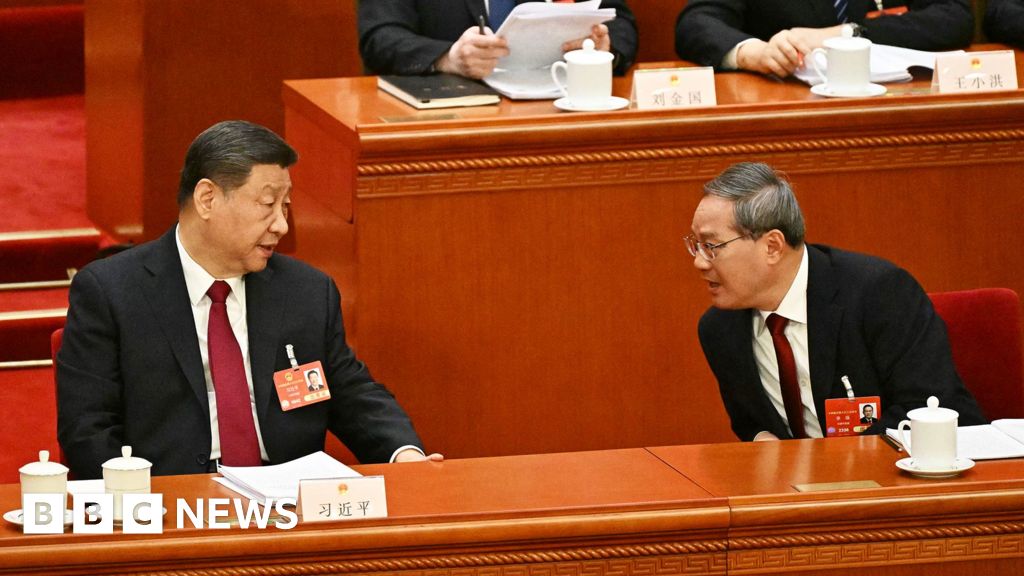
China lowered its annual growth target to a 4.5% to 5% range at the opening of this year's National People's Congress, its lowest official goal since 1991 and the first downgrade since the target was cut to around 5% in 2023. Premier Li Qiang presented the goal alongside the opening of the policy cycle that will feed into the 15th Five-Year Plan. The lower range reflects mounting constraints: weak household demand, a prolonged property slump, demographic decline, and rising external pressure from trade frictions and geopolitical risk. Beijing still signaled ambition in industrial policy, especially around advanced manufacturing and AI adoption, but the headline target indicates officials are choosing a more defensible baseline over optimistic signaling. For global markets, the change is important not as a collapse narrative, but as a formal acknowledgment that China's high-growth era is giving way to slower, more managed expansion.
The annual "two sessions" meetings set China's policy direction for the year and signal priorities to provincial governments and state-linked firms. A lower growth target can reduce pressure for short-term stimulus while giving more space to industrial restructuring. It also affects commodity demand expectations and regional trade planning.
Millions of Nepalis voted in the first general election since last September's youth-led uprising that toppled the previous government after months of protests over corruption, economic stagnation, and inequality. The ballot is widely seen as a test of whether anti-establishment energy can be converted into parliamentary power for newer candidates, or whether traditional parties will reassert control once protest momentum meets electoral reality. Nepal's 275-seat parliament will shape coalition talks, fiscal policy, and how aggressively the next government pursues institutional reforms demanded by protesters. Officials said vote counting could take days and final outcomes may not be clear until next week. The election matters beyond Nepal because it offers a live case study in whether a Gen Z protest wave can produce durable governance change rather than a short-term leadership reset under different personalities.
Nepal has cycled through frequent coalition governments since ending its monarchy, with reform promises often stalling after elections. The 2025 uprising added a new generation of politically active voters, many mobilized through digital networks and local organizing. This election is the first institutional test of that movement's staying power.
The US Nuclear Regulatory Commission granted TerraPower a construction permit for its Natrium project in Kemmerer, Wyoming, the first such federal construction approval in nearly a decade. The design uses a sodium-cooled fast reactor paired with molten-salt energy storage, a configuration intended to deliver steadier output and flexible dispatch when grids face demand spikes. The permit does not authorize operation, so TerraPower still has to clear additional safety and licensing steps before it can generate electricity, with earliest completion currently projected around 2030. Even so, the decision is a major milestone for advanced reactor developers who have struggled to move from demonstration rhetoric to regulated, financed buildouts. For US energy policy, the project is now a concrete test of whether next-generation nuclear can be deployed fast enough and cheaply enough to matter for reliability and decarbonization goals.
Natrium is one of several advanced reactor concepts pitched as an alternative to large traditional plants. Supporters argue these designs can complement renewable-heavy grids and large new industrial loads, including AI data centers. Critics focus on cost overruns, supply-chain bottlenecks, and long approval timelines that have repeatedly delayed commercial deployment.
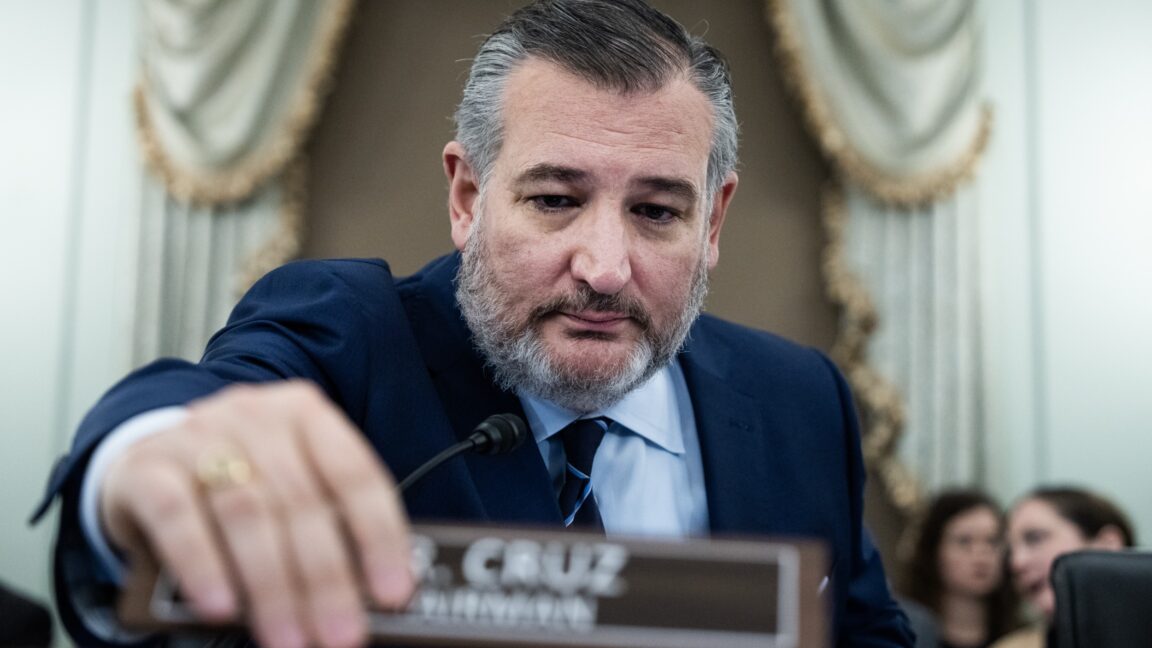
The Senate Commerce Committee moved forward new NASA authorization language that backs sustained funding and direction for Artemis and related lunar programs, signaling continued bipartisan appetite for a long-duration US moon strategy. Committee leadership framed the bill as aligning agency priorities with White House goals while giving NASA clearer political cover for multiyear planning. In practical terms, authorization bills do not automatically write checks, but they shape what appropriators fund and what missions gain momentum versus delay. The measure's rapid markup suggests lawmakers see lunar competition as strategic infrastructure rather than symbolic space prestige, especially as China and other actors accelerate their own cislunar ambitions. For NASA, that can translate into greater continuity for launch systems, surface architecture, and contractor planning, though cost pressure and schedule risk remain the central constraints.
NASA's Artemis program aims to return astronauts to the Moon and build a sustained human presence there. Authorization bills set policy direction, while annual appropriations decide actual spending. The US approach is increasingly framed as a strategic race over standards, logistics, and long-term access in cislunar space.
Google and Epic moved to close one of the highest-profile app store antitrust battles, with a settlement framework that effectively ends the old 30% default fee model as the center of Android economics. The case has been running since Fortnite was removed from mobile stores, then expanded into a broader fight over payment rules, distribution controls, and platform leverage. A jury ruling against Google in 2023 and subsequent remedy fights pushed both companies toward deal-making, though a federal judge had previously questioned whether the terms favored Epic disproportionately. The new agreement suggests both sides now prefer rule-reset certainty over years of additional appeals. The bigger consequence is not just one lawsuit ending: Android distribution norms are being rewritten at the same time regulators, courts, and rival platforms are all pressuring gatekeeper models across digital markets.
The Google-Epic case became a proxy battle over whether mobile platforms can require in-app payment systems and tightly control software distribution. Similar fights have played out against Apple in multiple jurisdictions. Even partial settlements can shift developer pricing, compliance burdens, and how app ecosystems compete on openness versus security.
The LIGO-Virgo-KAGRA collaboration released a new catalog that more than doubles the number of confirmed gravitational-wave detections, expanding the observed population of black-hole and neutron-star mergers and improving statistical power for cosmology and stellar evolution. The larger sample includes heavier systems, asymmetric mergers, and fast-spinning binaries that were underrepresented in earlier datasets. Each event is a tiny ripple in spacetime detected by laser interferometers spread across multiple continents, and the point of scale here is that gravitational-wave astronomy is shifting from rare discovery mode into survey science. With many more signals, researchers can test formation pathways for compact objects, constrain merger rates across cosmic time, and refine independent estimates of expansion history. In short, this is less about one dramatic detection and more about a field crossing into a data-rich phase where population-level questions become answerable.
LIGO in the United States, Virgo in Italy, and KAGRA in Japan operate as a coordinated detector network. The first direct gravitational-wave detection in 2015 proved Einstein's century-old prediction and opened a new observing channel beyond light. Larger catalogs now let scientists study trends, not just individual headline events.
Researchers behind the original Evo genome model released Evo 2, an open model trained on trillions of DNA base pairs from bacteria, archaea, and eukaryotes, a major expansion from earlier systems focused mostly on bacterial sequence structure. The team says the model can identify genes, regulatory regions, and splice-related patterns across much more complex genomes, where meaningful signals are less contiguous and harder to infer. That matters because many biomedical and biotech questions depend on understanding non-coding control logic rather than simple protein-coding segments. Open availability is also notable: it lets labs probe capabilities and failure modes without depending on closed APIs. The headline is not that AI can now "design life" overnight, but that sequence modeling is moving from narrow proof-of-concept toward broader, testable utility in annotation, hypothesis generation, and eventually experimental design support.
Genome foundation models borrow techniques from language AI but operate on biological sequence data. Early models did best on simpler organisms where functional units are easier to map. Extending performance to complex genomes is harder and more consequential because it intersects with medicine, agriculture, and synthetic biology research pipelines.
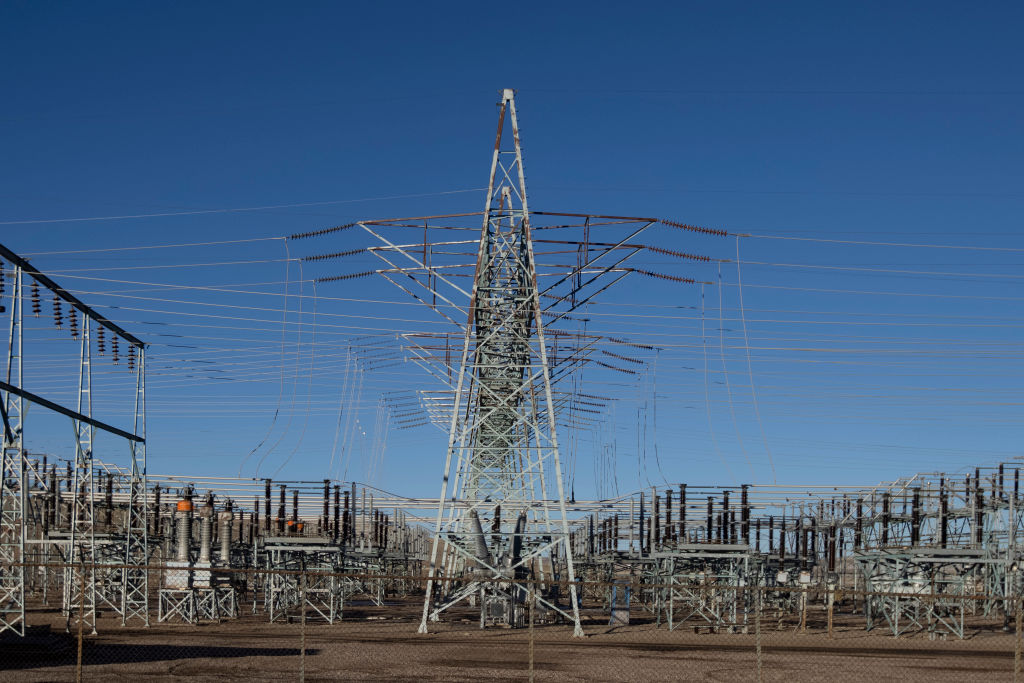
Google, Meta, Microsoft, Oracle, OpenAI, Amazon, and xAI signed a White House "rate payer protection" pledge aimed at showing AI buildout will not push electricity costs onto households and small businesses. The agreement is largely political signaling for now, but it acknowledges a real pressure point: hyperscale data centers are driving rapid demand growth while utilities and regulators debate who pays for transmission upgrades, new generation, and grid hardening. Companies said they would support frameworks where large users shoulder a larger share of infrastructure costs, though details on enforceability and cost accounting remain unclear. The timing reflects rising bipartisan concern that AI policy is becoming energy policy by default. If regulators conclude pledges are insufficient, expect tougher tariff structures, interconnection conditions, or permitting tradeoffs tied directly to new data-center projects.
US power demand was mostly flat for years, but AI and cloud expansion changed utility planning assumptions. Local communities and state regulators increasingly question whether residential customers are subsidizing corporate load growth. The policy fight is shifting from whether to build data centers to how grid costs and risks are allocated.
New York Attorney General officials instructed NYU Langone Health to resume providing puberty blockers and hormone treatment to transgender youth, arguing that state anti-discrimination law protects access to medically indicated care regardless of federal political pressure. The intervention follows reports that the hospital network had closed or restricted parts of its youth gender program after federal threats tied to Medicare and Medicaid participation. The dispute creates a direct state-federal collision in healthcare governance: New York is asserting civil-rights and patient-protection authority while Washington pressures providers through funding conditions and executive directives. For hospitals, the immediate challenge is legal risk management across conflicting mandates; for families, the issue is continuity of care in time-sensitive treatment windows. The case is likely to become a broader test of how far states can shield gender-affirming care infrastructure when federal agencies pursue deterrence through reimbursement leverage.
Hospitals connected to universities are increasingly caught between state protections and federal restrictions on trans healthcare. Court challenges are ongoing across multiple states, but many access disruptions happen before final rulings because providers preemptively narrow services to reduce funding or enforcement risk.
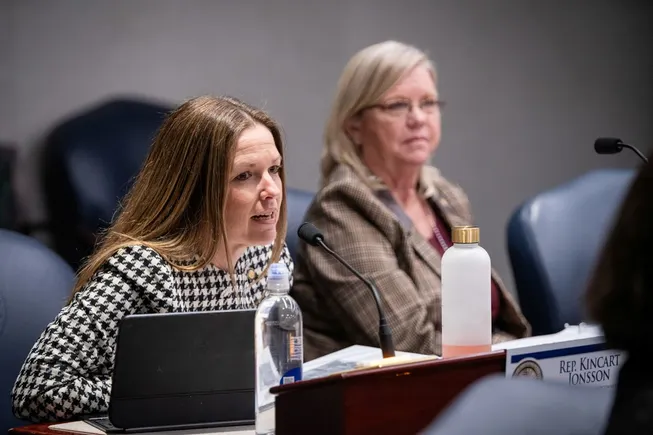
Florida's House passed legislation that would require certain top public universities to keep at least 95% of first-time, full-time fall enrollment in-state, effectively tightening limits on out-of-state and international recruitment. Supporters frame the bill as protecting taxpayer-funded capacity for Florida residents, while critics argue it could cut tuition flexibility, reduce geographic diversity, and weaken national competitiveness at campuses that have recently climbed in rankings. The proposal reflects a broader state trend toward more explicit enrollment engineering, where admissions strategy is treated as a policy lever rather than a purely institutional decision. If enacted, the cap would force universities to rebalance aid, yield strategy, and pipeline partnerships on a short timeline. The measure also signals that states may increasingly trade prestige ambitions for residency guarantees as political pressure around affordability and access intensifies.
Several states have debated whether flagship public universities should prioritize local access over out-of-state tuition revenue and national branding. Florida already applies enrollment constraints in parts of its system; this bill would push those limits further at campuses designated as top-tier research institutions.
New reporting from Arizona State University course data suggests in-person instruction is not insulated from AI-assisted cheating, challenging the assumption that academic dishonesty is mainly an online-learning problem. A preliminary syllabus review of 21 biology courses found that roughly 45% of available points came from assignments or participation structures that could be gamed using digital tools, including generative AI. The issue is less about a single rogue app and more about assessment design: when grading depends on low-friction submissions, students can automate responses faster than instructors can detect misuse. That shifts the policy question from surveillance to pedagogy. Institutions now face pressure to redesign tasks around process evidence, oral defense, iterative drafts, and constrained test environments rather than relying on after-the-fact detection tools that often produce false positives and uneven enforcement.
Higher education has spent two years debating whether to ban or integrate generative AI in coursework. Many schools adopted policy statements faster than they changed grading architecture. As models improve, assignment formats built for pre-AI assumptions are increasingly vulnerable even in face-to-face classes.
A study using health records from more than 600,000 US military veterans found that people taking GLP-1 drugs for obesity or diabetes were less likely to develop several complications tied to substance-use disorders, and those already dealing with addiction showed lower mortality risk in some categories. The findings, published in The BMJ and covered by Nature, add to growing evidence that these medications may influence reward pathways and compulsive behavior beyond appetite regulation. The result is promising but not definitive: observational data can show associations, not proof of causation, and veterans are not a perfect proxy for the general population. Still, the sample size and consistency across substances make the signal hard to dismiss. If replicated in randomized trials, GLP-1 therapies could become part of addiction treatment strategy rather than a separate obesity-only intervention.
GLP-1 receptor drugs were first used for diabetes and later expanded for weight management. Researchers have recently examined whether they also reduce cravings for alcohol, nicotine, or opioids. The field is early, and clinicians caution against off-label hype until controlled trials clarify who benefits and at what risk.