The US economy lost 92,000 jobs in February, a surprise contraction that sent Wall Street lower and renewed fears of a cracking labor market. Analysts had expected hiring to remain stable; instead, payrolls fell in nearly every sector. Healthcare — typically a reliable growth engine — shed jobs due to strikes. Federal government employment dropped 10,000 in the month and is now down 330,000, or 11%, since its October 2024 peak. The unemployment rate ticked up to 4.4%. Job gains in December and January were also revised downward. Economists said the main culprits are surging oil prices from the US-Israel war with Iran and the ongoing contraction of the federal workforce. Samuel Tombs of Pantheon Macroeconomics said the idea that the labor market had turned a corner 'implodes with this report.' The Federal Reserve is now caught between a weakening job market that would normally prompt rate cuts and the inflation risk from higher oil — a situation analysts are calling 'between a rock and a hard place.'
February's jobs report is the first one since the US-Israel military campaign against Iran began on February 28. The war has pushed global oil prices sharply higher, and economists have flagged energy costs as a potential drag on the broader economy. Last year was already the weakest year for US job creation since the pandemic. The 2025 slowdown was expected to ease in 2026; Friday's report suggests it has not.
President Trump declared Friday there will be 'no deal with Iran except UNCONDITIONAL SURRENDER,' escalating the diplomatic stance as the week-old US-Israel military campaign against Iran continues. Trump called for regime change, saying he wants to 'clean out everything' from Iranian leadership. When asked whether Americans should fear Iranian retaliation inside the US, he responded, 'I guess.' The remarks come as the war expands geographically: Iran launched drones into the Azerbaijani exclave of Nakhchivan, sparking a diplomatic rupture with Baku, and Israeli strikes continued to pound Lebanon's Hezbollah strongholds. Iran's reported strategy is one of endurance — absorbing strikes longer than its adversaries can sustain the military and economic costs. The Senate punted on a war powers vote this week despite bipartisan concern. The US has also reportedly asked Ukraine for help intercepting Iranian drones; President Zelensky said Kyiv will only help if doing so does not deplete its own air defenses.
The US and Israel launched Operation Epic Fury on February 28, striking Iran's nuclear and military infrastructure. Iran's Supreme Leader Ayatollah Ali Khamenei[1] was killed in the first wave of strikes, triggering a cascading regional crisis. Iran has responded with drone and missile attacks across the region, including strikes on US bases and shipping in the Strait of Hormuz. [1] Ayatollah Ali Khamenei: Iran's supreme leader, who held ultimate political and religious authority in the country since 1989.
via Reason Magazine, BBC World, Mother Jones, +2 more
President Trump announced Thursday on Truth Social that he is removing Kristi Noem as Secretary of Homeland Security and nominating Sen. Markwayne Mullin of Oklahoma to replace her. Noem's tenure was defined by controversy: a $220 million DHS advertising campaign that secretly awarded millions to a firm with close ties to her office, testimony before the Senate Judiciary Committee that both parties criticized as evasive, and growing backlash over the department's conduct during immigration enforcement operations. Trump acknowledged he was 'not thrilled' with the ad campaign. Sen. Peter Welch (D-VT), a political opponent, praised Mullin as 'competent' and 'honest,' signaling bipartisan support for his confirmation. Mullin, a Republican from Oklahoma, is a former plumber and MMA fighter who has served in the Senate since 2023. National Review described Noem's tenure as something 'out of Veep.'
Noem was seen as a rising conservative star when Trump appointed her to lead DHS at the start of his second term. She presided over a dramatic expansion of immigration enforcement, including mass deportations and the opening of large-scale detention facilities. Her reputation suffered after reports that the $220M ad campaign was awarded to a company with undisclosed ties to her office, and after Senate testimony about DHS shootings that drew rare unified bipartisan criticism.
OpenAI on Thursday released GPT-5.4, described as its most capable model yet for professional work, with state-of-the-art performance on coding, computer use, and tool-based tasks. The model supports a 1-million-token context window, analyzes images up to 10.24 megapixels, and produces responses OpenAI says are 18% less likely to contain factual errors than its predecessor. GPT-5.4 is available through ChatGPT, Codex, and the API; a GPT-5.4 Thinking variant is also rolling out for Plus, Team, and Pro subscribers. The release comes amid an ongoing PR crisis: OpenAI stepped into Anthropic's place as the Pentagon's primary AI vendor after the Department of War designated Anthropic a 'supply chain risk.' ChatGPT reportedly lost users to Anthropic following OpenAI's Pentagon deal announcement — March 2 was Anthropic's largest single-day sign-up ever. OpenAI is reportedly renegotiating additional safeguards in its Pentagon contract.
GPT-5.4 is the latest in OpenAI's GPT-5 family, which succeeded GPT-4 last year. OpenAI has been competing intensely with Anthropic (maker of Claude) and Google (Gemini) for dominance in both the consumer and enterprise AI markets. The Pentagon AI contract dispute — which saw OpenAI take Anthropic's place after Anthropic refused to remove restrictions on autonomous weapons and mass surveillance — has become a flashpoint in debates about the ethics of military AI.
Anthropic received formal notice from the Department of War (the Pentagon's new official name) that it has been designated a 'supply chain risk to America's national security' — a designation previously reserved for foreign adversaries and, according to the BBC, a first for a US company. The dispute centers on two restrictions Anthropic refused to remove from its Pentagon contract: a ban on using its AI in fully autonomous lethal weapons, and a ban on mass domestic surveillance applications. Anthropic CEO Dario Amodei said the company 'sees no choice but to challenge it in court.' The designation is legally narrow — affecting only Claude's use in direct Pentagon contracts, not all use by Pentagon-adjacent customers — but is symbolically significant. Dozens of protesters appeared outside OpenAI's San Francisco headquarters after OpenAI took the Pentagon contract instead. Amodei apologized for an internal post that leaked, saying it was written in a difficult moment and does not reflect his considered views. Anthropic says it will continue providing models to the military during the transition.
The 'supply chain risk' authority (10 USC 3252) allows the Pentagon to restrict or exclude vendors it deems threats to the defense supply chain. It was designed primarily to block Chinese tech companies like Huawei. Its application to Anthropic — a US company founded by former OpenAI researchers — is legally novel. The conflict began when the Trump administration issued a Truth Social post announcing Anthropic would be 'removed from all federal systems,' followed by an OpenAI deal announcement the same day.
Imagine N runners jogging around a circular track, each at a unique constant speed. Will every runner end up isolated — at least a distance of 1/N from all others — at some point, no matter their speeds? Mathematicians have conjectured yes since the 1960s, but proving it has been agonizingly slow. The conjecture was verified for up to seven runners by 2007, then stalled completely for nearly two decades. Last year, Matthieu Rosenfeld, a mathematician at the Laboratory of Computer Science, Robotics, and Microelectronics of Montpellier, proved it for eight runners. Within weeks, a second-year Oxford undergraduate named Tanupat 'Paul' Trakulthongchai extended the result to nine and ten. Matthias Beck of San Francisco State University, who was not involved, called the advance 'a quantum leap.' Adding just one runner makes the proof 'exponentially harder,' Beck said — so going from seven to ten is considered remarkable. The lonely runner conjecture turns out to be equivalent to questions across number theory, geometry, and graph theory: about approximating irrational numbers with fractions, about lines of sight through obstacle fields, about billiard-ball trajectories.
The lonely runner conjecture originated in the 1960s as an equivalent reformulation of a number theory problem about the quality of rational approximations to irrational numbers — a topic with broad applications in signal processing, cryptography, and analysis. It was rephrased in terms of running around a track in 1998, which gave it an accessible and 'poetic' description (per one of the original authors). Despite being stated simply, it has resisted a general proof for all N, with each new case requiring novel techniques.
A study published Friday in Geophysical Research Letters finds the strongest evidence yet that Earth's warming rate has surged since roughly 2015 and is now nearly double what it was in the 1970s. Stefan Rahmstorf of the Potsdam Institute for Climate Impact Research and statistician Grant Foster calculated the current warming rate at about 0.35 degrees Celsius per decade, up from around 0.20 degrees per decade in the 1970s. The past three years — 2023, 2024, and 2025 — have been the warmest on record. Crucially, the acceleration holds even after removing the influence of the 2023-2024 El Nino weather event. The main identified cause is a sharp reduction in reflective aerosol pollution following new fuel regulations for international shipping, which took effect around 2020 and reduced sulfur dioxide emissions that previously scattered sunlight back into space. Some scientists at Berkeley Earth estimate the rate at a slightly lower 0.30 degrees per decade, but most agree that warming is genuinely accelerating. At this pace, Earth is on track to permanently exceed the 1.5-degree Paris Agreement threshold by 2030.
The acceleration debate among climate scientists has been heated for several years. Prior estimates put the warming rate at 0.20-0.27 degrees per decade. The new analysis accounts more carefully for natural variability (volcanic eruptions, El Nino cycles) before measuring the underlying human-caused trend. The specific trigger — shipping emission regulations — was an international effort to reduce lung-disease-causing sulfur pollution from marine fuels, implemented without anticipating its warming feedback.
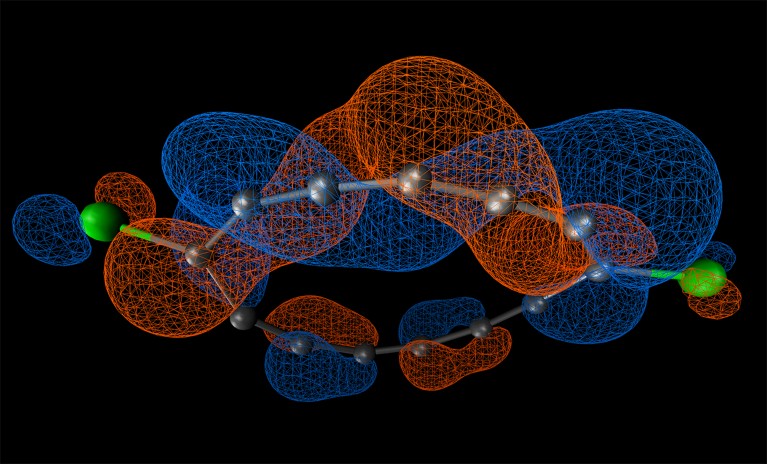
A team at IBM Research in Zurich and the University of Manchester has built the first carbon-based molecule with a 'half-Mobius' twist — a ring of atoms bent at 90 degrees rather than the full 180-degree twist of a standard Mobius strip. The results, published in Science on March 5, describe a loop of 13 carbon atoms whose structure was confirmed by atomic-force microscopy at the atomic scale. The 90-degree twist creates chirality — the molecule exists in two mirror-image versions, like left and right-handed gloves — and makes the molecule more stable because of how electrons fill its orbitals in the twisted state. The geometry is thought to give the molecule unusual magnetic and spin-dependent properties. It can switch between its twisted and untwisted forms under energy input, before relaxing back. Gemma Solomon of the University of Copenhagen called it 'a tremendous achievement.' Rainer Herges, who synthesized the first regular Mobius-strip molecule in 2003, confirmed: 'To my knowledge, this is the first molecule of this kind.'
A Mobius strip is a surface with only one side and one edge, made by giving a ribbon a half-twist (180 degrees) and connecting the ends. Chemists have been fascinated by Mobius-topology molecules since the first one was synthesized in 2003. The electron-sharing behavior of atoms in a loop (conjugated systems) changes dramatically depending on how many twists the loop contains, affecting conductivity, magnetic response, and stability. This 90-degree variant opens up a new topological class that chemists had theorized but never built.
A new hypothesis published this week proposes a counterintuitive answer to one of evolutionary biology's longstanding puzzles: why are vertebrate eyes built so differently from those of all other animals? Most invertebrates — including octopuses and insects — have eyes where photoreceptors point toward the light source. Vertebrate eyes, by contrast, are wired 'backward,' with photoreceptors pointing away from the incoming light and requiring a blind spot for the optic nerve to exit. The new hypothesis suggests this odd design isn't a flaw or evolutionary compromise but a clue: at some point in early vertebrate history, the ancestor of all vertebrates completely lost its eyes, then re-evolved them from scratch using a different developmental pathway. The rebuilt eye independently reached a high-performance solution that happens to work differently from the original. If correct, the hypothesis would explain why vertebrate eyes share almost no developmental genes with invertebrate eyes despite performing the same function — they aren't versions of the same organ, but two separate inventions.
The 'inverted retina' of vertebrates has puzzled biologists for over 150 years. Critics of Intelligent Design have cited it as evidence of evolution's messy, non-engineered character. The standard evolutionary explanation has been that the vertebrate eye evolved from a simpler light-sensing structure and became locked into its backward wiring before performance pressure was strong enough to fix it. The new 'lost and rebuilt' hypothesis challenges that explanation by proposing a more dramatic history of complete visual loss and reinvention.
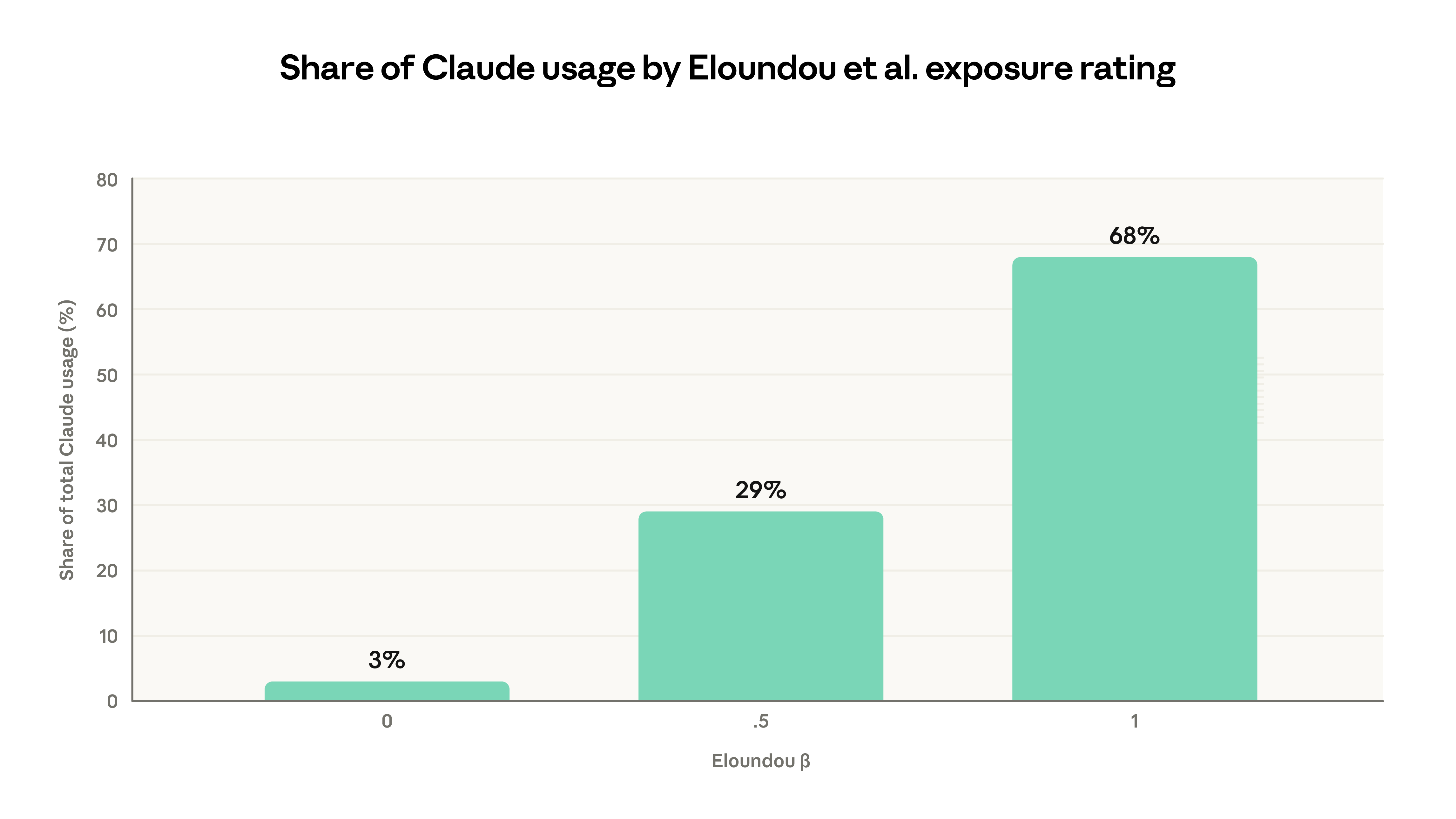
Anthropic published research Thursday introducing a new framework for tracking AI's impact on the labor market, combining data from the federal O*NET occupational database, its own Claude usage logs, and academic estimates of AI capability by task. The key early finding: despite widespread concern about AI-driven unemployment, there is no systematic increase in unemployment among workers in highly AI-exposed occupations since late 2022. However, suggestive evidence shows that hiring of younger workers has slowed in those same occupations — potentially the early signal of a structural shift. AI is also far from reaching its theoretical capability ceiling; real-world usage covers only a fraction of what is technically feasible. Occupations with the highest 'observed exposure' — Anthropic's new composite measure — are projected by the Bureau of Labor Statistics to grow less through 2034. The most exposed workers tend to be older, female, more educated, and higher-paid. Anthropic says it plans to revisit these analyses periodically as effects become clearer.
Measuring AI's labor impact is notoriously difficult: AI adoption is gradual, confounded by business cycles and policy changes, and the effects may initially appear as reduced hiring rather than layoffs (which don't show up in unemployment data until later). Earlier studies — including one projecting that 25% of US jobs were vulnerable to offshoring — proved inaccurate over a decade of observation, cautioning against overconfidence in any single methodology.
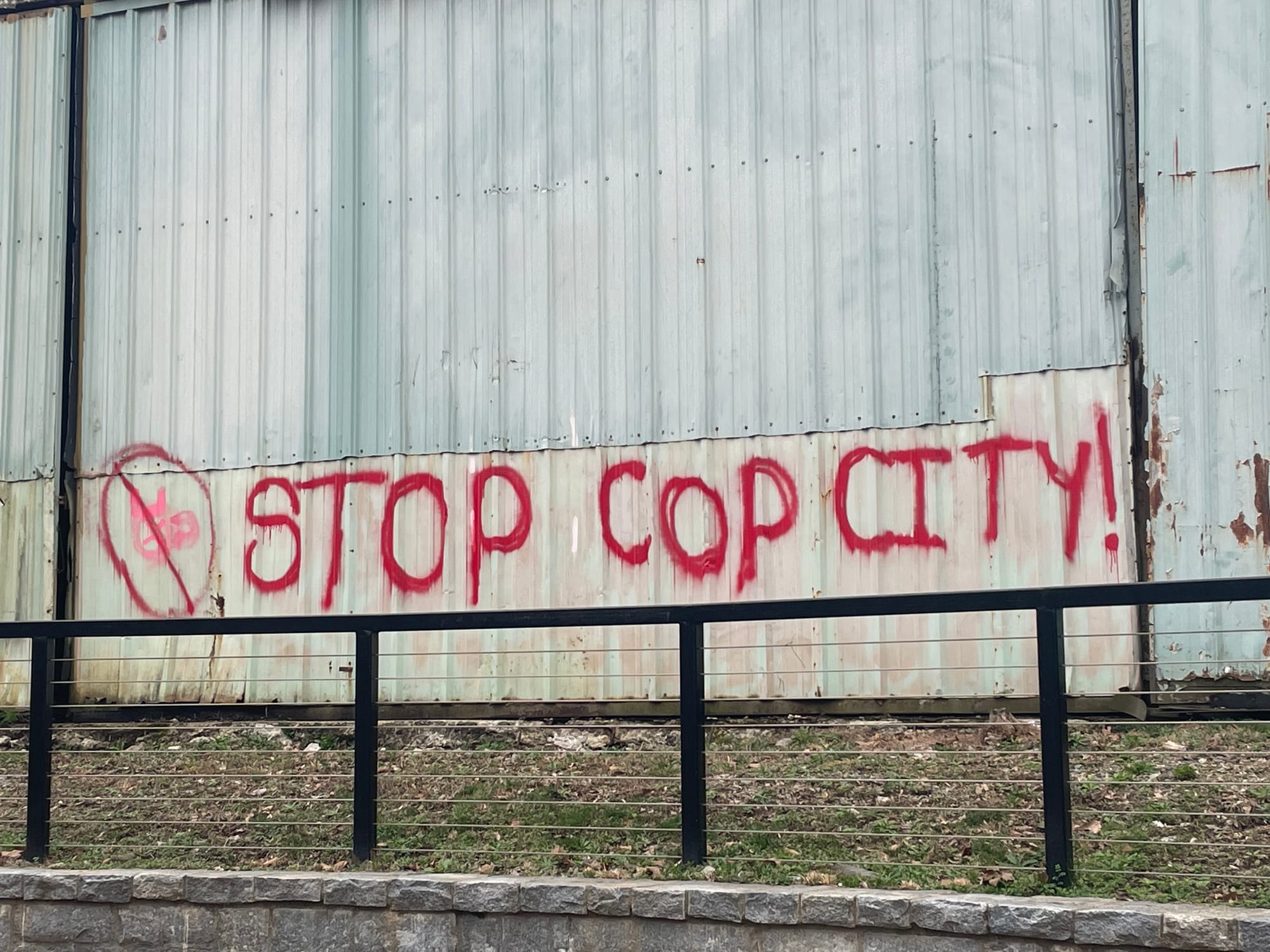
Privacy-focused email provider Proton Mail handed payment data linked to an anonymous 'Stop Cop City' activist to Swiss authorities, who then passed it to the FBI, according to court records reviewed by 404 Media. The data helped unmask the identity behind what the person thought was an anonymous Proton account. Stop Cop City is a loose movement opposing the construction of a large Atlanta police training facility. Proton, headquartered in Geneva and marketed as a secure, privacy-first alternative to Gmail, complied with a lawful Swiss legal order — it does not claim to protect users from lawful requests in its jurisdiction. The case illustrates a gap many users misunderstand: Proton encrypts email content end-to-end, but payment and account metadata (billing records, IP logs) can still be compelled through Swiss legal channels. This is at least the second high-profile instance in which Proton data disclosed through Swiss legal process led to identifying activists who believed their identity was protected.
Proton Mail was founded in 2013 by scientists from CERN and MIT as a response to revelations about NSA mass surveillance. Switzerland's privacy laws are stronger than those in the US or EU, but Swiss courts can still compel companies to provide user data in criminal investigations. A previous case in 2021 involved Proton disclosing IP address data linked to a Catalan activist to Spanish authorities. The lesson: no email provider can protect users from their own country's legal system, and 'private' does not mean 'lawful-request proof.'
Academic journal editors are increasingly finding that submitted papers contain references to articles that do not exist — fabricated by AI tools and formatted convincingly enough to fool casual inspection. The problem has grown severe enough that editors are now catching fake citations early in review rather than waiting until final checks. AI systems will generate plausible-sounding author names, titles, journal names, volume numbers, and page ranges that follow academic convention perfectly but point to nothing real. The issue compounds existing peer review pressures, since checking each reference now requires manual verification of dozens of citations per submission. The phenomenon is distinct from AI-assisted plagiarism: the papers may be original writing, but their scholarly apparatus — the evidence base — is fabricated. Editors report that the frequency is rising sharply, and multiple journals across disciplines have begun requiring authors to certify that all references were individually verified before submission.
AI hallucination of citations has been documented since at least 2023, when a US lawyer filed court briefs that cited nonexistent cases generated by ChatGPT. The academic context is more subtle because fake citations are harder to catch than fake legal citations — academic databases are vast and not all papers are freely searchable. The issue is particularly severe in fields where citation counts and specific references serve as proxies for intellectual credibility.
The National Institutes of Health sent a letter this week to leaders of NIH Fellows United-UAW saying the agency will no longer recognize their union, claiming the fellows are 'not employees' and 'not employed in an agency' — and therefore the union 'should never have been certified.' NIH said it will also file a petition with the Federal Labor Relations Authority seeking formal decertification. The union, formed in early 2024 following a wave of graduate and postdoctoral organizing at US universities, represents about 5,000 postbaccalaureate, predoctoral, and postdoctoral fellows. Union leaders called the move 'part of a coordinated effort by the current administration to dismantle federal worker protections,' and noted that the existing collective bargaining agreement remains in effect. The legal argument — that grant-funded fellows are not statutory employees — is contested; union lawyers say the contract is binding and NIH is acting unlawfully.
The NIH fellows' union is one of several research-worker unions that formed after the pandemic at major US institutions, inspired partly by successful organizing drives at Ivy League universities. The 'are grant-funded researchers employees?' question is genuinely contested in labor law: fellows receive stipends under training grants rather than salary lines, which some agencies and courts have treated differently from employment. If the decertification succeeds, it would affect roughly 5,000 researchers who work directly in NIH labs on federally funded projects.
Iran launched at least four drones into the Azerbaijani exclave of Nakhchivan on Thursday, hitting the airport terminal and detonating another near a school and injuring civilians. Azerbaijan's President Ilham Aliyev called the strikes an 'act of terror,' demanding an explanation and an apology, and on Friday ordered the withdrawal of Azerbaijani diplomatic staff from Tehran and Tabriz for their safety. The military was placed on maximum combat readiness. Aliyev also made unusually direct statements about Iran's estimated 20-25 million ethnic Azerbaijanis, suggesting Baku's patience with Tehran has snapped. Iran denied responsibility and suggested an Israeli false-flag operation. Nakhchivan is a geographically isolated Azerbaijani territory — not connected to the main country — sharing borders with Iran, Turkey, and Armenia, making it particularly exposed. Turkey, a NATO member, borders Nakhchivan; Iran striking there risks pulling NATO-adjacent territory into the conflict. Azerbaijan itself borders Russia, Iran, Armenia, and Georgia, making the situation strategically complex.
Nakhchivan is an Azerbaijani exclave separated from the rest of Azerbaijan by Armenian territory. It shares a border with both Iran and Turkey. Azerbaijan and Iran have had tense relations for years over Iranian Azerbaijanis (the country's largest ethnic minority), Azerbaijani ties to Israel (which Iran views as hostile), and pipeline politics. The exclave's proximity to Turkey — whose territory directly abuts Nakhchivan — adds a NATO dimension to any escalation there. Iran's denial and false-flag claim are consistent with its public posture throughout the war.
Erik Hoel argues in a new essay that the six years since GPT-3's release offer enough lived experience to evaluate whether large language models represent a genuine intelligence revolution — and the evidence from writing, where AI should have struck first and hardest, says they do not. The world is not in a glut of excellent writing; it is in a dearth of it. AI has produced mountains of 'slop' and improved the efficiency of already-competent writers, but the upper bound of writing quality has not moved. No 'move 37' moment has emerged — no creative leap that surprises humans the way AlphaGo surprised Go players. Hoel distinguishes approximation from automation: LLMs can produce something that looks like a children's book, but that approximation has remained constant for years while hype has escalated. If LLMs were genuinely a new source of intelligence, he argues, this weathervane domain would have shown it. Instead, the pattern suggests they are sophisticated tools that amplify and mirror the quality of the humans using them — not independent intelligences that raise the ceiling.