The Pentagon has asked the White House for another $200 billion to fund the Iran war, a figure large enough to turn what had felt like an open-ended military operation into an immediate fiscal fight on Capitol Hill. AP reports that Defense Secretary Pete Hegseth did not directly confirm the total at Thursday's briefing, but said the administration would return to Congress to make sure the campaign is fully funded. That money would come on top of the extra defense funding Republicans already passed last year, and lawmakers still have not formally authorized the war itself. The request matters because it forces Congress to move from rhetoric to ownership: approving it would mean accepting a long, expensive campaign even as federal debt sits above $39 trillion and unease is growing inside both parties about strategy, costs, and how far the conflict could spread.
Since the war began on February 28, the conflict has widened from direct strikes on Iran into attacks affecting Gulf energy infrastructure and shipping. The new funding request is the clearest sign yet that Washington is preparing for a longer campaign.
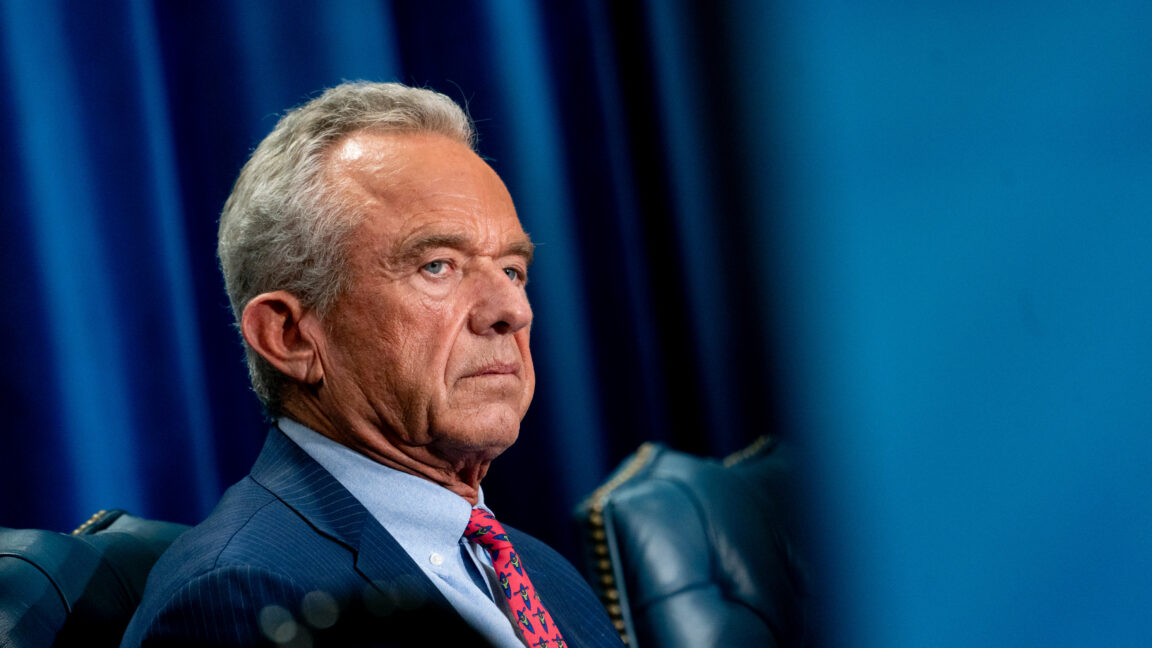
A court fight over vaccine policy is turning into a wider story about how much scientific review capacity Robert F. Kennedy Jr. has torn out of the federal health system. Ars Technica, citing a new Public Citizen report, says HHS has terminated 75 of its 273 advisory committees, including panels tied to NIH grant review, CDC disease guidance, FDA oversight, long Covid, Alzheimer's disease, and rural health. At the same time, a federal judge has temporarily blocked Kennedy's handpicked ACIP members and the vaccine-policy changes they made, and Scientific American reports that former vice chair Robert Malone now says the administration may disband and recreate the panel instead of appealing. The deeper issue is not just bad appointments. It is that independent structures that screen evidence, shape grant priorities, and determine what gets recommended or paid for are being weakened across the department all at once.
Last June, Kennedy fired all 17 outside experts on ACIP, the federal vaccine panel whose recommendations affect insurance coverage and school rules. A judge this week said his replacement process likely violated FACA, the law requiring advisory committees to be fairly balanced.
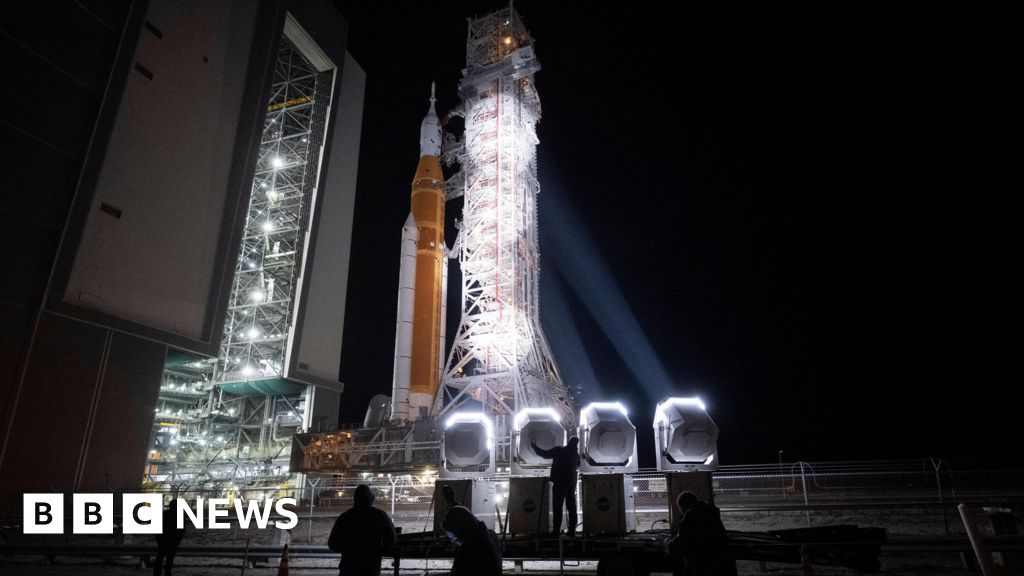
NASA has started rolling the 98-meter Space Launch System and Orion spacecraft back out to Pad 39B after bringing the vehicle indoors to fix the helium-system problem that killed the last launch attempt. The crawl itself is a small engineering spectacle: a roughly 5,000-ton launch stack inching four miles across Kennedy Space Center on a crawler built for the Saturn V era, moving at about 1 mile per hour so engineers can catch any dangerous sway or shift. Once it reaches the pad, teams will rerun pressure checks on the repaired helium system and rehearse parts of the countdown using the same ground computers and networks that will control launch day. If those tests hold, NASA says the earliest launch opportunity is April 1. That would set up the first crewed mission around the Moon in more than half a century.
Artemis II is the full dress rehearsal for NASA's lunar-return program: four astronauts will fly around the Moon without landing. The mission was scrubbed in March after engineers found a helium-system issue and rolled the vehicle back for repairs.
Trump officials keep arguing that the United States needs one national AI rulebook instead of a patchwork of state laws, but the immediate effect has been to kill state bills before Washington has produced any federal substitute. The Dispatch reports that the White House leaned on Utah Republicans to drop the Artificial Intelligence Transparency Act after it cleared committee, and similar pressure surfaced around a Florida AI Bill of Rights. Those proposals were not fringe ideas. They included safety-plan disclosures, whistleblower protections, child-protection measures, and rules for when people must be told they are interacting with AI. What makes the story politically interesting is that the backlash is now coming from Republicans as much as Democrats. State lawmakers who would normally welcome federal preemption are saying the administration's tactics feel high-handed and constitutionally shaky when Congress still has not delivered a national framework to replace the bills it is helping sink.
Trump's December executive order called for a single, "minimally burdensome" national AI framework and urged federal agencies to challenge state laws they see as obstructive. Critics say that has created a vacuum in which even modest red-state guardrails are being discouraged before federal standards exist.
Astral, one of the most important infrastructure startups in the Python world, says it has entered an agreement to join OpenAI as part of the Codex team. That makes this more than another acqui-hire. Astral says its tools, including Ruff, uv, and ty, have grown to hundreds of millions of downloads per month and become part of many developers' default workflow. OpenAI's pitch is that bringing those tools closer to Codex will let AI agents work more directly with the build, package, and code-quality systems programmers already use every day. The question now is whether a company that won trust by building fast, opinionated open-source tools can stay credible inside a much larger AI platform company. Astral is clearly aware of that tension: its announcement spends almost as much time promising continued open development and support for the broader Python ecosystem as it does selling the strategic logic of the deal.
Astral was founded about three years ago and quickly became influential by building extremely fast developer tools for Python. The acquisition also lands in a broader competition between OpenAI's Codex efforts and Anthropic's growing coding-tool stack.
Shu Xiaokun, a heavily US-funded life scientist who was only recently elevated to the Herfindahl Endowed Chair at UCSF, is moving back to Shanghai to join Fudan University as a distinguished professor and founding director of a new biotechnology institute. What makes the move notable is not simply that a Chinese-born researcher is returning home. Shu had already built a highly successful American career, won major support from the NIH, and worked in the orbit of Nobel laureate Roger Yonchien Tsien, making him exactly the kind of senior talent US universities usually expect to keep. Fudan says he will lead the Institute of Chemical and Open Biotechnology Research and Application. The broader significance is symbolic as much as practical: China is not only trying to stop brain drain. It is increasingly confident enough to poach scientists with entrenched US positions, funding histories, and institutional prestige.
Shu built widely used fluorescent-protein tools earlier in his career and was recently promoted at UCSF. Fudan is using the appointment to build higher-end biotechnology capacity in Shanghai rather than simply fill an existing department slot.
The Education Department says the Treasury Department will take over collection operations for defaulted federal student loans, the first concrete phase of a broader plan to move more of the government's $1.7 trillion loan machinery out of Education and into other agencies. The immediate numbers are large enough to matter on their own: roughly 9 million borrowers are already in default, and Treasury will assume operational responsibility for the Default Resolution Group and the systems that support those borrowers. But the institutional point is bigger than collections. The Trump administration has been steadily signing interagency deals that make Education less central to the day-to-day mechanics of student aid, which looks a lot like an attempt to make the department easier to hollow out before Congress ever votes on formally abolishing it. Borrower advocates worry that a transfer driven by administrative ideology will be less careful about protections, errors, and accountability.
Treasury already disburses federal loan money and shares tax data used for income verification. Congress, not the White House, would still have to eliminate the Education Department itself, but shifting core operations out of it changes the politics of that fight.
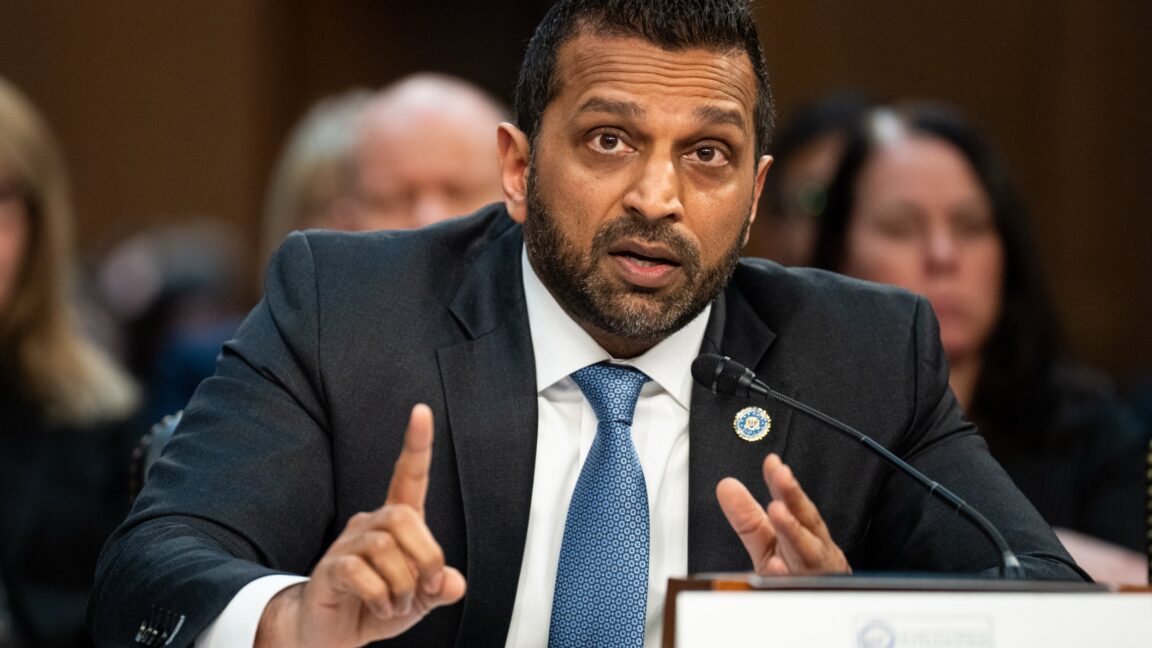
FBI Director Kash Patel told senators that the bureau once again buys commercially available location data on Americans, reopening a surveillance loophole that civil-liberties critics thought had at least partly closed after the agency's earlier retreat from the practice. The exchange matters because it exposes how little the 2018 Supreme Court ruling on phone-location privacy settled in practice. The government may need a warrant to force wireless carriers to hand over cell-site records, but agencies can still get similar movement histories from data brokers that collect signals from apps and advertising networks. Patel defended the purchases as legal and useful for investigations; Sen. Ron Wyden called them an outrageous end-run around the Fourth Amendment and renewed his push for legislation banning warrantless purchases. The broader lesson is that privacy law is still built around who holds the data, not around how revealing the data itself has become once brokers package and sell it.
Commercial location databases are assembled from apps and ad-tech systems rather than from court orders. Congress has debated closing that loophole for years, but agencies keep using purchased data while reform bills stall.
A new meta-analysis suggests synthetic chemical pollution is now a routine part of ocean chemistry rather than an isolated problem near a few dirty coastlines. Nature reports that human-made compounds used in products such as plastics and personal-care goods were found across the full range of marine environments reviewed by researchers, and that in coastal waters they can account for as much as 20 percent of dissolved organic matter. That is an unnerving metric because it means the issue is not just visible trash, oil, or a few famous toxic hotspots. It means part of the ocean's basic chemical background, the material microbes feed on and transform, now contains a large synthetic share in some places. The practical concern is that these compounds can reshape microbial communities and nutrient cycling long before the damage is obvious to beachgoers, fisheries, or regulators looking only for spectacular die-offs and surface-level pollution events.
Dissolved organic matter is the carbon-rich mix of compounds drifting through seawater. If synthetic chemicals occupy a larger share of that pool, they can change how microbes process carbon and how marine food webs function even without dramatic visible pollution.
Foreign drugmakers are not treating China as a market they can serve from elsewhere anymore. They are increasingly building parallel production systems inside the country itself. SCMP reports that AstraZeneca will add new manufacturing and innovation facilities in Guangzhou and Shanghai, including a plant for targeted radioactive prostate-cancer treatments, as part of a wider push by multinational pharmaceutical companies to localize supply chains for China. That strategy reflects more than optimism about demand. It is a hedge against a world in which trade restrictions, sanctions, export controls, or political shocks can disrupt cross-border flows of critical medicines. Companies still want access to Chinese patients, but they increasingly want that access insulated from geopolitical turbulence. The result is a version of globalization that is not really global at all: instead of one integrated supply chain, firms are building separate, regionally self-sufficient systems on different sides of the political divide.
AstraZeneca previously pledged about $15 billion for China through 2030. The new facilities in Guangzhou, Lingang, and Zhangjiang fit a broader push by both companies and Chinese officials to move more advanced biotech manufacturing and research onshore.