Israel says it carried out overnight strikes on a command centre and weapons stored at Syrian army compounds after clashes in southern Syria that it said threatened Druze civilians in Suweida province. Damascus called the attack an "outrageous" violation of sovereignty and said Israel was using flimsy pretexts to hit state infrastructure. The episode matters because it widens the already unstable regional map around the Iran war: Israel is no longer only trading blows with Iran and its direct allies, but is also signaling that Syria's new authorities could face military punishment if sectarian violence near the Israeli frontier spins out of control. That raises the risk that a local communal clash in southern Syria turns into a broader cross-border confrontation involving the Syrian state, Israel, and armed Druze groups.
The Druze are a small religious minority concentrated in southern Syria, Lebanon, and Israel. Since Assad's fall, Israel has repeatedly signaled that harm to Syrian Druze could trigger military intervention.
After a comparatively calm 2025 for U.S. climate disasters, forecasters now see the ingredients for a much messier stretch: a record-threatening early-season heat wave already building across the West, plus models pointing to a strong El Nino later this year. Ars reports that the National Weather Service expects temperature records to fall across dozens of locations, with heat warnings for parts of California, Arizona, and Nevada and fire warnings farther inland. The bigger concern is not any single event but the combination. An intense spring ridge over the West, followed by a major Pacific climate swing, could scramble rainfall, wildfire, and storm patterns well into next year. In practical terms, that means emergency planners and ordinary households alike may be moving from last year's relative lull into a far less predictable regime.
El Nino is the warm phase of a Pacific Ocean cycle that can reshape weather far beyond the tropics. In a hotter climate, those swings can layer on top of already elevated heat and fire risk.
NASA's Perseverance rover has spent years exploring the obvious fan-shaped delta in Jezero crater, but its ground-penetrating radar now suggests that another, older delta is buried tens of meters below it. Ars reports that the finding comes from RIMFAX, which kept sounding the subsurface as the rover drove across the crater's Margin unit. If that interpretation holds, Jezero did not host a single simple episode of water flow. It may have recorded multiple rounds of sediment deposition and erosion, which is exactly the sort of layered history astrobiologists want when looking for preserved biosignatures. The result is interesting not just because it makes Jezero geologically messier, but because a buried delta offers a quieter, protected environment where traces of ancient microbial life may have been better shielded from the radiation and surface chemistry that erase evidence over time.
Jezero crater is thought to have held a lake billions of years ago. Perseverance is exploring it because deltas can trap fine sediments and organic traces that are unusually good at preserving signs of past life.
Google has started testing AI-generated replacement headlines inside ordinary Search results, not just in its more obviously experimental products. The Verge found multiple cases where Google swapped publishers' original headlines for new ones written by the search engine itself, sometimes flattening nuance or making the article sound more supportive of a product or claim than it really was. Google told The Verge the rollout is a "small" and "narrow" experiment that has not been approved for broader launch, but the direction is clear. The issue is not cosmetic. Headlines carry framing, legal caution, and editorial judgment, and publishers use them to signal what an article actually says. If Search increasingly rewrites them on the fly, Google is no longer just indexing the web's news output. It is starting to editorialize it at the moment of discovery.
Google had already experimented with AI-generated text in Discover and AI Overviews. Extending that behavior into the classic "10 blue links" changes a much more familiar part of the web's information pipeline.
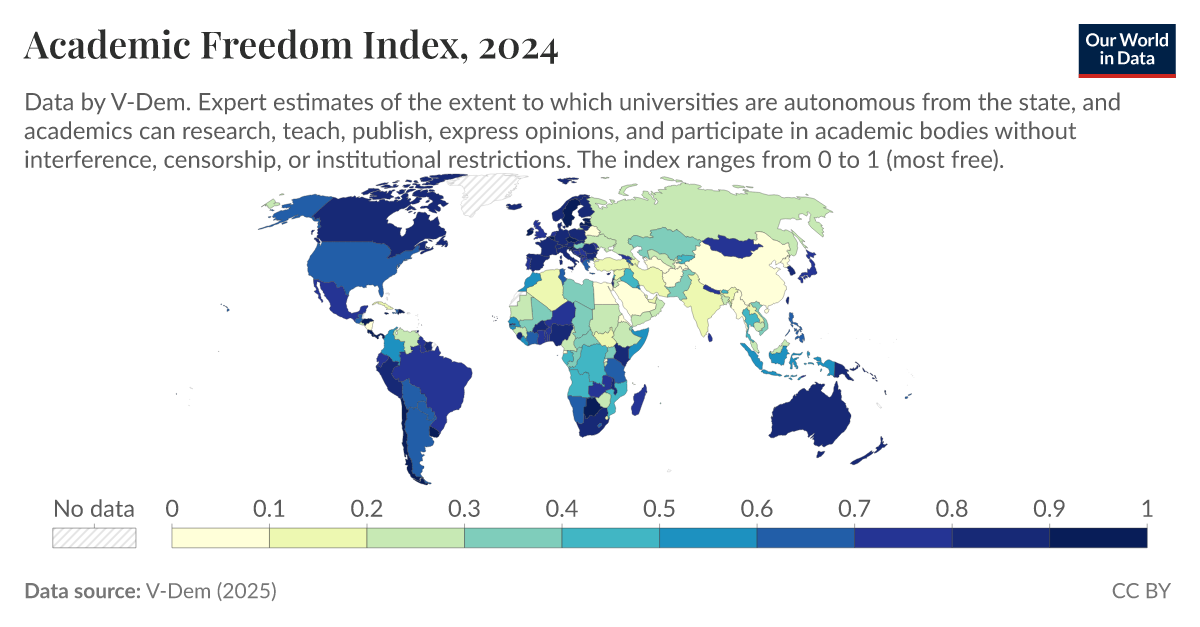
A new Academic Freedom Index summary says U.S. university autonomy has fallen by roughly 50 percent since 2015, leaving the country rated only "moderate" on that measure and deteriorating faster than places such as Hungary, India, and Turkey. The finding is jarring less because America has become an obvious academic police state than because the erosion has happened through ordinary politics: state laws targeting DEI, curriculum oversight fights, trustee activism, funding leverage, and growing willingness by elected officials to treat campuses as directly governable institutions. In practice, autonomy is the buffer that lets universities decide what gets taught, researched, funded, and published without immediate partisan command. Once that buffer weakens, every governor, legislature, or donor coalition has a clearer path to reshaping campus decisions that used to be insulated from day-to-day political pressure.
The index tracks both individual freedoms and institutional ones. A decline in autonomy does not just affect professors' speech; it changes who effectively controls hiring, governance, research priorities, and curricular boundaries.
Security researchers have uncovered a powerful iPhone exploitation chain called DarkSword that was already being used by Russian-linked hackers and could be repurposed by others with alarming ease. Ars reports that the technique silently compromises phones that visit infected websites and still works against devices running iOS 18, which Apple said last month still covered close to a quarter of active iPhones. Researchers say the exploit components were exposed carelessly enough that other attackers could host them on their own servers and start targeting victims without much original work. Apple has now shipped fixes, including emergency updates for older devices that cannot run iOS 26, but the story is a reminder that smartphone security failures do not stay niche for long. Once a turnkey exploit escapes into the open, lagging updates become a mass vulnerability rather than a specialist problem.
Apple says current security updates block both DarkSword and the related Coruna toolkit, and Lockdown Mode also stops the chain. The remaining risk sits mostly with users on older hardware or delayed software updates.
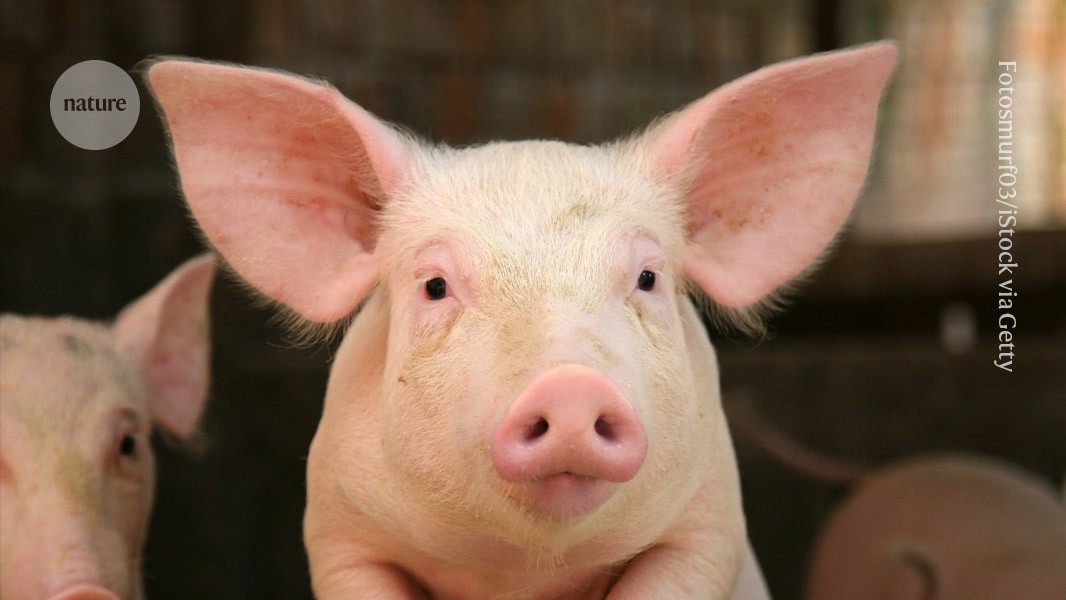
Researchers have grown replacement oesophagus tissue that restored swallowing in pigs, a result that points toward a much harder kind of regenerative medicine than the field usually celebrates. Nature reports that the engineered tissue could eventually help children born with gaps in the upper digestive tract or adults whose swallowing muscles are damaged by cancer and its treatment. What makes the result significant is that the oesophagus is not just a passive tube. It has to coordinate structure, muscle, lining, and movement well enough to move food safely downward. Getting tissue to survive in a lab dish is one challenge; getting it to integrate into a living animal and support a basic function such as swallowing is a more serious test. The work is still far from routine human use, but it suggests regenerative medicine is inching from proof-of-concept organs toward repairs that would immediately matter in daily life.
Rebuilding the oesophagus is especially difficult because the replacement tissue must survive surgery and also restore coordinated swallowing. Existing options for severe damage often require complex reconstruction using other body tissue.
China is bringing 12 more commercial banks into the e-CNY system, a move that makes the digital yuan look less like a controlled pilot and more like an ordinary layer of retail finance. SCMP reports that the added banks will handle wallet opening, currency exchange, and payment processing as Beijing pushes the project from a cash substitute toward something closer to an interest-bearing deposit instrument. That shift matters because it changes the policy question. A digital currency used only in narrowly managed trials is a showcase project; one routed through mainstream banks begins to touch the real plumbing of household payments and deposit competition. The expansion also comes alongside formal legal recognition in a draft Finance Law and explicit support in the latest five-year plan, suggesting that Beijing is trying to move the e-CNY from experimental tech policy into normal financial infrastructure.
China launched the digital yuan as a state-backed retail payment tool. Bringing more commercial banks into day-to-day operations is important because banks, not central banks, usually sit at the front line of consumer finance.
Prosecutors in Henan have formally indicted Shi Yongxin, the longtime former abbot of Shaolin Temple, on charges including embezzlement, misappropriation of funds, and bribery. The case lands four months after Shi's arrest and caps one of the most spectacular collapses of a religious celebrity in contemporary China. Shi was not a quiet temple figure. Over more than two decades he turned Shaolin into a global commercial brand with business interests ranging from entertainment to real estate, which earned him the nickname "CEO monk" and made him a symbol of both modernized Buddhism and its excesses. The indictment matters beyond scandal value because it signals that Chinese authorities are not treating the affair as a private moral embarrassment. They are recasting it as a criminal and institutional failure serious enough to justify formal state intervention at one of the country's most iconic religious sites.
Shi led Shaolin for more than 25 years and became famous for aggressively commercializing the temple's name and martial-arts brand. That strategy brought money and attention, but also years of controversy over finance, discipline, and credibility.
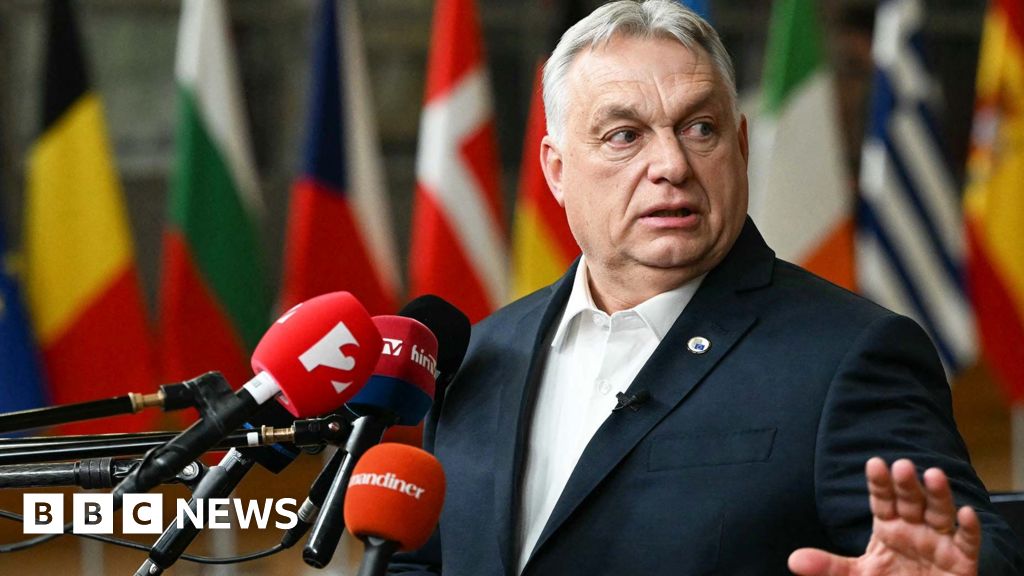
Hungary's Viktor Orbán is holding up an EU loan package for Ukraine while demanding repair of a pipeline that carries Russian oil through Ukraine into Hungary, a stance critics inside the bloc are calling blackmail. The immediate quarrel is over whether energy transit grievances can be used to freeze wider wartime support, but the deeper issue is institutional. The EU still needs unanimity for some of its most sensitive foreign-policy financing decisions, which gives a determined spoiler enormous leverage at exactly the moments when speed and cohesion matter most. Orbán's threat also exposes how the war keeps looping back into Europe's unfinished dependence on Russian energy infrastructure. Even after years of sanctions politics and diversification rhetoric, a damaged pipeline can still become a bargaining chip big enough to jam a central part of the bloc's Ukraine strategy.
Orbán has repeatedly used EU unanimity rules to extract concessions on sanctions, funding, and rule-of-law fights. The pipeline dispute gives him a fresh lever at a moment when Kyiv still depends heavily on external financing.