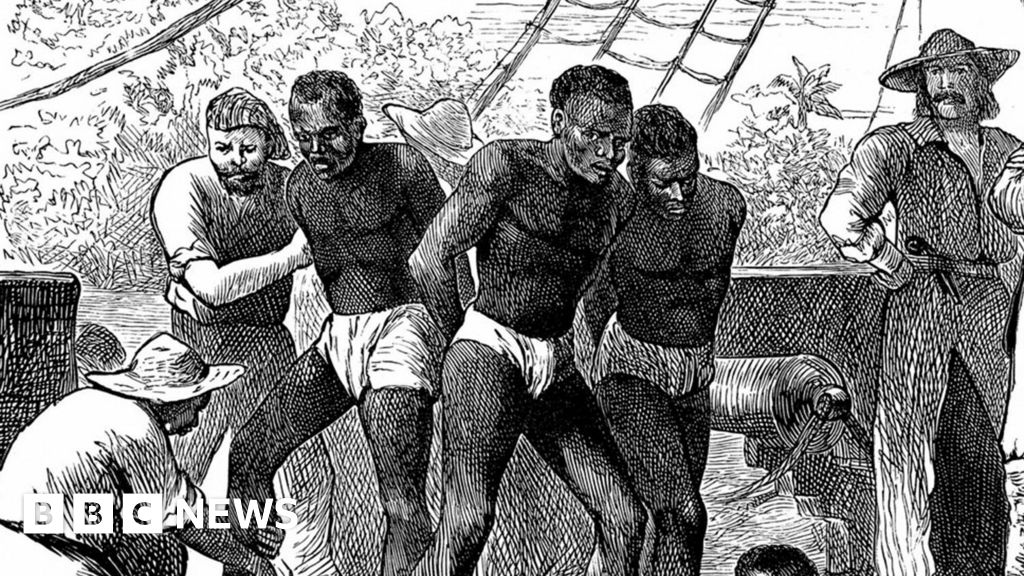
The UN General Assembly voted 123-3 to describe the transatlantic slave trade as "the gravest crime against humanity," adopting a Ghana-backed resolution that pushes the reparations debate beyond symbolic remembrance. The measure urges governments to consider formal apologies and contributions to a reparations fund, and it also calls for the return of looted artefacts. The politics of the vote are almost as telling as the text. The United States, Israel, and Argentina opposed it, while 52 countries abstained, including Britain and several EU states whose economies were deeply tied to Atlantic slavery. That split shows how hard it remains to turn historical acknowledgment into material obligation. Supporters framed the resolution as overdue recognition of a system that captured 12 to 15 million Africans and killed more than 2 million during the Middle Passage. Opponents avoided defending slavery itself and instead resisted language that could strengthen future compensation claims.
The transatlantic slave trade moved millions of Africans to the Americas between the 1500s and 1800s. Reparations campaigns have existed for decades, but major Western governments have generally preferred apology debates to any commitment involving money or returned cultural property.
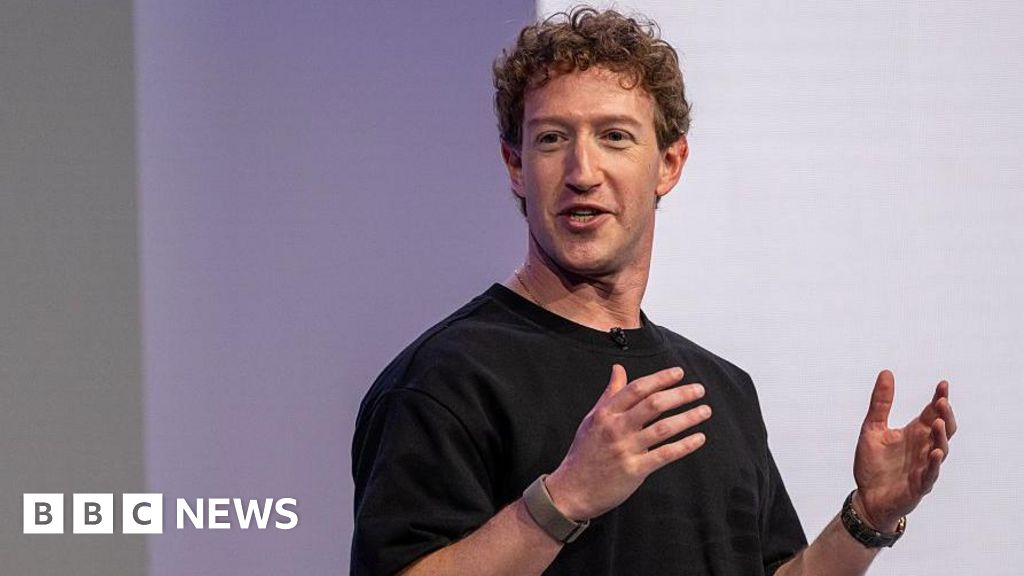
A New Mexico jury ordered Meta to pay $375 million after finding that Facebook and Instagram misled users about child safety and exposed minors to sexual predators and explicit material. The size of the verdict matters, but the more important point is that a state government has now won what officials are calling the first successful case of its kind against Meta over platform safety. BBC reports that the seven-week trial leaned on internal company research and testimony from former Meta executive Arturo Bejar, who said the company had long-known safety weaknesses. State lawyers said the penalty reflected thousands of violations under New Mexico's consumer-protection law, at up to $5,000 each. Meta says it will appeal. Even so, the case creates a template for other states: instead of arguing abstractly that social media is harmful, prosecutors can tie platform design and internal knowledge to specific consumer-protection claims and real monetary penalties.
States have increasingly tried to regulate or sue social platforms over harms to minors, but those efforts often run into federal pre-emption and speech-law limits. Consumer-protection law offers a narrower route focused on what companies knew and how they described their products to users.
Halfway through the US fiscal year, the NIH has obligated only about 15 percent of the outside-research money it is expected to award, according to figures cited by the Association of American Medical Colleges and reported by Inside Higher Ed. That is alarming because the NIH is the central funding pipe for university biomedical research, and a delay at this scale does not just postpone paperwork. It leaves labs unsure whether to hire, renew projects, or order equipment. The fear in the research community is not only austerity. It is that the agency could wait too long and then rush billions of dollars into multiyear grants near the end of the year, distorting priorities and creating avoidable chaos. NIH leadership has pushed back, saying critics are overstating the problem. But when the main federal science funder is moving this slowly six months into the year, universities do not need a formal cut to feel the shock.
The National Institutes of Health is the dominant federal backer of US biomedical research. Universities build hiring plans, graduate training, and multiyear lab projects around its grant cycle, so timing problems can destabilize work even before any official budget reduction arrives.
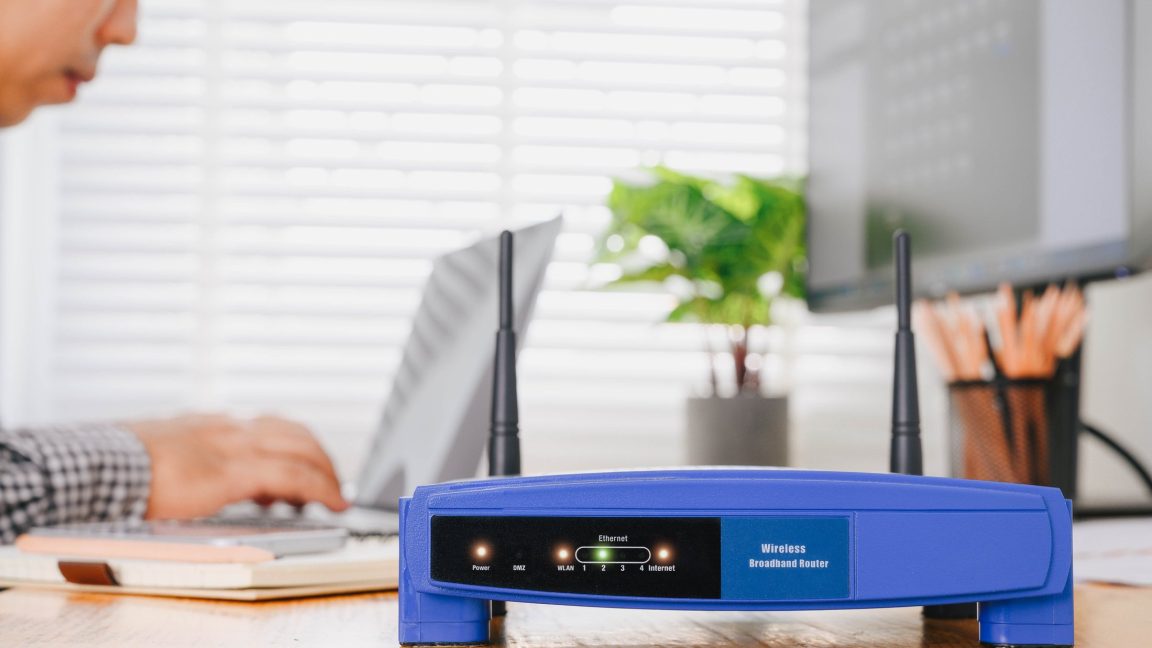
The FCC has moved consumer Wi-Fi routers made outside the United States onto its covered list, effectively blocking the import and sale of most new models unless the Trump administration grants exemptions. Ars Technica reports that the decision reaches far beyond one brand or one security scandal. Almost every major home-router vendor depends on foreign manufacturing, so the rule gives Washington unusual leverage over a dull but essential piece of digital infrastructure that sits in millions of living rooms. Supporters can frame the move as supply-chain hardening and telecom security. The practical effect, though, is to turn a commodity consumer device into a licensing question that federal officials can approve or deny case by case. That means higher uncertainty for sellers, fewer straightforward choices for buyers, and a new precedent for using national-security tools inside ordinary consumer electronics. A router used to be a boring purchase. The FCC has turned it into industrial policy.
The FCC's covered list was originally built to restrict telecom gear linked to national-security risks. Applying that framework to ordinary home routers expands it from network backbone equipment into consumer hardware bought at retail scale.
Google now says the point at which a quantum computer can break today's most common public-key cryptography may arrive around 2029, pulling the industry's migration clock forward by years. Ars Technica reports that the company is urging organizations to move off legacy internet encryption systems faster than many had planned, because the real risk is not waiting until the breakthrough arrives. Attackers can steal encrypted data now and keep it until future machines can decode it. That makes the problem less like a sudden doomsday switch and more like a long, quiet exposure window already underway. Google's revised timetable does not mean practical code-breaking hardware exists today, and other researchers will argue over the exact date. But when one of the world's biggest infrastructure companies publicly tightens its estimate this sharply, banks, governments, cloud providers, and anyone keeping long-lived secrets lose another excuse to delay their post-quantum migration.
Post-quantum cryptography aims to replace current internet encryption methods with schemes designed to resist future quantum attacks. The migration is slow because secure systems are buried inside browsers, cloud services, banking infrastructure, government networks, and long-lived devices.
Spain's final postmortem on the 2025 Iberian blackout says the disaster was not a mystery attack but a policy-made failure: too much grid equipment was allowed to drop offline right at the edge of normal conditions. Ars Technica writes that the report points to planning and regulatory choices that left the system short of enough hardware committed to voltage control, so a manageable disturbance cascaded into a massive outage across Spain and Portugal. That conclusion matters because it shifts the lesson from cyberwar paranoia to a duller and more uncomfortable truth. Modern power systems can fail because market rules and reliability obligations drift apart. When operators do not require enough plants or devices to provide stabilizing services, the grid can look efficient in ordinary hours and brittle in the exact moment it needs slack. The blackout therefore reads less like a freak event than like a case study in what happens when resilience is treated as optional until the day it is needed.
Voltage control is one of the grid services that keep power systems stable when conditions suddenly change. If too few plants or devices are assigned to provide it, a small disturbance can trigger automatic disconnects and spread much more widely than expected.
The Supreme Court unanimously ruled that Cox Communications is not liable for the massive music piracy carried out by some of its subscribers, ending the most aggressive version of the record industry's argument against internet providers. The Verge reports that the justices said Cox neither encouraged infringement nor built a service around it; it provided general internet access that customers used for many lawful purposes as well as illegal downloading. That distinction matters because the labels had previously won a $1 billion jury verdict, and if that theory had survived, internet providers could have faced heavy pressure to police users more aggressively or cut off customers on thinner evidence. The Court did not bless piracy. It rejected the idea that being a conduit for a mixed-use network automatically makes an ISP responsible for everything that flows through it. For the music industry, that narrows one of its strongest legal tools. For the rest of the internet, it avoids a more surveillance-heavy equilibrium.
Record labels sued Cox in 2018, arguing that repeated subscriber infringement notices should have forced the company to terminate more users. A jury awarded $1 billion in 2019, but later appeals weakened the ruling and sent the case toward the Supreme Court.
A group of scientists slowly rewarmed and studied pieces of gerontologist L. Stephen Coles's cryopreserved brain, not because reanimation is around the corner but because brain cryonics may turn out to be more useful for organ preservation than for immortality. MIT Technology Review reports that Coles's brain had been stored in Arizona at roughly -146 degrees Celsius for more than a decade before researchers lifted it from storage, photographed it, and examined tissue from it. The story gets attention because it sounds like science fiction, but the practical scientific angle is much more grounded. If researchers can learn how frozen tissue survives, where it cracks, and which structures remain intact, the payoff may be better preservation methods for transplant organs rather than future resurrection. That makes the episode a good example of how fringe ambitions sometimes feed mainstream medicine. Cryonics still has no plausible path to bringing a person back. Cryopreservation research may nonetheless improve the ordinary problem of keeping biological material viable.
Cryonics companies store bodies or brains at very low temperatures in the hope that future technology might repair and revive them. Mainstream researchers are far more interested in whether similar preservation methods can extend the usable life of organs for transplant.
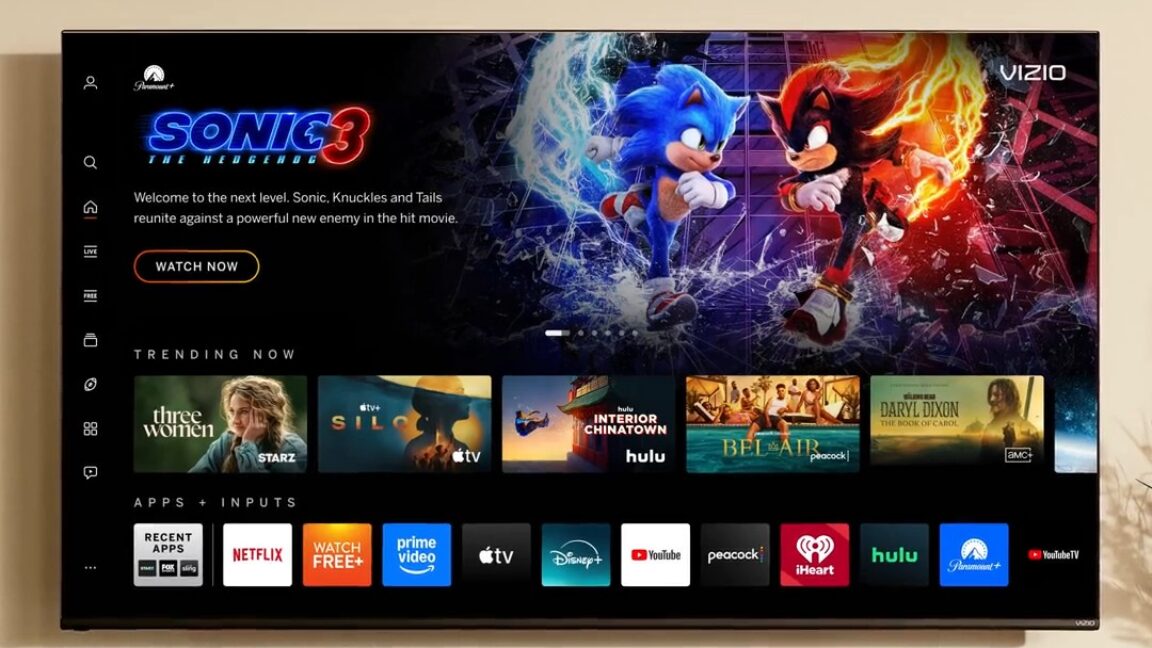
People buying new Vizio TVs are now being asked to sign in with a Walmart account before they can use the set's smart features, turning what used to be an optional retail identity into part of the living-room setup. Ars Technica reports that the requirement follows Walmart's acquisition of Vizio and fits the retailer's plan to connect streaming behavior more directly to shopping and advertising. The practical shift is easy to miss because the television still looks like a hardware purchase. In reality it is becoming a storefront that comes bundled with data collection, account linkage, and a commercial relationship that keeps running after checkout. Consumers have been gradually trained to expect this from phones and streaming apps. Putting it at the center of TV activation makes the arrangement harder to avoid, especially for households that just want a screen and a remote. Walmart is not merely selling TVs now. It is using the TV to pull users into its identity and ad system.
Walmart closed its purchase of Vizio in 2025. The strategic appeal was not just hardware sales but Vizio's ad and data business, which lets a retailer link what people watch on TV with its broader commerce platform.