Iran struck Prince Sultan Air Base in Saudi Arabia on Friday with missiles and drones, wounding at least 10 U.S. service members, seriously injuring two of them, and damaging several refueling aircraft on the ground. The attack landed a day after President Donald Trump said Iran had been "obliterated" and Defense Secretary Pete Hegseth said Tehran's military had been effectively neutralized, making the blow feel like a direct rebuttal to the administration's public line about the war's trajectory. The base has become one of the conflict's most exposed nodes: it was also hit on March 1, when Army Sgt. Benjamin Pennington suffered wounds that later killed him. Rubio is still saying Washington expects to wind the war down within weeks, but this strike showed that Iran retains enough reach to threaten U.S. forces and critical air-refueling operations well outside its own borders.
Prince Sultan Air Base was also attacked on March 1, turning it into a recurring pressure point in the monthlong Iran war.
After blowing up a Senate compromise that would have reopened most of Homeland Security without new ICE money, House Republicans passed their own eight-week bill Friday night to fund the entire department at current levels. The move came only after the standoff had already jammed airports nationwide: TSA officers missed another paycheck, absentee rates climbed sharply, and Trump signed an emergency order to get screeners paid. The House package is a clear win for immigration hawks because it keeps enforcement funding intact instead of carving it out, but it does not really end the crisis. Senate Democrats backed the earlier narrower plan, not this one, so the basic fight over whether DHS can be funded without fully protecting Trump's deportation machine is still unresolved. For travelers, the practical point is that a Washington funding tactic has already spilled into visible breakdowns at airport checkpoints.
DHS funding lapsed on February 14. ICE kept operating because Trump's tax-and-spending law had already steered billions toward immigration enforcement.
Nepalese police arrested former prime minister Khadga Prasad Oli and former home minister Ramesh Lekhak early Saturday over the September crackdown that killed 76 people and injured more than 2,300 during youth-led protests against corruption and poor governance. The arrests came just after the political system produced an even sharper break with the old order: Balendra "Balen" Shah, the 35-year-old rapper-turned-Kathmandu mayor who rose with the protest wave, was sworn in as prime minister after running as an anti-establishment outsider. Taken together, the two moves show Nepal's uprising moving from street anger into state power. The old guard is now facing criminal accountability while a younger figure who built his brand on disgust with party elites takes control of government, giving the country one of the clearest recent examples of a protest movement directly remaking the state.
Shah first became nationally prominent by winning Kathmandu's mayoral race in 2022 as an independent outsider.
Arctic sea ice appears to have peaked for the season at a level that ties the lowest winter maximum yet measured, according to the National Snow and Ice Data Center, which announced the mark as March heat records fell across large parts of the United States, Mexico, northern Africa, Australia and northern Europe. The winter maximum matters because it sets how much reflective ice the Arctic carries into the spring and summer melt season. Less ice means more dark ocean absorbing sunlight, which amplifies warming and feeds back into weather, ecosystems and geopolitics through new shipping routes and a more accessible Greenland. Scientists stressed the number is still preliminary, but the broader signal is now hard to miss: even the part of the year when Arctic ice is supposed to recover is scraping historic lows.
The Arctic usually reaches its annual sea-ice maximum in March and then begins a long melt season.
Idaho lawmakers approved a sweeping bill Friday that would make it a crime for transgender people to use bathrooms, locker rooms and changing areas matching their gender identity even in privately owned businesses open to the public. A first offense could bring up to a year in jail; a second could become a felony punishable by up to five years. Other states have bathroom restrictions, but Idaho's would go further because it explicitly reaches public-accommodation businesses rather than stopping at schools or government buildings. Opponents, including police groups and civil-liberties advocates, say the law would force officers to police people's bodies and appearance in ways that are both invasive and unworkable. Supporters frame it as a safety measure. With veto-proof margins in both chambers, Gov. Brad Little may have little practical room to block it even if he wants to.
Florida, Kansas and Utah also criminalize some bathroom-law violations, but not with Idaho's explicit private-business reach.
A federal judge has temporarily blocked the Trump administration from branding Anthropic a supply chain risk, giving the AI company an early win after it said the White House and Pentagon retaliated because it would not allow its models to be used for fully autonomous weapons or domestic surveillance. Judge Rita Lin said the governing law did not support what she called the "Orwellian notion" that an American company could be treated like a saboteur for disagreeing with the government. The case matters beyond one lab. Anthropic argued the label was already scaring off partners and forcing federal agencies to rip out Claude, and the court appeared receptive to the idea that procurement power cannot simply be turned into a political loyalty test. At stake is not just one contract dispute, but how much leverage the state gets to exert over frontier AI firms that resist military or surveillance demands.
The fight escalated after Anthropic resisted broader military uses of Claude and objected to domestic-surveillance applications.
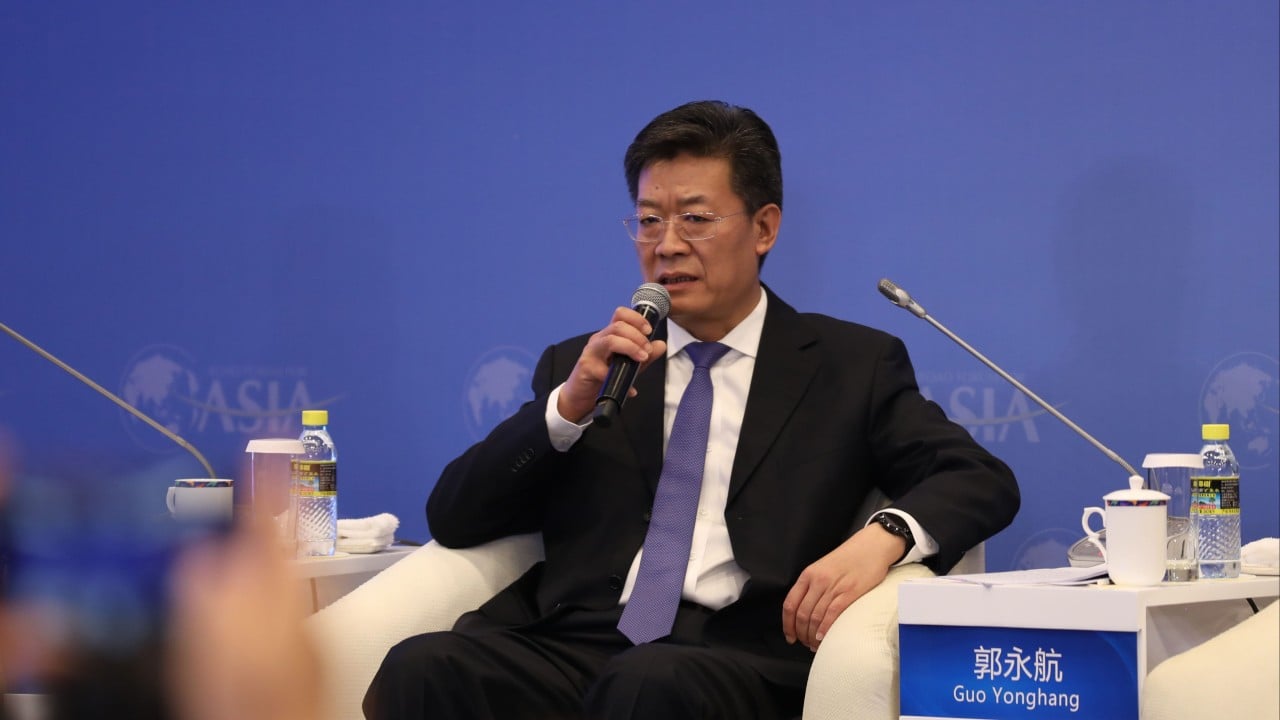
China's anti-corruption watchdog has placed Guo Yonghang, the former Guangzhou party secretary and a longtime ally of Ma Xingrui, under investigation for what it called "serious violations of discipline and law," the standard euphemism for corruption and bribery. On its face this is another cadre case, but the political interest is higher because Guo was widely seen as Ma's right-hand man in Guangdong and his fall sharpens questions about Ma himself, who was abruptly removed as Xinjiang party secretary in July and has largely vanished from public view since. In elite Chinese politics, investigations often matter as signals as much as punishments. Hitting a loyal lieutenant can suggest a broader factional cleanup or at least warn that protection from a disappeared patron no longer applies. That makes this less a local Guangzhou story than a clue about turbulence higher up the chain.
Ma previously governed Guangdong and later became party chief in Xinjiang, making him one of the more prominent provincial leaders to disappear from view.
A Chinese research team from Shanghai and Tianjin says it has built a hydrofluorocarbon-based lithium electrolyte that could push batteries beyond today's usual tradeoff between high energy density and cold-weather performance. In a Nature paper, the group reported a 1,3-difluoro-propane electrolyte with low viscosity, strong oxidation stability and measurable ionic conductivity even at minus 70 degrees Celsius. SCMP says the researchers believe that could eventually lift electric-vehicle range from roughly 500-600 kilometers to around 1,000 kilometers for the same battery mass. Laboratory results do not automatically become commercial packs, and many spectacular battery claims die in scale-up. Still, the engineering target here is genuinely important: if one chemistry can deliver both high density and reliable low-temperature behavior, it would solve one of electric transport's most stubborn practical headaches instead of merely shifting the tradeoff around.
Battery systems often lose range and charging performance sharply in winter because ion transport slows as temperatures fall.
An expanding E. coli outbreak tied to Raw Farm raw milk and raw cheddar has now sickened nine people in California, Texas and Florida, according to federal health agencies, with more than half of the illnesses in children younger than five. Three people have been hospitalized and one developed a dangerous kidney complication. Regulators say genetic sequencing suggests a common source, and most interviewed patients reported consuming Raw Farm products, but the Fresno company has resisted recalling its cheddar because no product sample has yet tested positive for the outbreak strain. That leaves public-health officials in the awkward position of warning consumers away from a product they believe is the source while the producer disputes the link and the FDA weighs whether to force a recall. It is a small outbreak so far, but exactly the kind that can grow quickly when the product category is raw dairy.
Raw milk is not pasteurized, so it can carry pathogens such as E. coli, salmonella, listeria and campylobacter.
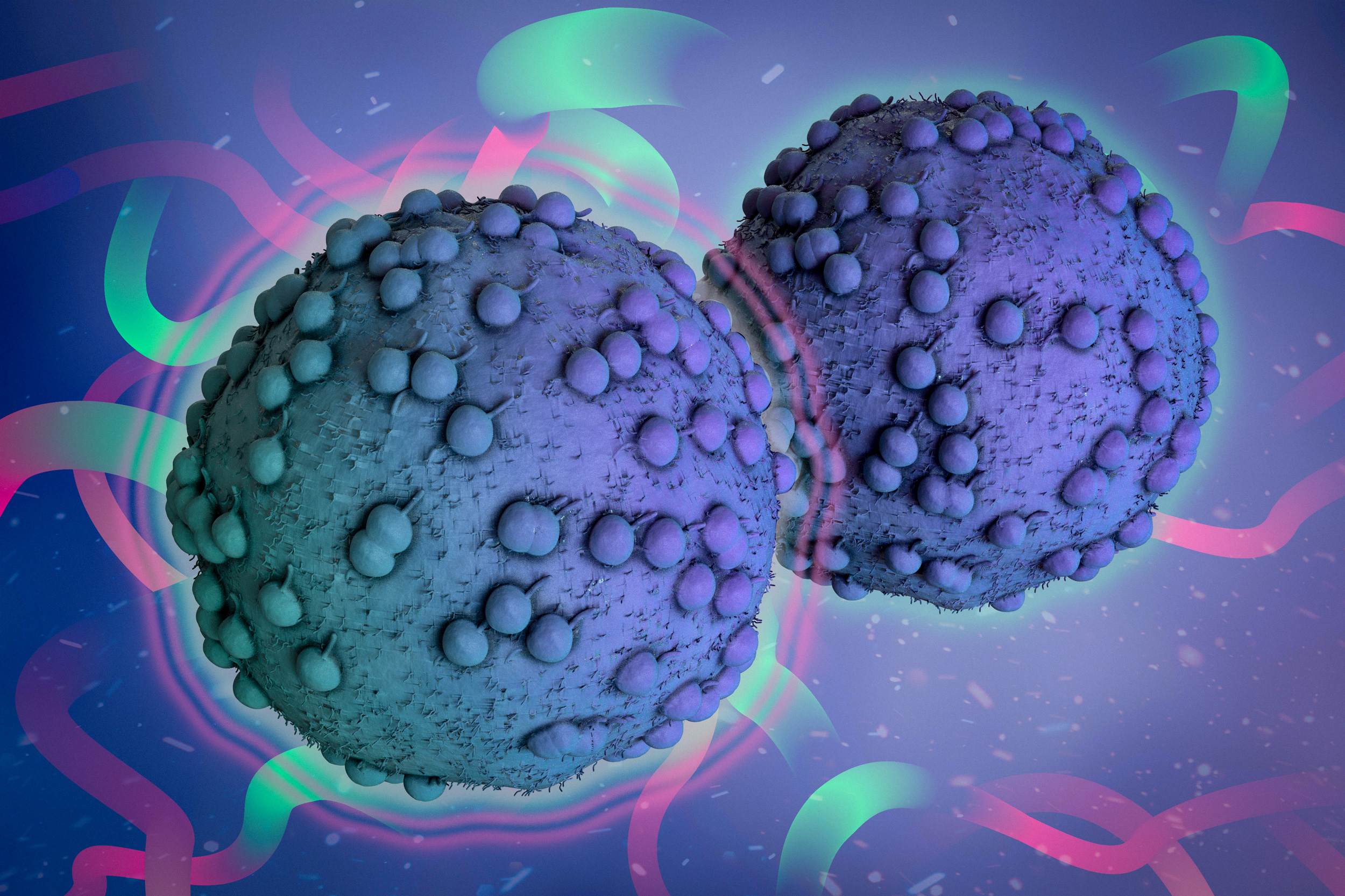
MIT researchers say they have identified why some tumors shrug off targeted cancer drugs that ought to work: even when the therapy successfully shuts down the mutated kinase it is aimed at, a separate survival network regulated by SRC-family kinases can already be switched on and keep the cancer alive. Working with lung-cancer cell lines and phosphoproteomics, the team found that resistant cells were not ignoring the drug so much as routing around it. That matters because it points toward a practical fix rather than a mystery. In the lab, combining the standard targeted drug with an SRC inhibitor killed far more resistant cells, and one related combination trial is already underway in lung cancer. The result will not change treatment tomorrow, but it offers a more concrete explanation for why precision oncology so often delivers only partial precision.
Targeted kinase inhibitors can work dramatically in some patients but fail in others whose tumors look molecularly similar.