Large crowds turned Saturday's third "No Kings" demonstrations from a projected show of force into a real one, with rallies spreading across the US and into Europe. Minnesota hosted the flagship event in St. Paul, where Bruce Springsteen performed and speakers tied the movement to federal immigration raids, the Iran war, and a broader fear that Trump's second term is hardening into something openly authoritarian. AP reported that organizers had registered more than 3,100 events in all 50 states and expected over 9 million participants, while BBC described the protests as mostly peaceful and geographically broad. That scale matters more than any single speech. What began as a loose coalition now looks like a repeatable national street movement able to mobilize not just coastal cities, but suburbs and smaller towns that are usually harder to bring into coordinated protest.
Organizers said earlier rounds drew more than 5 million people last June and more than 7 million in October. This third round was announced in January, then took on sharper urgency after the Minneapolis killings of Renee Good and Alex Pretti during a federal immigration crackdown.
Republicans appeared close to a Senate-House compromise to fund most of the Department of Homeland Security, then House Speaker Mike Johnson blew up the deal, leaving the partial shutdown to grind into a seventh week. Trump tried to relieve the most visible pain by ordering immediate pay for TSA officers, but AP and BBC both reported that airport lines remained long and the wider standoff over ICE and immigration operations was unresolved. The practical situation is awkward: travelers may see some short-term relief, but Congress still has not restored normal funding for the department that handles airport screening, immigration enforcement, and disaster response. After weeks of attrition, missed paychecks, and threats of smaller airport closures, the shutdown has become both a policy fight and a competence test for a Republican government that controls both chambers and the White House.
The shutdown began on February 14 after Senate Democrats blocked a GOP bill that would have kept most of DHS running while carving immigration operations out of the compromise. AP reported earlier this week that more than 450 TSA officers had already quit during the standoff.
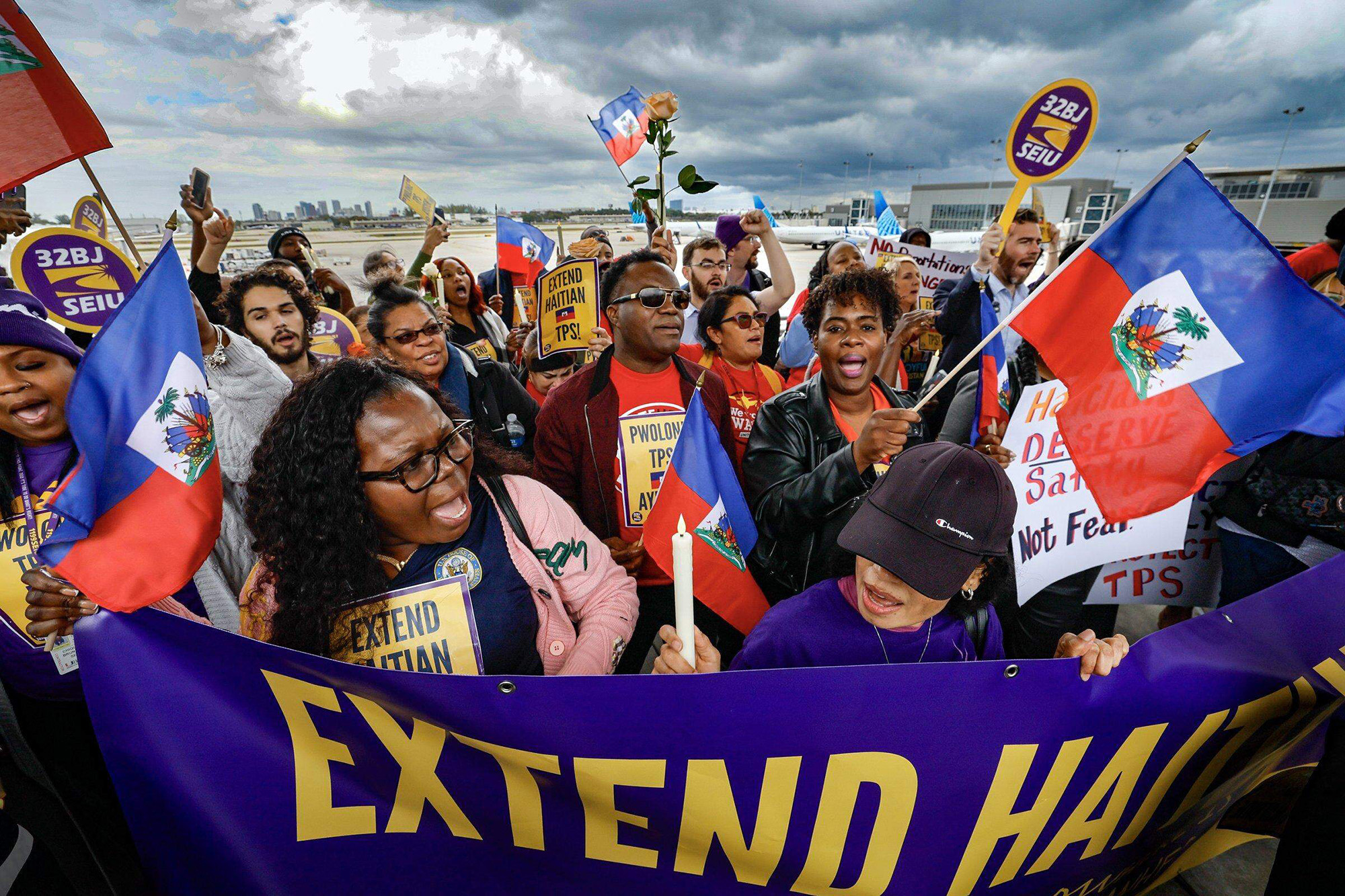
Two separate blows hit the Trump administration's Haiti policy on Friday. First, a federal appeals court let stand a lower-court order blocking the administration from ending protected status for roughly 350,000 Haitians. Then a House discharge petition picked up its 218th signature, enough to force a floor vote on a resolution that would require an extension of Temporary Protected Status. The combination matters because it shifts the issue out of the executive branch's preferred lane. Instead of a fast administrative rollback, the White House now faces both judicial resistance and a public congressional fight that pulled in a handful of Republicans. The administration can still push mass deportation plans, but the politics are getting harder: Haiti remains trapped in gang violence and state collapse, and even lawmakers outside the immigration left are increasingly unwilling to pretend conditions are safe enough for forced return.
TPS lets people from countries facing war, disaster, or other severe instability live and work temporarily in the US. Haiti first received the protection after the 2010 earthquake, and recent court filings say gang violence has displaced hundreds of thousands of people.
Egypt is ordering shops and restaurants to close by 9 p.m. for a month, a blunt sign that the regional energy shock is now spilling into ordinary urban life. The government's aim is straightforward: save electricity before shortages and fuel costs get worse, but the move also shows how exposed import-dependent states remain when war scrambles oil and gas markets. BBC reported that the policy reaches deep into the commercial routine of Cairo and other cities, not just heavy industry. That makes it more than a technical conservation measure. It is a public admission that the state cannot fully shield consumers and small businesses from a wider geopolitical squeeze. When restaurants, cafes, and neighborhood shops have to cut hours by decree, the energy crisis stops being an abstract macro story and becomes a visible form of rationing with political consequences of its own.
Egypt has faced recurring power strains in recent summers, but this round is being sharpened by regional fuel disruption linked to the Iran war. BBC has also reported fuel rationing and supply worries elsewhere in Africa as shipping and oil flows come under pressure.
The case around television host Collien Fernandes is no longer just a celebrity scandal. It is becoming a national test of whether Germany's legal system can keep up with AI-generated sexual abuse. Fernandes says her ex-husband spread fake pornographic images of her online; he denies it. What has pushed the story into wider politics is the recognition that even when the victim is famous, well connected, and able to command media attention, the law still struggles to respond quickly to synthetic abuse that can be made cheaply and spread instantly. BBC's reporting frames the scandal as a proxy for a larger fear now moving through Europe: deepfakes are collapsing the old distinction between fabricated and real intimate imagery, while prosecution, platform moderation, and victim support all lag behind. The result is a form of harassment that feels both technologically new and institutionally familiar.
Germany has already been debating stronger responses to image-based sexual abuse, and BBC linked the Fernandes case to broader European pressure for laws that treat synthetic intimate images as more than a niche online nuisance.
Chinese researchers are trying to build an alternative to one of academia's most entrenched status systems: the impact factor. According to SCMP, the new Dongbi Index lists cover 4,027 medical journals and 3,064 life-science journals chosen from a pool of more than 40,000 worldwide, and were unveiled in Shanghai on March 21. Supporters argue that citation-based prestige metrics are easy to game and reflect a Western-centered view of scholarly influence. That makes this more than a technical bibliometrics story. It fits a broader Chinese push for what officials and academics call stronger academic discourse power: the ability not just to publish more papers, but to define the standards by which importance is measured. If the index gains real uptake, the consequence would be cultural as much as scientific: China would be challenging not just who produces research, but who gets to referee global prestige in medicine and the life sciences.
The impact factor was designed as a citation measure for journals, but it has long been criticized for distortion, gaming, and misuse in hiring and promotion. China has spent recent years trying to reduce automatic reliance on foreign ranking systems in science and higher education.
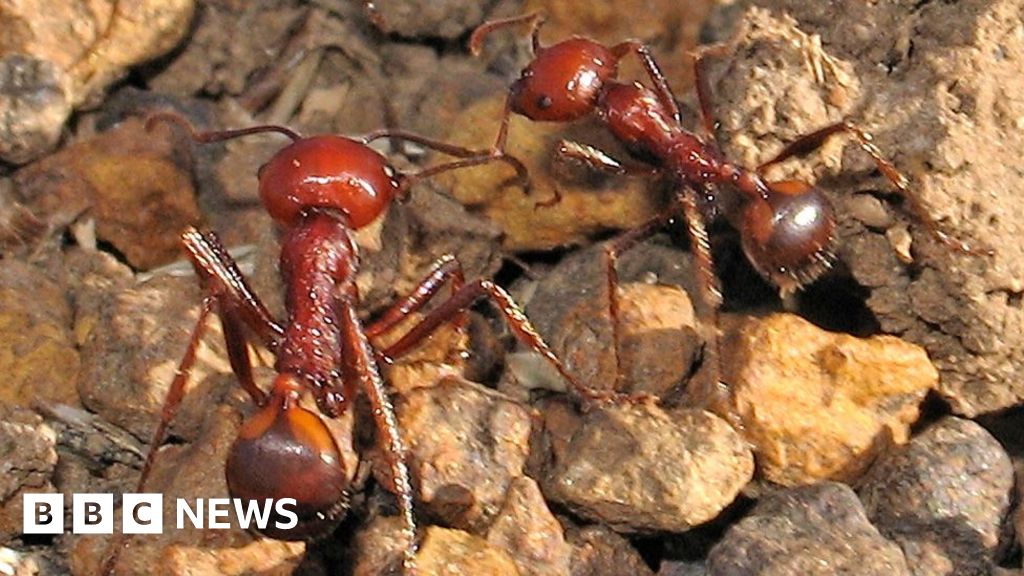
Wildlife trafficking has moved into stranger territory than tusks, horns, or exotic birds. BBC reports that giant African harvester ants are now being smuggled out of Kenya for collectors in China and Europe, with individual queens reportedly fetching about $220. The story is easy to laugh at for a second and then less funny on inspection. Ant colonies are not decorative trinkets; they are living systems, and the point of smuggling queens is to establish breeding colonies for the pet trade. That turns a niche collector craze into a repeatable extraction pipeline. Kenyan authorities say they have already broken up trafficking networks tied to this market, suggesting the trade is not a one-off curiosity but an emerging commercial channel. The broader lesson is that wildlife crime adapts quickly to new demand. Once collectors decide a species is rare, impressive, or status-bearing, almost anything can become contraband.
Kenyan authorities warned last year that demand for Messor cephalotes, a large harvester ant, was rising in Europe and Asia. The ant trade is smaller than ivory or big-cat trafficking, but it follows the same basic logic: rarity, international buyers, and easy profits.
A large occupational study found something genuinely odd: Alzheimer's disease accounted for a much smaller share of deaths among taxi and ambulance drivers than among people in most other jobs. Harvard Health's review of the BMJ paper says the dataset covered nearly nine million deaths across more than 443 occupations, with Alzheimer's tied to 0.91 percent of taxi-driver deaths and 1.03 percent of ambulance-driver deaths, versus about 1.82 percent among chief executives and roughly the general-population baseline. The tempting explanation is that constant real-time navigation strengthens the hippocampus, the brain region heavily involved in spatial memory and one of the regions Alzheimer's damages earliest. But the result is provocative, not definitive. The same article stresses that self-selection and other confounders could explain some of the effect. Even so, it opens a useful scientific door: not a cure, but a clue about what kinds of cognitive work might help preserve vulnerable brain circuits.
Earlier small studies of London taxi drivers found enlarged portions of the hippocampus, helping inspire the new hypothesis. The BMJ authors and Harvard both stress that observational data cannot prove that the job itself is protective.
Comets are messy objects, but this one still surprised astronomers. Analysis of Hubble, Swift, and Lowell telescope data showed that comet 41P/Tuttle-Giacobini-Kresak slowed from a rotation period of roughly 46 to 60 hours in May 2017, then by December had sped back up to about 14 hours while rotating the other way. Space.com describes it as the first observation of a comet reversing its spin, with jet-like gas outbursts likely acting as tiny thrusters that first braked the nucleus and then shoved it into reverse. That makes the finding more than a quirky orbital anecdote. It is a direct look at how unstable small icy bodies can be when sunlight, outgassing, and weak gravity all interact. Researchers now think the spin-up could eventually tear the comet apart, a reminder that even familiar short-period comets are less like clockwork snowballs than self-eroding machines.
41P is a Jupiter-family comet that loops around the sun about every 5.4 years. The unusual behavior was seen in archival 2017 observations and only fully understood after researchers revisited the data years later.
For decades, the clean explanation for why dragonfly-like insects once reached wingspans above 70 centimeters and no longer do was that ancient air had more oxygen. New work summarized by Ars Technica argues that this tidy story does not hold up. Researchers imaged flight muscles across insects spanning a 10,000-fold range in body mass and found that the tiny tracheoles delivering oxygen took up surprisingly little space even in larger species, rising from about 0.47 percent of muscle volume in very small insects to only 0.83 percent in much larger ones. In other words, the respiratory system does not appear to hit the hard anatomical ceiling the old hypothesis assumed. That does not fully solve why giant insects disappeared, but it changes the menu of plausible answers. Predation by birds and bats, heat dissipation, and other ecological or mechanical limits now look more promising than a simple oxygen cap.
Giant insects flourished in the late Paleozoic, when atmospheric oxygen was higher than today. The new Nature study argues that bigger insects could probably have increased oxygen delivery without sacrificing enough flight-muscle space to make flight impossible.