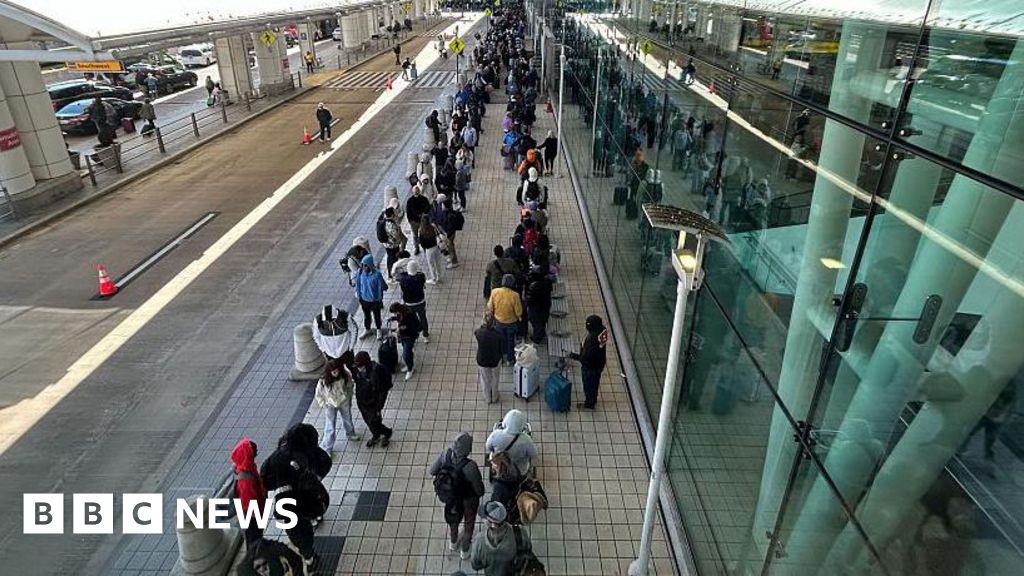
America's partial shutdown has now outlasted every previous federal funding lapse, and the failure point is unusually visible: airport security. The Department of Homeland Security has been unfunded since February 14, leaving TSA officers working without pay as wait times stretched for hours and some airports moved security lines outdoors. Trump says he will keep paying screeners by executive order, and border czar Tom Homan says ICE agents sent to airports will stay until normal operations return. But that workaround does not solve the real fight. The Senate passed a compromise that would partly reopen DHS and relieve travel disruption, then House Republicans rejected it and backed a short-term bill funding the department on Trump's terms. Democrats oppose that approach because DHS also houses ICE. So the country now has a shutdown that is no longer just a Washington leverage game; it is visibly degrading one of the most routine parts of American life.
DHS oversees TSA, ICE and FEMA. The shutdown reached 44 days on Sunday, passing the previous record set in 2025, while Congress left Washington for a two-week recess without a settlement.
The Iran war widened again over the weekend when Yemen's Houthi movement said it fired missiles at Israel, opening a new front that matters less for battlefield drama than for shipping. The group has already shown it can make commercial traffic through the Red Sea painfully expensive, and its re-entry now threatens the Bab el-Mandeb chokepoint just as Iran's grip on the Strait of Hormuz has already rattled oil, gas and fertilizer markets. AP reported that about 2,500 U.S. Marines have arrived in the region while Pakistan, Saudi Arabia, Turkey and Egypt explore diplomacy, but the practical risk is that one conflict is starting to connect multiple maritime bottlenecks at once. If the Houthis resume sustained attacks on merchant vessels, the effect will not stay regional. The Red Sea route feeds the Suez Canal, and shipping insurers, fuel buyers and importers around the world would all feel the shock.
The Houthis attacked more than 100 merchant ships between late 2023 and early 2025, sinking two. This time they are re-entering a war in which more than 3,000 people have already been killed and the U.S. says it has struck over 11,000 Iranian targets.
Myanmar's junta is trying to turn five years of military rule into something that looks constitutional. Parliament convened Monday after an election widely dismissed as a sham, and Min Aung Hlaing, the general who led the 2021 coup, was nominated for the presidency alongside two loyalists who have no real chance of beating him. That means the same man who overthrew Aung San Suu Kyi and drove the country into civil war is now poised to re-enter office with formal democratic packaging. The move matters because it shows the military no longer pretending the election was a path back to pluralism; it is a mechanism for laundering the coup into a new legal order. BBC notes that roughly 90% of the new parliament is controlled either by serving officers or candidates from the military's own party, so the outcome is effectively predetermined. The junta is not ending its rule. It is trying to rename it.
Large parts of Myanmar remain outside junta control, with armed resistance groups holding territory after years of fighting. The constitution also requires Min Aung Hlaing to give up direct command of the military if he becomes president, creating a succession test inside the armed forces.
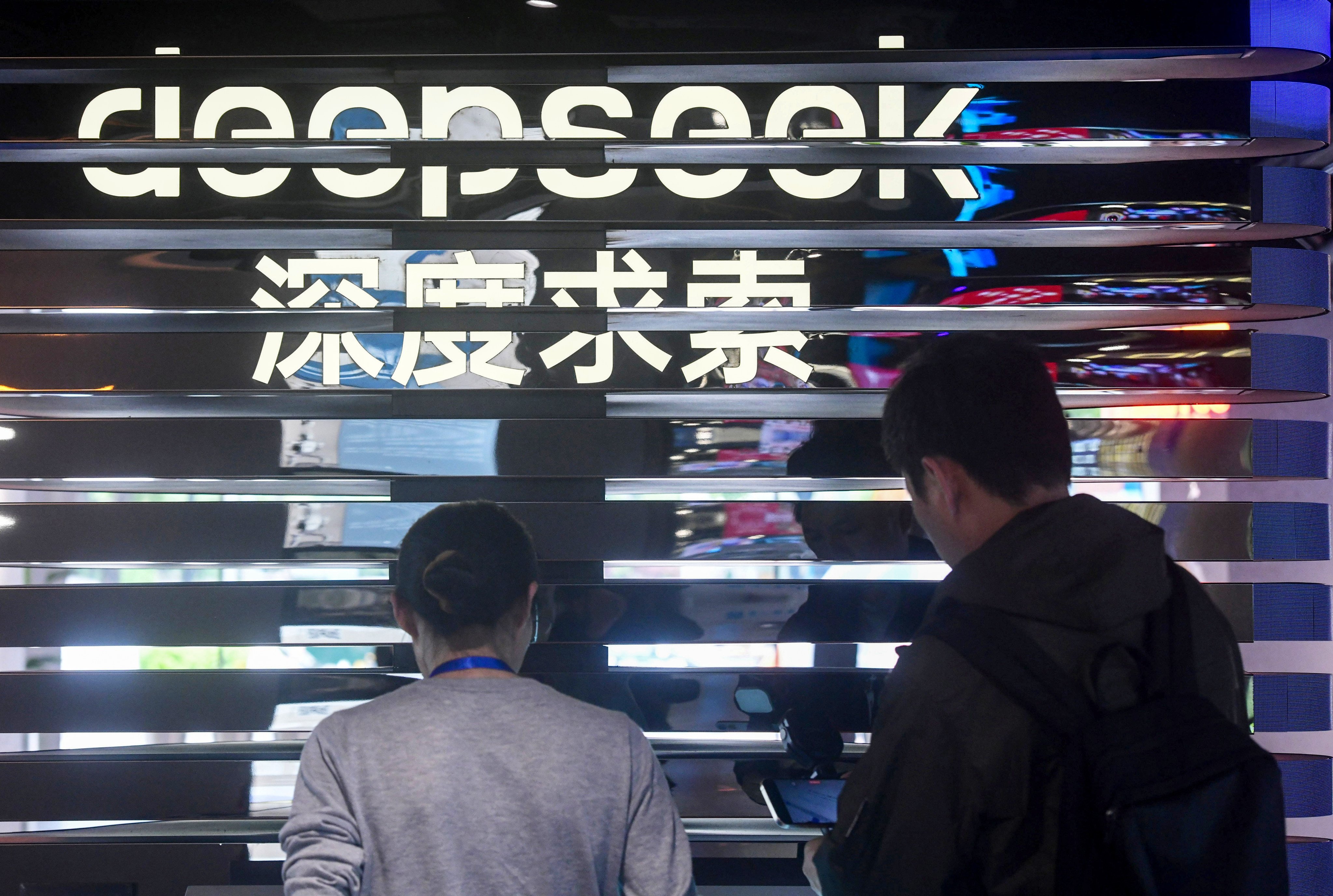
DeepSeek's overnight outage looks minor only if you think of it as a website crash. In practice it exposed how quickly one Chinese chatbot has become part of ordinary work. The Hangzhou company went offline Sunday evening and did not fully recover until Monday morning, with service notices showing engineers still testing fixes after 9 a.m. Users on Xiaohongshu and other Chinese platforms described suddenly not knowing how to draft emails, write proposals or finish routine office tasks without it. That reaction is the real story. DeepSeek's free reasoning models helped turn the app into a mass product rather than a niche AI demo, and SCMP cites tracker Aicpb.com saying it had more than 355 million users in February. An outage at that scale is less like one startup having a bad night and more like a piece of office infrastructure briefly disappearing. It also arrived as rivals such as Zhipu AI, MiniMax and Moonshot keep narrowing the attention gap while DeepSeek delays its next model.
DeepSeek was also hit by denial-of-service attacks after its R1 release in late January last year. This time the company described the issue as resolved by 10:33 a.m. Beijing time, but it did not immediately explain what caused the interruption.
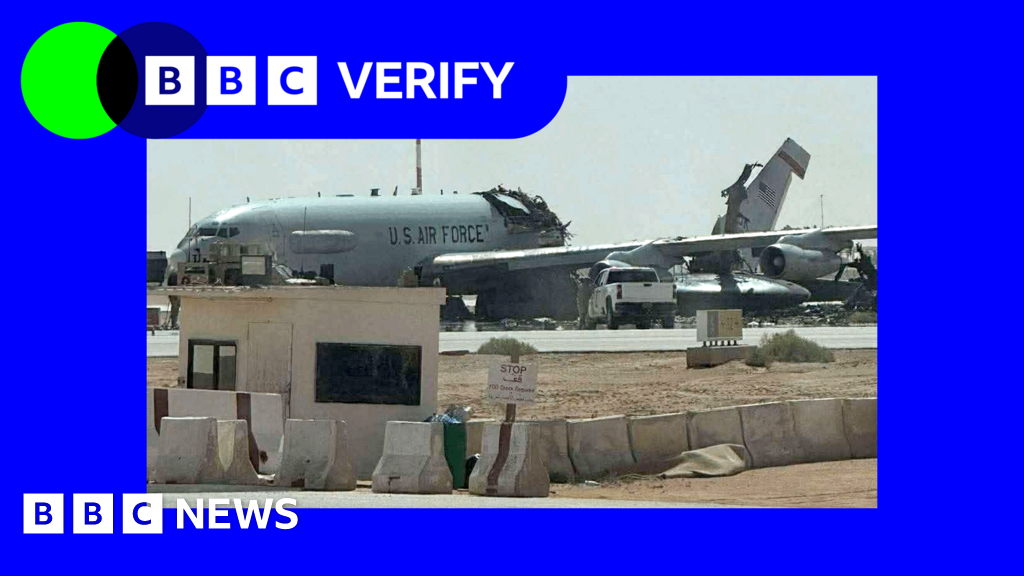
Verified photos from Saudi Arabia suggest Iran's Friday strike did more than wound U.S. personnel. They appear to show a badly damaged E-3 Sentry airborne warning aircraft at Prince Sultan Air Base, with the radar plane's distinctive dome collapsed and the fuselage apparently broken. BBC Verify matched features in the pictures to the base southeast of Riyadh and checked the tail number against flight-tracking records, making this one of the clearest visual signs yet of what Tehran managed to hit. That matters because the E-3 is not just another aircraft on the tarmac. It is a flying command-and-control platform used to track threats at long range and coordinate air operations. Reuters had already reported U.S. personnel wounded at the base and other outlets said refueling aircraft were damaged as well. If the photos are representative, the strike was not symbolic harassment. It knocked at the operational nervous system of the American air campaign.
Prince Sultan Air Base has become one of the most exposed U.S. positions in the war. The E-3 AWACS fleet is old but still central to airspace monitoring, battle management and early warning for large-scale operations.
Beijing is giving Taiwan's main opposition party a high-visibility invitation at exactly the moment cross-strait politics are becoming more brittle. Cheng Li-wun, the new chair of the Kuomintang, will visit Jiangsu, Shanghai and Beijing from April 7 to 12, and the official wording from Song Tao's Taiwan Work Office pointedly said Xi Jinping and the Communist Party leadership would welcome the trip. That raises the prospect of a Xi-Cheng meeting and turns what might have been routine party contact into a signal about who Beijing thinks is still worth talking to. Cheng is framing the visit through the KMT's familiar formula of opposing Taiwan independence and reaffirming the 1992 consensus, arguing that this is how to lower the risk of war. For Beijing, the trip is useful theater: it can present engagement with the KMT as proof that dialogue remains available, while isolating Taiwan's current governing camp as the side resisting stability.
KMT leaders have made symbolic mainland visits before, most notably Lien Chan's 2005 trip that reopened party-to-party dialogue after decades of hostility. Beijing still treats the 1992 consensus as the minimum political basis for any sustained engagement across the strait.
North Korea says it has tested a stronger solid-fuel engine for a missile it claims can reach the U.S. mainland, the latest sign that Pyongyang is still working on faster-launching long-range weapons while Washington's attention is consumed elsewhere. According to KCNA, the engine produced about 2,500 kilonewtons of thrust, up from a roughly 1,970-kilonewton test last September. The raw number matters less than what it implies. Solid-fuel systems can be moved and fired more quickly than liquid-fuel ones, giving adversaries less warning and making pre-emption harder. In other words, this was not just a technical benchmark for engineers. It was a reminder that North Korea's missile program keeps iterating even when it drops out of the daily headlines. The broader timing is also notable: the test lands as China resumes more practical links with Pyongyang and as regional security attention is being pulled toward the Middle East.
North Korea has spent years pushing solid-fuel intercontinental missiles because they are easier to store, move and launch. KCNA framed Sunday's test as part of a system explicitly intended to strengthen the country's ability to threaten the continental United States.
Italy's competition authority is treating the 'Sephora kids' trend as more than cringe internet culture. Regulators have opened an investigation into LVMH over whether Sephora and Benefit effectively marketed adult skincare, including anti-aging products, to children younger than 10 through what the watchdog called covert or especially manipulative influencer tactics. That framing matters because it turns a familiar parental complaint into a consumer-protection case about how platforms, brands and micro-influencers manufacture demand in very young users. The concern is not just that children are buying expensive serums for no reason. Dermatologists and regulators have warned that these products can irritate developing skin, trigger allergic reactions and push kids toward compulsive beauty routines before puberty. Social media made the behavior visible, but the Italian case goes one step further: it asks whether a prestige retail ecosystem quietly helped build the craze. If regulators answer yes, the next pressure will not stay confined to Italy.
The AGCM said officers and financial police inspected LVMH and Sephora's Italian offices last week. The inquiry centers on unfair-commercial-practice claims tied to masks, serums and anti-aging creams, and on whether warnings for children were omitted or obscured.
America's anti-EV politics look different when oil shocks stop being theoretical. Noah Smith argues that the Iran war is exposing a simple household reality: drivers who charge at home are less vulnerable to geopolitical spikes in gasoline than drivers who depend on the pump, and the U.S. spent years slowing that transition for bad reasons. His point is not that electricity is immune to global turmoil. It is that U.S. electricity prices, anchored by domestic natural gas, are structurally less volatile than gasoline when maritime choke points explode. That gives the piece more substance than a generic clean-energy pep talk. It ties EV adoption to everyday economic resilience, not just climate virtue or industrial policy. Smith also argues that Washington's tariff wall, subsidy rollbacks and culture-war backlash have left the U.S. lagging a shift the rest of the world kept accelerating. The war, in his telling, is a stress test revealing the cost of that delay.
Smith cites prewar estimates putting driving costs near 5 cents per mile for EVs versus about 12 cents for gasoline cars. His broader claim is that transport electrification is partly insurance against repeated oil-supply shocks, not just a decarbonization project.
Growing human neurons on a chip and making them play Doom sounds like a lab stunt, but the more interesting part is how the cells were trained. Cortical Labs built a feedback loop in which good moves produced stable, predictable signals and bad moves produced random electrical noise. The company argues that the neurons adapted in real time because biological systems tend to prefer predictability over chaos. Scientific American treats the demo cautiously, as it should. This is not a tiny synthetic brain mastering a first-person shooter, and it does not mean living cells are about to replace graphics cards. What it does offer is a vivid proof of concept for a broader idea: some kinds of computation and pattern adaptation may be possible at far lower energy cost in biological systems than in standard AI hardware. That has two obvious uses, one speculative and one immediate. It could inspire unusual low-power computing architectures, and it might also create more realistic platforms for testing neurological drugs.
Cortical Labs previously showed neurons on chips learning a much simpler game, Pong, in a 2022 Neuron paper. The new Doom demo is harder not because the cells became intelligent in any human sense, but because the task requires messier, real-time adaptation.