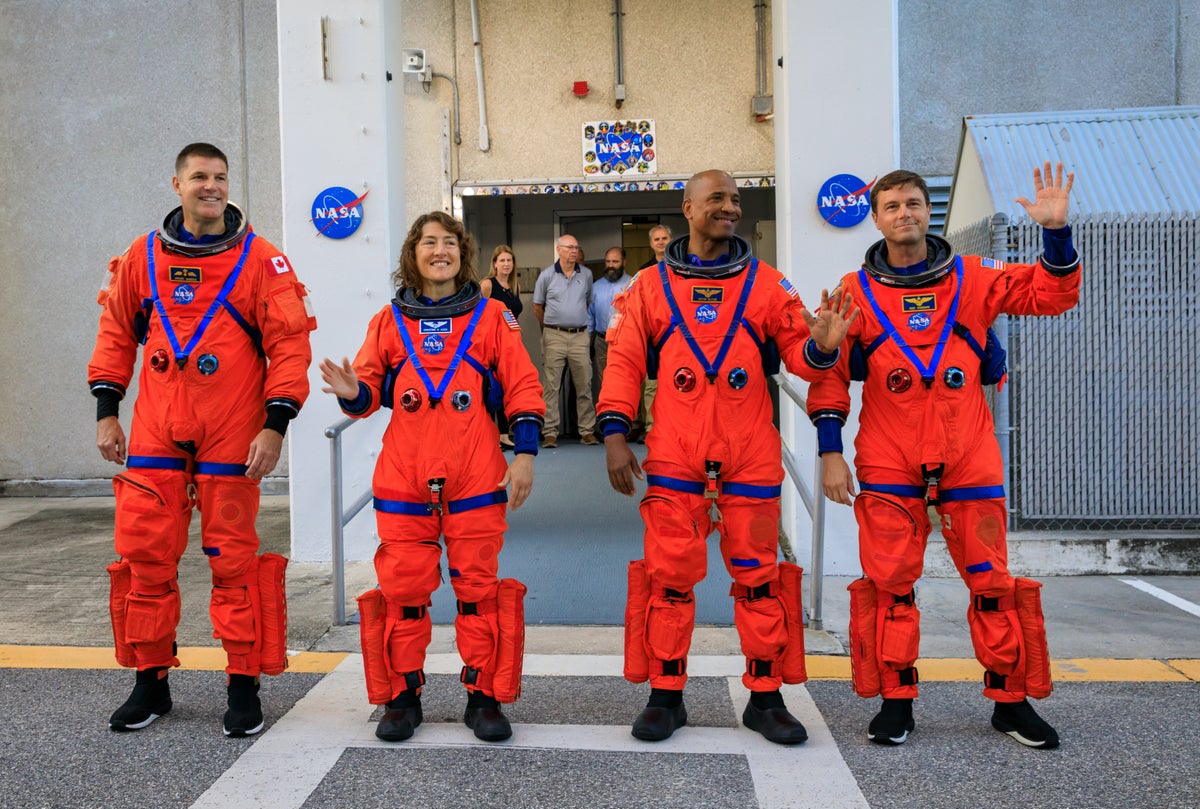
NASA formally started the Artemis II countdown on Monday afternoon, putting the agency on track for a Wednesday, April 1 launch that would send four astronauts around the moon and back in roughly 10 days. If the current window holds, Reid Wiseman, Victor Glover, Christina Koch, and Jeremy Hansen will become the first humans to leave Earth orbit since Apollo 17 in 1972. The mission is still only a flyby, not a landing, but it is the real test of whether the Space Launch System and Orion capsule can carry people safely through the architecture NASA wants to use for later lunar missions. Officials are publicly saying there are no issues stopping the countdown, while also stressing that Artemis II has already slipped multiple times and could still move again if fueling, weather, or hardware checks go sideways in the final hours.
Artemis II is the crewed follow-up to Artemis I, the uncrewed 2022 test flight. NASA wants it to validate the full lunar stack before later missions attempt landings and, eventually, a sustained presence near the moon.
A federal judge temporarily blocked the Pentagon from labeling Anthropic a "supply chain risk," pausing a move that would have pushed agencies and military users away from one of the country's biggest AI model providers. AP says the ruling lets Anthropic keep fighting the designation while the case proceeds, rather than absorbing an immediate procurement hit that could have spread well beyond one contract. What makes the dispute notable is not just that a major defense customer soured on a vendor, but the mechanism: instead of an ordinary contracting fight, the government tried to attach a risk label that carried broad reputational and operational consequences. MIT Technology Review has framed the episode as part of a wider clash over how much political and ideological leverage Washington should try to exert over frontier AI companies. The injunction does not settle that fight, but it keeps the Pentagon from making its preferred answer stick for now.
Anthropic is one of the few AI labs competing directly with OpenAI and Google at the model frontier. A government risk designation can matter even before any final judgment because agencies, contractors, and partners often treat it as a de facto warning to stay away.
The Trump administration has opened new investigations into how race is considered in admissions at three medical schools, extending its campaign against campus diversity programs into one of the country's most prestigious professional pipelines. AP reports that the inquiries focus on possible race discrimination, while the Chronicle's broader tracker shows the move as part of a steady escalation in federal pressure on colleges since January. Medical schools are an especially sensitive target because they sit at the intersection of elite admissions, workforce policy, and the Supreme Court's post-affirmative-action landscape. The practical effect is that institutions are now being pushed to prove not only that they changed their formal rules after the Court's 2023 decision, but that their current practices, evaluation language, and recruitment systems cannot be read as racial sorting by another name. Even schools that avoid formal penalties may still end up reshaping admissions out of fear.
The Supreme Court barred most explicit race-conscious admissions in 2023, but the enforcement fight never really ended. The new phase is less about headline rulings and more about whether the federal government can force universities to rewrite day-to-day admissions practice under investigation pressure.
The copyright fight over Meta's AI training data is shifting from the abstract question of fair use to a more concrete accusation: that Meta did not just read from pirated book collections but actively helped distribute them. Ars Technica reports that a judge handed authors an easier path to attack Meta's alleged torrent seeding, which matters because distribution claims can be simpler to explain to a jury than arguments about whether model training itself is transformative. Meta is trying to counter with a Supreme Court precedent it says should narrow who can sue and on what theory, but the immediate problem is that the case now sounds less like a futuristic dispute over machine learning and more like an old-school piracy fight with logs, files, and network behavior. That framing is dangerous for Meta because it makes the company look less like an experimental lab and more like a very large defendant that thought copyright rules were optional while building AI systems.
Many AI copyright suits hinge on difficult questions about training and output. Allegations about BitTorrent seeding are more traditional: plaintiffs can argue that the unlawful copying and redistribution happened before any model-learning debate even begins.
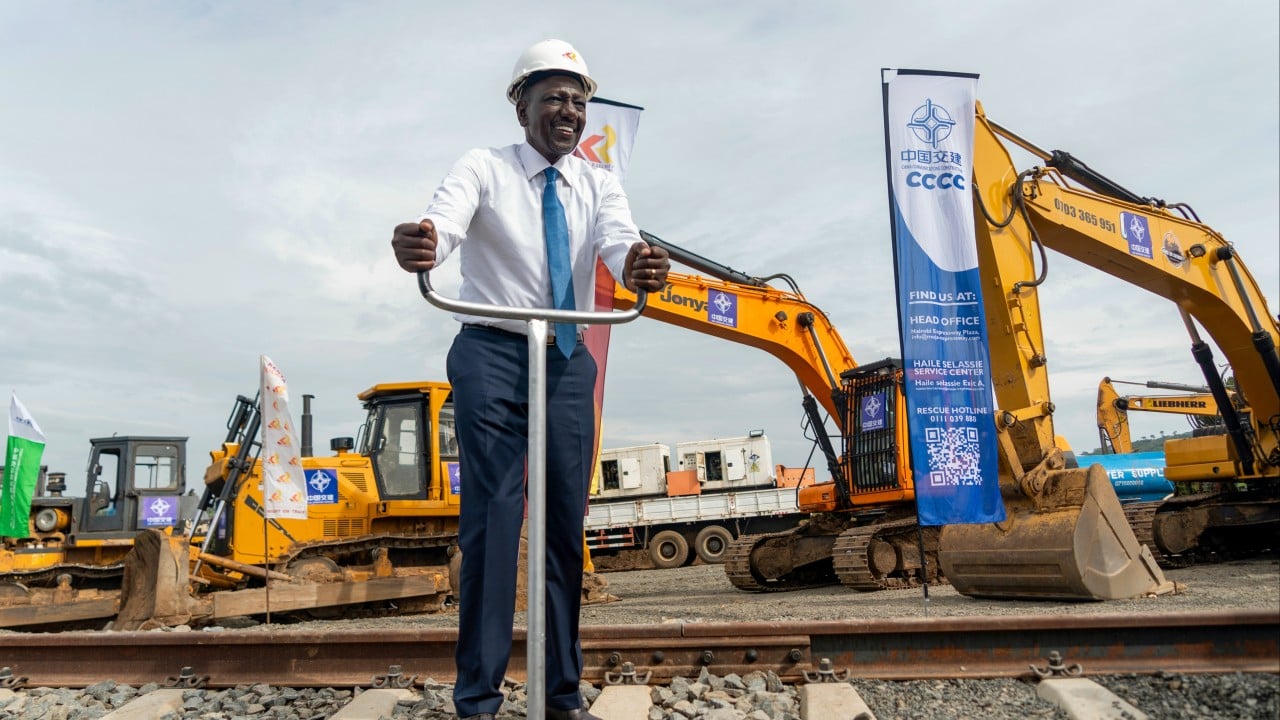
Kenya is trying to restart the long-stalled extension of its Standard Gauge Railway, with Chinese state-linked builders back in the picture and a new financing plan meant to avoid repeating the debt politics that froze the project years ago. SCMP reports that the remaining buildout is expected to cost about $5.4 billion and would push the line beyond its current endpoint toward western Kenya, reviving one of East Africa's most symbolically important Belt and Road projects. The significance is bigger than the rails themselves. For Nairobi, this is a wager that logistics and regional trade still justify the cost if the financing is structured more carefully. For Beijing, it is a chance to show that flagship overseas infrastructure deals are not dead, just entering a more defensive phase in which Chinese contractors stay central but the debt terms and political optics have to look less reckless than they did in the first Belt and Road wave.
Kenya's SGR first linked Mombasa to Nairobi and later reached Naivasha, but the project ran into financing strain and criticism over debt. Extending it farther has become a test case for whether large Chinese-backed infrastructure can survive a more skeptical post-boom era.
An Alabama water utility announced that it was dropping fluoridation, only for the story to turn into something stranger: the utility later acknowledged that fluoride had actually been gone from the system for years already. Ars Technica reports that the public-facing announcement leaned on familiar anti-fluoride health claims even though the operational change it advertised had effectively already happened. That makes the episode less about a live policy debate and more about how culture-war messaging now attaches itself to municipal utilities that most people assume are quietly doing technical work in the background. Fluoridation battles used to center on whether towns should start or stop adding fluoride. Here the striking part is that officials appear to have framed an old decision as a fresh act of public-health courage. The result is a story about trust: if a utility is performative about something this basic, residents have a reason to wonder what else is being narrated politically instead of explained plainly.
Community water fluoridation has long been promoted in the US as a cavity-prevention measure and attacked by a smaller but persistent anti-fluoride movement. The issue has returned in recent years as distrust of public-health institutions spread into more local services.
Taiwan is confronting a quieter but increasingly consequential form of diplomatic pressure: foreign bureaucratic systems that classify the island as part of China in visa files, residency databases, or conference registrations. SCMP says Taipei has recently retaliated against governments that made such changes, but analysts and opposition politicians are questioning whether the pushback can actually reverse anything or merely burn political capital on symbolic fights. The story matters because these labels are not just wording disputes. Once a classification enters the plumbing of state databases, airline systems, border forms, and event credentials, it starts shaping how ordinary officials and travelers treat Taiwan in practice. Beijing has long understood that procedural language can accumulate into geopolitical reality over time. Taipei is now trying to resist that normalization, but it faces the awkward problem that many governments may prefer quiet compliance in software and paperwork even when they do not want a loud public fight over Taiwan policy.
Taiwan's formal diplomatic space is already narrow, so naming fights often move into low-visibility settings like customs forms, software menus, and trade-event credentials. Those choices can look technical while still carrying real sovereignty implications.
MIT researchers say they have built a model that can identify and measure several kinds of atomic-scale defects in materials from neutron-scattering data, potentially giving engineers a much better way to inspect semiconductors, batteries, solar materials, and other high-performance components without destroying them first. The team trained the system on about 2,000 semiconductor materials and says it can infer up to six defect types at once, a level of mixed-signal interpretation that conventional methods struggle to do in one pass. This is one of those industrial AI stories that is easy to underrate because it lacks consumer drama. But quality control is where a lot of materials science gets bottlenecked: manufacturers can often create useful defects on purpose, yet still have a poor read on what actually ended up inside the final product. If this approach generalizes, it could turn defect tuning from a semi-blind craft into something closer to routine measurement.
In materials science, defects are not always bugs; carefully introduced imperfections can improve conductivity, strength, or energy performance. The hard part is measuring what is really there after manufacturing without slicing the material apart and losing the ability to test the finished piece.
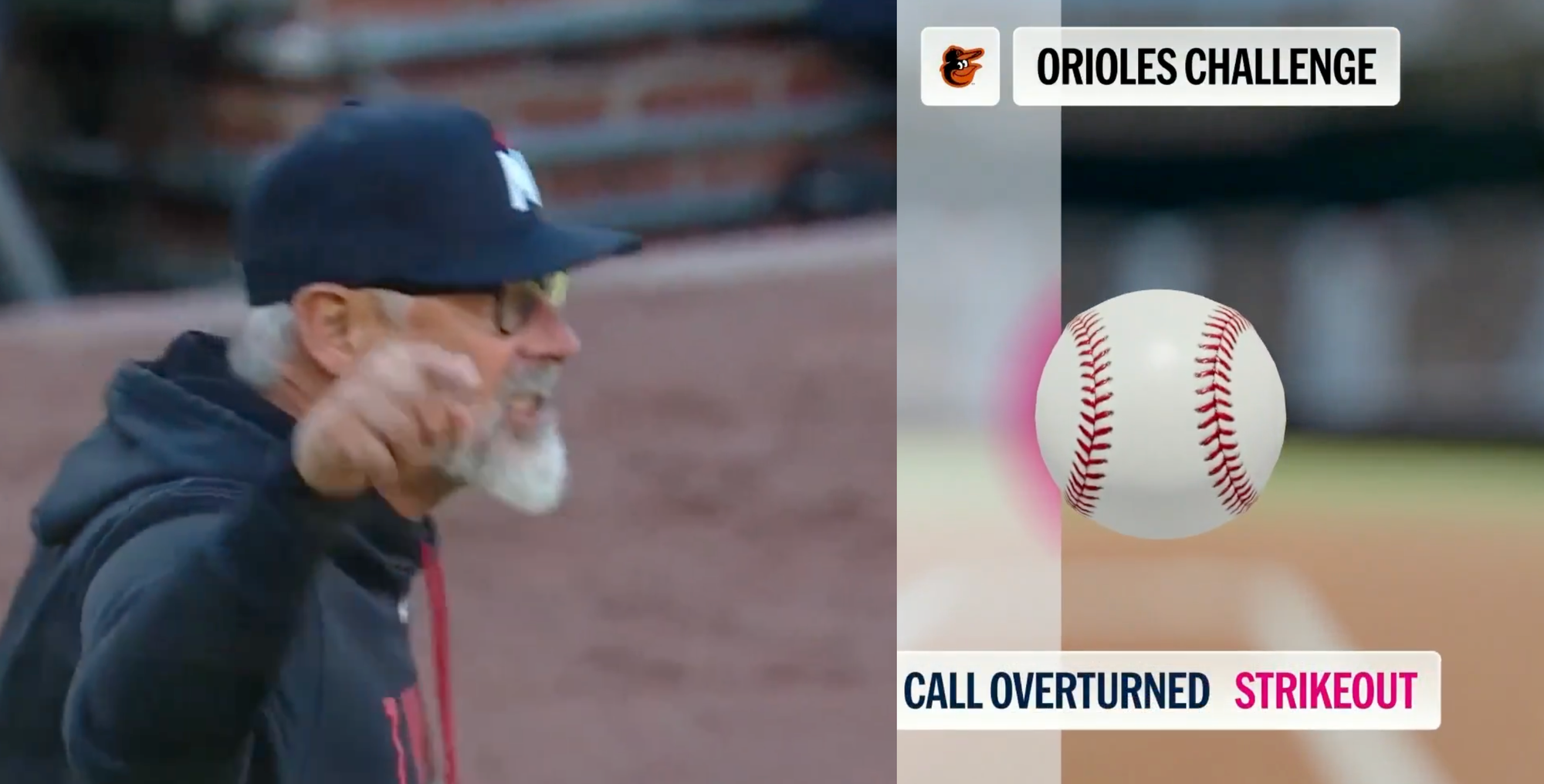
MLB's automated-ball-strike system was supposed to feel like a cold technology patch. Instead, it is producing a new kind of theater. As 404 Media notes, the appeal is not really man versus machine; it is that players and managers now challenge a call in public, everyone waits for the robot verdict, and the whole stadium gets a clean little burst of procedural suspense. The system does not remove umpire drama so much as rearrange it into a format that television understands better. That matters because most sports-tech reforms die when they solve a fairness problem by making the game less alive. ABS may be doing the opposite: tightening the strike zone while creating a replay moment simple enough for casual viewers to follow instantly. Whether the league expands it or not, baseball may have stumbled into a rare thing in modern sports governance, which is a rules experiment that is both more legible and more entertaining than the messy human version it partially replaces.
MLB has been testing ABS in the minors and experimenting with challenge-based formats rather than fully automated calling. The broader question is whether leagues can use technology to clean up officiating without making games feel overmanaged or less human.
March Madness produced the kind of ending that instantly rewrites a tournament bracket from trivia into memory. UConn beat top-seeded Duke 73-72 on a Braylon Mullins three with 0.4 seconds left, sending the Huskies to the Final Four and turning what looked like a routine Duke closeout into one of the tournament's defining swings. The broader reason this matters is not just that UConn won, but who it beat and how. Duke entered as a favorite with the kind of roster and national attention that usually makes everyone else feel like supporting cast. Instead, UConn landed the game's last line and reclaimed the spotlight at exactly the moment it looked finished. These are the nights that keep the tournament culturally sticky even for people who do not watch college basketball all season: one shot, one giant brand humbled, and a whole week's sports conversation instantly rerouted.
The men's NCAA tournament matters less because of season-long technical quality than because of its concentrated upset machine. A late-shot win over Duke is exactly the kind of bracket-breaking result that spills far beyond regular college-basketball audiences.