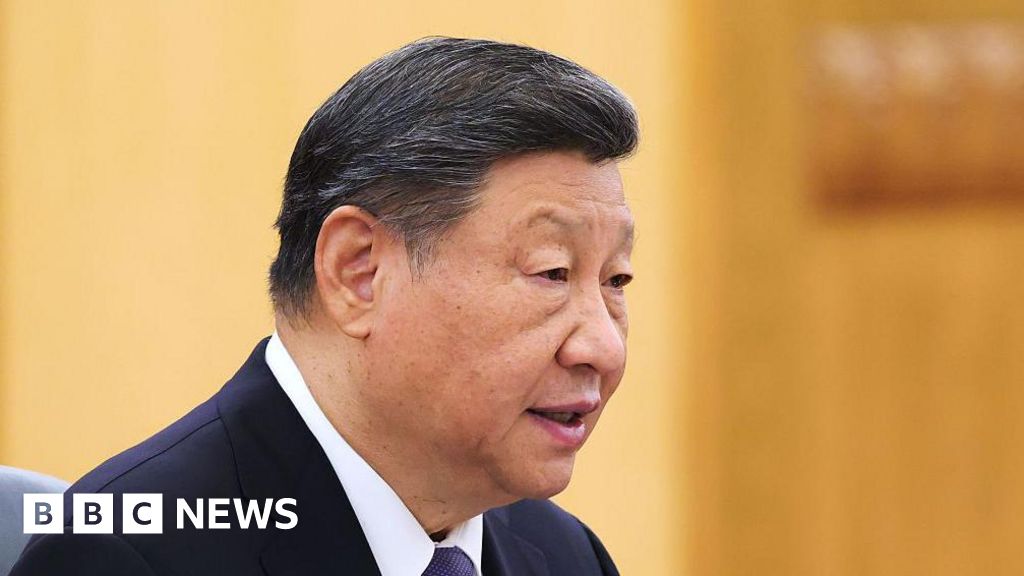
China has moved from guarded statements to open mediation as the Iran war enters a second month, oil prices climb, and pressure grows around shipping through the Strait of Hormuz. Beijing and Islamabad have put forward a five-point plan calling for a ceasefire, renewed talks, and protection for Gulf waterways, with Pakistan now acting as the public front of the effort. The timing matters: China is the world's biggest crude importer, it needs a calmer global economy, and Xi Jinping is heading into trade talks with Donald Trump next month. Beijing is also trying to cast itself as the adult in the room without taking on the military burden that Washington still carries. The open question is whether either side in the war sees enough upside in Chinese-backed diplomacy to stop shooting.
China brokered the Saudi-Iran rapprochement in 2023, but it has usually stayed cautious in Middle East wars. This time the threat to oil flows and trade routes is harder for Beijing to ignore.
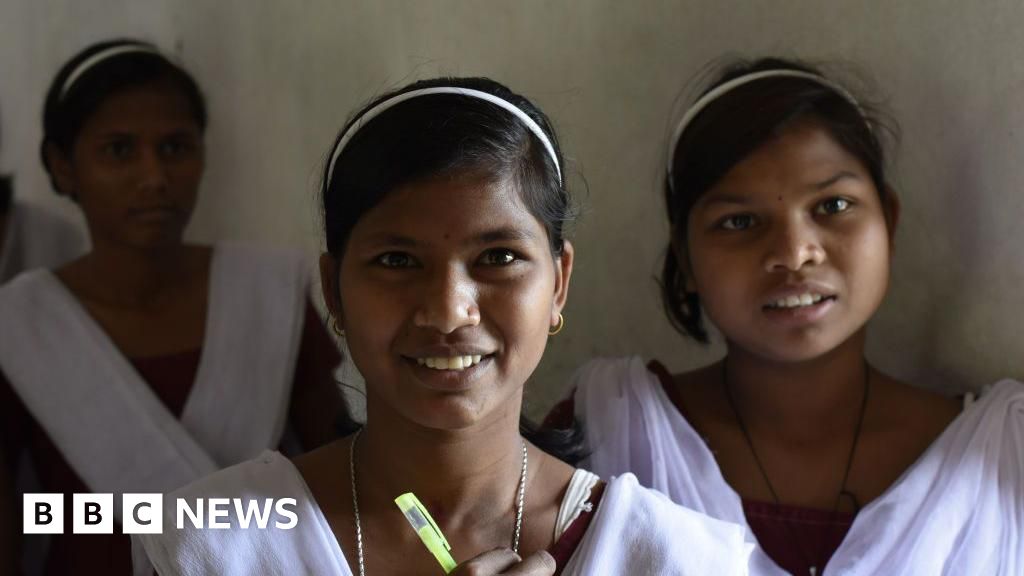
India began its first census in more than 15 years on Wednesday, starting a two-phase, year-long count that will ask more than 1.4 billion people about housing, education, internet access, and household makeup. More than three million officials will fan out across 36 states and federally administered territories, using mobile apps for the first fully digital census and offering an online self-enumeration portal in 16 languages. The count will also collect caste data, which raises the stakes far beyond basic demographics because census totals feed into welfare planning, funding formulas, and future political representation. The delay since the missed 2021 round has left policymakers working with badly aged numbers while India passed China as the world's most populous country and kept one of the youngest age profiles among major economies.
India's last census was in 2011. The 2021 round was first delayed by the pandemic and then pushed back again, leaving a long gap in the data used for public policy.
Oracle cut staff across engineering, architecture, operations, and program management on Tuesday, according to employees and managers posting on LinkedIn, adding another big company to the list of tech firms trimming headcount while pouring money into AI. Oracle did not comment, but workers described early-morning termination emails, one month of severance, and broad cuts that were not tied to individual performance reviews. One employee told the BBC that the drop in active accounts on the company's internal Slack suggested roughly 10,000 people may have been affected so far. The cuts land at a moment when Oracle is spending heavily to build out cloud infrastructure for AI demand and has said its own internal AI tools let fewer employees do more work. That mix of capital spending and labor cuts is becoming the sector's default playbook.
Oracle is one of the biggest enterprise software and cloud vendors. Its recent growth pitch has leaned hard on AI infrastructure, data centers, and tools for business customers.
Two moves by the Democratic Republic of Congo point the same way: Chinese mining groups are tightening their hold over one of the world's richest piles of battery and industrial minerals. Kinshasa canceled permits held by Australia's AVZ Minerals for unpaid surface-rights fees, the second big setback for the company after it lost the Manono lithium concession in 2023. Days later, Congo's mines minister signed a cooperation memorandum in Beijing with China's natural-resources ministry, creating a formal channel for geology and mineral-investment projects. Chinese companies already control an estimated majority of Congo's cobalt, lithium, copper, and coltan reserves, so the new deal looks less like an opening move than a consolidation round. For Western governments that want non-Chinese supply chains for EVs and strategic metals, Congo is getting harder to prise open.
DR Congo holds much of the world's cobalt and large reserves of copper, coltan, and lithium. Control over those deposits matters for batteries, electronics, and defense supply chains.
Chiang Mai is once again choking on seasonal smoke, and the health damage is getting personal enough that some families are thinking about leaving town for part of the year. Residents told the BBC their children were getting frequent nosebleeds as a blanket of haze settled over the city, while satellite data showed a record 4,750 hotspots across Thailand on Tuesday, mostly in forested areas. On Wednesday morning Chiang Mai's PM2.5 reading was classed as very unhealthy. The smoke comes from the usual mix of field burning before planting season and dry-weather wildfires, but the scale this year has pushed local officials to close parks in high-risk areas and threaten arrests for arson. Northern Thailand deals with this every fire season; what stands out now is how normal it is becoming for parents to weigh moving against staying put.
PM2.5 refers to tiny airborne particles that can penetrate deep into the lungs and bloodstream. Northern Thailand sees annual smoke spikes during the dry season, often linked to burning in farms and forests.
Researchers at NYU Langone estimate that exposure to two common phthalates used to soften plastics may have contributed to roughly 1.97 million preterm births and 74,000 newborn deaths worldwide in 2018, with a similar burden linked to a common replacement chemical, DiNP. Their paper in eClinicalMedicine is a global modeling study rather than a direct causal trial, so the authors are careful about uncertainty. Still, the numbers are big enough to sharpen an old criticism of chemical regulation: one compound comes under pressure, industry swaps in a close cousin, and the health risk may not change much. The heaviest estimated burden falls on the Middle East, South Asia, and Africa, where plastics production or waste exposure is high and neonatal care is often weaker. The point is not that cling wrap alone causes preterm birth. It is that background chemical exposure may be moving population-level outcomes.
Phthalates are used in packaging, cosmetics, detergents, and many household goods. Preterm birth raises the risk of infant death and long-term developmental problems, which is why even modest exposure effects can add up fast.
The strongest argument in Casey Newton's essay is that the recent jury wins against Meta and YouTube do not have to end with either total platform immunity or a speech-chilling collapse of Section 230. The new path around the law is design liability: plaintiffs say harms came not just from user posts but from recommendation systems, autoplay, infinite scroll, beauty filters, push alerts, and other product choices built to keep children engaged. That alarms internet-law scholars because the same theory could push platforms to lock down far more speech than regulators intended. Newton agrees the risk is real, especially when prosecutors start treating encryption itself as suspect. But he argues the better line is to police addictive or deceptive product design while preserving broad protection for user speech, rather than pretending platforms are passive pipes or opening the door to liability for everything users say.
Section 230 of the Communications Decency Act usually shields platforms from liability for user posts. The current cases test whether that shield still holds when the alleged harm comes from product design instead of the content itself.
Artemis II is still a NASA mission on paper, but the military frame around it is getting harder to miss. The Space Force will track the launch and protect the range, Air Force rescue teams are on standby for an abort, and the Navy will recover Orion after its nine-day flight around the Moon. None of that is new by itself. What has changed is the Pentagon's view that cislunar space could become a real military theater as the United States and China both push deeper toward the Moon. Trump signed an order in December calling for tools to detect and counter threats to US interests all the way out there, and Space Force leaders are now talking openly about building cislunar capability into the service's long-term plan. Artemis II is therefore more than a return-to-the-Moon milestone. It is also a rehearsal for how national-security competition might follow NASA outward.
Cislunar space means the region between Earth and the Moon. It matters because future crewed missions, communications links, and lunar infrastructure would all have to move through it.
A Hong Kong startup is making a direct bet that large language models can help keep Cantonese alive instead of flattening it. Votee AI says it has open-sourced a Cantonese model after piecing together training data from forums, social platforms, university partners, and a hand-built dictionary that tags words by context and cultural meaning. That matters because Cantonese is a classic low-resource language problem: plenty of speakers, not nearly enough digitized text that matches how the language is actually spoken. Big models trained mostly on English and standard written Chinese tend to miss slang, tone, and local usage, which means software slowly nudges users toward Mandarin or generic Chinese instead of meeting them where they are. The broader point is bigger than Hong Kong. AI systems are turning into language infrastructure, so whatever they ignore starts disappearing faster.
Cantonese is spoken by tens of millions of people, but much of its everyday usage lives in speech, slang, and informal writing. That makes it harder to train AI systems than languages with large standardized text corpora.
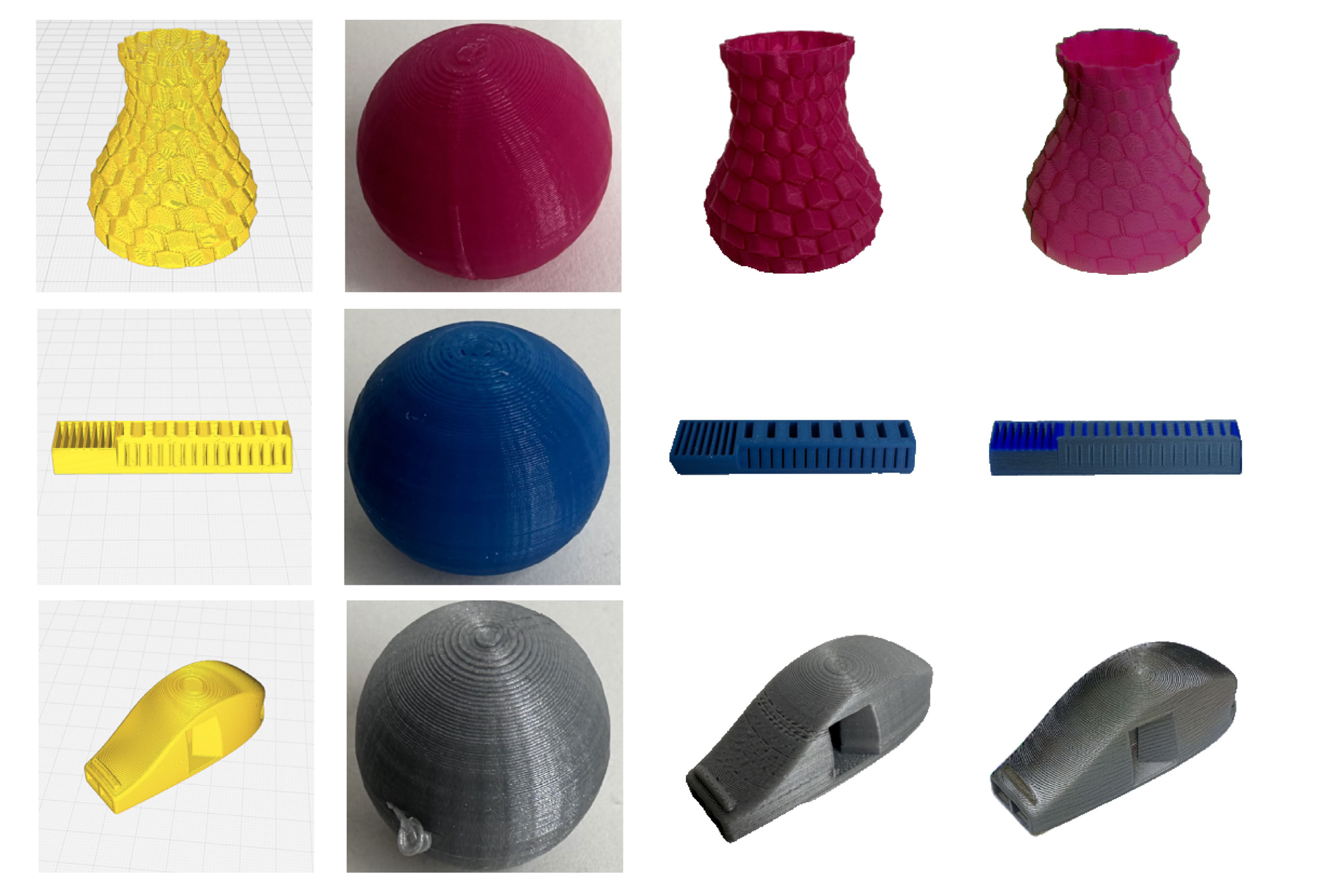
MIT researchers built a tool called VisiPrint that tries to solve a plain but costly problem in 3D printing: you can know an object will function and still end up hating how it looks. Most print previews care about geometry, not the color, gloss, translucency, and shading changes that show up after the material is melted, layered, and cooled. VisiPrint asks for a screenshot from standard printing software and one image of the print material, then generates an appearance-focused preview of the finished object. The researchers say that could cut down on discarded prototypes, which is not a small issue when some estimates put a third of 3D-printing material straight into landfills. The obvious uses are cosmetic ones like architecture models and movie props, but dentistry may be the better test case: temporary crowns and bridges have to work and also look right in someone's mouth.
The work focuses on fused deposition modeling, the common process where melted filament is laid down layer by layer. Tiny fabrication choices can change the final look much more than standard previews admit.