President Trump said Thursday that he had fired Attorney General Pam Bondi and would install Deputy Attorney General Todd Blanche as the department's interim chief. The move landed with almost no runway: Bondi had spent months as one of the administration's most visible legal defenders, and Trump still described her as a loyal ally even while showing her the door. That combination made the message harder to read as a clean policy reset and easier to read as another reminder that senior jobs in this White House remain personal appointments first, institutions second. Blanche now inherits a Justice Department already under strain from the Iran war, election-law fights, and the administration's broader effort to test the limits of executive power. A cabinet firing is not rare in itself. Doing it this suddenly at the top law-enforcement post is another matter.
Bondi, a former Florida attorney general, became one of Trump's most dependable legal and media allies. Blanche was previously one of Trump's personal defense lawyers before moving into senior Justice Department work.
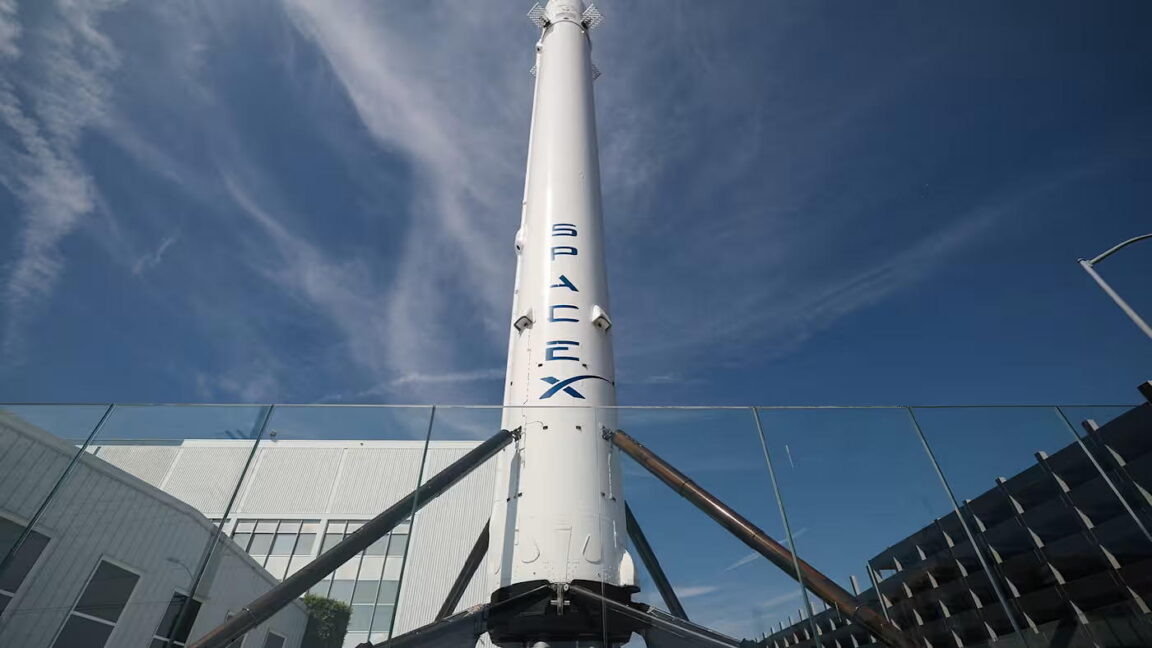
SpaceX has confidentially filed for an initial public offering, opening the door to a listing that could raise about $75 billion and value the company around $1.75 trillion. That would put it in public-market territory usually reserved for the very largest tech firms, and it would blow past Saudi Aramco's 2019 record as the biggest IPO on record. The filing matters beyond Elon Musk's personal wealth, though that will surge too. It would give public investors direct access to a company that now straddles rockets, Starlink, national-security launch work, and the satellite backbone of a growing chunk of the global internet economy. It also signals that Wall Street thinks the market can absorb a monster listing again after a long stretch in which private giants stayed private. SpaceX was worth roughly $90 billion in 2022. This filing says that era is over.
Confidential SEC filings let companies prepare an IPO without publishing full financials immediately. SpaceX's value has climbed through repeat private sales, and its March acquisition of xAI added another layer to Musk's corporate empire.
Google has launched Gemma 4, its first major refresh of the Gemma line in a year, and the part that stands out is not only the model upgrade. It is the license change. By moving the family to Apache 2.0, Google is giving developers a much clearer green light to build with the models commercially instead of asking them to trust a custom license that could be interpreted later. The technical pitch is aimed squarely at local and edge use: Google says the new models support native function calling, structured JSON output, long context windows, audio-visual work, and more than 140 languages, while the edge variants are tuned for phones, desktops, Raspberry Pi-class devices, and other constrained hardware. In other words, Google wants Gemma 4 to be the model you embed in a product, not just the one you benchmark for a weekend.
Gemma is Google's open-weight line, separate from the closed Gemini flagship models. Apache 2.0 is a permissive software license that gives developers far more freedom than Google's older, more restrictive Gemma terms.
Researchers told 404 Media that TeleGuard, a messaging app downloaded more than a million times and marketed as end-to-end encrypted, is built so badly that an attacker can recover a user's private key and read messages with little trouble. The most damaging detail is not some subtle cryptography mistake buried in a corner case. TeleGuard reportedly uploads users' private keys to a company server, which undercuts the whole premise of end-to-end encryption because the service operator can then decrypt the conversations itself. Researchers also said parts of the key could be derived just by intercepting network traffic. That turns a product sold on Swiss-made privacy branding into the opposite of what many users thought they were buying. Secure messaging is one of those markets where trust compounds slowly and evaporates all at once. Stories like this are why.
Proper end-to-end encryption keeps private keys on user devices so even the service operator cannot read messages. Once the keys are copied back to a server, that promise largely collapses.
Li Qiang is pushing what Beijing calls a "new-type power system," a phrase that sounds bureaucratic until you unpack what it is trying to solve. China has built renewable capacity at huge speed, but solar and wind are only as useful as the grid that can move, store, and balance them when demand spikes or imports wobble. Li's answer is a power network with more AI scheduling, more storage, more transmission flexibility, and better coordination between fossil generation and renewables. The timing is not accidental. Energy security looks different when the Strait of Hormuz is unstable and global fuel markets are jerking around by the week. So this is not only a green-transition story. It is also a state-capacity story: Beijing wants a grid that can keep factories running, keep households calm, and turn volatility abroad into a technical planning problem at home.
China's grid has to juggle huge industrial loads, fast renewable build-out, and regional mismatches between where power is generated and where it is needed. That makes storage and transmission policy almost as important as generation itself.
A California State University survey of 94,060 students, faculty, and staff found that 95 percent had used at least one AI tool, and most were using them on an ongoing basis. The result matters because CSU is not a boutique pilot. It is the nation's largest public university system, with 23 campuses, 460,000 students, and a systemwide OpenAI deal that gave everyone access to an education-specific version of ChatGPT. What the report shows is that higher education has already moved past the stage where administrators can treat AI as an edge case. The argument now is over terms of use, not whether use exists. Faculty responses captured that unease. Many provide guidance, some encourage AI, a sizable bloc discourages or bans it, and the rules differ from class to class. That inconsistency is quickly becoming its own academic policy problem.
CSU paid OpenAI $17 million last year to extend access across the system. The survey found ChatGPT dominated usage, while faculty policy remained split between encouragement, discouragement, bans, and silence.
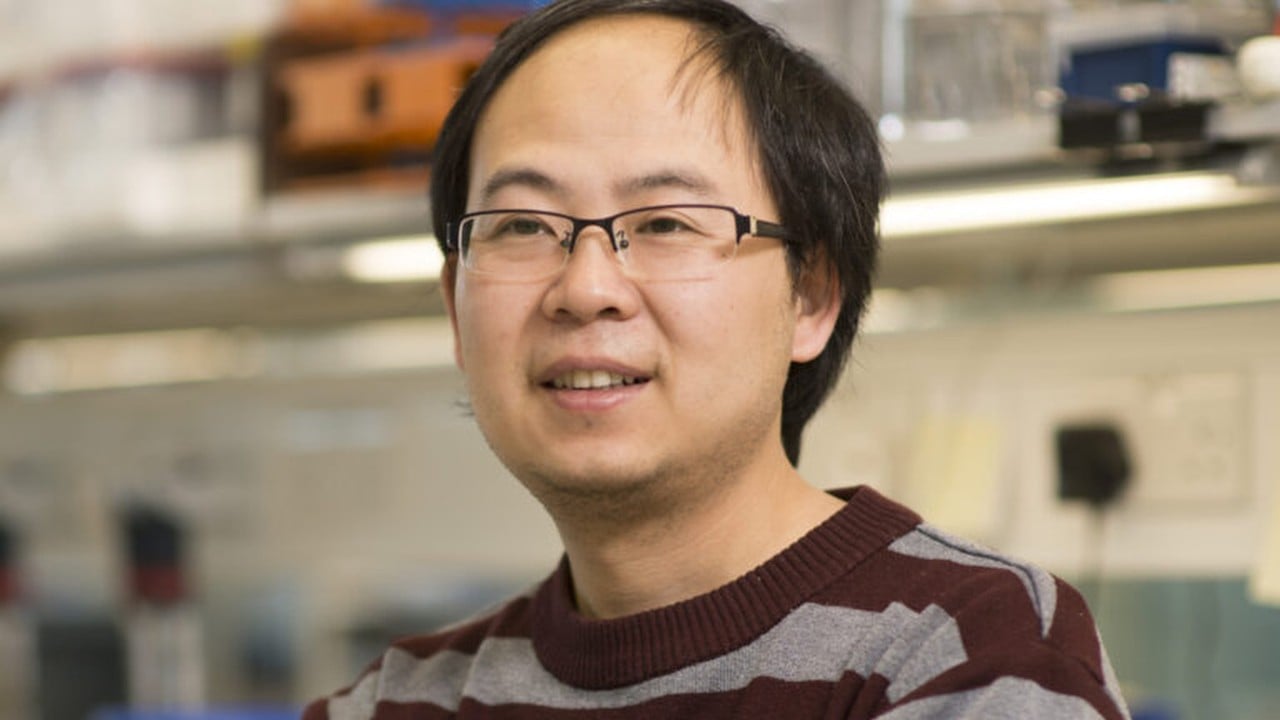
Structural biologist Zhang Kai is leaving Yale for the Chinese Academy of Sciences, and the reason he gave was blunt enough to cut through the usual talent-war boilerplate. In the United States, he said, it was "almost impossible" for a Chinese scholar to lead the kind of ultra-large cellular structure mapping project he wants to build. That makes this story about more than one lab move. Zhang works on observing proteins in action inside living bodies, a line of research that could feed a huge structural database rather than a single paper or instrument. His departure is a reminder that scientific competition is no longer only about salary, equipment, or visas. It is also about who gets to own the big platform project, who gets trusted with leadership, and where ambitious researchers think they can build something with their own name on the door.
China has spent years trying to attract senior researchers from top Western institutions. Recent moves have become more politically charged as U.S.-China relations, grant scrutiny, and campus tensions around Chinese scientists all intensified.
Sweden's retreat from screen-heavy schooling has moved well past symbolic nostalgia. The government is spending roughly $83 million on textbooks and teachers' guides, another $54 million on fiction and nonfiction books for students, and it plans to make primary schools phone-free nationwide. The shift follows years of concern that the country's early rush toward digital classrooms was not especially evidence-based and may have traded away the basics for the feeling of modernity. Officials are not saying laptops and tablets have no place. They are saying young students need reading, writing, attention, and handwriting first, with digital tools added later when they help rather than distract. That is a sharper reversal than many countries have been willing to admit. Sweden was once held up as a model for classroom digitalization. Now it is becoming the cautionary tale that others may copy.
Swedish test scores fell from 2000 to 2012, recovered somewhat, then slipped again by 2022. Researchers still debate how much blame belongs to screens, but the political momentum has swung hard toward analog fundamentals.
A new analysis of LIGO merger data points to a missing band of black-hole masses, and that gap may be the best evidence yet for one of astrophysics' strangest predicted explosions. In a pair-instability supernova, a star gets so massive and so unstable that it blows itself apart instead of collapsing into a black hole. The trouble has always been proving that such stars actually die this way, because the explosion leaves almost nothing behind to inspect. The new work takes the indirect route. By looking at which black-hole masses do and do not show up in merger events, researchers found a cutoff around 45 solar masses for the smaller object in a merger. That is close to what theory predicts if stars in that range destroy themselves entirely. Sometimes the cleanest evidence for something in space is a hole in the census.
LIGO detects gravitational waves from black-hole mergers rather than photographing the black holes directly. Researchers have long expected a black-hole "mass gap" if pair-instability supernovae really wipe out the heaviest stars before a remnant can form.
One of the stranger labor markets created by the AI boom now looks like this: workers in Nigeria and India strap iPhones to their heads, film themselves doing household tasks, and send the footage back so humanoid robots can learn how people move through the world. The work exists because embodied AI has a data shortage. Language models can be trained on the open web; robots need examples of hands, bodies, kitchens, floors, and the small adjustments humans make without thinking. So companies are building the dataset the hard way, by turning ordinary chores into labeled training material and spreading that labor through the gig economy. The result is a neat reversal of the old automation story. Before the robot can replace drudge work, a human being still has to perform it first, on camera, cheaply, and over and over again.
Humanoid systems need far more physical-world training data than chatbots do. That has created a new layer of remote piecework around data collection, teleoperation, and task labeling for robotics companies chasing general-purpose household automation.