Four astronauts left Florida on Wednesday evening aboard NASA's Artemis II mission, starting humanity's first crewed trip toward the Moon in 53 years. The crew includes three Americans and one Canadian, and their nine-day flight is meant to prove that Orion and the Space Launch System can carry people safely beyond low Earth orbit before NASA attempts a landing mission later in the program. This flight will not touch down on the lunar surface. Instead, it will loop around the far side of the Moon, test life-support and navigation systems, and bring the capsule back for a high-speed re-entry. The launch matters on its own, but it also resets a clock that had been stopped since Apollo 17 in 1972: the United States is once again flying humans into deep space, not just talking about it.
Artemis I flew an uncrewed Orion capsule around the Moon in 2022. Artemis II is the first crewed test, and a later mission is supposed to return astronauts to the lunar surface.
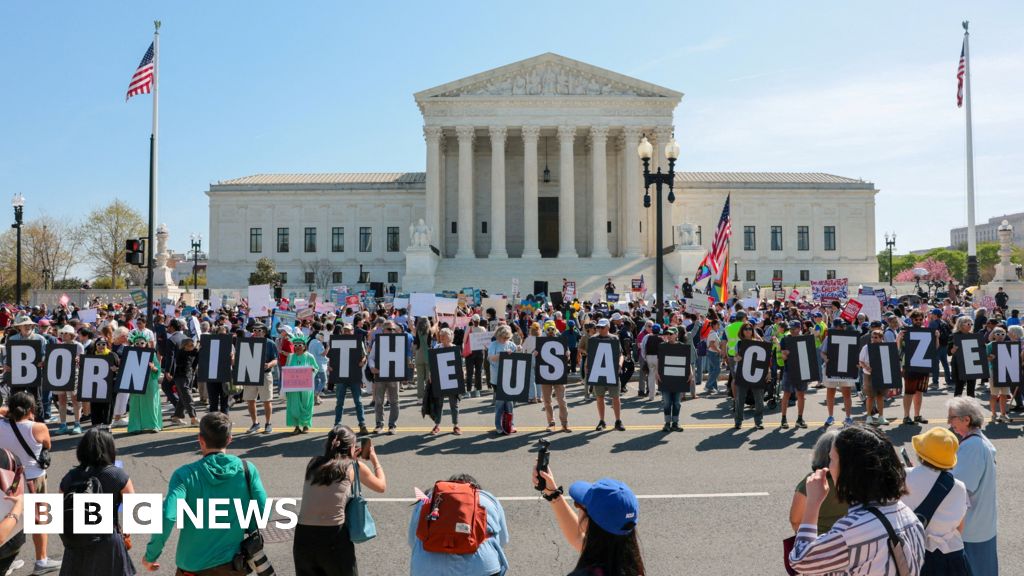
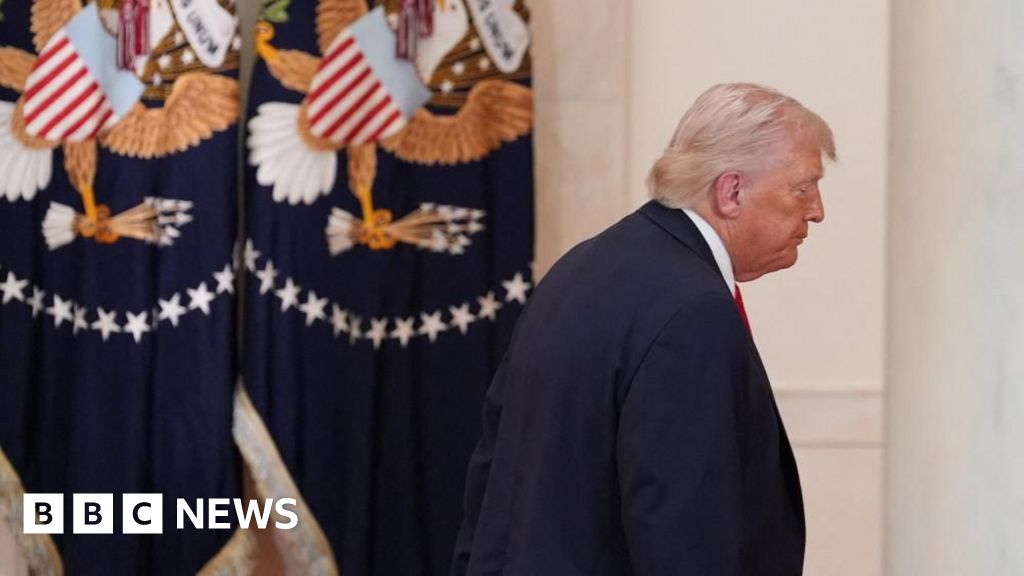
The Supreme Court appeared skeptical on Wednesday as the Trump administration defended its attempt to deny automatic citizenship to some babies born in the United States. During oral arguments, several justices seemed unconvinced that a president can narrow birthright citizenship on his own, especially when the 14th Amendment and more than a century of court precedent point the other way. Trump attended in person, which underlined how much political weight he has put on the case. The administration says the current rule encourages illegal immigration and goes beyond what the Constitution originally meant. Opponents say the order would upend settled law and strip citizenship from children whose only disqualifying fact is their parents' immigration status. A ruling against Trump would hand him another legal loss at the high court after last month's tariff decision.
Birthright citizenship comes from the 14th Amendment's guarantee that people born in the United States are citizens. Trump's order has been blocked before taking effect, so the case is also a test of how far executive power can reach.
Donald Trump used a 20-minute primetime speech on Wednesday night to argue that the Iran war is close to its final phase, saying the operation's "core strategic objectives" are nearly complete and may last another two or three weeks. What he did not do was explain what an actual end looks like. He offered little about ceasefire terms, postwar diplomacy, the cost of keeping oil routes open, or what would happen if Iran refused the demands already on the table. AP reported that the speech also skipped over the administration's own deadline for reopening the Strait of Hormuz. That gap is now the story. The White House wants Americans to believe the war is almost finished, but it is still asking the public to trust a plan that remains mostly offstage while casualties, fuel prices, and political pressure keep rising.
The US and Israel began striking Iran on February 28, 2026. Since then the war has pushed up oil prices, rattled markets, and turned the Strait of Hormuz back into a daily economic risk.
China's commercial space sector is starting to argue on price, not just patriotism. SCMP reports that CAS Space says its new Kinetica-2 launch vehicle costs about 30,000 yuan per kilogram of payload, roughly US$4,350, which would put it below the sticker price the company compares to SpaceX's Falcon 9. The claim matters less as a clean apples-to-apples benchmark than as a sign of where China's rocket firms think the race is heading: toward routine commercial launches, cargo flights, and a market where state-backed newcomers want to look like cheaper logistics companies rather than prestige projects. Kinetica-2 just made its inaugural flight carrying three satellites, including a prototype cargo spacecraft and a small orbital lab. China still trails SpaceX on flight cadence and reusability, but this is a louder signal than another generic promise to catch up someday.
Falcon 9 set the modern launch market's price and cadence standards, especially after SpaceX made booster reuse routine. Chinese commercial firms are now trying to build a private-launch sector alongside the country's state space program.
Pop Mart's latest results read like a blowout and a warning at the same time. Revenue for 2025 reached 37.12 billion yuan, up 185%, while net profit jumped 293% to 13.01 billion yuan, according to 36Kr. Investors still flinched, and the company spent four straight trading days buying back shares worth about HK$1.2 billion. The market's worry is obvious: has Pop Mart become too dependent on Labubu? The numbers cut both ways. Labubu and the wider THE MONSTERS line brought in more than 10 billion yuan and made up about 38% of revenue, which is enormous. But six other IPs each topped 2 billion yuan in sales, and 17 crossed 100 million yuan. That is not a single-character business. It is a hit machine whose biggest problem is that one hit has become almost too visible.
Pop Mart sells collectible designer toys built around recurring characters and blind-box drops. Labubu is the breakout global star, but the company's valuation now depends on whether it can keep building fresh characters instead of milking one mascot.
The early assumption that Trump's second administration might go easy on corporate concentration is wearing thin. The Verge describes a policy crowd that is no longer willing to give the White House the benefit of the doubt after a speech from acting antitrust chief Omeed Assefi and a fresh round of arguments over how hard the government should push merger and monopoly cases. The interesting part is not that Washington has discovered antitrust again. It is that the old bipartisan mood has started to split in a less predictable way. Some current officials still sound ready to keep a tougher line on dominant firms, while business lobbyists and many former enforcers are pressing for a friendlier posture. That leaves companies in an awkward spot: they spent months betting on a reset, and now the political case for softer enforcement looks shakier than expected.
Antitrust law is the part of US competition policy that targets monopolization, anti-competitive mergers, and other conduct that can lock markets up. Tech, ticketing, and platform businesses have been central targets in the latest enforcement wave.
A small software company noticed fake accounts with nonsense names and then saw traffic spike on its forgot-password page. That turned out to be a textbook subscription-bombing attack, where bots sign a victim's email address up for hundreds or thousands of accounts so the inbox fills with junk while the real crime happens elsewhere. The buried messages are the point: bank alerts, purchase confirmations, and password resets disappear under a pile of welcome emails. Bytemash's write-up is useful because it treats this as an engineering failure, not just a weird abuse case. Any site that lets strangers trigger emails without strong checks can become part of the attack. The fix is not glamorous. It is rate limits, verification steps, and taking password-reset abuse as seriously as login abuse. The article's real message is that "we'll harden it later" is already a security decision.
Subscription bombing has become a common way to hide account takeovers and financial fraud in plain sight. The attacker usually does not care about the throwaway accounts themselves; they care about burying the one or two emails the victim actually needs to notice.
The leak of Claude Code's source tree turned into an accidental roadmap. Ars Technica reports that people combing through more than 512,000 lines of code found disabled or hidden references to features Anthropic has not fully shipped, including a background daemon called Kairos, a file-based memory system, an "AutoDream" mode for reflective cleanup when a user goes idle, and an "Undercover" setting that appears built for stealthier operation. Read together, the features point toward a coding assistant that does not simply wait for the next prompt in a terminal window. It would remember past sessions, keep working after the visible chat ends, and nudge users proactively when it thinks something needs attention. That is a bigger behavioral shift than another autocomplete boost. It suggests AI coding tools are moving from reactive helpers toward software colleagues that linger after you close the tab.
Most coding assistants still act like short-session tools tied to a visible editor or terminal. Persistent memory and background execution would push them closer to agents that manage longer-running work across sessions.
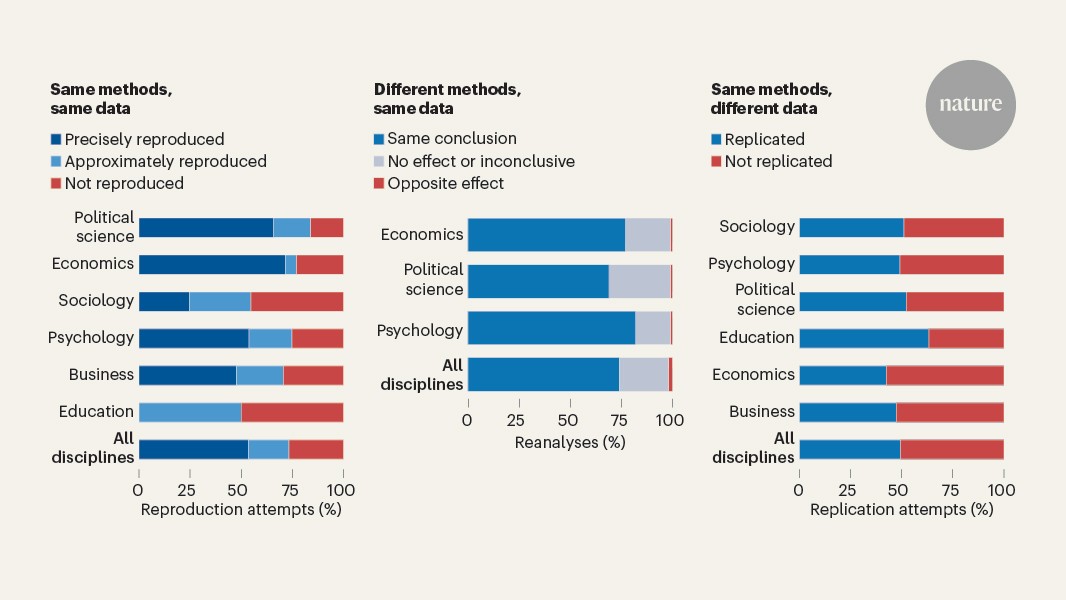
A large Nature project took a hard look at hundreds of social and behavioral science papers and came away with a picture that is more specific than the old "replication crisis" slogan. The effort examined a stratified sample of 600 papers from 62 journals published between 2009 and 2018, then split the problem into three different checks: whether studies could be reproduced from the original data and code, whether the analyses held up under reasonable alternatives, and whether new teams could replicate the findings. The answer was not a clean pass, but it was not universal collapse either. Newer papers did better, and journals that required data sharing did better too. That matters because it suggests the field's problems are not mysterious. A lot of them respond to boring institutional things like better archives, clearer workflows, and stronger norms about showing your work.
The replication crisis refers to the discovery that many published findings, especially in psychology and related fields, do not survive reanalysis or follow-up studies. This project tries to measure that problem in a more granular way instead of treating every failure as the same kind.
A study of more than 11,000 women suggests the old advice about moving more in midlife is not empty scolding. Even a few hours a week of moderate-to-vigorous physical activity was linked to a meaningfully lower risk of early death, and the benefit showed up even for women who were not especially active when they were younger. That is the part worth holding onto. Plenty of health stories quietly assume the real decisions were made years ago, which makes behavior change sound like a guilt trip disguised as science. This one points the other way. Midlife still looks like a period where habits can move the curve, not just slow a decline that is already locked in. The paper is observational, so it cannot prove that exercise alone caused the difference, but the finding is strong enough to make the "too late" excuse look weaker than ever.
Observational health studies track associations rather than assigning people randomly to different lifestyles. That means they cannot settle causation on their own, but they are still useful for spotting patterns big enough to matter in public health.