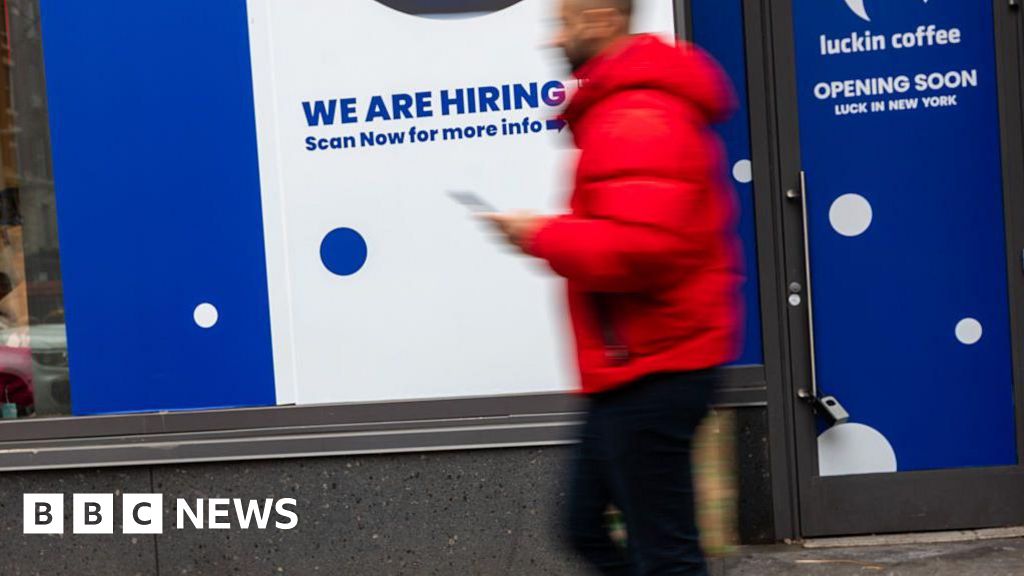
The US job market did not crack in March, even with the Iran war already pushing oil higher. Employers added 178,000 jobs, well above expectations, and the unemployment rate edged down to 4.3 percent. BBC reports that part of the rebound came from health-care hiring after strikes had depressed February's numbers, but the gains were not confined to one corner of the economy. Construction and manufacturing also added jobs. That matters because Washington is now trying to read two stories at once: a labor market that has cooled over the past year, and an energy shock that could still spill into transport, food, and consumer spending. The payroll number does not settle that argument. It does make the Federal Reserve's wait-and-see stance easier to defend, since a resilient jobs report gives it more room to worry about inflation before cutting rates.
Trump has been pressing the Fed to cut rates. Fed officials have held back, arguing that inflation is still above target and that war-driven energy costs could make the next few months harder to read.
Ma Xingrui, a Politburo member and the former party chief of Xinjiang, is under investigation for "serious violations of discipline and law," according to Xinhua via SCMP. On paper that is the familiar language of a corruption case. In practice it is a sign that Xi Jinping's discipline apparatus is still reaching into the very top of the system. SCMP notes that Ma is the third Politburo member from the current term, which began in 2022, to fall under investigation, something China has not seen in decades. The detail that gives the story extra weight is where Ma sat in the power map: he was not a provincial minor figure but a senior national politician with a high-profile stint in Xinjiang and earlier work in aerospace. When anti-graft probes start landing this high and this often, they stop looking like cleanup alone and start looking like ongoing political sorting.
The Politburo is the CCP's top decision-making body below the Standing Committee. Recent investigations have also reached the Central Military Commission, which suggests the anti-corruption campaign is still entangled with elite power management.
Google DeepMind released Gemma 4, the newest version of its open-model family, and this one looks less like a lightweight side project than a real bid to stay in the open-model conversation. DeepMind's own page shows large gains on math, coding, multimodal reasoning, and tool-use benchmarks over Gemma 3, including much stronger AIME 2026 and LiveCodeBench scores. The pitch is not only raw intelligence. Google is also selling Gemma 4 as a family that can scale from small deployments up to models that are good enough for serious agent-style workflows. That matters because the open-model market is now crowded with Chinese labs, Meta, and a long tail of fine-tuning communities. If Google wants Gemma to matter, it has to give developers something beyond brand comfort. On the first numbers, it may have done that.
Gemma is Google's openly released model line, separate from the closed Gemini consumer products. Open-model releases now matter partly because they determine what smaller labs, startups, and hobbyist developers can run or fine-tune without using a hosted API.
via Higher Ed Dive, Indiana Commission for Higher Education
Indiana's public colleges are moving toward one of the biggest state-led academic pruning efforts in the country. A law that took effect last year forces programs to clear minimum graduation thresholds based on a rolling three-year average, and Higher Ed Dive reports that the state's review left roughly 580 programs headed for elimination or merger. The thresholds are blunt: as few as three graduates a year for doctoral programs and 15 for bachelor's programs. More than 1,000 programs missed the bar, but the state allowed about 470 to survive, which still leaves a huge trim. The point of the law is obvious enough. Legislators want to stop colleges from carrying low-demand majors forever. The risk is just as obvious. Once the state starts using headcounts as the main test of academic value, small disciplines, niche languages, and regional campuses are the first things to look expendable, even when they matter locally or feed longer-term institutional goals.
Indiana is not stopping at enrollment. A newer law will also push the commission to review programs whose graduates fail to clear earnings thresholds, which means labor-market outcomes are moving closer to the center of state higher-ed policy.
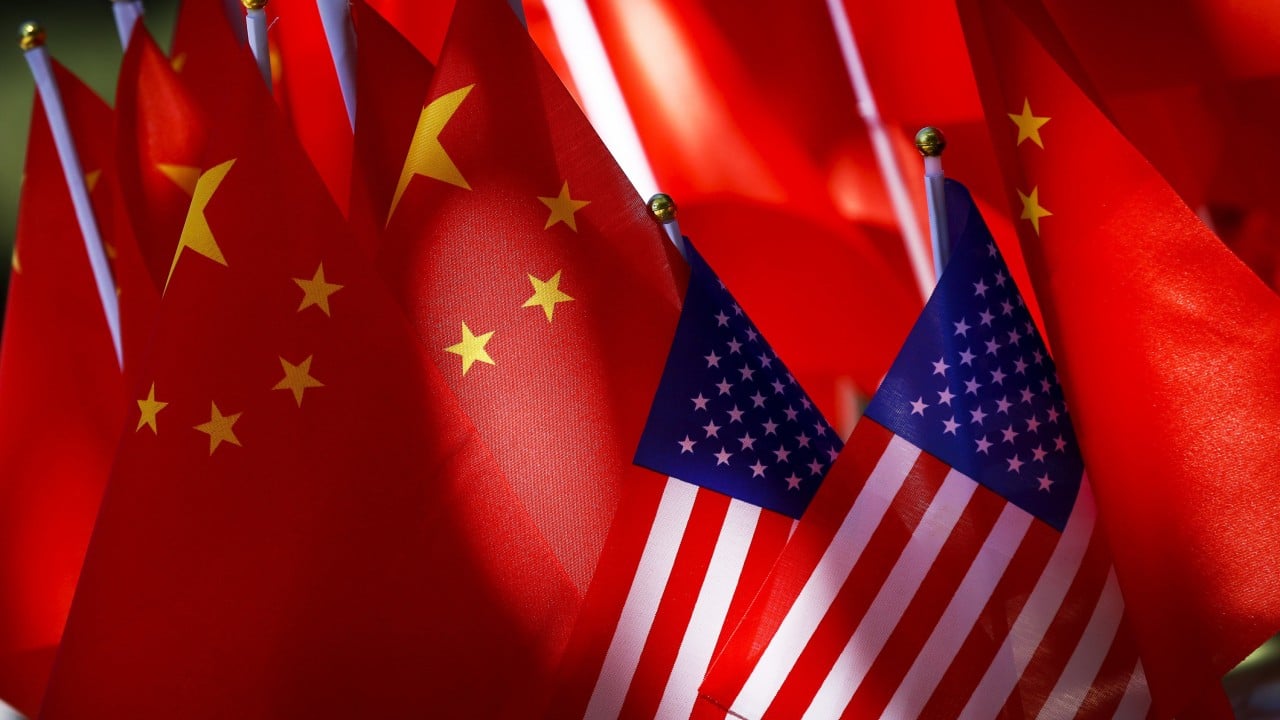
The United States handed a Chinese drug suspect back to China through ICE, giving Beijing a small but notable cooperation story at a time when the bilateral relationship is mostly about tariffs, tech controls, and military suspicion. According to Xinhua, cited by SCMP, the suspect, identified only as Han, was repatriated after Chinese narcotics authorities provided information through existing cooperation channels. Chinese officials called it the first such drug-related handover in years. That is the part worth noticing. Washington and Beijing still have a few narrow policy lanes where both sides can claim practical gains, and counternarcotics is one of them. A single return does not mean the relationship is thawing. It does show that even in a harsher strategic climate, law-enforcement cooperation can survive where both governments think the domestic optics are favorable.
US-China cooperation on fentanyl precursors and broader drug enforcement has swung up and down with the wider relationship. Even when military and trade ties deteriorate, both governments still have reasons to show progress on narcotics cases.
A proposed class action says Perplexity's so-called Incognito Mode is not private in any ordinary sense of the word. Ars Technica reports that the complaint alleges chats, follow-up prompts, and identifiers were being shared with Google and Meta through ad-tracking systems, including cases where non-subscribed users could have entire conversations exposed through accessible URLs. The suit also claims that financial, health, and other sensitive information may have been swept up along the way. Those are allegations, not findings, but the case lands on a weak point for the whole AI-search category. These products invite people to type more intimate, more speculative, and often more sensitive text than they would put into a normal search box. That makes the privacy promise do a lot of work. If "private mode" turns out to mean only a thinner layer of marketing varnish over the same tracker stack, the credibility damage will travel beyond Perplexity.
AI search tools encourage long back-and-forth sessions, which means they often collect far richer personal material than a normal web query. That makes ad trackers and conversation logging more legally and politically explosive than they were in old search products.
Eli Lilly now has an FDA-approved weight-loss pill, and that matters because the market has been defined by injections. Scientific American reports that the once-daily drug orforglipron, which Lilly will sell as Foundayo, produced average weight loss of 27 pounds after 72 weeks at the highest dose in clinical trials. The obvious commercial story is convenience: many patients who are curious about GLP-1 drugs are still reluctant to inject themselves every week. A pill changes that. But the medical story is less clean. Foundayo still brings the familiar gastrointestinal side effects, and trial participants on the highest dose were more likely to stop treatment than people on placebo. So this is not a magic upgrade over the whole class. It is a potentially big market-expander. If oral options keep getting better, the next phase of the obesity-drug boom may be about who can make the easiest regimen stick.
GLP-1 drugs mimic gut hormones involved in appetite and blood-sugar control. The boom started with diabetes treatments, then expanded into obesity care, where convenience, side effects, supply, and insurance coverage now shape the commercial fight.
Rowhammer has spent a decade haunting ordinary memory chips. Now researchers are dragging the same basic idea into Nvidia GPU systems. Ars Technica reports that a new batch of attacks, including GDDRHammer, GeForge, and GPUBreach, can flip bits in graphics memory in ways that let attackers compromise the wider machine, not just a graphics workload. That is the unsettling part. GPUs are no longer side hardware for games and rendering. They sit at the center of AI training clusters, inference boxes, and an increasing share of high-performance computing. So a memory-corruption trick that used to sound like a weird DRAM lab stunt now lands in the middle of the AI stack. Not every system is equally exposed, and practical exploitation still depends on access and setup. Still, the paper is a reminder that accelerator security is lagging the importance of the hardware it is supposed to protect.
Rowhammer attacks work by repeatedly accessing memory rows until neighboring bits flip. Defenses have improved over the years, but each new generation of variants has shown that the underlying hardware problem is harder to bury than vendors would like.
The usual comforting line about quantum threats is that they are real but still far away. Two new results make that line harder to repeat with a straight face. Quanta reports that Google has found a version of Shor's algorithm that is about ten times more efficient than earlier approaches, while a separate Caltech-linked analysis argues that breaking a widely used P-256 elliptic-curve key might require around 10,000 qubits, not the old cartoon estimate of millions. None of this means today's encrypted traffic is about to melt overnight. It does mean the migration problem is no longer something institutions can dump on a future team. Post-quantum work is boring until it isn't. Once people accept that the attack date may arrive sooner than expected, every slow procurement cycle and every legacy system that still depends on old crypto starts to look like technical debt with a clock attached.
The US government has been standardizing post-quantum cryptography, but large migrations take years. The problem is not only building a quantum machine that works. It is replacing today's encryption before someone else does.
A Minnesota journalist is suing over an FAA flight restriction that bars drones within 3,000 feet of Department of Homeland Security facilities and mobile assets, a definition broad enough to cover the kind of moving ICE operations reporters might want to document. 404 Media says the temporary restriction was issued in January when immigration raids ramped up in Minneapolis, and the lawsuit argues that the rule is impossible to follow because journalists cannot know in advance where unmarked federal vehicles will be. That makes the dispute bigger than one local reporting fight. Governments have always tried to control the angle and distance from which enforcement actions are seen. Drones complicate that because they let small newsrooms and freelancers capture the same overhead view that used to require a helicopter budget. If the state can declare large floating no-fly bubbles around mobile law-enforcement activity, that tool will not stay limited to one immigration crackdown.
The restriction covers not only fixed DHS sites but mobile assets, which is why critics say it reaches far beyond ordinary site security. The case turns a niche drone rule into a broader fight over reporting access and viewpoint control.