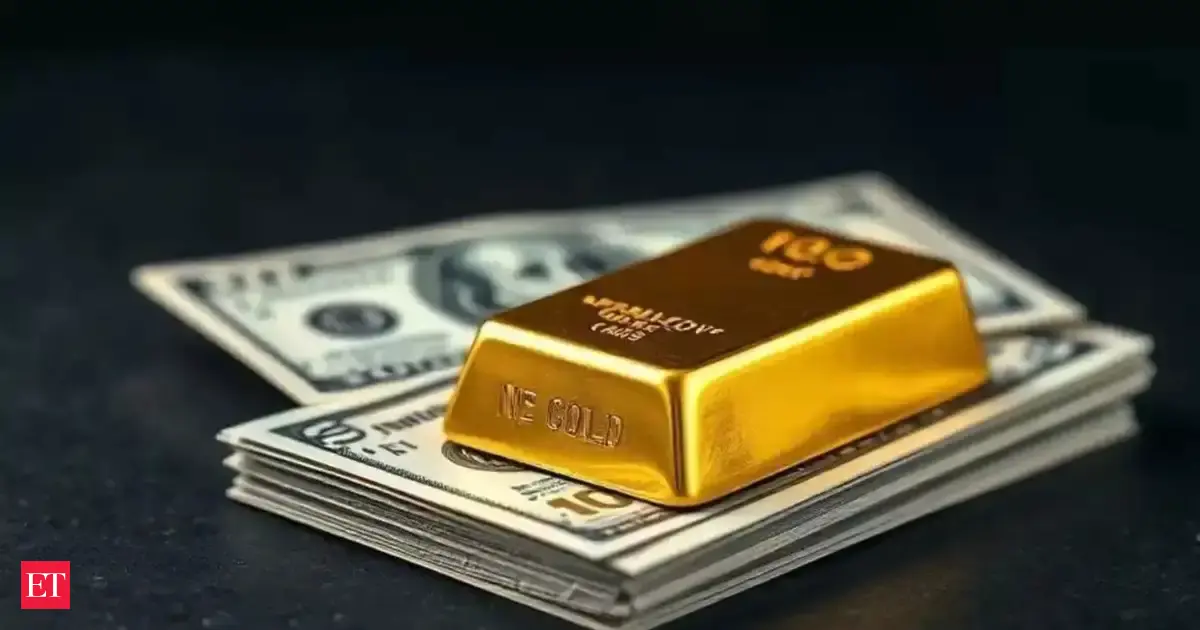
Foreign central banks now hold slightly more gold than U.S. Treasuries, a symbolic shift in the plumbing of global finance. The broad picture, drawn from World Gold Council data and summarized by Economic Times and FXStreet, is that official gold holdings have climbed to about $4 trillion while foreign Treasury holdings sit just below that. This is partly a price story, since gold surged in 2025. It is also a trust story. Central banks have been buying more than 1,000 tonnes a year for several years running, with China, India, Turkey, and Gulf states among the more visible buyers, as governments look for reserve assets that cannot be frozen, sanctioned, or inflated away by Washington. The dollar is still the world's core currency. But the reserve mix around it is getting less loyal, and that matters because Treasury demand has long helped the United States finance very large deficits at relatively low cost.
Gold reserves last exceeded foreign Treasury holdings in the mid-1990s. The new shift does not dethrone the dollar, but it does show more governments building insurance against sanctions, fiscal stress, and political risk in the United States.
via Higher Ed Dive, White House, U.S. Department of Education
Trump's fiscal 2027 budget proposal goes straight at the parts of federal higher-ed policy built around access. Higher Ed Dive reports that the plan would again wipe out TRIO and GEAR UP, zeroing out programs that help low-income and first-generation students get to and through college, while also cutting $354 million in grants for minority-serving institutions. The Education Department's overall discretionary budget would fall to $76.5 billion, and higher-ed programs alone would lose roughly $2.7 billion. The administration is openly framing this as a step toward shrinking the department itself. Congress still writes the final spending bills, so this is not an accomplished fact. Still, the proposal is useful as a policy map. It shows that the administration's preferred version of higher-ed reform is not mostly about efficiency or paperwork. It is about pulling federal support away from access pipelines, identity-linked campus funding, and a broad federal role in college opportunity.
TRIO and GEAR UP are long-running federal college-access programs. Minority-serving institutions include HBCUs, Hispanic-serving institutions, and other campuses that receive targeted federal support because of whom they enroll and serve.
The timing is almost theatrical: while Artemis II is on its way around the Moon, the White House is asking Congress to cut NASA's budget by about 23 percent. Ars Technica reports that the fiscal 2027 request would drop the agency to $18.8 billion, down $5.6 billion from the current level, while steering money toward the administration's headline goals of beating China back to the Moon and pushing harder toward Mars. The cuts would land elsewhere. Space science, Earth science, and pieces of the broader research portfolio would take the hit, and Nature reports that the administration is again proposing wider federal science cuts across agencies. Congress rejected a similar NASA squeeze last year, so the request is not the last word. But it does show the governing idea. In this budget, exploration survives mainly when it can be sold as geopolitical prestige; the rest of civil science is treated as overhead.
Artemis II is a crewed lunar flyby, not a landing mission. NASA's science divisions cover everything from planetary probes to Earth-observing satellites, so cuts there ripple far beyond the Moon program itself.
Cuba has begun freeing more than 2,000 prisoners in a move that looks humanitarian on the surface and highly strategic underneath. BBC reports that those slated for release include foreign nationals, women, younger detainees, and people over 60, with the first groups already leaving prison and reuniting with relatives. The release comes as the island is under heavy new strain from the Trump administration's effort to squeeze the regime through oil restrictions and open talk of political change. Cuba has also been dealing with blackouts and fuel shortages severe enough to threaten daily life. That makes the prisoner move easier to read. Havana may be trying to relieve domestic pressure, improve its international optics, and create a little room for maneuver without conceding the core political fight. Human Rights Watch says Cuba still holds hundreds of political prisoners, so the gesture does not erase the deeper repression. It does suggest the government thinks the moment is dangerous enough to make concessions.
The United States has tightened pressure on Cuba since Trump's return, including steps aimed at the island's oil supply. Cuba's prison system became a bigger international issue after the 2021 protests and the crackdown that followed.
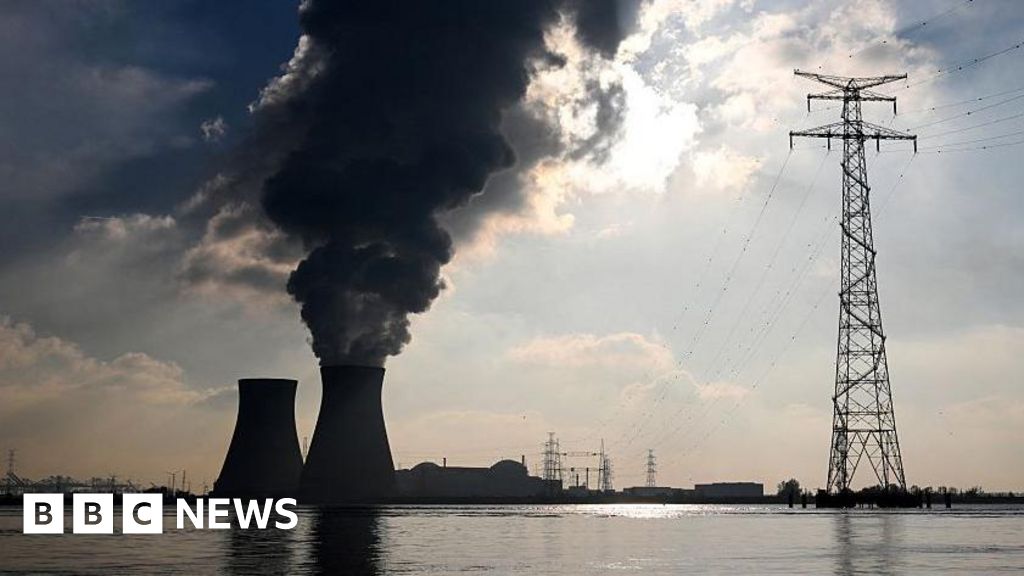
Europe is having an unpleasant flashback. As the war-driven jump in oil and gas prices feeds another round of anxiety about energy security, governments and EU officials are again asking whether nuclear power needs to be a bigger part of the continent's answer. BBC reports that the Commission is urging households and businesses to conserve energy, while leaders who spent the post-Fukushima years phasing reactors out are now talking about nuclear as a domestic buffer against imported fuel shocks. The catch is speed. New reactors take years, sometimes decades, to finance and build, so nuclear is a hedge against repeated crises more than a fix for this month. Still, the political turn matters. Europe's first energy panic after Russia's invasion of Ukraine revived the language of resilience; this second one is reviving technologies that many governments had treated as politically exhausted. If the continent decides the age of cheap fuel imports is over, the old anti-nuclear consensus may be over too.
Europe's energy politics were already reshaped by Russia's 2022 invasion of Ukraine. Nuclear's appeal now rests less on climate rhetoric than on the hope of reliable domestic supply when imported fossil fuels become expensive or insecure.
via Ars Technica, International Renewable Energy Agency
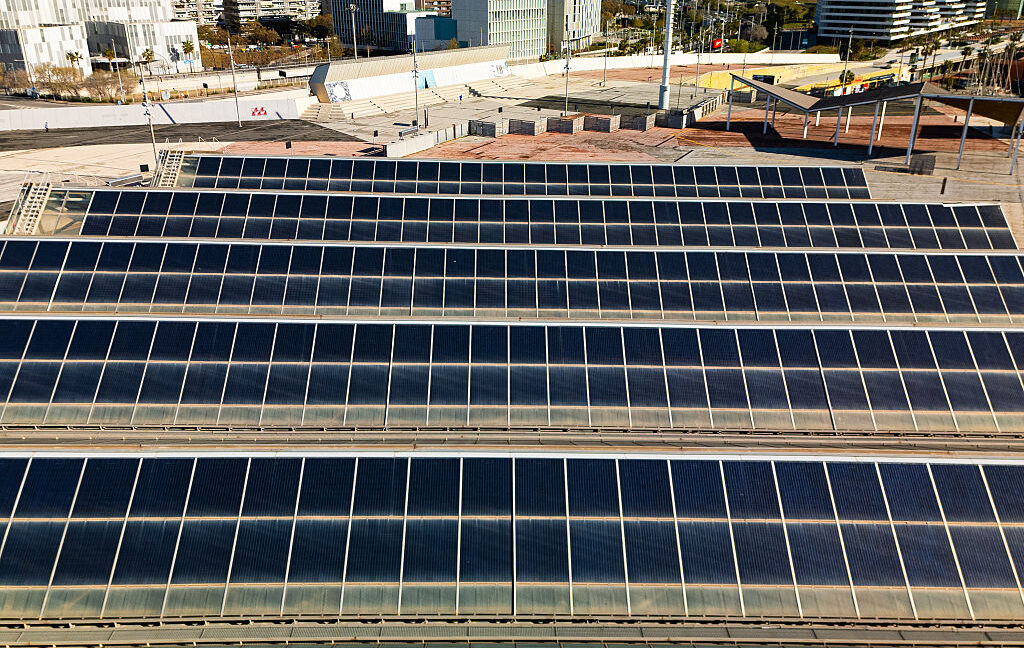
One number from the new IRENA data says a lot about where the electricity system is headed: 86 percent of all new generating capacity added worldwide in 2025 was renewable. Ars Technica reports that solar did most of the work, with wind still growing strongly and hydro adding a smaller bump behind them. The raw capacity numbers are not the same as actual electricity produced; solar farms do not run all day, and wind output varies. Even so, the direction is hard to miss. New fossil-fuel projects are no longer the default way the world expands its grid. What makes this more than a climate story is that it is happening during another fossil-fuel price shock. That gives renewables a second argument beyond emissions. They are becoming a hedge against volatile fuel markets. The politics of energy transition can still turn ugly. But on last year's buildout numbers, investors and utilities already seem to have made up a lot of their mind.
Capacity measures how much power plants can produce at full output, not how much they actually generate over a year. That is why solar can dominate new capacity and still trail older sources in total electricity produced.
MIT researchers say they have found a scalable way to make high-quality moire crystals, and the payoff is not just better materials engineering. In the structures they built, electrons appear to tunnel as if they briefly passed through an extra dimension before returning, giving physicists a much cleaner handle on a class of quantum behavior that had been theoretically enticing and experimentally messy. MIT describes the result as a route to studying four-dimensional quantum effects inside a material that still sits in our ordinary three-dimensional world. That sounds like science-fiction phrasing, but the practical point is more grounded. If researchers can reliably build these crystals, they may get a better platform for studying superconductivity and designing unusual electronic states rather than chasing fragile one-off samples. A lot of condensed-matter physics moves forward this way: not with one dramatic device, but with a better fabrication trick that suddenly makes weird behavior easier to reproduce.
Moire materials are built by stacking very thin crystal layers with a slight mismatch in angle or spacing. That mismatch creates large repeating patterns that can give electrons unusual collective behavior.
A large fossil haul from Yunnan is pushing complex animal life deeper into prehistory. Scientific American reports that hundreds of newly described fossils from about 539 million years ago show body plans and ecological behavior that many researchers had associated mainly with the Cambrian explosion, the famous burst when animal life seems to get suddenly more elaborate in the rock record. The new material suggests at least some of that complexity was already present in the late Ediacaran, which means the "explosion" may have been less of a clean starting gun and more of a period when preservation finally caught up with evolution. That matters beyond paleontology trivia. One of the long-running fights in early animal history has been whether fossils and genetic clocks are telling incompatible stories. Finds like this narrow the gap. They do not erase the mystery of why complex life took off when it did, but they make the timeline look less like a miracle and more like a transition.
The Ediacaran period came just before the Cambrian. The Cambrian explosion is the name for the interval when many major animal body plans become much more visible in the fossil record.
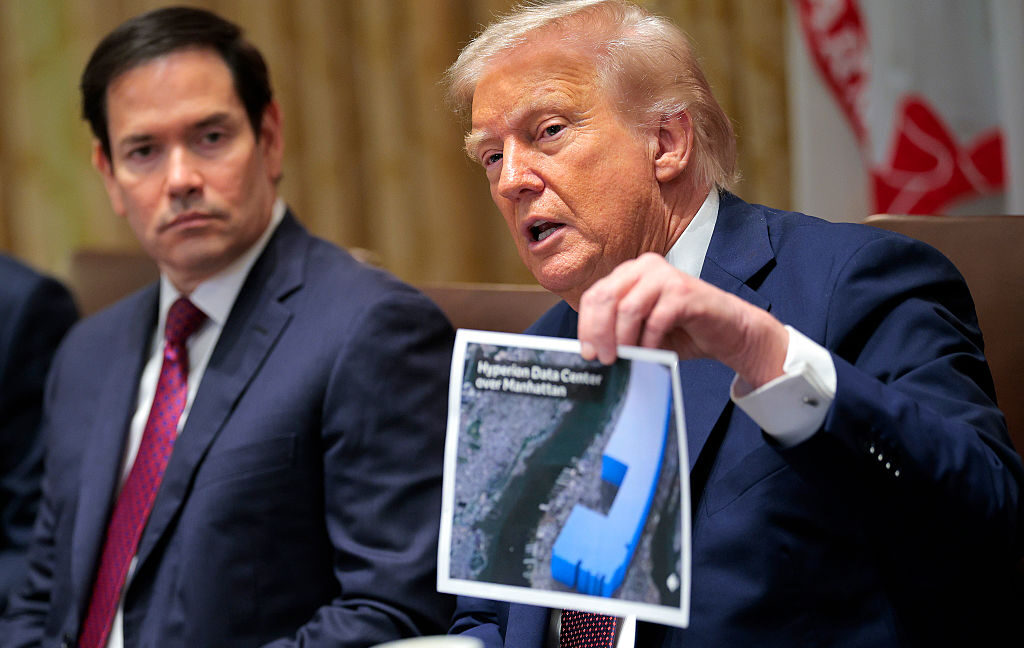
Washington keeps talking as if AI leadership is mostly a question of chips and model talent. The less glamorous bottleneck is electricity hardware. Ars Technica, citing Bloomberg's reporting, says almost half of the U.S. data-center projects planned for this year are expected to be delayed or canceled because developers cannot get enough transformers, switchgear, and batteries to build the power systems around them. Those parts already had ugly lead times. Tariffs on Chinese imports have made the crunch worse, even though China has been a major supplier of this equipment for years and domestic manufacturing still cannot fill the gap. That turns Trump's data-center policy into a self-own. He wants faster AI buildout, but some of the same trade measures meant to strengthen American industry are slowing the physical infrastructure AI needs. It is a useful reminder that compute races are not fought only in model weights and GPU benchmarks. They are fought in substations, warehouses, and procurement queues.
Transformers and switchgear are the equipment that let large facilities connect to and manage electrical power. AI campuses need huge amounts of both, so shortages in those parts can delay projects even when land, money, and GPUs are already lined up.
A new paper from University of Pennsylvania researchers tries to name a habit a lot of people already recognize in themselves: once a chatbot sounds smooth and confident, users often stop doing the extra mental step that would catch a bad answer. Ars Technica reports that the authors call this "cognitive surrender," and they tested it with variants of Cognitive Reflection Tests designed to reward people who pause and override an intuitive but wrong response. Many participants using AI assistance did worse at that pause. They accepted polished answers that were faulty, or let the model frame the problem for them before they had really thought it through. That is a different failure mode from ordinary automation. A calculator takes over arithmetic while you still know what question you asked. A chatbot can quietly take over the question-forming part too. If that pattern holds up outside lab tasks, the risk from AI is not only misinformation. It is the slow loss of the habit of checking.
Cognitive Reflection Tests are designed to tempt people into an immediate but wrong answer, then reward those who slow down and reason through the trap. They are often used to study impulsive versus reflective thinking.