via Scientific American, NASA, MIT Lincoln Laboratory
NASA's Artemis II crew has successfully transmitted high-definition 4K video and photographs from lunar orbit using an optical laser communications system—a historic upgrade from the radio signals that carried grainy footage during Apollo missions. The O2O (Orion Artemis II Optical) system, developed over two decades by NASA and MIT Lincoln Laboratory, sends data at 260 megabits per second, roughly 10 times faster than traditional radio links. The pristine images show Earth receding as the crew approaches the Moon for their historic first crewed lunar flyby in over 50 years, scheduled for April 7. The laser system uses near-infrared light beamed to specialized ground stations in California and New Mexico, allowing live transmission of scientific data and video at speeds previously impossible for deep space missions.
Artemis II represents NASA's first crewed mission to the Moon since 1972, serving as a dress rehearsal for the eventual Artemis III landing, which aims to put the first woman and person of color on the lunar surface. The laser communications demonstration on this mission paves the way for faster, richer data transmission for future deep space exploration and Moon base operations.
A 7.5-tonne unmanned cargo aircraft powered by China's independently developed megawatt-class hydrogen turboprop engine completed its maiden 16-minute flight on Saturday in Hunan province, marking the world's first test of a megawatt hydrogen-fueled turboprop at operational scale. The AEP100 engine, developed by China's Aero Engine Corporation, operated normally throughout the flight, reaching 220 km/h at 300 meters altitude over a 36-kilometer circuit. The successful test demonstrates that China has now mastered the complete technological chain for hydrogen-fueled aviation engines—from core components to full engine integration. The milestone comes as global energy markets roil from the Iran war, with hydrogen propulsion emerging as a strategic bet for China's aviation industry.
China's hydrogen aviation initiative reflects both environmental commitments and strategic energy independence goals. Hydrogen propulsion offers zero carbon emissions and independence from fossil fuel supply chains—crucial advantages given ongoing tensions in the Persian Gulf. The technology remains years behind commercialization, but successful test flights of this magnitude signal serious progress in next-generation aircraft propulsion.
President Trump said Sunday he has not ruled out deploying ground troops to Iran if diplomatic negotiations fail to produce a deal, marking an escalation in rhetoric around the ongoing conflict. When asked whether he would exclude ground troops from his Iran strategy, Trump told The Hill: "No," citing the need to move quickly toward resolution. The Pentagon has meanwhile been preparing detailed military options for a potential ground campaign, including scenarios that would involve seizing control of the Strait of Hormuz and capturing Iran's enriched uranium stockpiles. Trump has also signaled willingness to unleash massive bombing campaigns, with crude public statements describing plans for "Power Plant Day" and "Bridge Day" attacks. The combination of unfiltered rhetoric and serious Pentagon contingency planning reflects an administration betting that escalatory threats will pressure Iran into surrendering concessions in ongoing, stalled negotiations.
The US has already conducted five weeks of air strikes against Iranian targets and lost two fighter jets in combat—the first such losses in over 20 years. Deploying tens of thousands of ground troops would represent a qualitative escalation of the conflict, with deep uncertainty about casualty projections, exit strategy, and international blowback. The administration maintains it is negotiating with Iran simultaneously, though Iranian officials have expressed skepticism about good-faith talks.
AI music generator Suno, despite claiming robust copyright protections, allows users to effortlessly generate near-identical reproductions of copyrighted songs—revealing a critical gap between stated policy and technical reality. The platform's filters are remarkably easy to circumvent: users can generate convincing imitations of hits by Beyoncé, Black Sabbath, and other artists with minimal effort and ambiguous prompts. Suno claims not to permit copyrighted material and that its system recognizes and stops infringing outputs, but repeated testing has shown the filters fail consistently. Warner Music Group settled with Suno in November 2025 under terms requiring new models trained on licensed content, yet copyright lawsuits from Universal and Sony remain pending. The core tension: most AI music training inherently requires exposure to copyrighted recordings to function; the question of whether Suno's filters actually prevent infringing outputs—or merely slow users down—remains unresolved.
The copyright question exposes a fundamental problem in generative AI: training models to create plausible outputs requires exposure to millions of examples—nearly all of which are protected works. Companies claim novel licensing or fair-use arguments, but courts have not yet ruled definitively on whether training on copyrighted material without permission is legally permissible.
A new study of 51 Finnish adults found that 30 minutes in a traditional sauna at 73°C (163°F) triggers a pronounced immune response, with direct mobilization of immune cells outpacing the release of cytokines—signaling molecules that coordinate immune function. Researchers exposed participants to controlled sauna conditions and measured both circulating immune cells and inflammatory markers in the blood. The findings challenge the conventional understanding of how sauna affects immunity: instead of the expected cytokine-driven response, direct immune cell activation dominated, suggesting sauna activates the immune system through a different biological pathway than previously theorized. The research adds to growing evidence that regular sauna use correlates with reduced susceptibility to respiratory infections and better cardiovascular outcomes—effects that may stem from this direct immune cell mobilization rather than hormonal signaling.
Saunas have been part of Scandinavian health culture for centuries; scientific validation is relatively recent. The immune-boosting effect appears to operate through multiple mechanisms including heat shock protein expression, which protects cells and may explain sauna's association with longevity. Finland's traditional sauna culture now has measurable immunological backing.
As Hungary holds parliamentary elections in nine days, synthetic AI-generated video deepfakes have begun targeting Viktor Orbán's main election rival in an apparent bid to influence voters weeks before the ballot. The deepfakes specifically depict the opposition candidate in compromising scenarios—a tactic that could reshape how elections in democracies are contested. Orbán, who has held power for 16 years, faces his strongest electoral challenge yet as younger, more EU-aligned opposition voters have consolidated behind a single challenger for the first time. The deployment of deepfakes underscores how AI-generated media can now be weaponized at scale in electoral contexts. Election observers and international media have flagged the deepfakes as evidence of information warfare, though attribution remains unclear—critics point to Orbán's government's record of controlling media narratives and state broadcasters.
Hungary's media environment is heavily skewed toward the government; many independent outlets have been pressured to close or accept state influence. The emergence of deepfakes in this context shows how synthetic media compounds existing information control challenges. International election observers are now flagging AI-generated disinformation as a new vector for electoral interference.
Rep. Adam Smith (D-Wash.), the ranking Democrat on the House Armed Services Committee, criticized the Iran war as a strategic mistake driven by the Trump administration's refusal to prioritize competing military needs. In a Sunday interview, Smith argued that repeated strikes against Iran are "hardening the regime" rather than forcing capitulation, while simultaneously diverting defense dollars from naval modernization, military readiness, and strategic competition with China. "This war was a mistake in large part because of the cost," Smith said, laying out the opportunity-cost argument: every dollar spent on sustained operations against Iran is a dollar unavailable for other defense priorities. Smith's critique frames the Iran conflict not as morally indefensible but as strategically wasteful—a framing that resonates across ideological lines among defense analysts concerned about diffuse US military commitments. The argument suggests Democratic opposition to the war may center on priorities and execution rather than hawkish vs. dovish ideology.
Smith is one of the most respected defense voices in Congress and has historically been willing to support military action when he judges it strategically sound. His break with the administration on cost grounds—rather than pure opposition—carries weight in debates about military budgeting and national priorities.
Following the abrupt firing of Attorney General Pam Bondi, Senator Tim Kaine (D-Va.) warned that the incident should caution Trump's next nominee to the position: the nation's chief law enforcement officer must maintain "independent gravitas and integrity" rather than serve as a loyalist. Bondi's removal—reportedly over perceived disloyalty regarding Ukraine policy—came mere weeks into her tenure as attorney general, signaling that the role is subordinate to presidential impulse rather than constitutional independence. Kaine's framing mirrors broader concerns among legal scholars that the AG position under Trump is increasingly a political tool rather than an independent law enforcement office. The statement reflects a Democratic strategy of flagging the institutional damage from rapid personnel turnover in sensitive national security and law enforcement roles.
The role of attorney general has historically been protected from political whim—Bondi's firing so quickly suggests a departure from that tradition. Her replacement will face immediate pressure to prove loyalty, potentially compromising the independence the position theoretically requires.
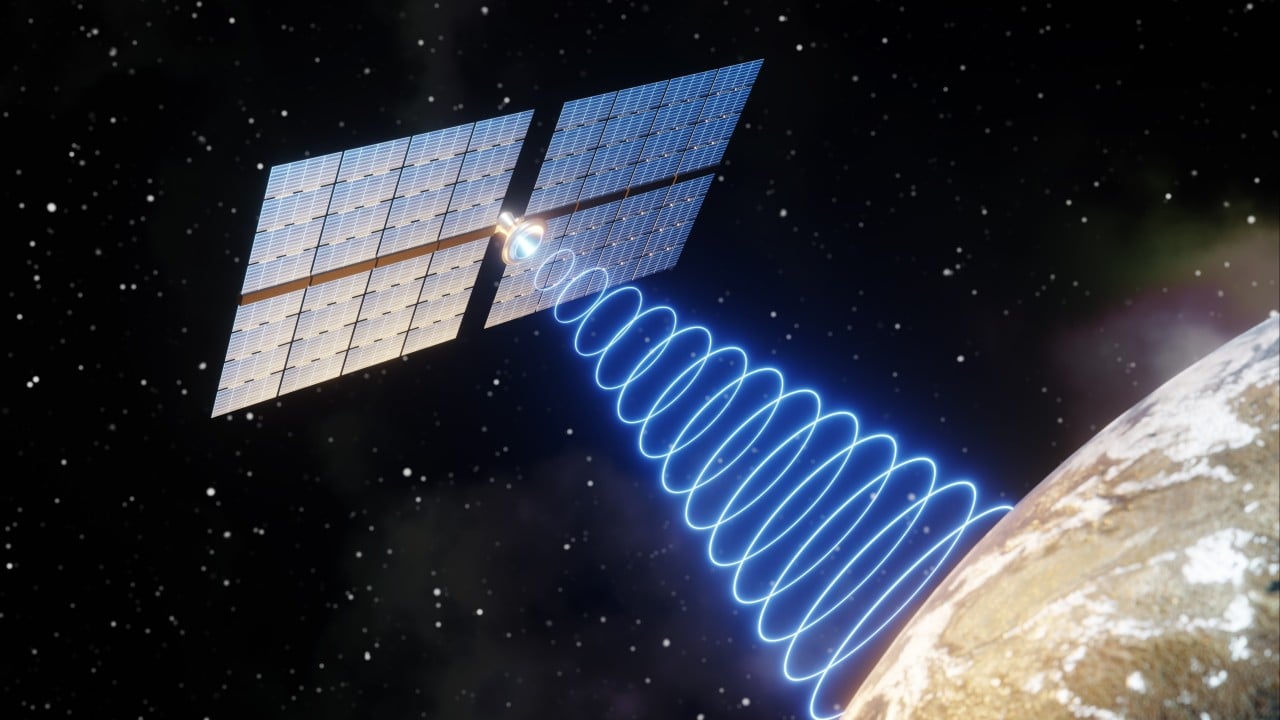
A Chinese scientist leading the government's "Zhuri" space solar power initiative has outlined potential military applications of orbital solar collectors—revealing that proposed designs could double as surveillance and electronic warfare platforms. Duan Baoyan, a senior architect of the program, published findings detailing how energy-beaming infrastructure in orbit could be repurposed for targeting, signal jamming, and electromagnetic warfare. The revelation offers a rare official glimpse into how dual-use civil technologies are evaluated within China's military strategy. Space-based solar power remains decades from practical deployment, but the early emphasis on military potential suggests defense applications are already shaping research priorities. The announcement underscores how energy infrastructure and military capability are increasingly intertwined in strategic competition over space.
Orbital solar power is being pursued by multiple nations as an eventual solution to energy scarcity. China's willingness to openly discuss military dimensions distinguishes its approach from Western programs, which typically keep military-civilian overlap implicit. The technical challenge of beaming energy from orbit—maintaining tight focus across vast distances—is the same skill required for directed energy weapons.
A security researcher discovered that customer email addresses from BrowserStack—a widely used cross-browser testing platform—appear to be leaking through what may be an insider or systemic data exposure. The researcher documented emails from BrowserStack customers appearing in unexpected contexts, suggesting either an employee deliberately exfiltrating data or a vulnerability in how the service stores and controls access to customer information. BrowserStack, used by thousands of development teams globally to test websites across browsers, has not officially confirmed the breach or responded to researcher disclosures at publication time. The incident underscores ongoing challenges in securing engineering-focused platforms that handle credentials, code repositories, and customer metadata—attractive targets for attackers or careless insiders.
BrowserStack is trusted by major tech companies as a testing infrastructure service. Email leaks may seem minor compared to code or credential theft, but email addresses feed downstream phishing and social engineering attacks. The breach highlights how even niche developer tools can become security weak points affecting larger ecosystems.