Two US military jets were shot down over Iran on Friday—a rare incident marking the first time American aircraft have been downed by enemy fire in over two decades. After a dramatic two-day search involving hundreds of special operations troops, the US successfully rescued the second F-15E crew member, a weapons system officer who evaded capture in the mountains with injuries from his ejection. The rescue involved CIA deception operations inside Iran while US aircraft dropped bombs on Iranian convoys moving toward the airman's position. The first crew member was rescued earlier.
This is the most significant air-to-air loss for the US military since the 2003 Iraq invasion. The incident shows Iran's continued capacity to strike back despite Trump's claims that the country is 'completely decimated.' The rescue operation underscore the scale of US military commitment in the ongoing Iran conflict, now in its fifth week.
Iran's successful targeting of two US military aircraft—an F-15E Strike Eagle and an A-10 Thunderbolt—marks an exceedingly rare military achievement for Iran and a significant escalation in the conflict. The last time the US lost a fighter jet in combat was in April 2003 over Baghdad, when an A-10 pilot was shot down and successfully rescued. The dual shootdowns demonstrate that despite five weeks of sustained US and Israeli strikes against Iranian military targets, Iran retains the capability to inflict losses on American air power—a fact that complicates Trump's narrative of military dominance.
The last major US combat aviation loss was during the 2003 Iraq invasion. Iran's successful strikes come despite the US maintaining air superiority throughout the conflict. The incident reveals gaps in either US air defense suppression or Iran's improved air defense capabilities, both with strategic implications.
A federal judge in Massachusetts on Friday halted the Trump administration's effort to force public colleges and universities to hand over detailed race-based admissions data. The order applies to institutions in 17 states, including California, Massachusetts, New York, and others challenging the mandate. Judge F. Dennis Saylor IV found that while the federal government likely has the authority to collect such data, the administration's approach was "rushed and chaotic," with a 120-day deadline that prevented meaningful engagement with universities through standard notice-and-comment procedures. The data request, which would have required schools to submit seven years of applicant and admissions information, was part of Trump's broader challenge to race-conscious admissions policies.
The Trump administration moved aggressively to dismantle what it views as race-based admissions discrimination against white applicants. The judge's ruling doesn't reject the underlying policy goal but faults the procedural shortcuts—a common strategy in administrative law challenges. This is the second major court setback for the administration's higher education agenda in days.
NASA's Artemis II crew—commanders Reid Wiseman and Victor Glover, specialist Jeremy Hansen, and physician Christina Koch—crossed the halfway point of their 10-day mission to the moon on Saturday. On Monday, April 6, the astronauts will conduct a five-hour lunar flyby during which they'll observe the far side of the moon, including features humans have never seen with their own eyes. Scientists are particularly eager for the crew to photograph the Orientale basin, a massive impact crater roughly three times the width of Massachusetts. Despite a persistent toilet malfunction (a wastewater line clogged with ice due to the cold environment), the mission remains on track with the spacecraft achieving "99.92% accuracy" in its initial Earth orbit insertion.
Artemis II is NASA's first crewed mission to the moon since 1972, representing a historic return to lunar exploration after a 54-year gap. The mission serves as a dress rehearsal for the eventual Artemis III landing, which aims to put the first woman and person of color on the lunar surface. The mission will also conduct the AVATAR experiment, testing organs-on-a-chip during the journey to understand how space travel affects biological systems.
Researchers have discovered evidence that Native American hunter-gatherers on the western Great Plains created and used dice more than 12,000 years ago at the end of the last Ice Age—making them the oldest known dice in human history, predating Old World equivalents by roughly 6,000 years. Colorado State University Ph.D. student Robert J. Madden examined 565 confirmed and 94 probable dice artifacts from 45 archaeological sites across Wyoming, Colorado, and New Mexico. These "binary lots"—carefully crafted two-sided bone pieces—showed deliberate markings distinguishing each face. The discovery suggests that Ice Age populations understood and intentionally leveraged probabilistic regularities in ways resembling the law of large numbers, even without formal probability theory.
The findings challenge the historical narrative that dice-based games emerged only in Bronze Age civilizations around the Mediterranean. This research demonstrates that indigenous North American cultures developed sophisticated understandings of randomness and risk long before Old World societies. The ability to create consistent, rule-based systems dependent on random outcomes required both mathematical thinking and technological skill.
A Russian drone struck a covered market in the eastern Ukrainian city of Nikopol at 9:50 AM on Saturday, killing five people—three women and two men—and wounding 19 others, including a 14-year-old girl left in critical condition. The attack represents part of an intensified campaign of daytime strikes against civilian targets. Ukrainian air force data shows Russia fired 286 drones overnight, of which 260 were intercepted, yet the daytime raids continue with increasing frequency. The Dnipropetrovsk region where Nikopol is located has become a focal point for Russian strikes targeting civilian infrastructure and crowded public spaces.
Russia has maintained a pattern of striking civilian markets and public gathering places throughout its four-year invasion, killing thousands of non-combatants. The shift toward daytime attacks in recent weeks marks a tactical change, possibly reflecting confidence in Russian air defenses or degraded Ukrainian air defense systems. Nikopol, a Soviet-era industrial city, sits near the front lines and has been under constant artillery and aerial bombardment.
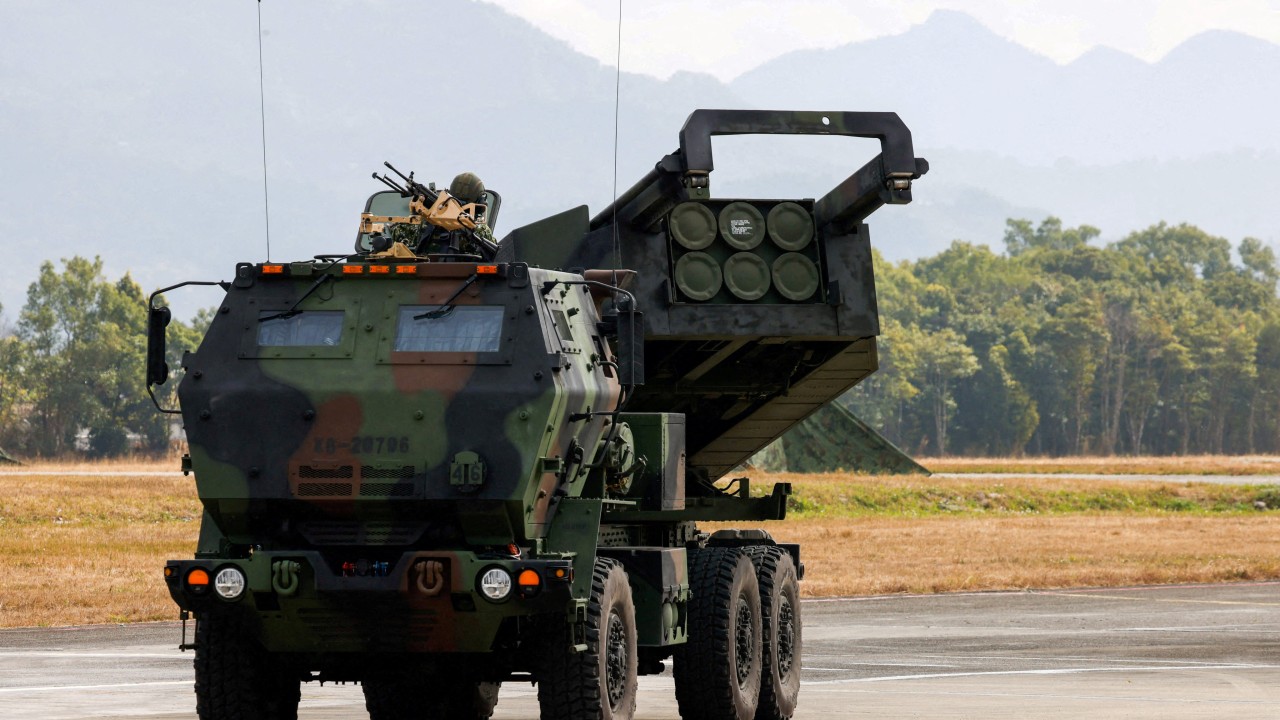
Taiwan's main opposition Kuomintang (KMT) party is fracturing along ideological lines as chairwoman Cheng Li-wun prepares for a controversial April 7-12 visit to mainland China that could include a meeting with Xi Jinping. The central point of contention is a proposed NT$1.25 trillion (US$40 billion) special defense budget from the ruling Democratic Progressive Party, with moderates in the KMT pushing for a higher defense commitment while more Beijing-friendly senior figures oppose increased military spending. The internal divisions expose a strategic choice that Beijing may soon face: the party's Beijing-friendly hardliners are losing influence to more US-aligned moderates, potentially upending the CCP's preferred opposition partner.
The KMT is Taiwan's second-largest party and Beijing has historically viewed it as more amenable to rapprochement than the ruling Democratic Progressive Party. The internal party struggle over defense spending and cross-strait policy reflects deeper demographic and generational shifts within Taiwan's opposition, with younger party members more willing to confront China's military threat.
In China's poorest regions, thousands of mothers have found economic independence through data labeling work that powers the country's AI revolution. In Qingjian county, where incomes remain less than half those in Beijing, roughly 70% of employees at AI labeling companies are mothers from the '90s generation. These workers identify discrepancies in satellite images, mark buildings and roadways for autonomous vehicle training data, and categorize traffic patterns—foundational work that shapes AI models for self-driving cars and navigation systems. As autonomous systems begin to displace these workers, however, uncertainty looms about the future of this emerging profession. The Chinese government has signaled support through favorable fiscal and tax policies, with plans to develop national standards for AI training and data labeling professions.
Data labeling represents a critical bottleneck in AI development. China's willingness to centralize this work in rural regions provides both labor cost advantages and strategic control over training datasets. The rise and potential decline of these jobs illustrates the paradox of AI development: the human labor that trains AI systems may be among the first to be displaced once the systems achieve sufficient capability.
Less than three months after Colorado's Consumer Right to Repair Digital Electronic Equipment law took effect on January 1, 2026, tech giants are attempting to gut it. On April 3, the Colorado Senate Business committee unanimously advanced bill SB26-090, titled "Exempt Critical Infrastructure from Right to Repair," which would allow manufacturers like Apple, Samsung, Cisco, and IBM to exempt equipment they deem "critical infrastructure" from repair requirements. Under the proposed exemption, companies need only declare their equipment sensitive—with no burden of proof—to invoke broad exemptions from providing repair documentation and software. The original law required manufacturers to provide "documentation, software, data, and other tools" to device owners and independent repair shops at competitive prices and prohibited parts pairing restrictions.
Colorado's law was viewed as the strongest right-to-repair legislation in the world when signed into law. The corporate counteroffensive reveals how manufacturers leverage regulatory ambiguity—in this case, undefined "critical infrastructure" designations—to carve out exceptions. This pattern is likely to repeat in other states considering right-to-repair legislation, setting up a battleground over how broadly "critical infrastructure" gets defined.
Australia is grappling with fuel shortages and sharply rising prices as the Iran war has disrupted global oil markets through the effective closure of the Strait of Hormuz. Australian fuel reserves stand at only 36 days of petrol, 34 days of diesel, and 32 days of jet fuel—the largest stockpile in 15 years, yet still precarious given that Australia imports roughly 90% of its refined fuel and sources over 80% from Asian refineries, which in turn depend on Middle Eastern crude oil. Analysts estimate petrol prices could jump 40 cents per litre, meaning a 60-litre tank fill-up would cost an extra $24. Prime Minister Anthony Albanese has called for public conservation and announced financial support for affected businesses. Western Australia invoked emergency powers to compel fuel suppliers to disclose supply chain details.
Australia's fuel vulnerability stems from decades of policy decisions to rely on imported refined fuel rather than invest in domestic refining capacity. The crisis exposes how geopolitical shocks in distant regions can ripple through commodity markets with immediate economic consequences. The Strait of Hormuz, through which roughly one-third of global seaborne traded oil flows, represents a chokepoint that has periodically triggered energy crises throughout modern history.