President Trump said Monday that Iran has made what he called a "significant" ceasefire proposal, though he added that it still falls short of what Washington wants. The remark is the clearest sign yet that the fighting may be moving from pure escalation toward bargaining, even if no agreement is close. It also marks a tonal shift from Sunday's threats about attacking Iranian infrastructure and widening the war if the Strait of Hormuz remained shut. The White House is now trying to hold two positions at once: keep military pressure high while treating the Iranian message as proof that threats are working. That leaves the next move unclear. A proposal on the table lowers the odds of an immediate new lurch upward, but Trump's public line still says any pause depends on bigger concessions from Tehran.
The US rescued a downed airman in Iran over the weekend after losing another fighter jet, then Trump publicly threatened broader strikes. Monday's ceasefire comment is the first sign that Tehran is probing for an exit.
Bangladesh has started an emergency vaccination drive after a measles outbreak that officials suspect has killed more than 100 people since March 15, most of them children. Health ministry figures cited by the BBC say the country has logged more than 7,500 suspected cases in just over three weeks, with more than 900 already confirmed. That is a sharp jump from 2025, when Bangladesh recorded only 125 cases across the full year. The campaign began on Sunday and is concentrating on children under 10, with extra focus on Dhaka and Cox's Bazar, where crowded Rohingya refugee camps make containment harder. The speed of the rise is what stands out here. A disease that had been kept relatively contained has broken loose fast enough to force a national emergency response.
Measles spreads through the air and can turn deadly when vaccination coverage slips. Dense urban neighborhoods and refugee camps make outbreaks harder to stop once transmission starts.
A federal judge on Friday blocked the Trump administration from forcing public colleges in 17 states to hand over seven years of admissions data broken down by race and gender. The ruling does not settle the broader fight, but it stops the administration's attempt to pull a large archive of student-selection records while the case moves forward. For universities, that matters for two reasons. First, the request would have exposed a huge amount of sensitive institutional data at a moment when admissions policy is already under national pressure after the end of affirmative action. Second, it signals that courts are not automatically accepting expansive federal information demands just because they are framed as civil-rights enforcement. Higher ed has spent the last two years expecting scrutiny. What schools are seeing now is scrutiny plus aggressive data collection.
The administration asked for admissions records reaching back seven years. After the Supreme Court's 2023 affirmative-action ruling, universities have faced growing legal and political pressure over how they evaluate applicants.
Analysts told the South China Morning Post that the yuan's international reach may be growing faster than standard Western data shows because more payments are moving through China's own plumbing instead of Swift. That matters because the usual league tables for global currency use rely heavily on Swift message traffic. If more trade settlement is happening through CIPS, bilateral arrangements, or other channels outside that network, the headline numbers can undercount Beijing's progress. The gap is already visible. People's Bank of China governor Pan Gongsheng has described the yuan as the world's third-largest payment currency, while Swift's own data put it sixth in February with a 2.74 percent share by value. The story here is less about a sudden yuan breakthrough than about measurement. China may be building parallel rails that make the old dashboard less trustworthy.
CIPS is China's Cross-Border Interbank Payment System. It gives Beijing a way to settle some international payments without relying entirely on Swift, the Belgium-based network that dominates global bank messaging.
The Verge reports that marketers are learning how to shape AI search answers by publishing comparison pages that look neutral but quietly rank their own products first. In one example, Google's AI Mode surfaced a Zendesk page ranking help-desk software, and Zendesk just happened to choose Zendesk as the best option. Freshworks did the same for Freshservice. The trick works because these pages are structured in exactly the way large language models like to ingest: clear headings, product tables, canned pros and cons. That does not mean the model has been bribed or retrained. It means the retrieval layer is easy to flood with self-serving material dressed up as buyer guidance. Old SEO was about winning ten blue links. The new version is about becoming the synthetic source text an AI system chews up before it answers.
Google, OpenAI, and others now answer more search queries with generated summaries. That changes the incentive from ranking a webpage to becoming the source material those summaries pull from.
MIT Technology Review describes how small US merchants are using Alibaba's Accio tool to compress weeks of product research and supplier hunting into a single chat session. One seller, Mike McClary, used it when revisiting a flashlight product that had kept drawing customer demand years after he stopped selling it. Instead of manually trawling supplier listings and emailing factories, he started with a conversational query and let the tool narrow the field. The shift here is not that AI is inventing new products. It is making the old grunt work of e-commerce much cheaper for one-person shops: estimate demand, compare suppliers, and get to a shortlist quickly. Human judgment still matters at the last mile, especially on pricing and reliability. But the front end of the business, the messy "what should I even make" stage, is becoming software.
Alibaba launched Accio as an AI sourcing tool tied to its supplier marketplace. The promise is simple: take a task that used to require spreadsheets, marketplace browsing, and many emails, and shrink it into one interface.
via Krebs on Security, German Federal Criminal Police
German authorities say they have identified "UNKN," the shadowy figure long linked to the GandCrab and REvil ransomware crews, as 31-year-old Russian national Daniil Maksimovich Shchukin. Krebs on Security reports that Germany's BKA says Shchukin led both groups and helped carry out at least 130 acts of computer sabotage and extortion in Germany between 2019 and 2021. The agency also named another alleged operator, Anatoly Sergeevitsch Kravchuk, and said the two men extorted nearly 2 million euros across two dozen attacks that caused more than 35 million euros in economic damage. REvil and GandCrab mattered because they helped industrialize ransomware as a service and pushed double extortion into the mainstream. Putting a legal name and face on one of their central operators does not end that model, but it sharpens the picture of who built it.
GandCrab and REvil were among the most feared ransomware brands of the last decade. Their crews popularized stealing data before encryption, then charging victims both for decryption and for silence.
Florida's Fish and Wildlife Conservation Commission officers are running license-plate lookups through Flock camera systems for Immigration and Customs Enforcement, according to public records reviewed by 404 Media. The story matters less because it reveals a new surveillance product than because it shows how broad the access web has become. ICE does not have its own Flock contract, yet it can still reach the data through partner agencies whose core mission has little to do with immigration enforcement. In this case the bridge is a conservation police force that, on paper, exists to protect wildlife, waterways, and boating safety. The practical result is mission creep by network. Once a camera system is scattered across local agencies, the line between traffic tools, public-safety tools, and federal immigration searches gets very thin very fast.
Flock sells automated license-plate reader systems that let police search for vehicles across shared camera networks. Civil-liberties critics have long warned that data sharing makes the systems far broader than any one local contract suggests.
404 Media reports that at least three independent researchers warned the anti-porn app Quittr about a Firebase misconfiguration that exposed sensitive user data, yet the company left the problem unfixed for months. The flaw made it possible for an attacker to access backend data tied to users of an app built around one of the most private categories of behavior on a phone. According to the report, exposed information included ages, self-reported porn-use frequency, and written confessions, and many users identified themselves as minors. One researcher first contacted the company in July 2025, another in August, and a separate warning reached the founders in September. Quittr acknowledged the issue at one stage, then still failed to fix it until after repeated press outreach. That timeline is the real scandal. A bug is common. Ignoring three rounds of warnings is not.
Firebase is a Google-backed mobile backend platform. A bad configuration can expose app databases to users who should never be able to read or write that data in the first place.
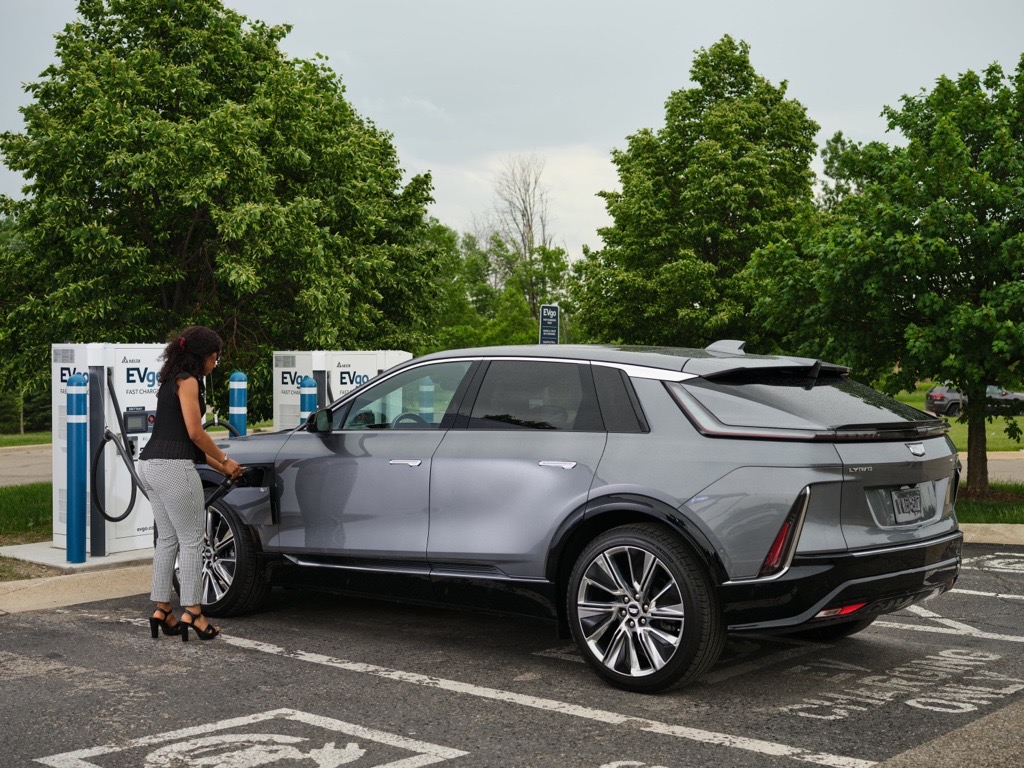
Ars Technica says used electric-vehicle sales are climbing as higher gas prices push buyers toward cheaper ways to cut fuel bills and as the broader new-car market stays soft. That pairing matters. For a long time the EV market was framed as a story about expensive new models, early adopters, and tax credits. The used market tells a different story: EVs becoming ordinary household substitutes when cost pressure bites. Buyers who would not stretch for a new battery car can suddenly justify a secondhand one if monthly payments are lower and charging is manageable. It is also a sign that the first big wave of EV adoption is finally feeding the resale market with enough inventory to matter. If the used segment keeps moving, EV adoption stops looking like a luxury trend and starts looking like a more normal consumer response to energy prices.
The used EV market has been held back by thin inventory and buyer anxiety about batteries. Rising fuel prices can change that math quickly, especially when more off-lease vehicles start showing up on dealer lots.