Four astronauts aboard NASA's Orion spacecraft reached a maximum distance of 252,756 miles from Earth on Monday, surpassing the Apollo 13 record set 56 years ago. Reid Wiseman, Victor Glover, Christina Koch, and Canadian Jeremy Hansen also became the first humans to see parts of the far side of the moon with naked eyes. During the flyby, they witnessed a solar eclipse from their vantage point—the sun completely blocked by the moon for nearly an hour. The crew lost radio contact for 40 minutes during their passage around the lunar far side, regaining contact with Mission Control before the closest approach of 4,067 miles. This milestone demonstrates NASA's readiness for sustained lunar operations and paves the way for landing astronauts on the moon under Artemis III.
Apollo 13, the failed 1970 lunar mission, holds the previous human distance record at 248,655 miles. Artemis II is an uncrewed lunar orbit mission; no landing occurs on this flight. The crew will return to Earth by April 10.
The artificial intelligence competition between the US and China has tightened dramatically over the past year, with Chinese models closing performance gaps that once seemed insurmountable. While the US maintains leads in AI investment ($109 billion in 2024 vs. China's $9.3 billion) and operates roughly 74% of the world's high-end AI supercomputing capacity, China's advantage in energy production and rapid model improvements are reshaping the race. Chinese AI publications now exceed American output by volume, and models on performance benchmarks no longer show the decisive American dominance of previous years. Both nations are pouring resources into proprietary chip development and computational infrastructure. The outcome hinges less on who wins outright than on whether either side can advance without the other's capabilities—China needs access to advanced chips, while the US needs China's manufacturing scale.
In 2023, the US was widely seen as decisively ahead in AI development. Stanford's 2025 AI Index Report found this gap has compressed significantly across most metrics. Energy availability—where China holds an advantage since 2010—is becoming a bottleneck for US AI scaling.
Cheng Li-wun, chairwoman of Taiwan's Kuomintang opposition party, arrived in mainland China on Monday for a six-day visit at the invitation of Xi Jinping—the first such trip by a major KMT leader in a decade. Cheng characterized the journey as a 'bridge for peace,' hoping to reduce tensions across the Taiwan Strait. Beijing's timing is strategic: the visit precedes planned talks between Xi and President Trump and appears designed to reinforce Cheng's political standing within the KMT, potentially marginalizing the ruling Democratic Progressive Party's pro-independence orientation. Taiwanese officials expressed concern that Xi may offer incentives to constrain future US weapons sales to the island. Cheng supports the 1992 Consensus, a framework for cross-strait dialogue that Beijing advocates for reunification negotiations.
Cheng Li-wun leads Taiwan's largest opposition party, which has historically favored closer ties with mainland China. The 1992 Consensus is an agreement referenced in cross-strait talks, though its exact terms remain disputed between Beijing and Taipei. US-Taiwan military relations have been a flashpoint in US-China tensions.
President Trump dismissed Pam Bondi as attorney general on April 2 after she fell out of favor with the administration. Bondi had transformed the Justice Department into an instrument for investigating Trump's political opponents, yet frustrated the president by not moving aggressively enough on prosecutions he wanted. Deputy Attorney General Todd Blanche will serve as acting attorney general. Trump has signaled he may replace Bondi with EPA administrator Lee Zeldin or another candidate. Bondi is the second Cabinet member fired in recent weeks, following Homeland Security Secretary Kristi Noem. Her departure suggests Trump views the DOJ primarily as a tool for retribution rather than institutional governance.
Bondi served as Florida's attorney general from 2011 to 2019 and was one of Trump's lawyers during his first impeachment. The Trump administration has prioritized using federal law enforcement to target perceived enemies rather than pursuing traditional criminal agendas.
via Ars Technica, The Robot Report, Humanoids Daily
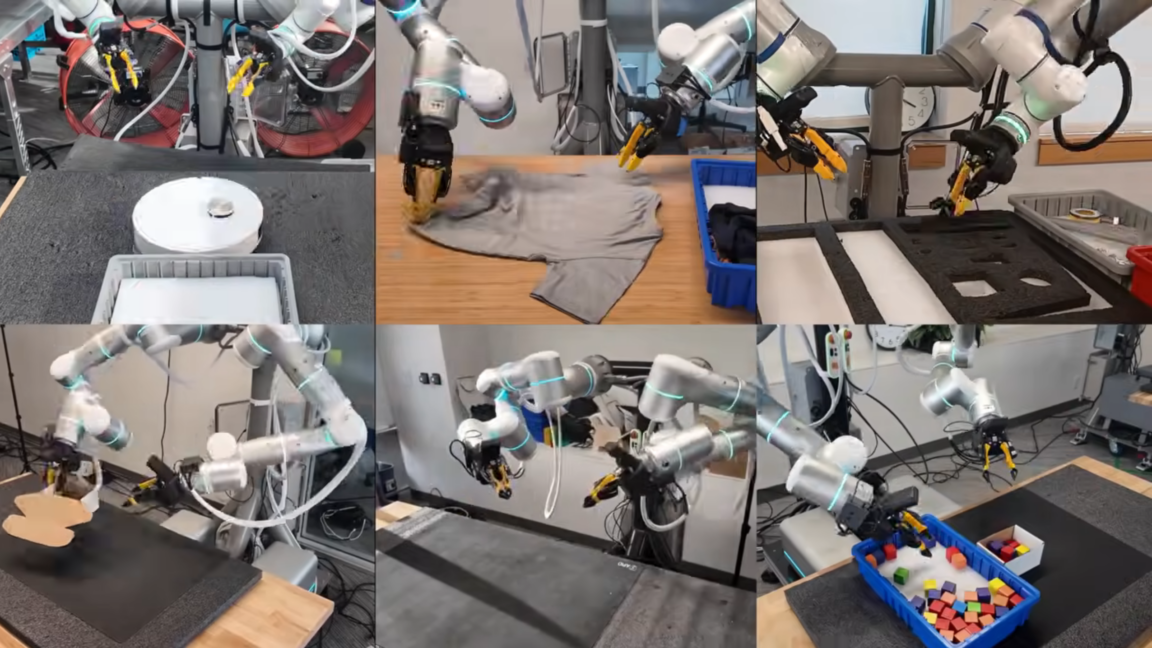
Generalist AI released GEN-1, a foundation model for physical robotics that hits 99% reliability on multiple real-world tasks—a dramatic leap from its predecessor GEN-0 (81%) and from-scratch baselines (13% on box folding). The model masters fine-motor tasks like folding boxes and servicing robot vacuums repeatedly over 200 consecutive attempts, and can recover from unexpected disruptions by improvising solutions it was never explicitly trained for. Trained on over 500,000 hours of physical interaction data, GEN-1 runs tasks approximately 3x faster than prior systems while maintaining reliability. This represents a shift from brittleness—where robots fail if conditions deviate slightly from training—to adaptability. The breakthrough matters because most real-world robotics applications require sustained reliability at scale.
Most AI robotics systems rely on task-specific training. GEN-1's multi-hour pretraining on diverse tasks allows it to generalize—the key bottleneck in practical robot deployment. 99% success rates matter because manufacturing and service applications cannot tolerate frequent failures.
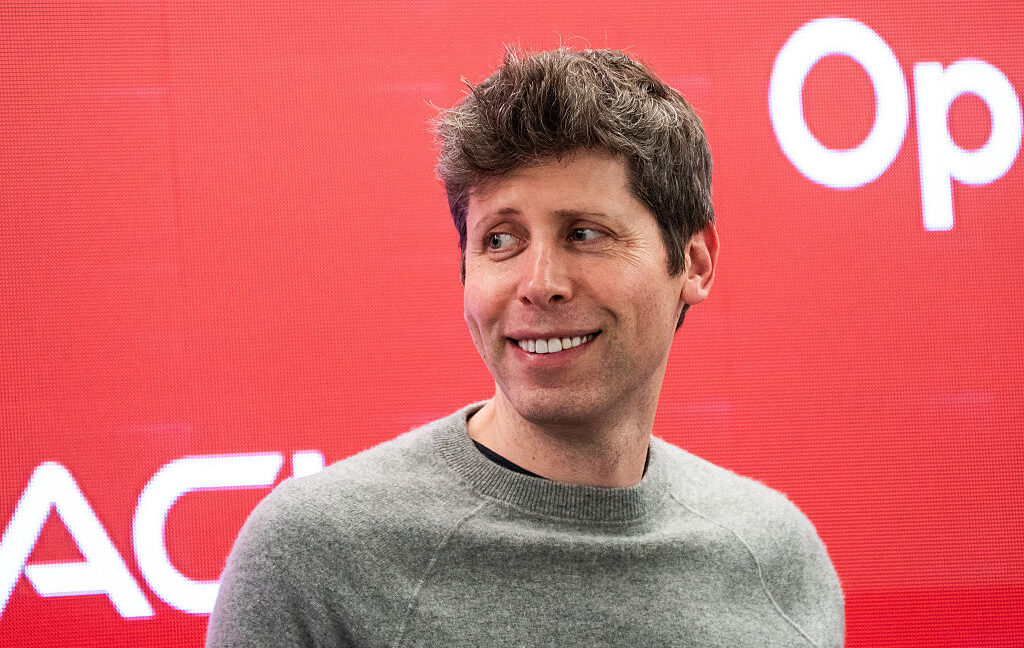
A deep investigation by The New Yorker found that current and former OpenAI insiders, including a former board member, question whether Sam Altman can be trusted. Over 100 sources and 200+ pages of internal documents reveal a pattern: Altman repeatedly breaks commitments, deceives colleagues, and treats AI safety as a negotiation tactic rather than a principle. One former board member called him a 'sociopath'; others described someone with conflicting traits—desperate to be liked yet indifferent to the consequences of his actions. Examples include reneging on safety assurances to Anthropic CEO Dario Amodei and straining his relationship with Microsoft CEO Satya Nadella through repeated broken promises. The investigation reconstructs why the board fired Altman in November 2023 and whether they were justified. As OpenAI prepares for a potential IPO, leadership credibility matters—investors will scrutinize whether Altman's assurances can be relied upon.
Altman was reinstated as CEO days after his November 2023 firing following employee and investor pressure. OpenAI is valued at over $100 billion privately. An IPO would be one of the largest tech offerings in years.
Anthropic announced it will receive 3.5 gigawatts of Google's next-generation TPU (tensor processing unit) chips from Broadcom starting in 2027, building on 1 gigawatt already deployed in 2026. The commitment is Anthropic's largest compute deal to date and reflects explosive demand: the company's annualized revenue run rate now exceeds $30 billion, with over 1,000 enterprise customers spending more than $1 million annually—doubling in just two months. Anthropic trains Claude across multiple hardware platforms (AWS Trainium, NVIDIA GPUs, Google TPUs), enabling it to match workloads to optimal chips and avoid dependency on any single vendor. The majority of new capacity will be physically located in the US, extending Anthropic's November 2025 commitment to invest $50 billion in American AI infrastructure. The deal reflects both Anthropic's rapid scaling and broader industry competition over compute resources.
Compute capacity is the most expensive bottleneck in large language model development. Multiple gigawatts of power are required for training and inference at Anthropic's scale. This deal is one of the largest corporate commitments to US infrastructure investment in recent years.
A federal judge issued a preliminary injunction on Friday blocking the Trump administration's data collection deadline for race and sex information in college admissions from 17 states' public universities. U.S. District Court Judge F. Dennis Saylor ruled that while the Education Department has the legal authority to gather such data, the 120-day timeline violated the Administrative Procedure Act's notice-and-comment requirements. The judge found the rushed process prevented meaningful institutional feedback. The administration had directed colleges to submit detailed admissions data broken down by race, sex, and enrollment status—ostensibly to enforce the Supreme Court's 2023 decision striking down race-conscious admissions. Democratic attorneys general sued in March, arguing the rulemaking was 'sloppy' and circumvented proper procedure. The ruling doesn't address the substance of the data collection itself but returns focus to process: federal agencies must follow legal procedures even when pursuing popular policies.
The Supreme Court's June 2023 decision barred universities from considering applicant race in admissions decisions. The Trump administration has moved aggressively to enforce this ruling through data collection and enforcement actions. Higher education institutions have raised concerns about the short timeline and broad scope of the data request.
Vice President JD Vance and second lady Usha Vance visited Budapest on April 7-8 to bolster support for Hungarian Prime Minister Viktor Orbán ahead of Sunday's parliamentary election. Orbán, who has governed Hungary for 12 of the past 16 years, faces his most serious political challenge: opposition candidate Péter Magyar and his Tisza party are leading in polls. The White House visit—following President Trump's February endorsement of Orbán and Secretary of State Marco Rubio's March trip—signals continued US backing for the Hungarian leader despite his nationalist, pro-Russia positioning and erosion of judicial independence. Vance's bilateral meeting and speech 'on the rich partnership between the United States and Hungary' underscore Trump's alignment with Orbán's anti-immigration and skeptical-of-NATO stance. Hungary's April 12 vote will test whether Orbán's alliance with the incoming Trump administration can overcome domestic opposition.
Viktor Orbán has systematically weakened Hungarian courts and media independence over his tenure, drawing criticism from the EU and Western governments. Péter Magyar, leader of the opposition Tisza party, has positioned himself as a pro-EU, pro-democracy alternative. Hungary is an EU member but has increasingly aligned with Russia on energy and foreign policy.