Hungarians are voting Sunday in the first election in years where Viktor Orbán does not look inevitable. Opposition challenger Péter Magyar, a former Fidesz insider who built the Tisza party from scratch, went into election day with major pollsters showing a lead or a tie, unusually high early turnout, and a campaign built around corruption, stagnation, and fatigue with one-man rule. Orbán is still running on familiar ground: nationalism, family policy, and the claim that only he can keep Hungary out of a wider regional mess tied to Ukraine and Brussels. But the mood has shifted. This is no longer a normal European election where the ruling party starts with all the machinery and the result feels prewritten. If Magyar wins, one of Europe's longest-running illiberal projects cracks open in a single night. If he loses, Orbán's model looks durable again even after the economy slowed and the scandals piled up.
Orbán has led Hungary since 2010 and used repeated wins to tighten control over media, courts, and patronage networks. Magyar says he needs not just victory, but enough seats to unwind years of constitutional changes.
The first direct US-Iran talks since the war began ended after about 21 hours in Islamabad without a deal, which means the ceasefire Pakistan brokered is now hanging on while the core disputes stay exactly where they were. J.D. Vance said there had been no headway and cast that as bad news for Tehran. Iranian officials, meanwhile, still want a broader settlement that touches prisoners, regional militias, and the terms of the truce itself. That gap matters because the ceasefire was always less a peace deal than a pause between two governments still arguing over what the fighting even proved. A direct channel now exists, which is more than either side had a week ago. But a channel is not a settlement. If the next round does not narrow the agenda fast, the war risks sliding back into the pattern of partial truces, public threats, and fighting by proxy while diplomats keep meeting anyway.
US and Israeli strikes on Iran in late February set off the war. Pakistan later helped broker a two-week ceasefire, but arguments over shipping, militias, and what counts as compliance never really went away.
A new Shorelight analysis says worldwide refusal rates for F-1 student visas climbed to 35 percent in 2025, the highest level in a decade, after a year when international enrollment in the US already fell hard. The number by itself is bad enough. The breakdown is worse. Nearly two-thirds of African applicants were turned down, and refusal rates in several countries topped 90 percent, while Europe stayed near 9 percent and parts of South America improved. That makes the system look less like a case-by-case review and more like a rough country filter that universities cannot predict around. For students, it means admissions offers, funding, and months of planning can still dissolve at the consulate window. For campuses, especially research universities that depend on graduate talent from abroad, it means enrollment policy is being set in practice by opaque visa patterns rather than by who got in or who can do the work.
Shorelight says it obtained the refusal data from the US State Department through public-records requests. The biggest increases were concentrated in Africa, the Middle East, and South Asia.
Fuel protests in Ireland entered a fifth day with hundreds of petrol stations running dry, slow-moving convoys clogging roads, and protesters blockading trucks at the Whitegate refinery in County Cork until police and defence forces pushed them back. The dispute began with anger from farmers and hauliers over costs, but by the weekend it had become a harder question about leverage. How much disruption can a relatively small protest movement cause by choking one physical bottleneck in a country that depends on road fuel? Garda commissioner Justin Kelly said arrests were made and warned that threats against tanker drivers could bring prison time. Ministers were still trying to negotiate a funding package at the same time. That split approach tells you where Dublin is: part de-escalation, part enforcement, and no guarantee yet that reopening one refinery gate is enough to stop shortages from spreading.
Whitegate is Ireland's only oil refinery, so a blockade there hits supply quickly. The current protests are being led by farmers and hauliers pressing for government relief on operating costs.
Chinese researchers say they have found a way to grow wafer-scale two-dimensional semiconductors about 1,000 times faster than earlier methods, which would matter less as a lab curiosity than as a shot at one of the nastier bottlenecks in next-generation chips. The problem is not just making tiny devices. It is finding materials thin enough to keep shrinking while still giving chip designers both the n-type and p-type behavior they need in pairs. According to the report, stable high-performance p-type 2D materials have been the weak point, especially for sub-5-nanometer designs. If this growth method holds up outside the lab, it could make those materials more practical for optoelectronics and maybe for future logic chips as standard silicon scaling keeps slowing. China is not claiming a finished commercial chip here. It is trying to move one stubborn materials problem from exotic research toward something engineers could actually build around.
Two-dimensional semiconductors are attractive because they can stay atomically thin while still switching current. That makes them one of the main candidates for chip designs after conventional scaling starts running into harder physical limits.
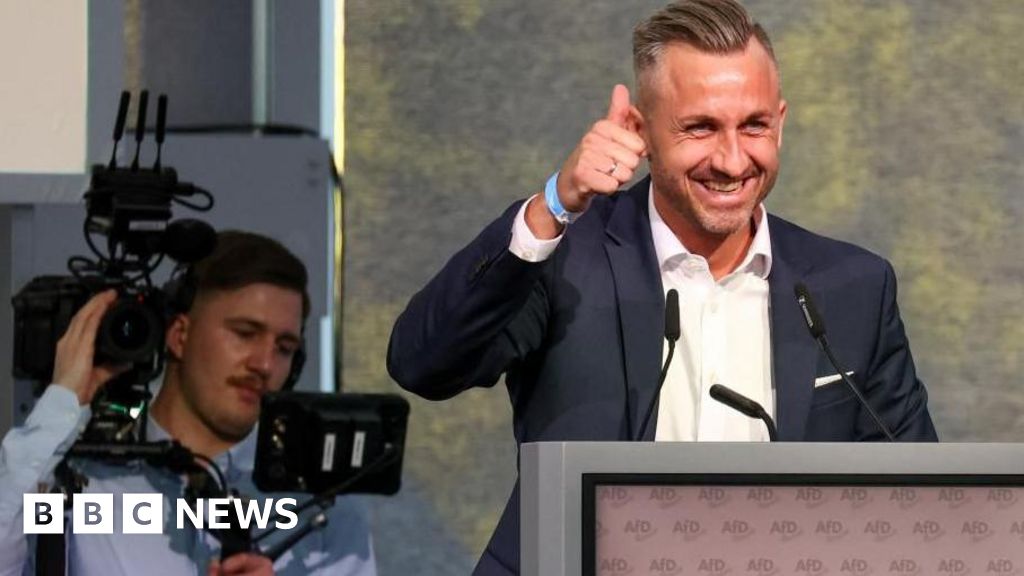
Germany's far-right AfD used a party conference in Magdeburg to adopt a hard-line governing program for Saxony-Anhalt, a move that matters because the party is no longer campaigning as a protest vehicle there. It is acting like a government-in-waiting. The document reportedly runs more than 150 pages and leans into anti-immigration politics, pro-ethnic family policy, and a broader pitch that Germany no longer feels safe or familiar to its own people. That language is not new. What is new is how close the party may be to testing it in office. A win in Saxony-Anhalt would be the first time a far-right party has held power in a German state since World War II, which is why this state election has drawn so much national attention. German politics has spent years assuming the AfD could rise in polls yet still be fenced off from real executive power. That assumption is now being stress-tested in public.
Saxony-Anhalt is an eastern German state where the AfD has been polling strongly for months. German parties have long relied on a cordon sanitaire to keep the AfD out of governing coalitions.
Dutch regulators have approved Tesla's Full Self-Driving Supervised for use on public roads, making the Netherlands the first European country to allow the system after more than a year and a half of testing. This is not robotaxi autonomy in disguise. Drivers still have to watch the road, complete a tutorial, pass a quiz, and keep their hands and attention ready because the system can be shut off if they drift. Even so, the approval matters because Europe has moved much more slowly than the US on advanced driver assistance, and a green light from the RDW gives Tesla a foothold for arguing that tighter but still workable deployment is possible under European rules. That will not erase the company's safety problems or the US investigations hanging over FSD. It does change the map. Tesla now has one real European jurisdiction where the product is legal, public, and no longer just a promise.
Tesla's European headquarters is in Amsterdam, which made the Netherlands an obvious first target for approval. The software version now rolling out is branded FSD Supervised, not autonomous driving.
Researchers report in Science that a metallic form of tantalum nitride can conduct heat at about 1,110 watts per meter-kelvin, nearly three times copper's long-standing benchmark. That number would already make the paper worth attention. The stranger part is how the material seems to do it. In ordinary metals, heat-carrying vibrations and electrons keep bumping into one another and bleeding away efficiency. In this crystal structure, those phonons appear to travel much farther with less interference than materials scientists thought a metal would allow. If the result holds up at scale, it could matter for chips, power systems, and the thermal bottlenecks that keep showing up in AI-heavy data centers. More than that, it pokes at an old habit in physics: mistaking a record that has lasted a long time for a real limit of nature. Copper looked unbeatable for heat management right up until it didn't.
Copper has been the default heat-spreading metal in electronics and industrial systems for more than a century. The new work points to a different route for thermal design: crystal structures that let vibrations move with much less scattering.
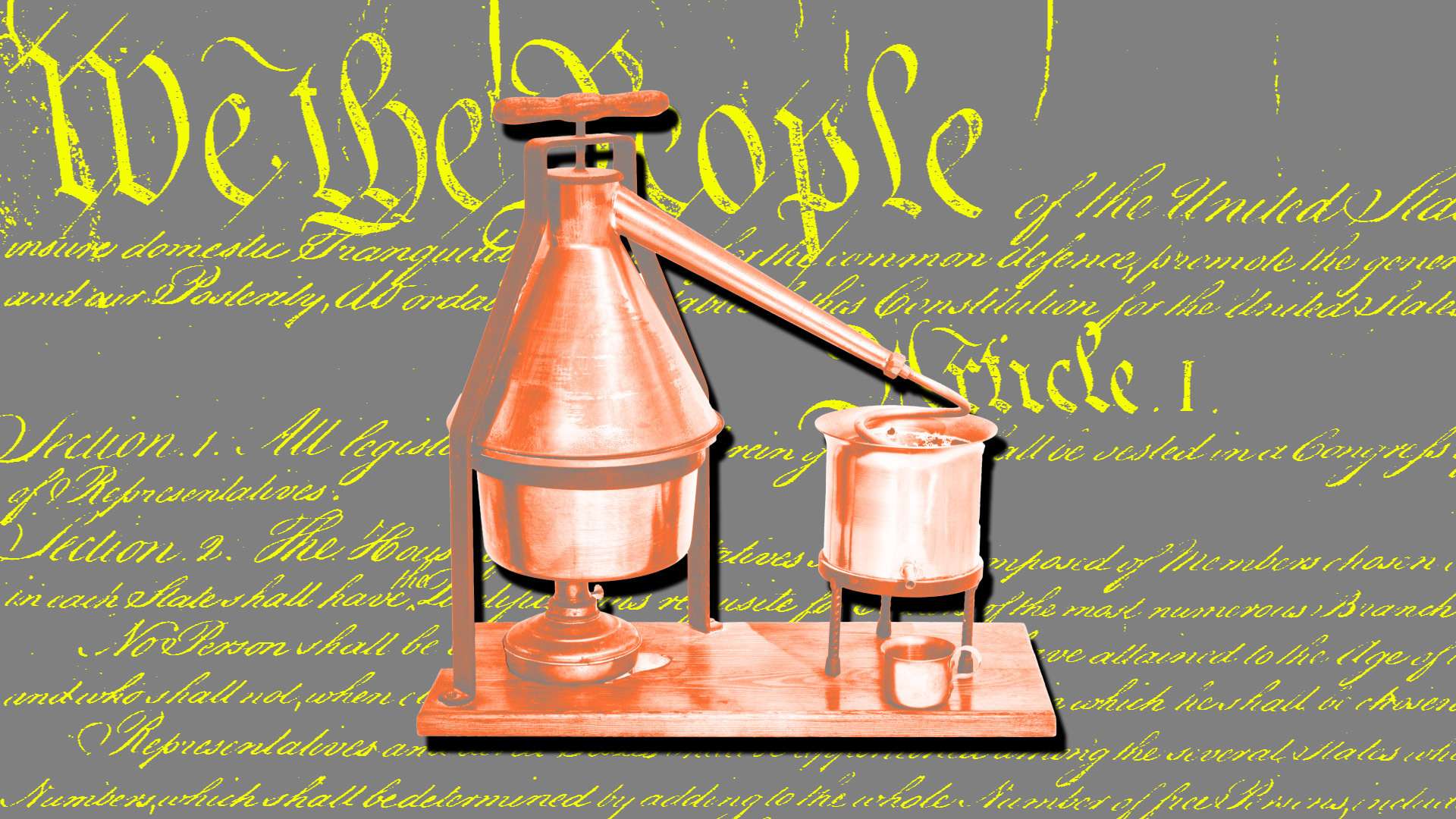
The Fifth Circuit struck down an 1868 federal ban on home alcohol distilling, ruling that the law went beyond Congress's tax power and could not be rescued by the Necessary and Proper Clause either. The opinion matters less because lots of people are waiting to build stills in their garage than because it cuts at a familiar federal move: treating a flat ban as if it were just tax administration in another form. The judges' point was blunt. A law that stops distilled spirits from existing does not raise revenue; it blocks the thing being taxed before taxation can even begin. That does not settle every possible constitutional theory, since the court did not decide the commerce question. But it does narrow one line of argument the federal government has leaned on for a very long time. In practice, the ruling is a small alcohol story and a bigger federal-power story.
The case is McNutt v. US Department of Justice. The ruling was unanimous and joined judges appointed by both Republican and Democratic presidents, which gives it more weight than a purely partisan split would have.
Anthropic's Mythos announcement landed like a frontier-model flex: a limited-access system finding serious vulnerabilities across operating systems and browsers, plus money to back open-source security work. A follow-up analysis from the security startup Aisle argues the story is messier. Using stripped-down versions of the same benchmark problems, it says several much smaller open models reproduced a lot of Mythos's reasoning, including the flagship FreeBSD exploit and the core chain behind an old OpenBSD bug. That does not mean Mythos was fake. It means cybersecurity may be one of those domains where capability arrives in jagged chunks rather than in a neat model-size ranking. A small model might do one exploit task shockingly well and then fall apart somewhere else. If that holds, the moat shifts from owning the single best model to building the best pipeline for finding, validating, and patching zero-day bugs before someone else does.
Anthropic introduced Mythos on April 7 alongside Project Glasswing, a security consortium and funding package aimed at vulnerability discovery and patching. Aisle's response is partly an industry argument, but the technical comparison is still worth watching.