Kansas Gov. Laura Kelly has signed a bill that bars the state's public colleges from requiring any course the Board of Regents later classifies as a "DEI-CRT" class, pushing the real fight out of the legislature and into the bureaucracy that now has to decide what the label means. The same measure also directs the regents to set curricula around American institutions and freshman orientation material on free speech. That matters because the bill does not just signal a mood. It creates a mechanism for state officials to redraw core academic requirements across every public campus, with the new course restriction scheduled to start in the 2028-29 school year. Supporters say students should not have to take politically loaded classes to graduate. Critics see the opposite problem: politicians building a vague category first and letting administrators figure out later which parts of ordinary coursework get swept into it.
Kansas already had a Board of Regents policy restricting DEI statements in hiring and promotion. This law goes further by reaching into the curriculum itself and tying the details to later regents rulemaking.
Argentina's Congress has approved Javier Milei's rewrite of the country's glacier law, cutting back one of Latin America's best-known environmental protections in the name of a mining boom. The old framework treated glaciers and nearby frozen high-altitude terrain as strategic water reserves and largely closed them to mining. The new one gives provinces much more room to decide what counts as protected land, which is why copper, gold, and silver developers are cheering while winemakers, hydrologists, and environmental groups are panicking. In Mendoza, where vineyards depend on meltwater from the Andes, the fear is not abstract. Glaciers are the backup supply when snowfall is poor and drought stretches on. Milei argues Argentina has left billions on the table while Chile cashes in on the same mountain belt. Opponents hear a government willing to cash out a long-term water buffer for a short-term investment pitch.
Argentina's original glacier law passed in 2010 after years of pressure from environmental groups. Milei's government says the old map treated too much land as untouchable and blocked a planned copper build-out.
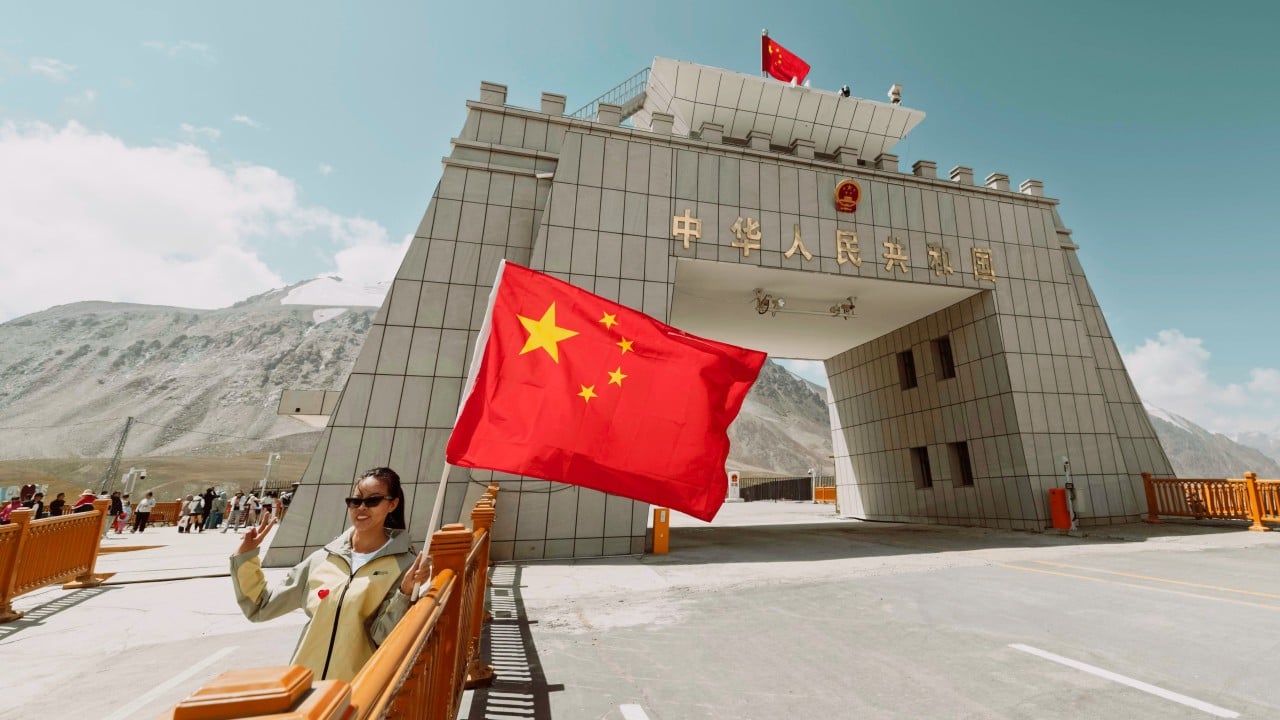
Beijing has carved out a new county called Cenling in southwestern Xinjiang, putting another layer of administration on a frontier zone near Pakistan, Afghanistan, and the disputed border with India. On paper this is a local government change. In practice it looks like border strategy. The new county sits under Kashgar prefecture, close to routes tied to the China-Pakistan Economic Corridor and other westbound transport links, and analysts quoted by SCMP read it as part of a broader push for tighter grass-roots control in a region Beijing already treats as a security problem first and a development problem second. That is why the location matters more than the mapmaking. New counties bring cadres, budget lines, policing capacity, and more direct oversight. Creating a third one in this corridor suggests the state wants denser administration exactly where ethnic tension, foreign-border risk, and strategic infrastructure all overlap.
Xinjiang is home to several Muslim and Central Asian ethnic groups and has been under heavy surveillance and political control for years. Beijing frames the region as a border-security and anti-extremism priority.
An Epoch AI and Ipsos survey says half of American adults used AI in the past week, and among full-time workers, 20% said the tools had already replaced parts of their existing job while 15% said AI had created new tasks for them. That does not mean one in five workers lost a job. It means the task mix inside ordinary jobs is changing faster than the public debate usually admits. Forms get drafted by a chatbot. Notes get summarized automatically. Research gets front-loaded by a model before a human checks it. Those are small substitutions until enough of them pile up and a role starts looking thinner, more supervisory, or harder to train a beginner into. The survey points to that middle stage: not mass unemployment, not hype, but work being quietly rearranged. The labor question now is less "Will AI replace people?" than "Which parts of a job disappear first, and who still gets to learn them?"
The same survey said AI created new work for 15% of full-time employees, which fits the pattern many offices now describe: some routine tasks vanish, but checking, prompting, and cleanup work expands.
San Francisco police arrested a 20-year-old man suspected of throwing a Molotov cocktail at Sam Altman's Russian Hill home early Friday, then heading to OpenAI's Mission Bay offices and making more threats there. No one was hurt, and OpenAI says it is helping law enforcement with the investigation, but the sequence makes the incident feel larger than an isolated property crime. It hit the chief executive's house first and the company's headquarters second, which reads less like random vandalism than a targeted performance of grievance against a person and a symbol at the same time. Motive is still unclear, and that matters; there is a difference between personal fixation, political anger, and anti-tech nihilism. Still, the episode lands in a climate where AI executives are treated less like software managers and more like contested public figures whose products now sit inside culture-war fights, labor anxiety, and fantasies about civilizational risk.
OpenAI has become a lightning rod far beyond the tech industry, with arguments over safety, jobs, copyright, and political power increasingly personalized around a few executives, Altman included.
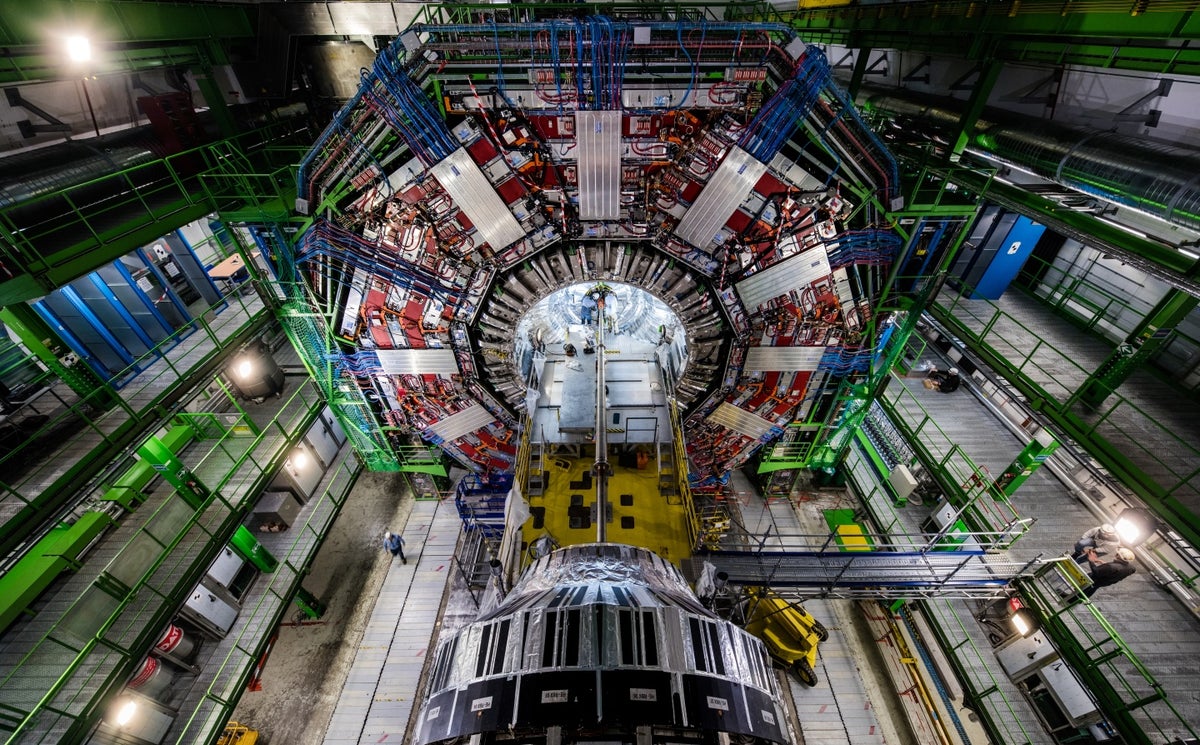
A new mass measurement from the Large Hadron Collider's CMS experiment has cut into one of particle physics' biggest recent headaches: the 2022 Fermilab result that put the W boson noticeably off from what the standard model predicted. That earlier number was thrilling because it hinted the theory might finally be cracking. The new one is almost as precise and lands back where the theory says it should. That does not settle the issue, because both measurements cannot be right at once, but it changes the mood. The story is no longer "physics beyond the standard model may be here" so much as "one spectacular anomaly now has a serious rival." For outsiders, the stakes are simple. The standard model is already known to be incomplete, yet physicists rarely get a clean mismatch between prediction and data. The CMS result has not closed that door. It has made it much heavier to push open.
The W boson carries the weak force, which drives radioactive decay and some nuclear reactions. Particle physicists care about its mass because tiny deviations can hint at unknown particles or missing pieces in the theory.
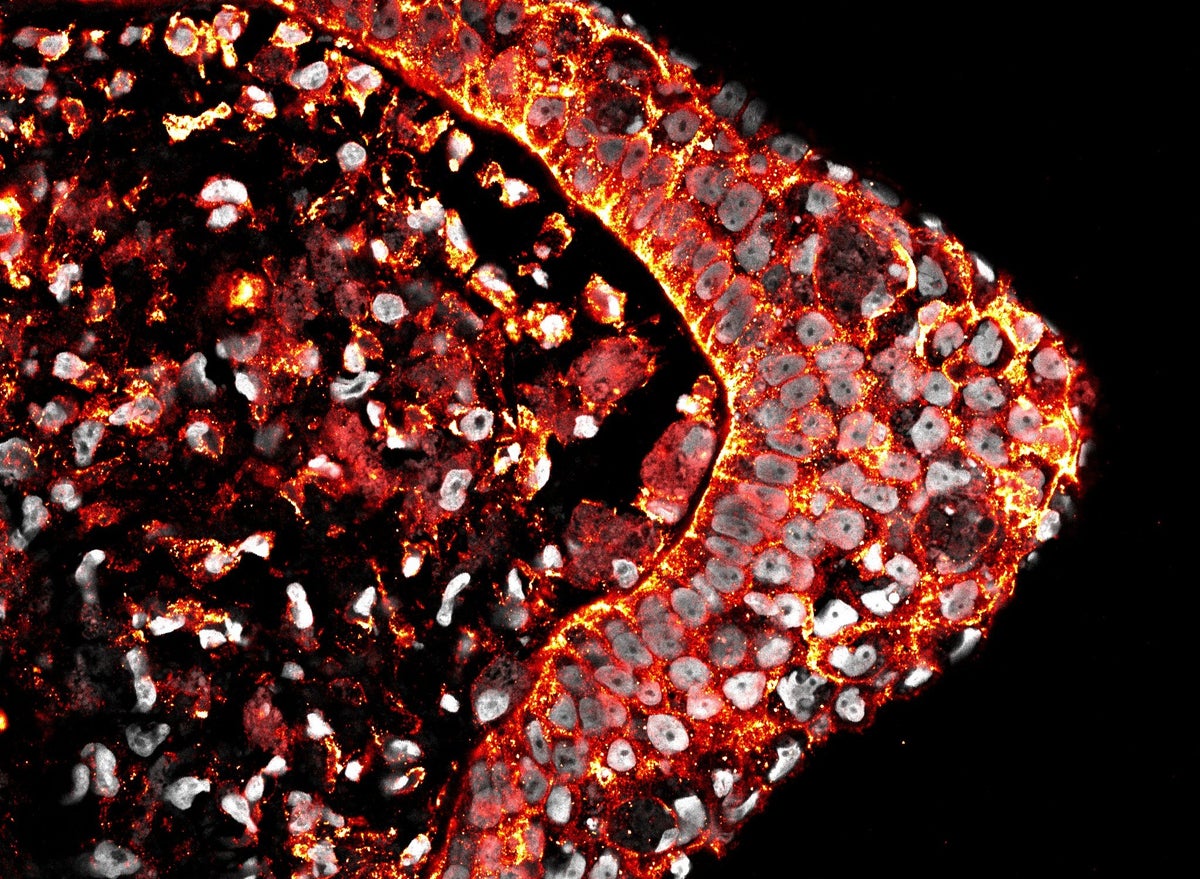
Two new studies are giving limb-regeneration research something more useful than a sci-fi promise: a concrete list of local conditions that seem to matter. One team found that mice regrew amputated fingertips with less scarring when the tissue environment held higher levels of hyaluronic acid, the gel-like material between cells. Another compared frog tadpoles, which can regenerate limbs, with embryonic mice, which cannot, and found that low-oxygen conditions could push mouse tissue into some of the same early regenerative responses seen in tadpoles. That does not mean scientists are about to regrow a human arm. They did not regrow full mammalian limbs here. What changed is the framing. The question is no longer only whether mammals lack the right genes. It is also whether the wound environment itself pushes tissue toward scarring instead of rebuilding. That is a harder problem than movie magic, but a much more believable one.
Humans and other mammals can sometimes regrow fingertips, especially in children, but not full limbs. Salamanders remain the classic example of whole-limb regeneration, which is why researchers keep looking for the switch that mammals seem to lose.
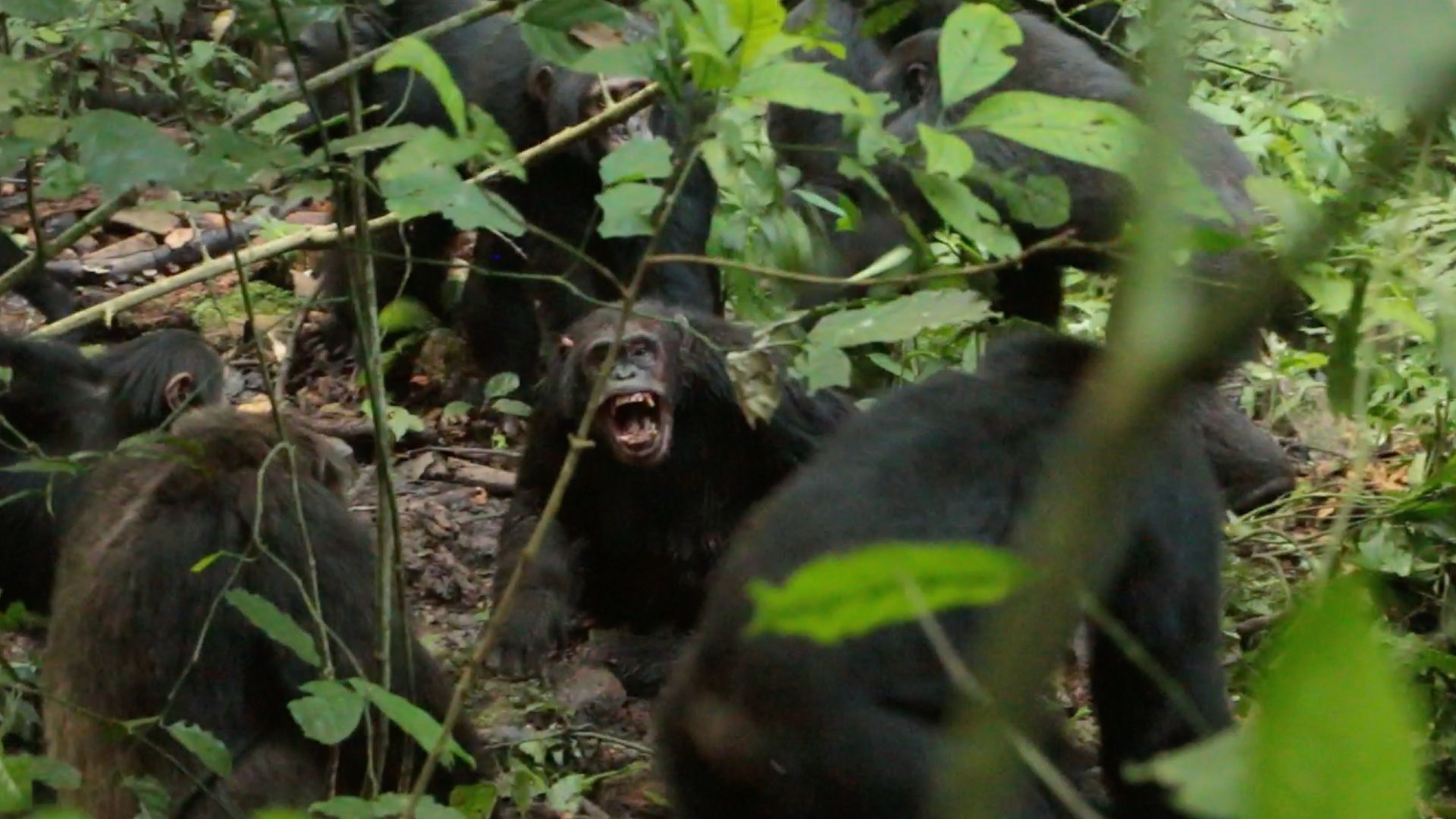
Researchers studying the Ngogo chimpanzee community in Uganda say the world's largest known wild chimp group split into two camps and then slid into lethal conflict, producing what may be the clearest well-observed "civil war" yet recorded in chimpanzees. The community had been tracked for decades, which is what makes this unsettling. Scientists could watch temporary cliques harden into stable factions, then watch those factions separate, reproduce apart, and eventually attack one another. By the time the rupture became obvious around 2015, the group had roughly 200 chimps. The study's real punch is not that chimpanzees can be violent; that was never in doubt. It is that collective violence may emerge from changing social ties alone, without ideology, religion, or formal politics. Humans are not chimps with smartphones, but the paper strips one excuse away. Sometimes a group does not need a big doctrine to break. It just needs its internal bonds to rearrange in the wrong direction.
Ngogo is a long-running chimpanzee research site in Kibale National Park, Uganda. Because the community had been observed for about 30 years, scientists could connect the eventual violence to earlier shifts in friendship and alliance patterns.
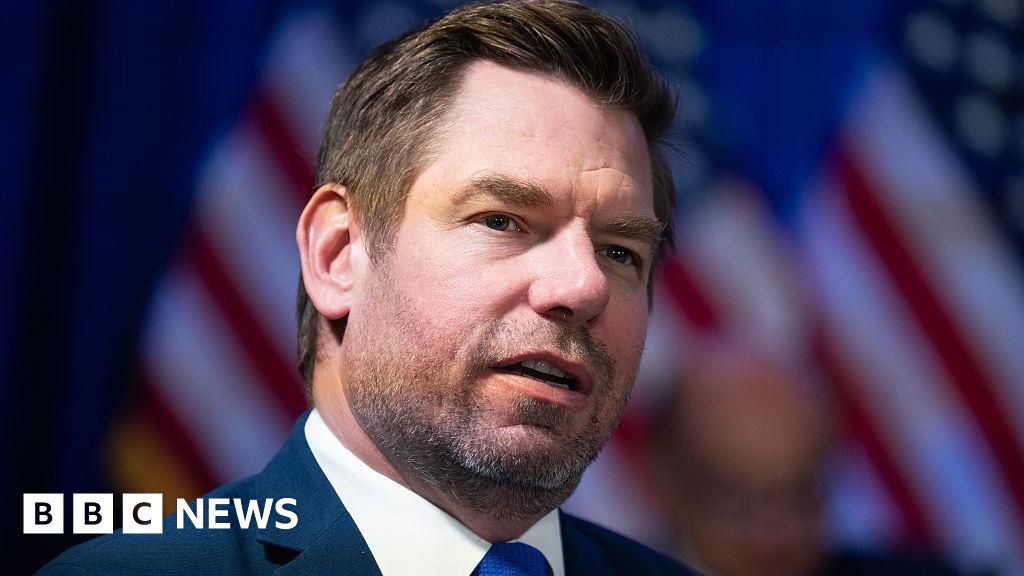
Eric Swalwell's run for California governor is suddenly in danger of collapsing after sexual assault allegations reported Friday triggered calls for him to quit and cost him campaign chairs and endorsements. Swalwell, one of the better-known Democrats in the field, has denied the accusations and says he will fight them with facts. That keeps the story in a politically awkward middle zone. There is no quiet withdrawal, but there is already visible elite abandonment. In a crowded top-two primary system, campaigns can fall apart long before voters sort out the underlying allegations if donors, surrogates, and endorsers decide the risk is no longer worth it. That is what makes this more than a scandal story. California's governor race was already a jostling contest without a dominant heir apparent. If Swalwell's support keeps peeling away, the field gets reshuffled fast, and the party has to absorb another ugly fight on top of the allegation itself.
Gov. Gavin Newsom cannot run again, so California's 2026 race is open. The state's top-two primary means even a modest polling shift can decide which two candidates reach the general election.
The second season of Jiangsu's city football league starts Saturday, and the point is no longer just football. The league has become a giant machine for city-level identity, with matches sold through food jokes, dialect pride, and meme warfare as much as through tactics or star players. Suzhou gets cast as hairy crab. Yangzhou becomes lion's-head meatballs. What sounds like internet fluff has turned into one of China's liveliest sports products. Last season's 85 matches drew more than 2.43 million in-person spectators and more than two billion livestream views, beating average attendance for the professional national league. SCMP's reporting makes the deeper claim that this works because Jiangsu's cities are genuinely distinct while still sitting inside a political system that keeps the rivalry bounded. That combination gives people a safe way to perform local pride at scale. The state gets consumption, tourism, and civic energy. Fans get something that feels messy and alive.
The league is often nicknamed the Su Super League or Suchao. Its breakout success has pushed other provinces to launch similar city-based tournaments that double as tourism and consumption campaigns.