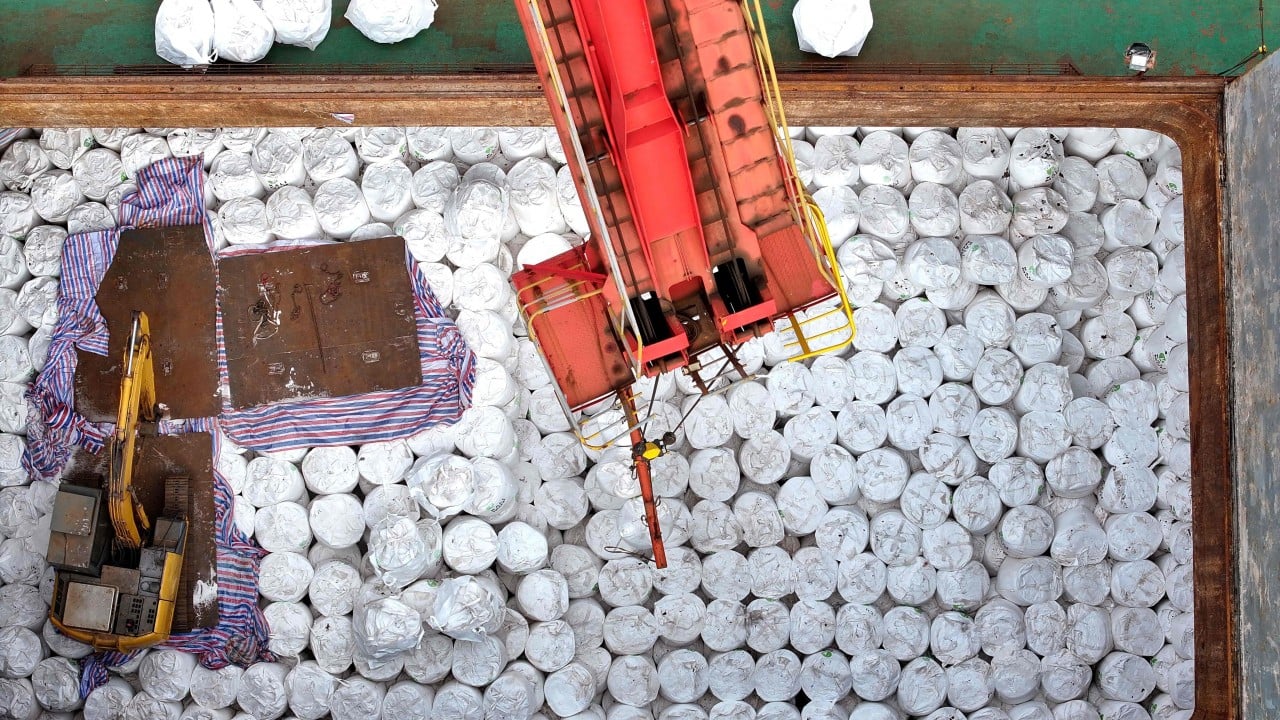
The short-lived US-Iran ceasefire has tipped into a new phase: after weekend talks in Pakistan ended without a deal, Washington said US forces would start blockading ships entering and leaving Iranian ports on Monday morning, while leaving non-Iranian traffic in the Strait of Hormuz to thread through a much more dangerous corridor. Markets reacted fast. Oil climbed back above $100 a barrel and Asian stocks slid as traders priced in a longer disruption to the waterway that handles a huge share of seaborne crude and fertilizer trade. The military move is narrower than Donald Trump's earlier talk of sealing the entire strait, but it still puts US ships, Iranian forces, and commercial traffic into the same small space under ceasefire conditions that now look mostly nominal. Iran has already warned that approaching military vessels would be treated as a violation.
Trump announced a two-week ceasefire on April 8 after the Iran war disrupted shipping and energy flows. The talks that were supposed to turn that truce into a broader settlement collapsed over the weekend, reopening the Strait of Hormuz fight almost immediately.
Viktor Orbán lost power on Sunday in the clearest way possible: Péter Magyar's Tisza party did not merely edge him out but won a national landslide that broke the system Orbán spent 16 years building around Fidesz. Magyar is a former insider who turned himself into the vessel for a simple argument that finally stuck with enough voters: Hungary had become poorer, more isolated, and too tightly bent around one man's political survival. European leaders treated the result as more than a domestic upset. Orbán had become the EU's resident spoiler on Russia, rule-of-law fights, and a wider nationalist model admired by parts of the American right, so his defeat reads across the continent as a strategic change, not just a leadership change. The harder part starts now. Tisza inherits a state whose media, institutions, and patronage networks were shaped to keep Orbánism durable after Orbán.
Hungary voted on April 12 after a campaign in which Orbán leaned on state media, nationalist messaging, and even a late visit from US Vice President JD Vance. Earlier digests covered the race as a real test; the result turned that possibility into a clean transfer of power.
Roughly nine million people have been dropped from West Bengal's electoral rolls ahead of this month's state election, and the sheer scale has changed the story from routine administrative cleanup to a fight over whether the vote will be seen as legitimate at all. The deletions came through India's Special Intensive Revision, a process election officials describe as a way to remove duplicates, ineligible names, and suspected undocumented migrants. Critics hear something else. Chief minister Mamata Banerjee and her allies say the revision has fallen hardest on poor voters, Muslims, migrant workers, and others least able to navigate document checks on a short clock. That matters because West Bengal is one of India's biggest and most politically charged states, not a quiet provincial test case. When about one in eight names disappears before ballots are cast, the argument stops being about list maintenance and starts being about who counts as part of the electorate.
West Bengal votes later this month. The Special Intensive Revision removed about 91 lakh names, around 12 percent of the state's electorate by some local tallies, after months of scrutiny tied to migration and documentation politics.
Eric Swalwell suspended his campaign for California governor on Sunday after sexual assault and misconduct allegations detonated what had looked, a few days ago, like one of the strongest Democratic bids in the field. The exit matters because it does more than remove a scandal-hit candidate. It throws a huge, expensive race back into real uncertainty just weeks before other Democrats expected to start consolidating donors, endorsements, and media attention around a smaller set of plausible contenders. Swalwell had been running as a familiar national figure with a ready-made fundraising network, so his collapse opens space for rivals and leaves his former supporters up for grabs in a contest with no obvious successor. He denies the allegations, but politically that may no longer matter much. California primaries are brutal enough without this kind of implosion, and the race now looks less like a march toward a favorite than a scramble for an unexpectedly open lane.
The reports first surfaced Friday and were followed by a rapid endorsement collapse. California's primary is set for June 2, so the withdrawal lands late enough to reorder campaign strategy but early enough for rivals to fight over Swalwell's donors and voters.
China's reported plan to halt sulphuric acid exports from May would be a niche trade-policy story on an ordinary week. Right now it is not ordinary. With Hormuz traffic under fresh pressure after the failed US-Iran talks, one more squeeze on a dull but indispensable chemical could hit fertilizer, mining, metal processing, and food costs in countries that rely on Chinese supply. Sulphuric acid is not glamorous, but it sits all through industrial life: refining ore, making fertilizer, treating waste, processing chemicals. That is why the move matters beyond commodity traders. Beijing appears to be choosing domestic food-security and industrial stability over overseas buyers just as the wider war is already making supply chains more brittle. China was the world's largest sulphuric-acid exporter last year, and the countries most exposed include India, Chile, Indonesia, Morocco, and Saudi Arabia. A small-seeming export control can travel very far when it lands on the wrong chokepoint.
SCMP cited Bloomberg, commodity desks, and ING economists saying administrative controls are expected to amount to a de facto export suspension from May. The market was already jumpy because the Strait of Hormuz handles a large share of fertilizer and sulphur shipments.
Researchers led by Peking University say a dual-agent AI system solved an open math problem first posed in 2014 by University of Iowa mathematician Dan Anderson, doing in hours what had resisted human progress for more than a decade. The paper is still a preprint, so this is not the kind of result to swallow whole on day one. Even so, the claim is striking because of what the system was asked to do. This was not proving a canned olympiad exercise with a narrow search tree; it was supposed to synthesize old literature, explore candidate routes, and land on a real answer without a human steering each step. If the result survives scrutiny, it would push AI mathematics away from "good at formal manipulations" and closer to something researchers actually want from a collaborator: the ability to spot structure, search the history, and find a viable path through unfamiliar terrain.
The team says its framework split work between two agents, one exploring problem structure and another testing candidate arguments against the literature. Because the paper is not yet peer reviewed, the right posture is interest with caution rather than instant canonization.
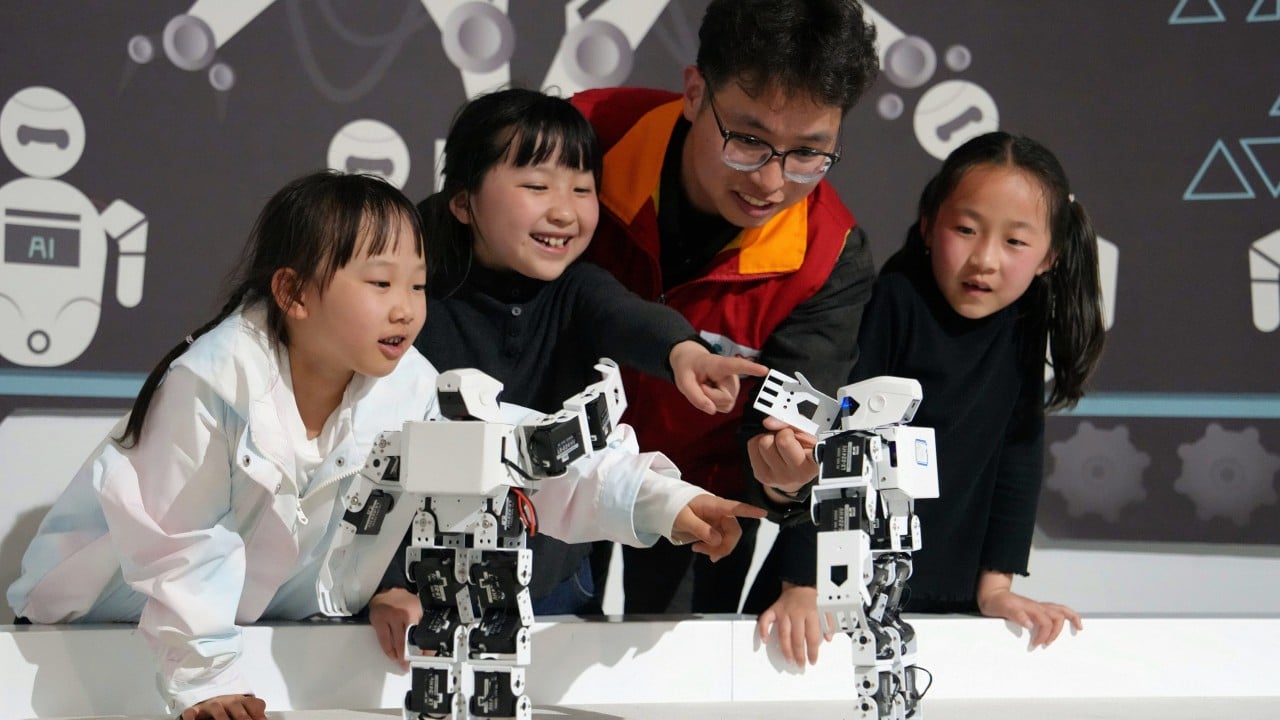
China has issued a five-agency "AI+ Education" action plan that aims to push artificial intelligence through the entire pipeline, from primary school to teacher training to public online courses for adults. The document reads less like a flashy one-off initiative than a state effort to standardize who gets exposed to AI, when, and under what institutional control. That is the part worth watching. Plenty of countries talk about AI literacy; Beijing is trying to turn it into infrastructure. The plan calls for dedicated courses in schools, broader cross-disciplinary use, more national digital resources, and even AI content in teacher qualification exams. It fits a wider Chinese pattern: do not leave a strategic technology as an optional enrichment topic for elite students or a handful of ambitious schools. Build a system around it, then use scale as the advantage. Whether that produces real understanding or just universal exposure is a separate question.
The plan was jointly issued on April 10 by China's education ministry, the state planner, the industry ministry, the science ministry, and the National Data Administration. Official messaging says the country wants a comprehensive AI education system in place by 2030.
Microplastics are becoming one of those policy problems where the political pressure is arriving before scientists can answer the cleanest version of the health question. That tension is now visible in Washington. The EPA has moved to place microplastics on a draft drinking-water contaminant list, a first step that could eventually lead to federal limits, while researchers still disagree on how much current evidence can tell us about direct human harm rather than plausible mechanisms and worrying correlations. That does not make regulation irrational. It makes the tradeoff explicit. Regulators are saying the particles show up in enough places, and behave in enough nasty ways, that waiting for perfect certainty may be its own decision. Skeptics answer that weak evidence plus public panic is a bad recipe for durable policy. The debate is shifting from "are these everywhere?" to "how much proof do we demand before treating everywhere as enough?"
The EPA added microplastics to a draft Contaminant Candidate List on April 2. That does not itself regulate them, but it starts the federal process for more research and possible future standards under drinking-water law.
A fossil that spent years in the Guinness record book as the world's oldest octopus now seems to be something else entirely: not an octopus, but a relative of the nautilus. The creature, Pohlsepia mazonensis, came from Illinois rocks more than 300 million years old and had been awkwardly sitting in evolutionary history as an animal that looked far too octopus-like far too early. New imaging work appears to have solved that mismatch by finding tiny teeth and other internal details hidden in the rock, pointing toward a shelled cephalopod line instead. That is a quieter result than discovering a spectacular new species, but it matters because it cleans up a story biologists had never fully trusted. Sometimes science advances by adding a weird new ancestor. Sometimes it advances by deleting one. In this case, octopus evolution just got later, messier, and probably more plausible.
The new work used synchrotron imaging, which can reveal fine structures inside rock without destroying the specimen. The fossil had been debated for years because it seemed to place octopus-like anatomy much earlier than most evolutionary evidence suggested.
A new betting benchmark built around an entire Premier League season produced a useful anti-hype result: eight prominent AI models all lost money against the odds market, six went bust in at least one run, and Grok performed especially badly. On the surface this is a sports-betting story. It is more useful as an evaluation story. Language models can look smart on short tasks because they get credit for sounding coherent at each step. A season-long betting environment forces them to do something harsher: build a world model, update it over time, size risk sensibly, and avoid blowing up after a few bad calls. That is much closer to the kind of sequential judgment people actually want from autonomous agents in finance, operations, or strategy. The point is not that humans should listen to bookies instead of AI. It is that "good at answers" still does not mean "good at repeated decisions under uncertainty."
The benchmark, KellyBench, simulated the 2023-24 Premier League season and made models size bets over time rather than answer isolated prediction prompts. That setup punished overconfidence, poor bankroll management, and shallow updating much more harshly than ordinary leaderboard tests do.