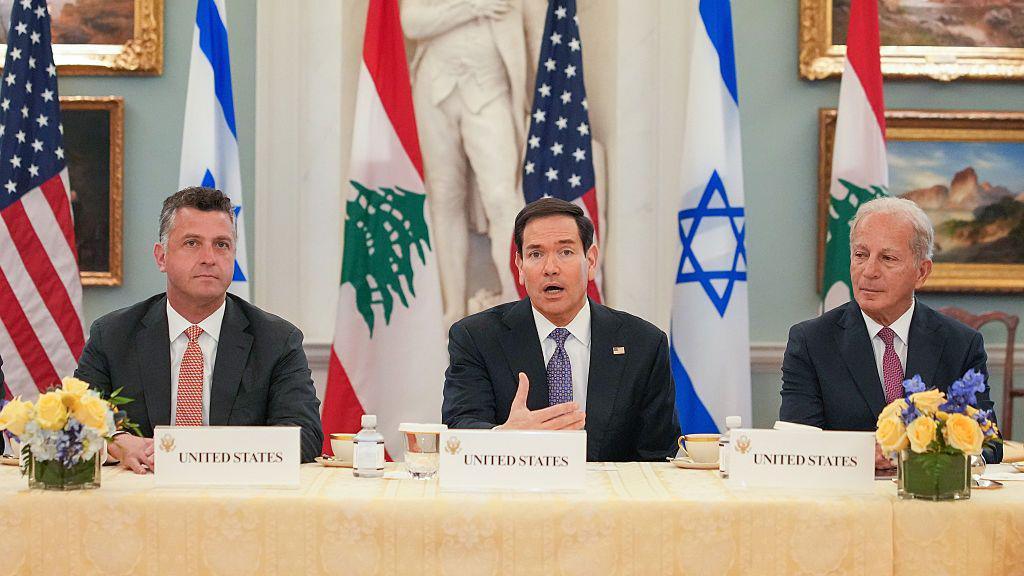
Israeli and Lebanese ambassadors sat down together in Washington on April 14 for the first time in over three decades. The two-hour meeting, brokered by US Secretary of State Marco Rubio, produced a joint agreement to launch "direct negotiations at a mutually agreed time and place." That's the extent of the progress. Lebanon came seeking a ceasefire. Israel demanded Hezbollah disarmament. The gap between those positions is enormous, and Hezbollah itself dismissed the talks as "futile," warning the Lebanese government not to make commitments it can't enforce. The group said it wouldn't abide by any resulting agreements. Israel and Lebanon have technically been at war since 1948, and the last direct talks between them were part of the Madrid Conference process in 1993. Whether this diplomatic opening leads anywhere depends largely on whether Hezbollah, which operates as a state within a state in southern Lebanon, can be brought into or sidelined from the process.
Israel and Lebanon have no diplomatic relations and remain in a formal state of war dating to 1948. Hezbollah controls much of southern Lebanon and has exchanged fire with Israel repeatedly. The 1993 Madrid talks were the last time officials from both countries met directly.
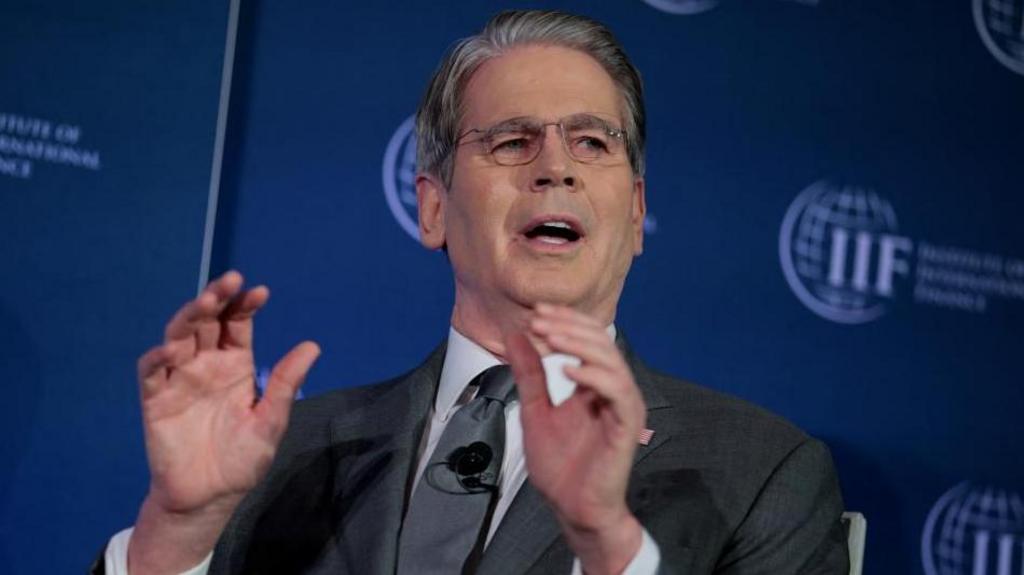
US Treasury Secretary Scott Bessent defended the economic fallout from the naval blockade of Iranian ports, telling reporters that "a small bit of economic pain for a few weeks" is worth eliminating the risk of a nuclear Iran. He dismissed recession concerns as "transient" and posed a pointed question to the BBC: "I wonder what the hit to global GDP would be if a nuclear weapon hit London." The IMF doesn't share his calm. It cut its 2026 growth forecast for the Middle East and North Africa to 1.1% and projected Iran's economy will contract 6.1% as the blockade chokes Gulf oil exports through the Strait of Hormuz. China, Iran's largest oil buyer, called the blockade "irresponsible and dangerous," saying it undermines "an already fragile ceasefire." The blockade began after US-Iran peace talks in Islamabad collapsed on April 12 following 21 hours of negotiation with no deal. About 20% of global oil trade passes through the strait, making any sustained disruption a worldwide price shock.
The US imposed a naval blockade on Iranian ports after peace talks in Islamabad failed on April 12. The Strait of Hormuz is the chokepoint: a narrow waterway between Iran and Oman that handles roughly a fifth of all global oil shipments. China imports substantial volumes of Iranian crude, giving it a direct economic stake.
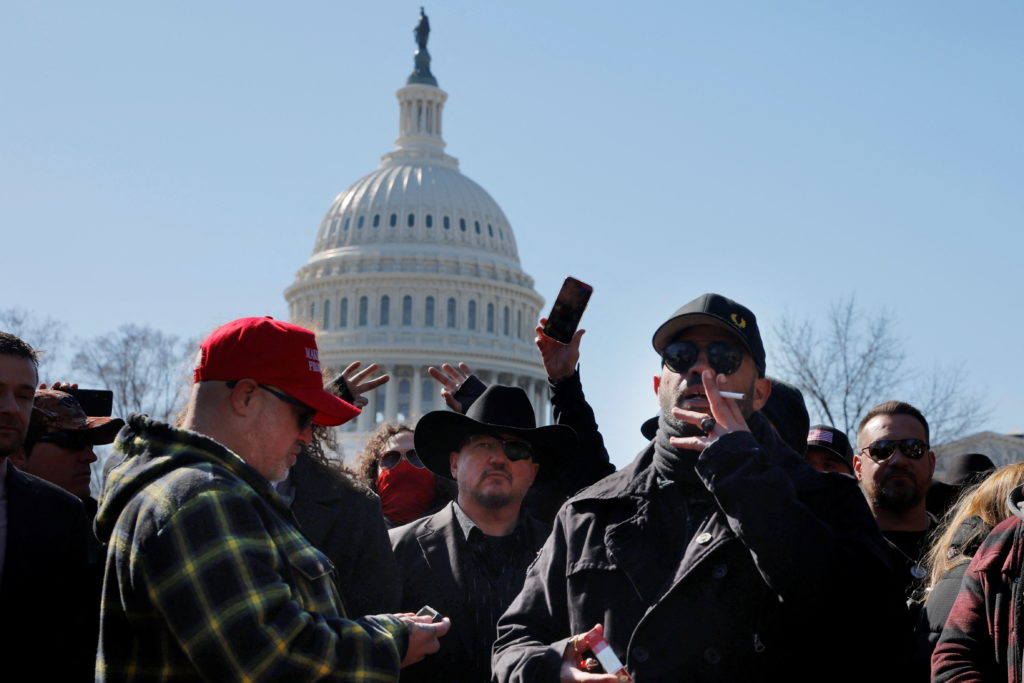
The Justice Department asked a federal appeals court on Tuesday to vacate the seditious conspiracy convictions of Proud Boys and Oath Keepers leaders from the January 6, 2021 Capitol attack. The move targets about a dozen defendants, including Oath Keepers founder Stewart Rhodes, originally sentenced to 18 years, and Proud Boys national chairman Enrique Tarrio. Trump had already commuted their prison sentences in January 2026, but this goes further. Prosecutors are requesting dismissal with prejudice, which would permanently erase the convictions from official record and bar the charges from ever being refiled. The DOJ cited "prosecutorial discretion" and the "interests of justice" in its filing. This matters because commutation only ends a sentence — the conviction stays. Vacating it wipes the legal record clean, as if the prosecution never happened. Trump's January clemency covered all 1,500-plus January 6 defendants' prison terms but left every conviction intact until now.
[Seditious conspiracy] is among the most serious federal charges, carrying up to 20 years. It's rarely prosecuted. Trump's January 2026 clemency freed all Jan. 6 defendants from prison but didn't touch the underlying convictions. Vacating convictions is a separate legal step that removes the guilty finding entirely.
Flock Safety has built the largest vehicle surveillance network in the US, and a growing campaign wants it dismantled. The company operates over 100,000 cameras across 5,000-plus communities, photographing every passing vehicle's plate, color, make, model, and distinguishing features — scanning 20 billion vehicles monthly. Its "Vehicle Fingerprint" technology identifies cars even without visible plates. When a California resident filed a CCPA deletion request, Flock refused, claiming it acts as a "service provider" for police rather than a data controller. San Francisco cameras were searched by out-of-state agencies 1.6 million times in seven months. In Oak Park, Illinois, 84% of drivers stopped using Flock alerts were Black in a town that's 21% Black. A Kansas police chief used cameras 228 times to stalk an ex-girlfriend. At least 30 localities have canceled Flock contracts since 2025, many worried local plate data is feeding federal immigration enforcement. A class action filed in February 2026 accuses the company of violating California's ALPR Privacy Act.
The StopFlock campaign grew after the EFF documented police using the network to track protesters. With Trump's immigration enforcement escalating, cities worry local surveillance data is being shared with ICE without oversight. A 2024 trial court compared Flock's data collection to "placing GPS trackers on every vehicle."
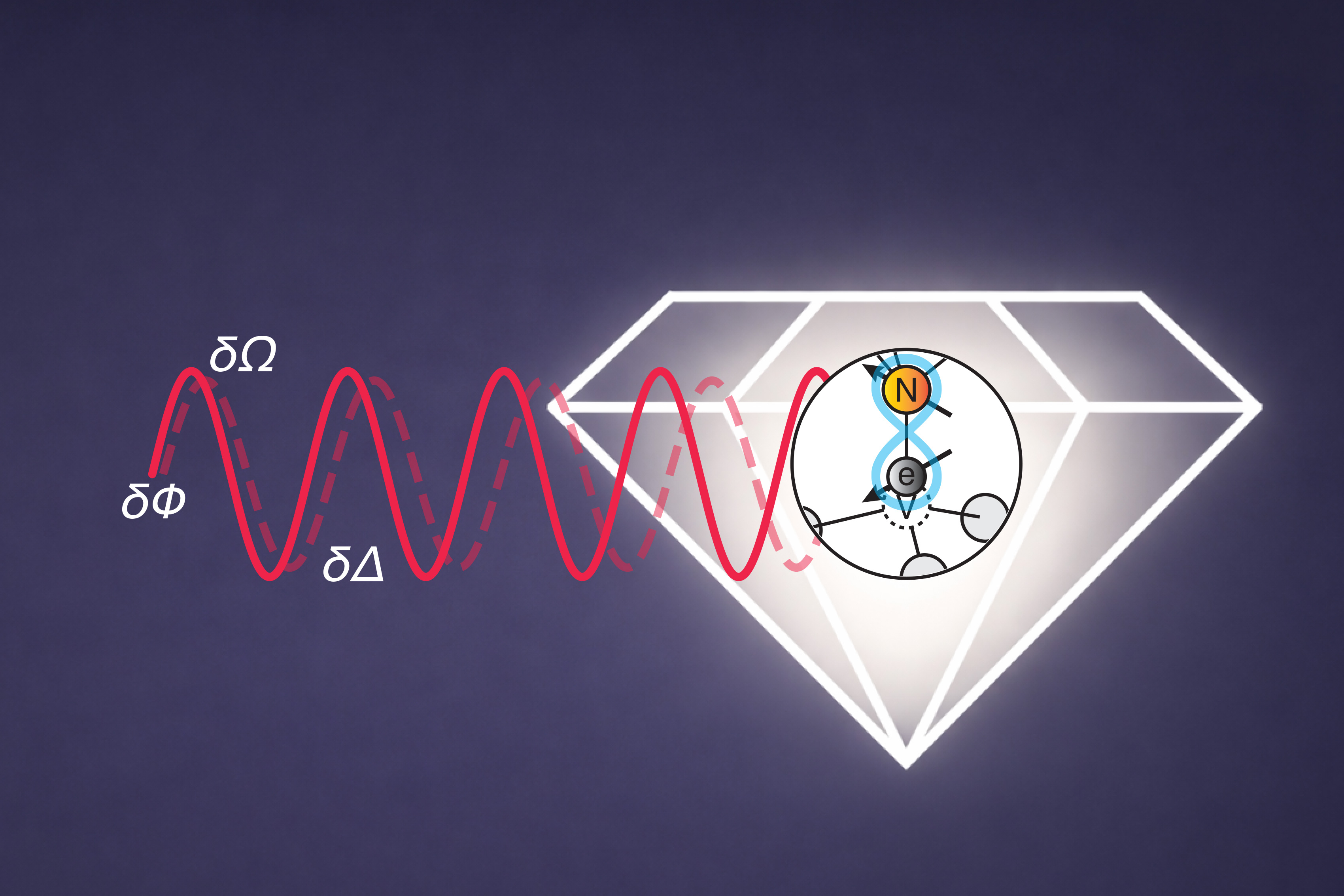
Most quantum sensors measure one thing at a time. MIT researchers built one that measures three simultaneously. The device, developed by graduate student Takuya Isogawa and senior investigator Paola Cappellaro, captures the amplitude, frequency, and phase of microwave fields in a single operation. Classical sensors handle these sequentially, losing time and resolution at each step. The trick is quantum entanglement between two qubits inside a nitrogen-vacancy center in diamond. This is a room-temperature solid-state system, which matters because most quantum devices need cooling to near absolute zero. The team calls the technique "entanglement-assisted multiparameter estimation." By entangling the qubits, each measurement extracts information about all three properties at once rather than collapsing the quantum state for just one. Published recently, the work points toward applications in biomedical sensing of cellular activity, materials characterization, and measuring spin waves in exotic quantum materials.
Quantum sensors exploit quantum mechanical effects to achieve measurement precision beyond classical instruments. Until now, they've been single-parameter devices. Room-temperature operation is a practical advantage since most quantum hardware requires extreme cooling that limits where it can be deployed.
Two widely used open-access health datasets that fed AI disease-prediction models appear to be fabricated. Researchers led by Adrian Barnett identified 124 peer-reviewed studies using these datasets to train models predicting diabetes or stroke risk. The statistical problems are glaring. The diabetes dataset recorded only 18 discrete blood glucose values across 100,000 supposed patients. Human biology doesn't work that way — blood glucose varies continuously, and 18 values for that many people is biologically impossible. The stroke dataset was uploaded by a Madrid data scientist who said it came from "a confidential source" meant only for "educational purposes" — yet it was downloaded 288,000 times. Papers got published. Citations cascaded. Some of the resulting models may already be in use on real patients. At least two journals are now investigating papers built on these datasets. The episode exposes a gap in the pipeline from open data to peer review to clinical deployment: almost nobody audits the source data itself.
Medical AI tools increasingly feed into hospital workflows, with some disease-prediction models already deployed in clinical settings. Once a dubious dataset appears in one published paper, subsequent researchers cite that paper rather than checking the original data. The pipeline from open dataset to clinical tool has very few checkpoints for verifying that underlying data is real.
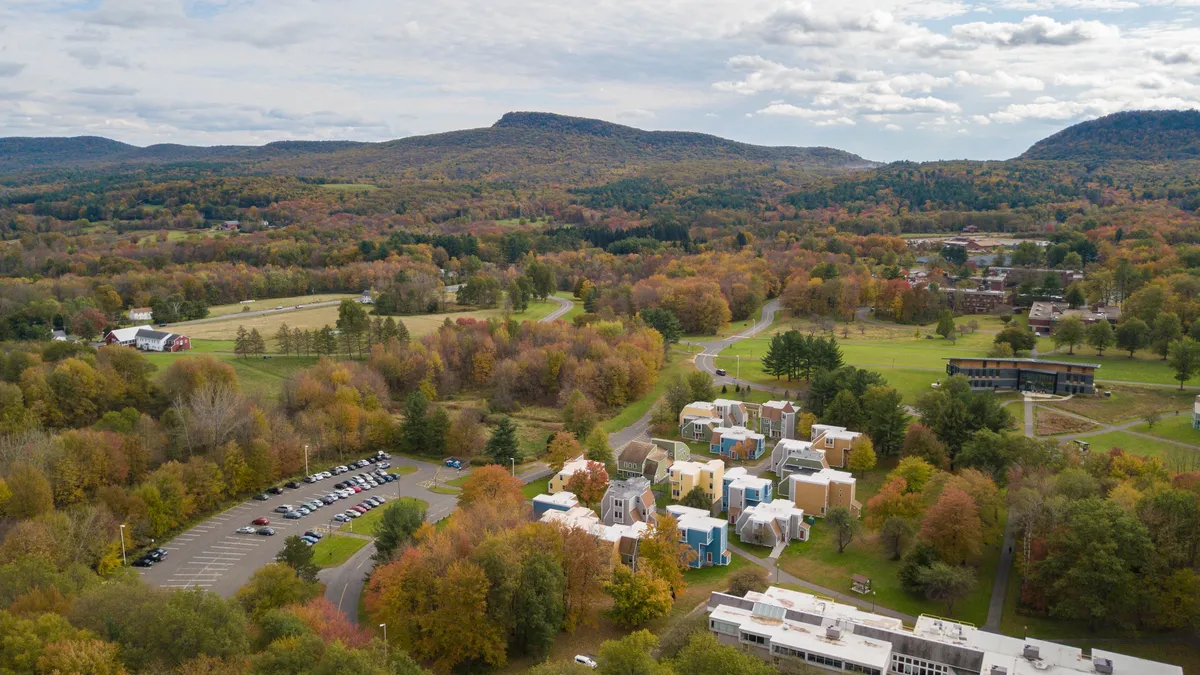
Hampshire College will permanently close in December 2026. The school, in Amherst, Massachusetts, ran out of turnaround options after years of financial decline. It carried $21 million in bond debt, breached bond covenants in June 2024, and saw enrollment drop 11.3% to 747 students by fall 2025. No new students will be admitted for fall 2026. Partner schools in the Five College Consortium are developing teach-out plans so current students can finish their degrees. Founded in 1965, Hampshire was known for a no-grades, student-designed curriculum — Ken Burns and Jon Krakauer are among its alumni. The college had narrowly avoided closure once before, in 2019, when it froze freshman admissions and its incoming president resigned. Donor fundraising saved it then. Not this time. The Chronicle frames the closure as a warning for other small liberal arts colleges carrying similar debt loads while enrollment shrinks year after year.
Hampshire nearly shut down in 2019 after freezing admissions and losing its incoming president, but a donor campaign kept it open. The school is part of the Five College Consortium in western Massachusetts, which lets students cross-register at partner institutions.
许家印 pleaded guilty and expressed remorse on April 14 at the 深圳市中级人民法院, bringing one of China's highest-profile corporate fraud cases toward a conclusion. The 恒大集团 founder faces charges spanning fundraising fraud, illegal deposit-taking, securities fraud, embezzlement, and corporate bribery. 恒大 and its real estate subsidiary also stood trial. A verdict will come later. Xu was once Asia's richest person, worth $42.2 billion according to Forbes in 2017. Then 恒大 accumulated over $300 billion in liabilities and defaulted in 2021 after Beijing's three red lines policy capped how much debt property developers could carry. The company had pre-sold millions of homes but diverted buyer deposits to fund operations instead of building the properties people had paid for. Xu was detained by police in 2023. The guilty plea closes a chapter that began with regulatory tightening and ended with one of the largest corporate collapses in modern Chinese history.
恒大's default in 2021 followed Beijing's 2020 "three red lines" policy, which set debt-ratio limits for property developers. Companies exceeding all three thresholds were barred from taking on new borrowing. The collapse left millions of homebuyers with unfinished apartments and sent shockwaves through China's property sector.
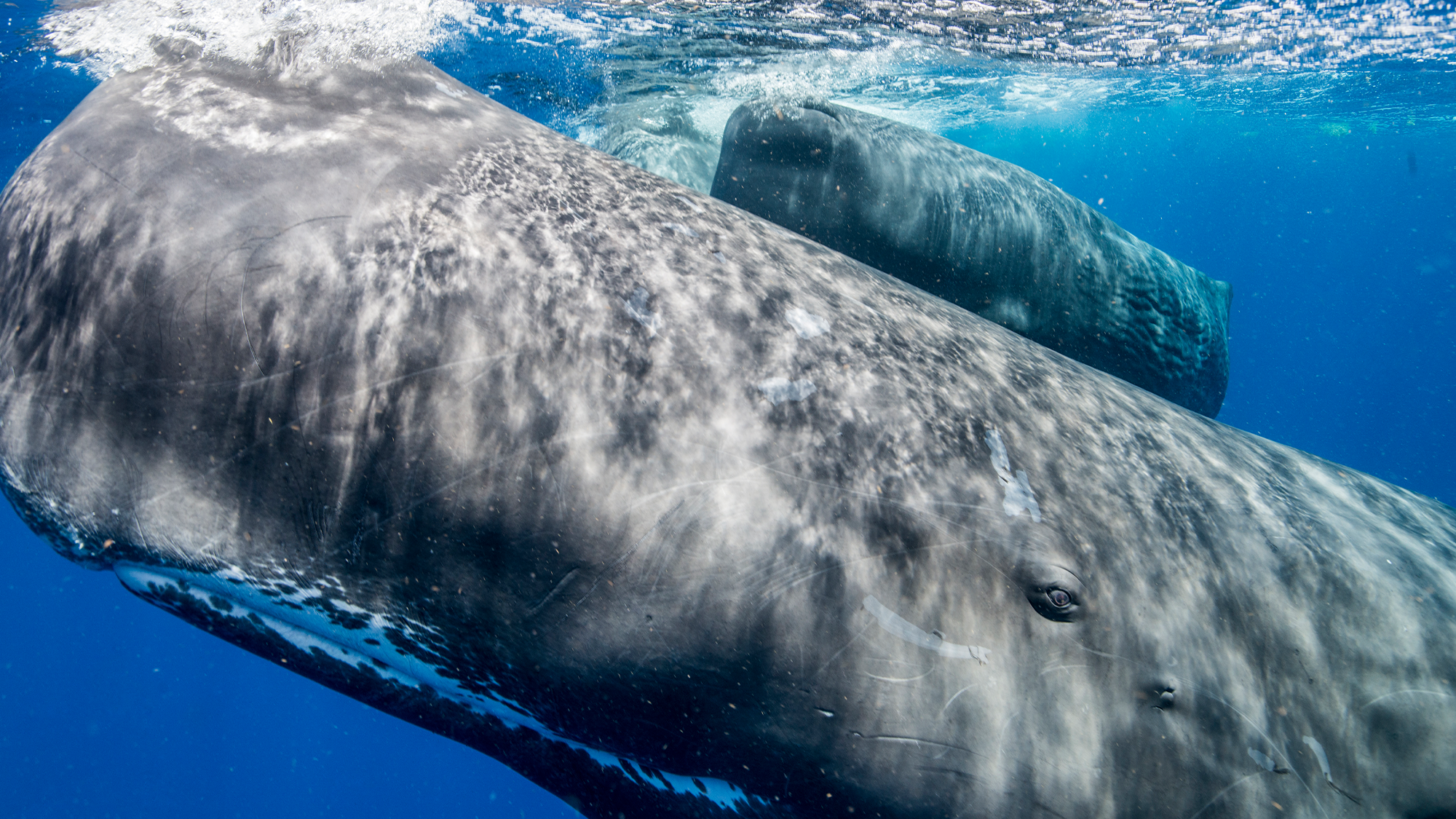
Sperm whale click sequences contain vowel-like sounds that parallel structures in human speech. Researchers at Project CETI and UC Berkeley, led by linguist Gašper Beguš, analyzed the click sequences (codas) that whales use in social settings and found two distinct vowel-like acoustic patterns — an ɑ-vowel and an i-vowel — plus diphthong patterns where sound glides between vowel types, and long and short variations similar to some human languages. The mechanism is physical: whales control a structure called the distal air sac to change click resonance, much like humans reshape the vocal tract for different vowels. When the team sped up recordings, patterns matching human vowels became audible. Published in Open Mind (MIT Press), the finding suggests whale codas "can convey more information than we previously thought," according to researcher Mason Youngblood. Previous work had decoded the combinatorial structure of codas but hadn't found vowel-like features embedded within individual clicks.
Sperm whales produce codas in social contexts — rhythmic click series that vary by family group, suggesting they carry social meaning. Project CETI applies AI and linguistics to decode whale communication. Prior research mapped the combinatorial patterns of codas but hadn't identified vowel-like features within individual clicks.
Up to 25% of heart attack patients have normal cholesterol, yet they do worse than patients with high cholesterol alone. The explanation is inflammation. Cholesterol crystals form in artery walls, expand by 45%, and grow into needle-like structures that perforate the tissue. The immune system attacks these crystals, releasing IL-1β and triggering a prolonged cascade involving macrophages and T cells that destabilizes arterial plaques and causes clots. [Colchicine], an ancient gout drug, reduced heart attack and stroke risk by 31% in a 2020 trial and won FDA approval for cardiovascular use in 2023. Statins also work partly through inflammation: the JUPITER trial showed a 54% reduction in heart attacks among patients with normal cholesterol but elevated CRP, a blood inflammation marker. The old model of heart disease treated arteries as pipes that get clogged. The new one explains why the pipes sometimes rupture even when they're clean.
The standard model of heart disease focused on LDL cholesterol physically blocking arteries. The inflammation model explains why patients with normal cholesterol still have heart attacks, and why statins outperform their cholesterol-lowering effects alone. Anti-inflammatory drugs were previously avoided in cardiac patients due to side effects, but colchicine offers a safer option.