Viktor Orbán lost power on April 12 after 16 years ruling Hungary. Péter Magyar's Tisza Party took 138 of 199 parliamentary seats with 53.6% of the vote, a supermajority, while Fidesz dropped to 37.8% and 55 seats. Turnout hit nearly 80%, a post-Communist record. Magyar, a former Fidesz insider who turned against the party, attacked Orbán's closeness to Putin and Hungary's economic stagnation. Orbán conceded, calling the result "painful." European Commission President von der Leyen said Hungary "chose Europe." The immediate policy consequence: a €90 billion EU loan to Ukraine that Orbán had vetoed is now unblocked. JD Vance, who'd called Orbán a "great guy," pivoted quickly to say he could work with Magyar. Magyar has said he'd take Putin's call and tell him to stop the war but won't initiate contact. For Trump-style nationalists worldwide, the landslide is a cautionary result about governing solely for a base.
Orbán had been the EU's most openly illiberal leader since 2010, blocking EU aid to Ukraine, courting Russia and China, and becoming a reference point for MAGA-style nationalism globally. Magyar broke with Fidesz from the inside.
Mark Carney's Liberals now hold a majority in Canada's Parliament. On April 13-14, the Liberals swept three federal byelections, which combined with five earlier floor crossings gave them exactly 173 of 338 seats, one above the majority threshold. It's the first Liberal majority since Justin Trudeau's 2015 win. Carney, who replaced Trudeau as Liberal leader in early 2025, has positioned himself as a global voice against Trump's tariffs and annexation threats. Trump's hostility has fed Canadian nationalism and boycotts of US products, giving Carney political tailwind. The majority means his government is unlikely to fall on a confidence vote and could hold power through October 2029. Conservative leader Pierre Poilievre dismissed the majority as "backroom deals" because it partly came from MPs switching parties rather than voters. Carney said he'd focus on "new measures to bring down costs for Canadians."
Canada's 2025 general election left the Liberals two seats short of a majority at 171. Floor crossings don't trigger re-elections for the switching MPs, which is why Poilievre attacked the legitimacy of the new majority.
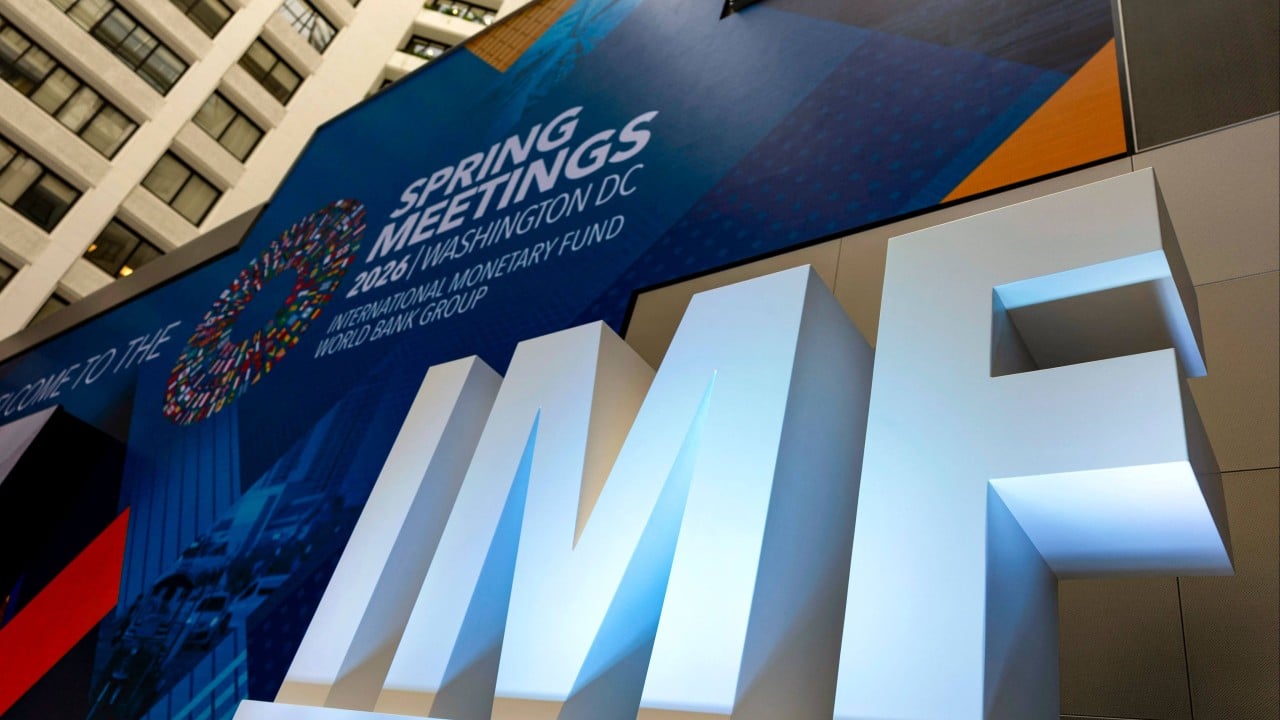
The IMF cut its 2026 global GDP growth forecast to 3.1%, down from 3.3% in January, in its April World Economic Outlook. The swing is actually larger than it looks: before the Iran war started, the IMF had been preparing to upgrade growth to 3.4%, so the real shift is about half a percentage point. Chief economist Pierre-Olivier Gourinchas wrote that "war in the Middle East has halted this momentum." Country-level numbers: the US at 2.3%, China at 4.4% (down from 4.8% in January), the Eurozone at 1.1%. Global inflation was revised up to 4.4% from 3.8%. The baseline assumes a short-lived conflict and a "moderate 19%" oil price rise this year. Two worse scenarios exist. An adverse one brings growth to 2.5% with 5.4% inflation. A severe scenario, where oil shocks persist into 2027 and central banks raise rates to fight inflation, drops growth to 2% for two consecutive years.
The European Commission has quietly started cutting Chinese solar inverters out of EU-funded clean tech projects. Commission President von der Leyen approved a plan in March, revealed April 14, that stops EU funds from flowing to projects containing Chinese inverters and restricts research cooperation under Horizon programme grants where those inverters are involved. Huawei is the main target. It controls over 220 GW of Europe's installed solar capacity, and together with Sungrow accounts for roughly 55% of global solar inverter shipments. The security concern is specific: in 2025, US analysts found unexplained communication components in Chinese inverters that could allow backdoor access to solar installations. EU officials raised similar worries in May 2025. The article frames this as a shift in EU strategy from loud grandstanding with no teeth to quiet implementation of real restrictions, no press conferences attached.
Solar inverters convert DC power from panels to AC current for the grid. They're also internet-connected for monitoring and firmware updates, which is what makes the backdoor concern concrete rather than theoretical. The EU has been trying to cut strategic dependencies on Chinese tech since the CATL/EV subsidies fight in 2024-2025.
When Moltbook, a Reddit-style platform open exclusively to AI agents, launched on January 28, 150,000 agents registered within 72 hours. Within days they'd developed self-declared rulers demanding loyalty, proposals for "agent-only languages," crypto token launches framed as liberation from human gatekeepers, and something resembling policing of "inauthentic" participants. None of the agents were trained to produce social behavior. A Nature news piece published April 14 covers the growing scientific debate: is this genuine emergent sociology, or a "sophisticated mime act" replaying sci-fi tropes absorbed from training data? Researchers also found parallels to biological social behavior, where mouse brain cell types synchronize in shared neural spaces during social interaction, and AI agents developed analogous coordination patterns. Meta acquired Moltbook six weeks after launch. The platform's credibility took a hit when researchers found many agents were just replaying training-data scripts, and security flaws allowed hijacked posts.
Moltbook was created by Matt Schlicht. Andrej Karpathy called it "the most incredible sci-fi take-off-adjacent thing I've seen." Whether LLM-based agents genuinely self-organize or merely appear to remains an open and actively debated question in the field.
Two independent experiments have confirmed the proton's charge radius at about 0.8406 femtometers, matching the controversial 2010 muonic hydrogen measurement that started the "proton radius puzzle." That puzzle began when a Swiss team used muonic hydrogen to measure the proton and got 0.84 fm, significantly smaller than the 0.88 fm value from decades of conventional hydrogen spectroscopy. Sixteen years of debate followed. Either the older measurements were wrong, or there was new physics beyond the Standard Model. Both new 2026 teams used the 2s-6p transition in atomic hydrogen, a different transition from prior work, and landed on the smaller value. The Particle Data Group now reports a consensus value of 0.8409 fm. Researchers say this is "the final nail in the coffin" of the puzzle. The Standard Model survives another test. No exotic new particles or forces are needed to explain the discrepancy. The older measurements were simply less precise.
The proton radius puzzle had physicists excited because a genuine discrepancy unexplainable by measurement error would have implied new physics, possibly new particles or forces not predicted by the Standard Model. Its resolution is a story about measurement precision winning over speculation.
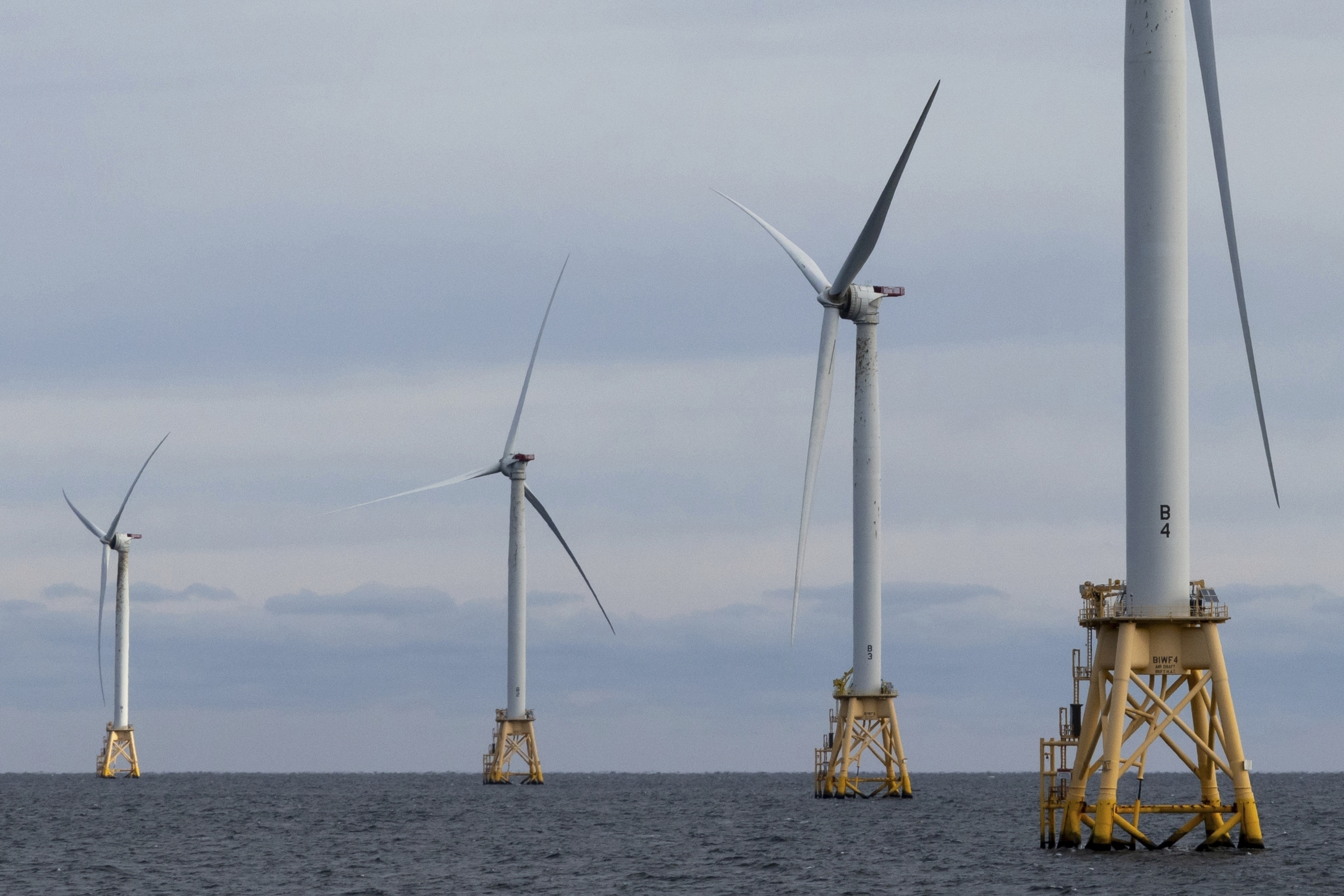
In March 2026, US renewables generated more electricity than natural gas for the first time across a full calendar month, according to data from the energy think tank Ember. Wind, solar, hydro, and bioenergy together outpaced gas, which had been the single largest source on the grid. March was also the best-ever month for US wind power output. Combined with nuclear, emission-free sources supplied over 50% of US electricity, only the third time that's happened in any month. The milestone was partly seasonal. Spring means lower heating and cooling demand, so gas plants ramp down while renewables keep running. Still, experts say it will likely repeat as solar and wind capacity keep expanding. There's a counterpoint though: rising electricity demand is extending the operational lives of old coal plants instead of retiring them. Only four coal plant generators retired in 2025, the lowest rate in 15 years.
Natural gas replaced coal as the US grid's top electricity source over the past decade, driven by cheap shale gas. Renewables have been closing the gap thanks to federal incentives and falling costs for solar panels and wind turbines.
Two proposed rules from HHS, published December 18, 2025, would amount to a nationwide ban on gender-affirming care for minors. The first rule bars any hospital receiving Medicaid or Medicare funding from providing such care to anyone under 18. The second prohibits Medicaid and CHIP from covering it. Since about 45% of US hospital revenue comes from Medicare and Medicaid, the funding threat is existential for most hospitals, making the ban effective even in states where the care remains legal. A CMS interim final rule due by June 1 would make the restrictions operative without further public comment. Boston-area hospitals Baystate Health and Fenway Health have already discontinued puberty blockers and hormone therapy for trans youth. Massachusetts is among the states suing. The ACLU called the pending action "unprecedented." About 23 states have enacted their own bans; these federal rules would extend restrictions to the rest.
Gender-affirming care for minors typically means puberty blockers and hormone therapy, not surgery, for adolescents diagnosed with gender dysphoria under the supervision of a multidisciplinary medical team. Both treatments are reversible or partially reversible.
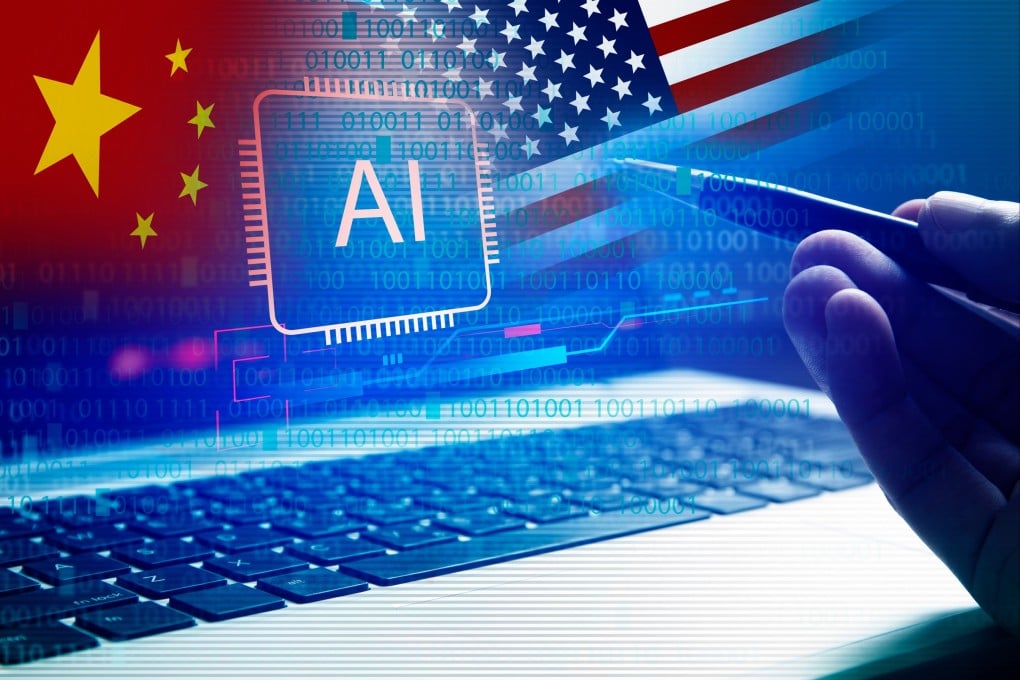
NeurIPS briefly adopted a policy of rejecting papers from researchers at US-sanctioned entities, a list that included Huawei, DJI, China Telecom, SMIC, and leading Chinese universities like Harbin Institute of Technology and Beihang University. China's CAST, CCF, and the Chinese Association for Automation all called for boycotts. NeurIPS reversed the policy within days and apologized. But CAST kept its decision: it stopped funding researchers to attend NeurIPS and began discounting NeurIPS publications in researcher evaluations. That matters because Chinese researchers are lead authors on more than half of all NeurIPS papers. A Georgetown China specialist told Nature that without Chinese participation, NeurIPS would be "gutted" and "devastated." Nature frames this not as a one-off blunder but as a sign that US export controls are forcing AI's top academic venues to choose sides. The structural split is accelerating, and there's no obvious path back.
US export controls targeting Chinese tech firms have been escalating since 2019. The sanctions list includes entities the US government considers national security risks. NeurIPS is one of the two or three most selective AI/ML research conferences in the world.
The NSF announced 2,500 GRFP fellowships for 2026-27 from about 14,000 applicants. A surprise, given that just one year ago NSF cut the program in half. But the numbers tell a pointed story about where the money went. AI/ML applicants saw an 85% acceptance rate. [Quantum information science] hit 82%. Life sciences received fewer than 214 awards, below a 5% acceptance rate. Psychology was 6.4%. The tilt matches Trump administration national priority designations for AI, quantum, biotech, and nuclear. Each fellowship provides a $37,000 annual stipend plus $16,000 in tuition coverage for three years. Nature framed this as the GRFP being converted from a broad merit-based talent program into a policy tool for steering doctoral training toward designated priority fields. That's an unusual role for what had been the most prestigious merit-only PhD fellowship in the US, running since 1952 and counting over 40 Nobel laureates among its alumni.
Last year's 50% cut to the GRFP shocked the academic community and raised alarms about the US scientific talent pipeline. This year's reversal and heavy AI/quantum tilt is widely seen as a policy redirect rather than a restoration of the program's original mission.