A Manhattan federal jury found Live Nation and its subsidiary Ticketmaster liable on every monopolization count brought against them, capping a six-week trial. The jury concluded the companies illegally monopolized live event ticketing and the amphitheater market, and that Ticketmaster tied concert promotions to venue bookings, forcing artists and venues into its ecosystem. Fans were overcharged by $1.72 per ticket, the jury determined. The Trump administration had dropped out of the case before trial, but 33 state attorneys general pressed forward and secured the verdict. Judge Arun Subramanian will now preside over a second trial focused on remedies, which could include forcing Live Nation to sell off Ticketmaster entirely. The ruling marks the first major antitrust courtroom loss for the company after years of regulatory pressure from the DOJ and state officials.
Live Nation acquired Ticketmaster in 2010, creating a vertically integrated giant that controls concert promotion, venue management, and ticketing. Critics argued the merger let the company lock artists, venues, and fans into a single ecosystem with no competitive alternative.
Amandla Thomas-Johnson, a PhD student at Cornell on a student visa, briefly attended a pro-Palestinian protest in September 2024. Seven months later, ICE issued an administrative subpoena to Google requesting his account information. Google handed over subscriber data including IP addresses, physical address, and session logs without notifying Thomas-Johnson first, violating the company's long-standing written pledge to warn users before disclosing data to law enforcement. Thomas-Johnson learned about the disclosure weeks later while traveling in Switzerland. The EFF filed complaints with the California and New York attorneys general, asking both to investigate Google for deceptive trade practices. The case highlights a growing pattern under the Trump administration: federal agencies using administrative subpoenas, which require no judge's approval, to obtain tech company records on student protesters and immigrants.
The Trump administration has relied on administrative subpoenas to collect user data from tech companies targeting student protesters and immigrants. Several major tech firms had previously pledged to notify users when law enforcement sought their records, giving them time to challenge the request.
China's economy grew 5% year-on-year in the first quarter of 2026, beating economist forecasts of 4.86% and accelerating from Q4 2025's 4.5%, which had been the weakest quarterly rate in three years. The 国家统计局 released the figures, which represent the first GDP data since the US-Israel war in Iran began disrupting global energy markets. Analysts said the conflict had minimal direct impact on China's economy despite the country's heavy reliance on Iranian oil imports. Retail sales rose 1.7%. Standard Chartered's chief economist said Beijing is unlikely to roll out near-term stimulus and that interest rate cuts appear unnecessary given the stronger-than-expected performance. Beijing's full-year target of 5% growth looks achievable based on the quarter's results.
Beijing set a 5% annual growth target for 2026. China imports large volumes of Iranian oil and has been navigating secondary sanctions pressure from the US, which has blockaded Iranian ports since the war began in March.
Researchers at Beth Israel Deaconess Medical Center and Harvard Medical School used a modified CRISPR technique to silence much of the extra chromosome responsible for Down syndrome. The approach targets trisomy 21, a condition where a person carries three copies of chromosome 21 instead of two. The team inserted the XIST gene, which normally shuts down one X chromosome in female cells, into the extra copy of chromosome 21 in human stem cells. The gene coated the extra chromosome in RNA, dampening its activity. Integration succeeded in 20-40% of treated cells, though full silencing remained inconsistent across the population. Published in PNAS, the work represents a proof-of-concept for whole-chromosome silencing in a single step, a departure from earlier gene therapies that targeted individual genes one at a time. Clinical applications are years away and will require animal model validation and thorough off-target safety checks.
Down syndrome results from an extra copy of chromosome 21, causing intellectual disability and various health complications. Previous gene therapy strategies tried to correct individual genes on the chromosome; this study attempts to quiet the entire extra copy at once.
MIT researchers discovered that the composition of cell membranes actively controls how growth receptors on cell surfaces behave, overturning the long-held view of membranes as passive structural scaffolding. The study focused on EGFR, a receptor protein that tells cells when to divide. The team found that when negatively charged lipid molecules in the membrane rise from a normal 15% to about 60%, EGFR locks into an always-on state and drives continuous cell growth, even without external growth signals. Elevated cholesterol has the opposite effect: it stiffens the membrane and suppresses signaling. Many cancer cells carry abnormally high levels of negatively charged lipids, and this finding helps explain why. The researchers suggest a potential therapeutic angle: neutralizing the membrane's negative charge could suppress EGFR activity in cancers like lung cancer and glioblastoma, possibly offering a path around the drug resistance that limits existing EGFR-targeted therapies.
EGFR mutations rank among the most common drivers of lung cancer. Existing drugs that target EGFR can lose effectiveness as tumors evolve resistance, so researchers have been searching for alternative mechanisms to control the receptor.
Iran's military threatened to shut down Red Sea shipping unless the US lifted its naval blockade on Iranian ports, raising the stakes in negotiations that have so far failed to produce a lasting agreement. Marathon talks in Islamabad last week ended without a deal after 21 hours. The White House denied seeking a ceasefire extension but said discussions for a second round of in-person talks were underway, likely again in Pakistan. Bloomberg reported that both sides were separately weighing a two-week extension of the existing ceasefire, which paused roughly five weeks of fighting and is due to expire soon. Trump said the conflict was "very close to over" and that Iran wanted a deal. The US Treasury separately warned China, Iran's largest oil buyer, that its banks risk secondary sanctions if they continue processing Iranian transactions. A closure of Red Sea shipping lanes or the Strait of Hormuz would threaten roughly one-fifth of the world's daily traded oil.
The US and Israel launched strikes against Iran in March 2026, triggering a ceasefire in early April. The US has since blockaded Iranian ports, disrupting global oil supplies and tanker routes through the Persian Gulf.
The core node of China's national supercomputing network in Zhengzhou, Henan province, doubled its domestically produced AI accelerator chips from 30,000 to 60,000 units in two months. Sugon, a supercomputer developer affiliated with the Chinese Academy of Sciences (中科院), manufactured the chips. State broadcaster CCTV described the expansion as a breakthrough in AI research infrastructure. The scaling demonstrates that Chinese institutions can grow AI computing capacity for scientific research without relying on US-exported chips like Nvidia's H100, which Washington has restricted since 2022. Sugon has been on the US entity list since 2019, barring it from purchasing American technology without government approval. That restriction pushed the company to develop fully domestic chip alternatives, and the Zhengzhou expansion shows those alternatives can now be manufactured and deployed at meaningful scale.
The US has been tightening export controls on advanced AI chips to China since 2022, blocking sales of Nvidia's most powerful processors. Chinese institutions have responded by accelerating domestic chip development programs.
In a first-of-its-kind ruling, federal judge Jed Rakoff of the S.D.N.Y. held that documents a criminal defendant created by querying Anthropic's Claude chatbot were not protected by attorney-client privilege. Bradley Heppner, charged with securities and wire fraud, had used Claude to research defense arguments after hiring legal counsel, then sent the AI-generated documents to his attorneys. Judge Rakoff gave three reasons for denying privilege. Claude is not a lawyer, so the exchange was not a communication between attorney and client. The public version of Claude carries no confidentiality guarantee, because Anthropic's privacy policy allows sharing user data with government regulators. And the work-product doctrine did not apply because Heppner generated the materials on his own initiative, not at his lawyer's direction. The court left open one narrow exception under the Kovel doctrine: if an attorney had specifically directed a client to use Claude as a research tool, privilege might extend to the results.
Attorney-client privilege shields private communications between a client and their lawyer from forced disclosure in court. The work-product doctrine separately protects materials prepared in anticipation of litigation, but only when prepared by or at the direction of counsel.
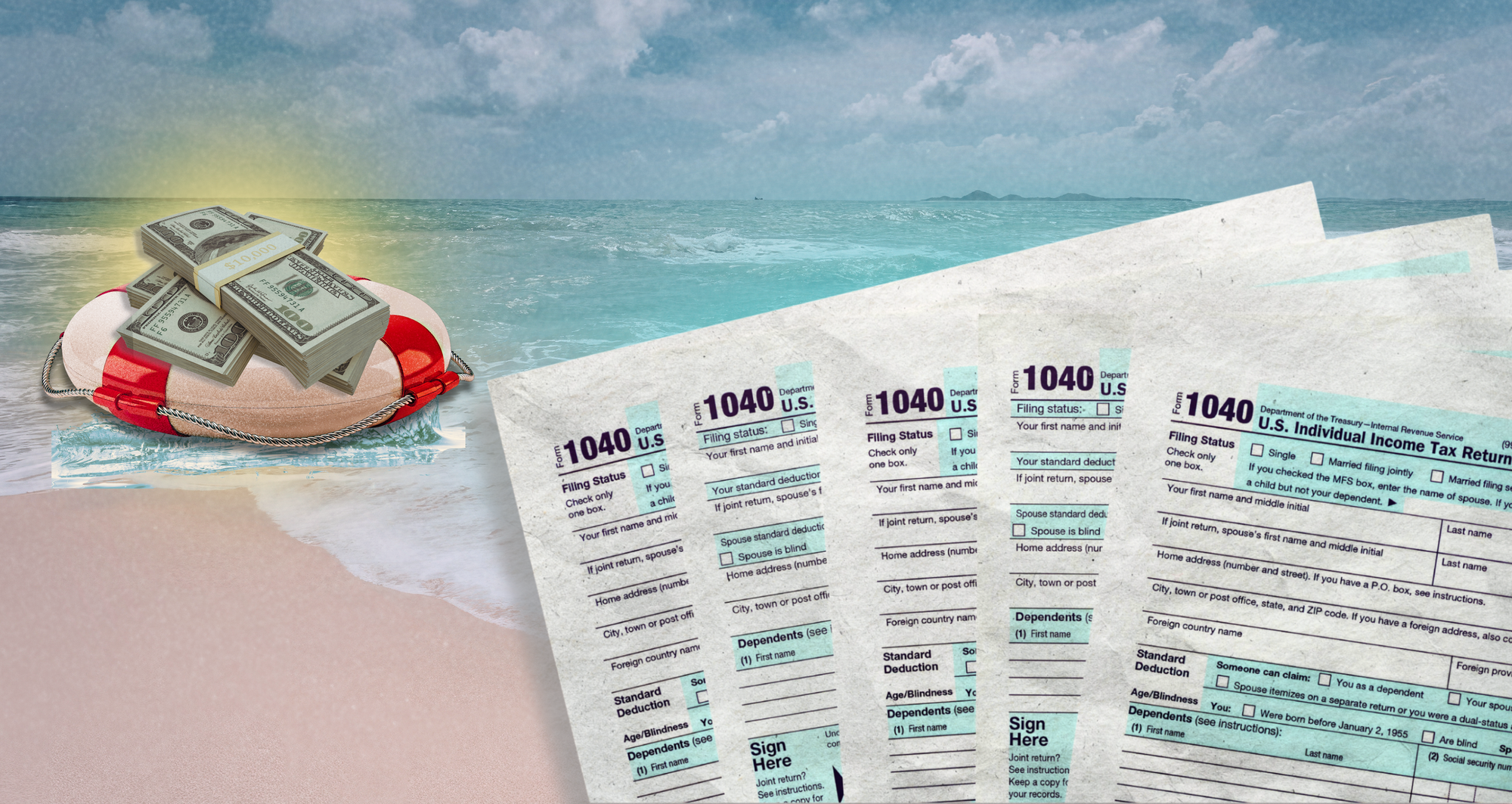
The Lever argues that the US tax system now operates on two tiers: ordinary Americans face a complex filing burden with no free government help, while the ultrawealthy hide billions in offshore accounts under minimal IRS scrutiny. Published on Tax Day, the piece centers on a contradiction in the Trump administration's approach to taxes. The administration shut down Direct File, a free government-run filing tool the IRS launched in 2024 as an alternative to commercial software like TurboTax and H&R Block. At the same time, the IRS relaxed enforcement on wealthy individuals sheltering income abroad. The IRS already receives income data from employers and banks and knows what most Americans owe, but US taxpayers must still file paperwork themselves, often paying private companies for the privilege. Most wealthy countries offer free government filing. Intuit, the maker of TurboTax, has spent decades lobbying to prevent the US from doing the same.
The IRS launched Direct File in 2024 to let taxpayers file for free without commercial software. The tax preparation industry, led by Intuit, lobbied against the program for years before the Trump administration ended it in 2025.
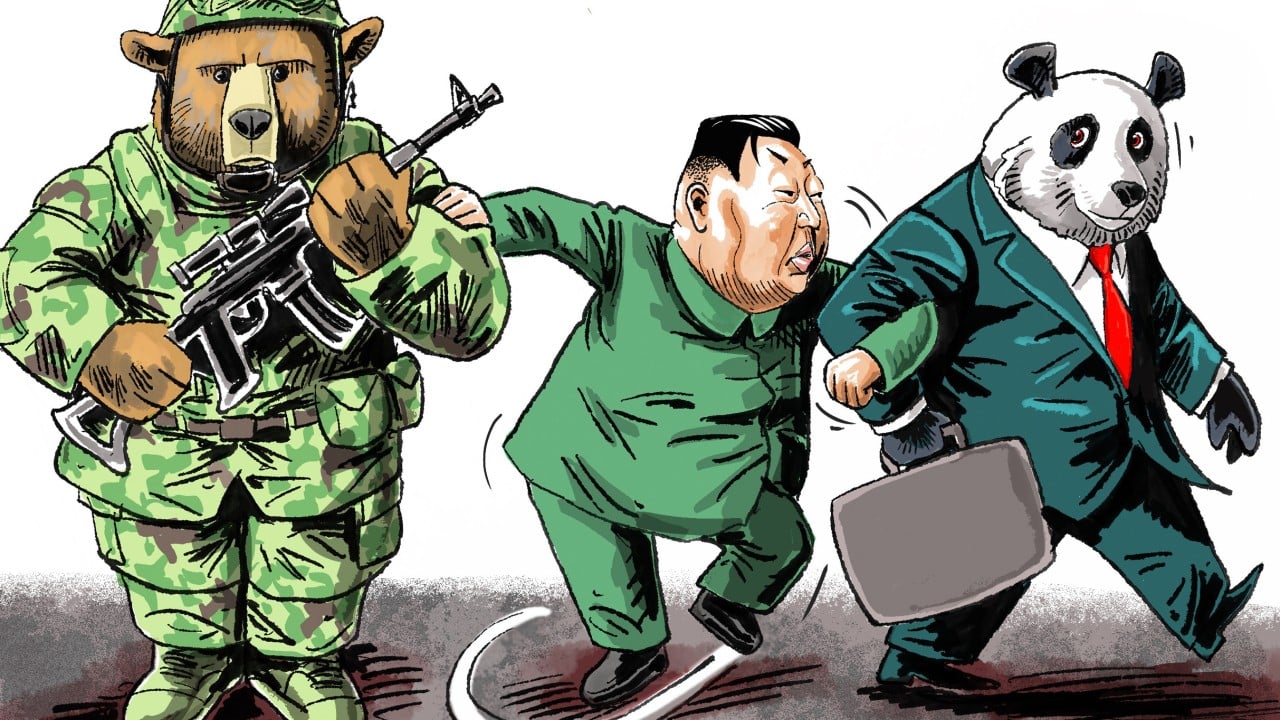
Kim Jong-un declared that North Korea places "the greatest value" on improving ties with Beijing during a visit to Pyongyang by Chinese Foreign Minister Wang Yi (王毅) last week. Wang described bilateral relations as entering a "new phase." The visit was Wang's first trip to North Korea since 2019 and signals a diplomatic recalibration by Pyongyang. North Korea had invested heavily in its Russia partnership from 2023 onward, sending troops and artillery shells to support Moscow's war in Ukraine. That deepening military cooperation came at the cost of the China relationship: Beijing, which formally opposes the Ukraine war, was quietly unhappy about Pyongyang's involvement. SCMP analysts argue Kim is now hedging between his two great-power patrons rather than over-committing to either. By reactivating China ties while maintaining the Russia partnership, Pyongyang positions itself to extract support from both sides.
North Korea supplied artillery shells and deployed troops alongside Russian forces in Ukraine starting in 2023. Beijing viewed this military involvement with Moscow unfavorably, straining a relationship that had been China's most reliable buffer alliance in East Asia.