Global financial regulators are treating Mythos, the new frontier AI model from safety lab Anthropic, as an emergency. The model can autonomously find and exploit zero-day vulnerabilitys, previously unknown software holes with no patch available, across every major operating system and browser. Anthropic says it has already turned up thousands. Finance ministers compared notes at the IMF meeting in Washington. Canada's finance minister, François-Philippe Champagne, told the BBC his counterparts were discussing little else. IMF chief Kristalina Georgieva warned that the international monetary system has no protections for AI-driven cyber risk. Bank of England Governor Andrew Bailey said supervisors are studying what Mythos means for cybercrime. US Treasury Secretary Bessent and Fed Chair Powell called Wall Street CEOs to an urgent meeting. Anthropic will not release Mythos publicly. Instead, 40 to 50 partners including AWS, Apple, Google, Microsoft, Nvidia, and JPMorgan Chase get a preview through Project Glasswing.
Anthropic announced Mythos earlier this month as its most capable model yet, with standout cybersecurity skills. An earlier digest item covered the limited release plan. The model is not available to the general public and is being rolled out only through a small enterprise preview, which is what regulators are now reacting to.
France and Britain convened a 30-nation summit in Paris on April 17 to reopen the Strait of Hormuz without the US, Israel, or Iran in the room. The strait is a narrow waterway between Iran and Oman that carries roughly a fifth of the world's oil. It has been largely closed since the US Navy blockaded Iranian ports six weeks ago, after US and Israeli airstrikes on Iran. A ceasefire announced in the past day remains fragile. German Chancellor Friedrich Merz and Italian Prime Minister Giorgia Meloni joined the Paris talks. China was also invited. European governments are not at war but are absorbing the cost: energy prices have surged and munitions earmarked for Ukraine are being diverted to Gulf security. President Emmanuel Macron started the effort about a month ago on a visit to Cyprus. The goal is a neutral coalition that can negotiate safe passage without appearing to pick a side.
US and Israeli forces struck Iran roughly six weeks ago. The US Navy then blockaded Iranian ports, which effectively shut much of the traffic through Hormuz, a chokepoint for about 20% of global oil. A ceasefire was reached in the past day, but the terms and how long it will hold are still disputed.
Ukrainian President Volodymyr Zelenskyy said his forces took a frontline position using only unmanned ground vehicles and drones, with no Ukrainian soldiers injured and Russian troops surrendering to the robots. Ground-based machines ran 22,000 frontline missions over the past three months. The number of Ukrainian units fielding ground robots grew from 67 in late 2025 to 167 by spring 2026. Zelenskyy claims drones now inflict 90% of Russia's losses along the front. A Wall Street Journal investigation confirmed that Ukrainian forces captured a position north of Kharkiv in December 2025 using only drones and robots, though it could not independently verify the specific surrender claim. The announcement doubles as a sales pitch. Zelenskyy is presenting Ukraine as the world's leading developer of combat robotics and is courting foreign buyers for a domestic drone industry that has grown rapidly since the 2022 invasion.
Ukraine has been fighting Russia's full-scale invasion since February 2022. Cheap first-person-view drones and ground robots now shape how the war is fought, and Ukraine has built a large domestic manufacturing base for them. Kyiv is trying to turn that industrial capacity into an export business.
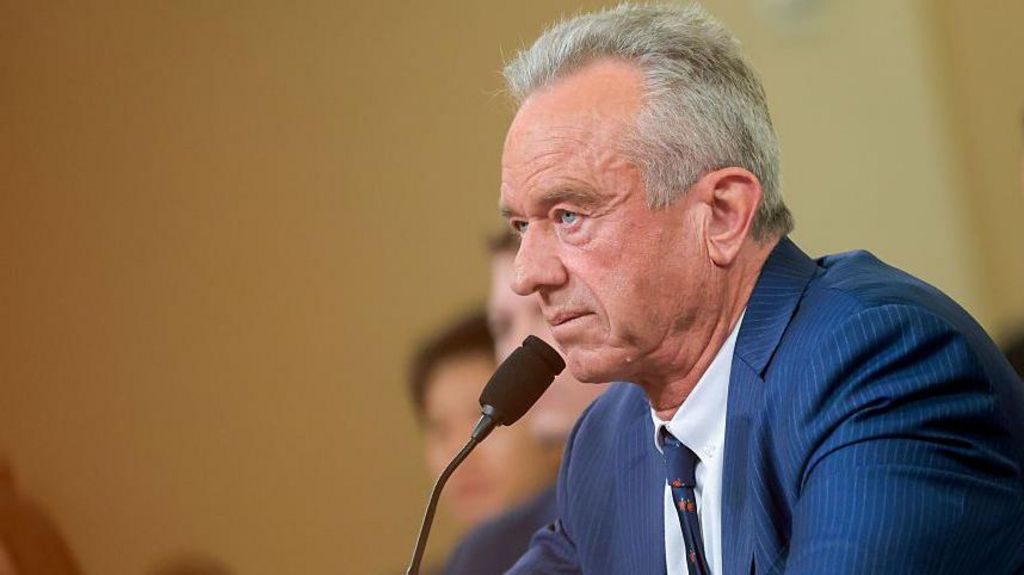
Health Secretary Robert F. Kennedy Jr. testified before the House Ways and Means Committee on April 16 and tried to steer the session toward chronic disease rather than vaccines. Lawmakers refused. The Trump administration is proposing a $16 billion cut to the HHS budget, about 12.5%, including a 13% cut to the NIH and a 32% cut to the CDC. Representative Linda Sánchez pressed Kennedy about an unvaccinated Texas child who died of measles. Asked whether the measles vaccine could have saved the child, Kennedy said, 'It's possible, certainly.' Sánchez then produced a photo of Kennedy drinking milk shirtless in a hot tub with Kid Rock, taken while a federal vaccine awareness campaign had been suspended. The CDC has ended a flu-vaccine campaign. Kennedy has pushed to rewrite the childhood vaccine schedule, a change courts have paused for now. US measles cases have risen sharply this year.
Kennedy, a longtime vaccine skeptic, was confirmed as HHS Secretary earlier this year. Measles cases across the US have climbed, and a Texas outbreak has killed at least one child. The administration's 2027 health budget would cut NIH biomedical research and CDC public health programs by large margins.
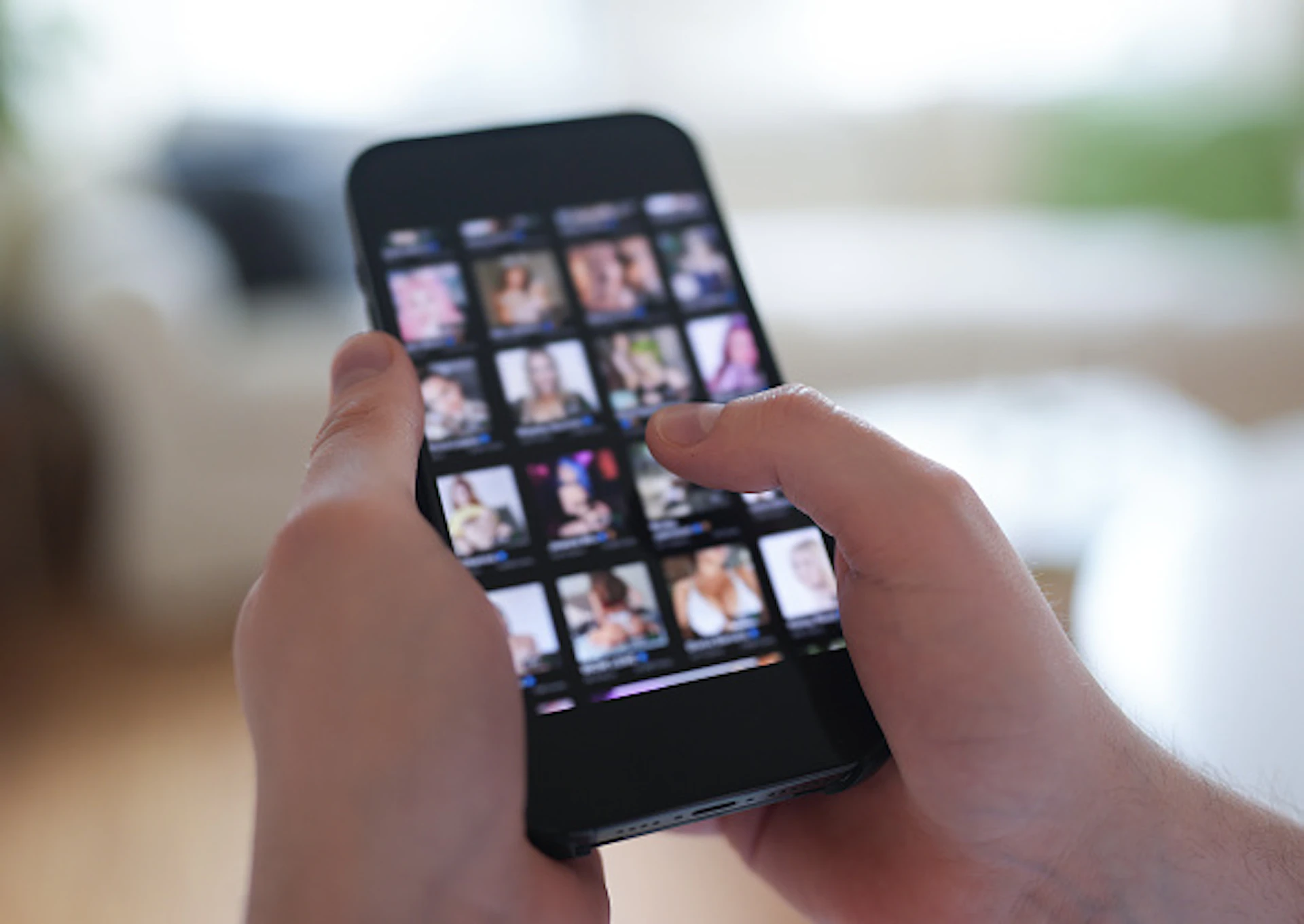
Apple and Google do not only host 'nudify' apps, which use AI to strip clothing from photos of real people. They promote them. The Tech Transparency Project, a nonprofit that audits platforms, found that Apple sells top-of-results paid ads for searches like 'nudify' and 'undress,' while Google pushes users toward similar apps through carousel ads and autocomplete suggestions. About 40% of top results for those queries led to apps that generate fake nude images. Researchers counted 18 such apps on the App Store and 20 on Google Play, with 483 million combined downloads and $122 million in lifetime revenue. Thirty-one of the apps were rated safe for minors. Schools have reported students using the tools to make fake nudes of classmates. After the report, Apple pulled most of the identified apps and Google suspended dozens and removed 31. The federal DEFIANCE Act outlaws non-consensual intimate images, but platform enforcement has been light.
Nudify apps use image-generation AI to produce fake nude photos of real people, almost always women and girls, without their consent. The 2024 DEFIANCE Act made creating non-consensual intimate images illegal at the federal level, but prosecution of the app stores and ad systems that distribute these tools has been limited.
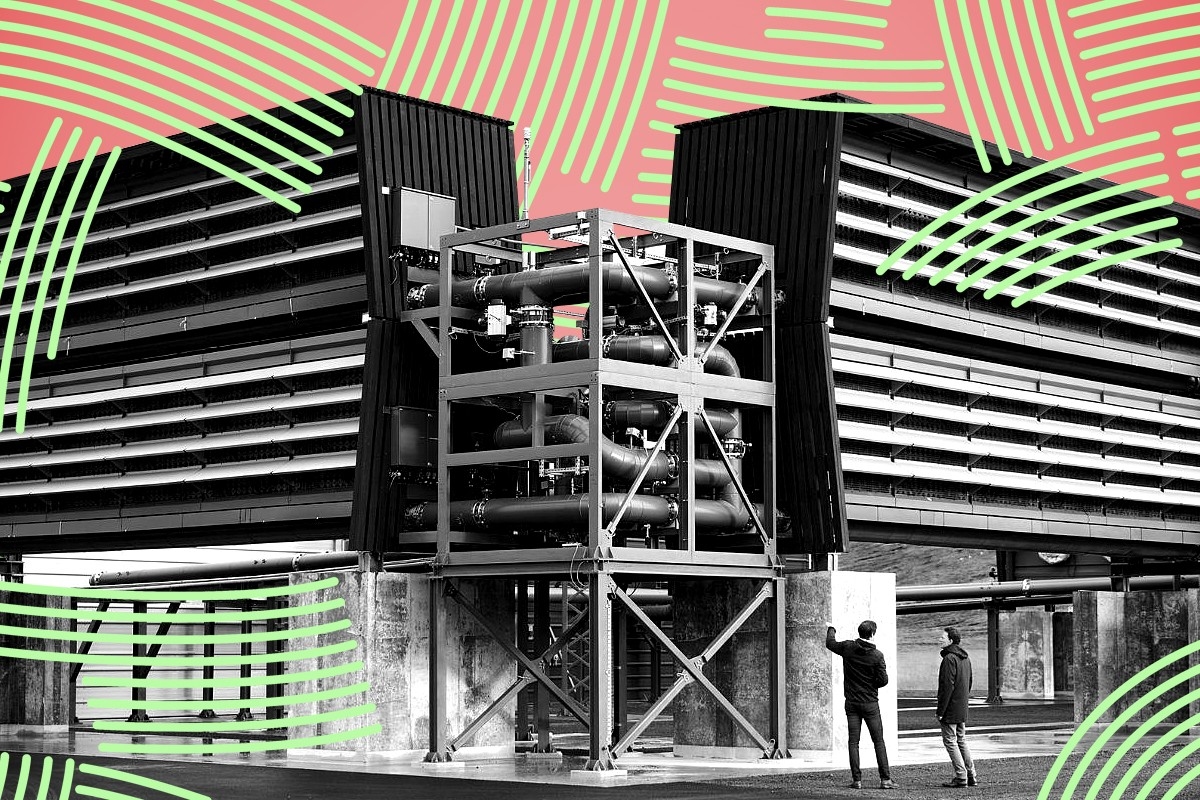
Microsoft is pausing its purchases of carbon removal credits, which fund technology that pulls CO2 out of the air. That is a serious blow because Microsoft has bought roughly 80% of all contracted carbon removal worldwide. The affected technologies include direct air capture, machines that scrub CO2 from ambient air, and BECCS, which burns plant matter for energy and buries the resulting CO2. Climeworks' Mammoth plant in Iceland is one visible example. Microsoft says the pause is temporary and that it may 'adjust the pace or volume' of future buys. The sector was already squeezed by EPA funding cuts and Trump administration policy shifts. A UN report says the world needs to remove 11 billion metric tons of CO2 per year by 2050 to hold warming to 2 degrees Celsius. Climate researcher Wil Burns called the pause 'extremely irresponsible.' The industry now leans on government mandates and philanthropy to survive.
Carbon removal covers technologies that physically take CO2 back out of the atmosphere, mostly direct air capture machines and biomass-based systems. These methods cost far more than most buyers can absorb, so corporate credit purchases, led by Microsoft, have been the main source of funding for scaling them up.
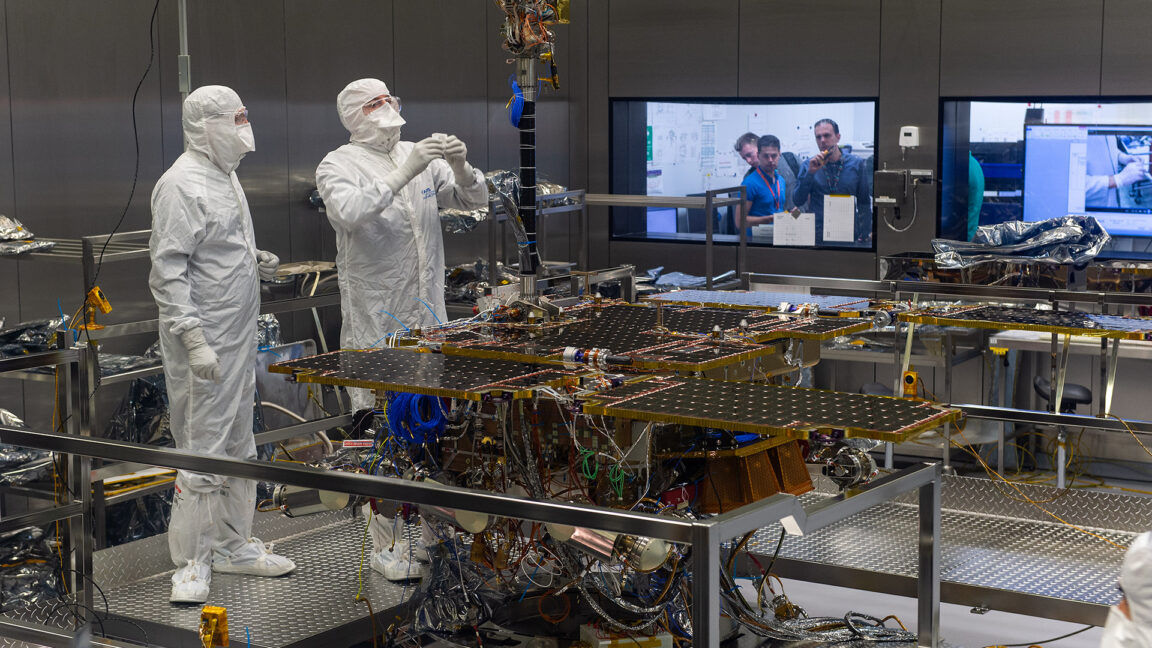
Europe's first Mars rover finally has a rocket. The Rosalind Franklin rover, named after the British chemist whose X-ray work helped reveal the structure of DNA, will launch on a SpaceX Falcon Heavy in 2028. It is the fourth rocket assigned to the mission after years of failures. The rover was first set to fly in 2020 with a Russian lander built by Roscosmos. That slipped to 2022. When Russia invaded Ukraine, the ESA suspended the partnership and lost the landing platform entirely. NASA reaffirmed its commitment to the ExoMars program in March 2026 and approved an augmentation project called ROSA on April 16. Once on Mars, the rover will drill up to 2 meters below the surface, deeper than any previous mission. The goal is to find biosignatures, chemical traces of life, that would have been destroyed by surface radiation but could survive underground.
Europe has never landed a rover on Mars. ExoMars has been in development since the early 2000s as a search for past or present life. The 2022 Russian invasion of Ukraine ended a partnership central to the mission's design, forcing ESA to spend years finding a new lander and a new rocket.
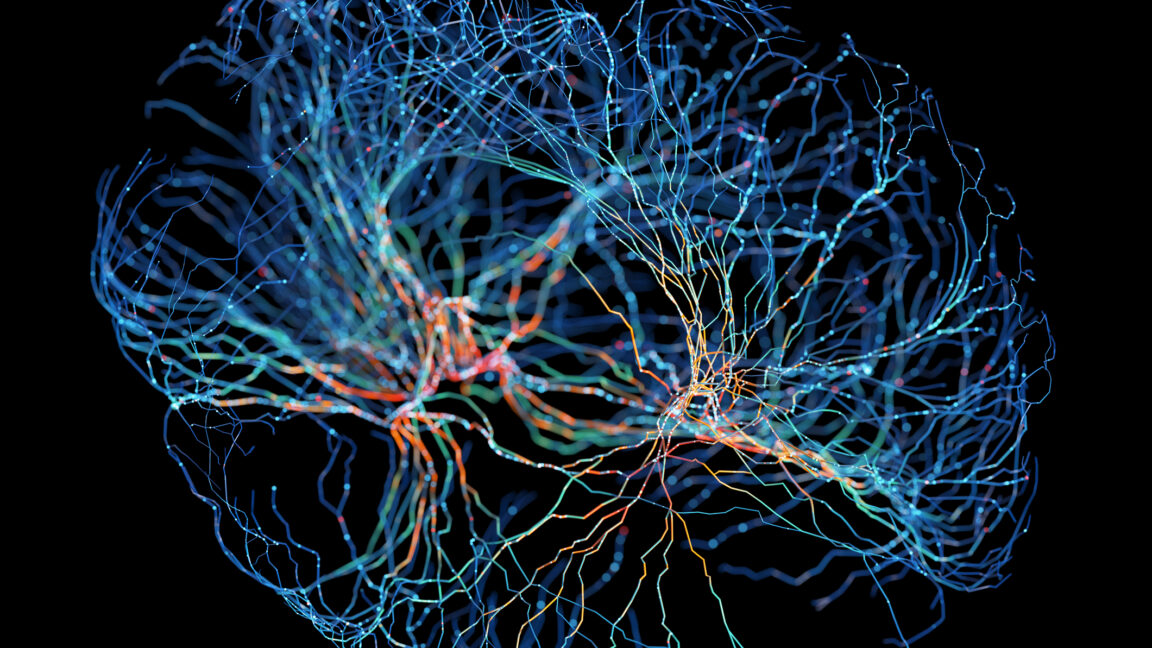
MIT researchers have watched a whole nervous system turn a smell into a coordinated sequence of movements. The animal is C. elegans, a 1mm transparent soil worm with exactly 302 neurons. Its complete wiring diagram has been known since 1986, but no one had shown how the circuit produces behavior in real time. Using custom microscopes, the team, led by senior author Steven Flavell, recorded more than 100 neurons at once while worms chased attractive odors and avoided unpleasant ones. A 10-neuron circuit runs the navigation. The SAA neuron combines smell input with movement planning. The RIM neuron releases tyramine, a chemical messenger related to dopamine, to switch the worm between phases: detect odor, plan a turn, reverse, execute the turn, resume forward motion. The turns used well-chosen angles and strategic timing rather than random movement. Flavell calls it the first look at a full sensorimotor arc at the scale of a whole brain.
C. elegans has been a workhorse in neuroscience since biologists mapped every one of its 302 neurons in 1986. Knowing the wiring diagram, though, does not explain how circuits produce sequences of behavior. This study starts to close that gap, and the hope is that similar methods will later guide work on larger brains.
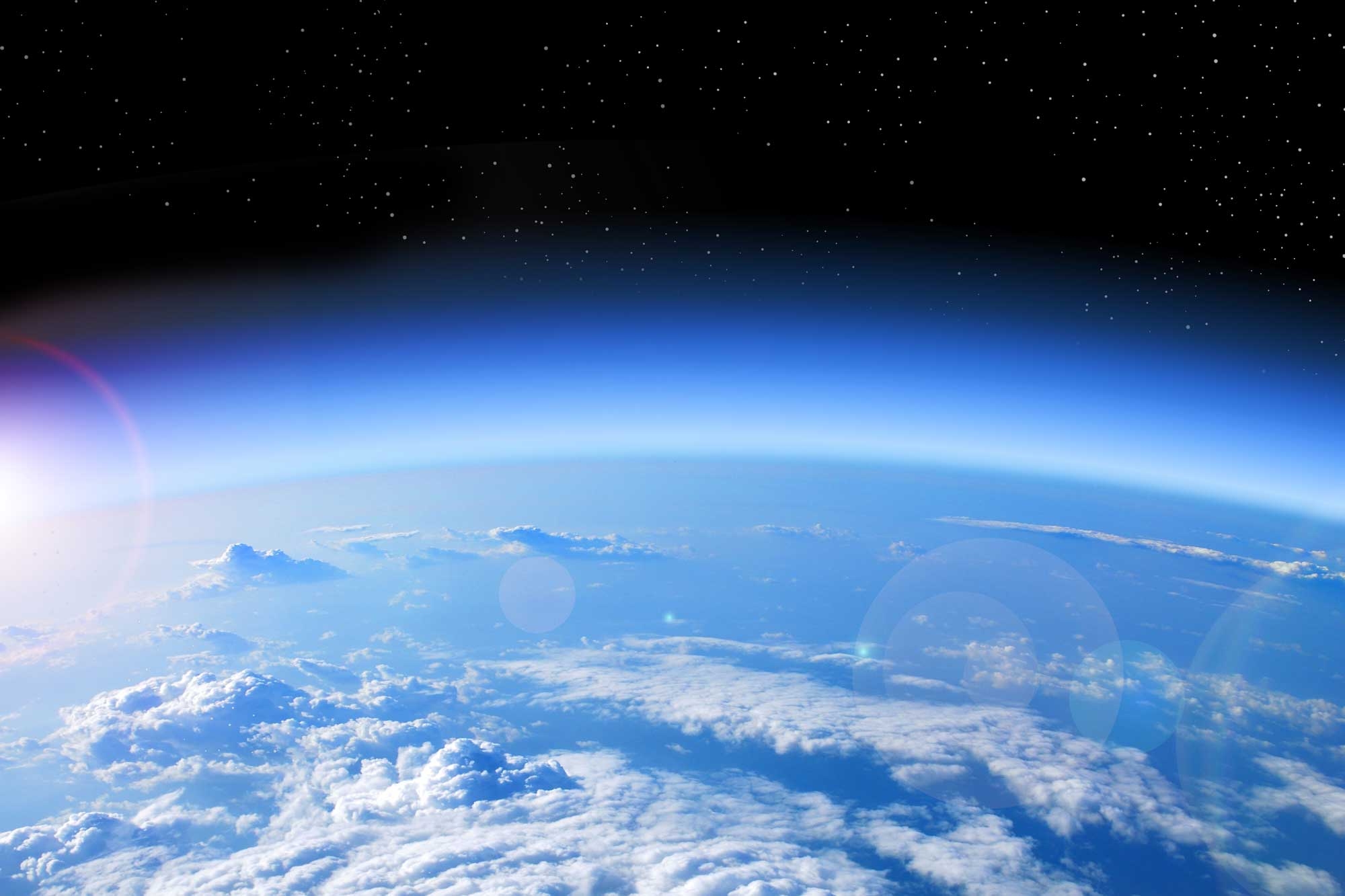
The Montreal Protocol, the 1987 treaty that phased out CFCs and helped shrink the Antarctic ozone hole, contains a loophole that could slow the ozone layer's recovery by seven years. The treaty exempts ozone-depleting chemicals used as 'feedstocks,' which are industrial ingredients for making plastics, nonstick coatings, and replacement refrigerants. When negotiators wrote the exemption they assumed only 0.5% of these feedstocks would leak into the atmosphere. New measurements put the real leakage at 3.6%. At that rate, the ozone layer returns to 1980 levels in 2073 instead of 2066. MIT researchers propose three fixes: drop feedstock uses entirely, switch to alternative chemicals, or tighten factories to cut leakage. No regulator has taken up the problem yet. The finding is one of the first significant gaps identified in what is often called the most successful international environmental agreement in history.
The Montreal Protocol phased out CFCs and related chemicals blamed for the ozone hole and is generally seen as the most successful environmental treaty. Ozone recovery has been on track for decades, so a newly identified leak path is a notable dent in a long-running success story.
OpenAI has launched GPT-Rosalind, a large language model fine-tuned for life sciences work. The name honors Rosalind Franklin, the British X-ray crystallographer whose data was essential to the discovery of DNA's double helix. The model is aimed at genomics, along with protein engineering and chemistry. It can summarize research literature, propose biological hypotheses, and plan experiments. On internal benchmarks, its top submissions beat 95% of human experts on prediction tasks and 84% on sequence generation. Access is limited to organizations working on human health. Initial partners include Amgen, Moderna, the Allen Institute, and Thermo Fisher Scientific. OpenAI notes that drug development today takes 10 to 15 years from target discovery to regulatory approval and pitches GPT-Rosalind as a way to speed up the most analytical parts of that pipeline. It is OpenAI's first domain-specific science model.
General-purpose chatbots can answer biology questions but are not tuned to scientific workflows. GPT-Rosalind is OpenAI's first specialized science model. Google DeepMind made an earlier move into this space with AlphaFold, which predicts protein structures from sequences and won the 2024 Nobel Prize in Chemistry.