International oil prices recorded their largest weekly gain in decades this week as the Strait of Hormuz — the narrow waterway through which about a fifth of the world's oil flows — remains effectively closed to normal tanker traffic following US and Israeli strikes on Iran. Goldman Sachs issued a research note Sunday warning that oil price upside risks are 'rapidly expanding' and that prices could break $100 per barrel next week if there is no sign of resolution. If the strait stays suppressed through all of March, Goldman projects prices could exceed the historic peaks of 2008 ($147/barrel) and 2022.
US Energy Secretary Chris Wright pushed back against the alarm Sunday, saying one large tanker has already transited the strait without incident and that American forces are rapidly degrading Iran's ability to threaten shipping. But markets are not fully reassured: crude has already risen sharply, squeezing supply chains globally and raising inflation fears just as the US economy is showing signs of strain.
The Strait of Hormuz is a narrow chokepoint between Iran and Oman through which roughly 20 percent of global oil supply passes daily. Iran has long threatened to close it in the event of war. Saudi Aramco shares rose 4.3 percent on Sunday alone. The Iran war began with US-Israeli strikes roughly two weeks ago that killed Supreme Leader Khamenei and triggered escalating exchanges. Previous oil price spikes to near-historic levels occurred after the 1973 Arab oil embargo, Russia's 2022 invasion of Ukraine, and the 2008 financial run-up.
Iran's Foreign Minister Abbas Araghchi said Sunday that military cooperation between Tehran and Moscow is ongoing and 'not a secret,' responding to reports that Russia has been providing Iran with intelligence during the US-led military campaign. Araghchi spoke during what appeared to be a coordinated diplomatic push, including meetings in Moscow and public statements underscoring the Iran-Russia relationship.
The disclosure adds a new dimension to the conflict: while the US is striking Iran directly, Russia — a permanent UN Security Council member — is reportedly feeding intelligence to help Iran survive the campaign. US officials have not publicly addressed the reports. The Russia-Iran relationship has deepened sharply since 2022, when Iran supplied Russia with Shahed drones used in Ukraine; analysts say Moscow now views Iran's survival as strategically important to countering Western power projection.
Iran and Russia formalized a comprehensive strategic partnership agreement in January 2025, covering defense, energy, and intelligence cooperation. Russia has faced Western sanctions since invading Ukraine in 2022 and has increasingly deepened ties with Iran, North Korea, and China as a countermeasure. The Iran-Russia intelligence-sharing reports, first circulated by Western media this week, have not been independently verified but align with patterns of cooperation observers have tracked since the war began.
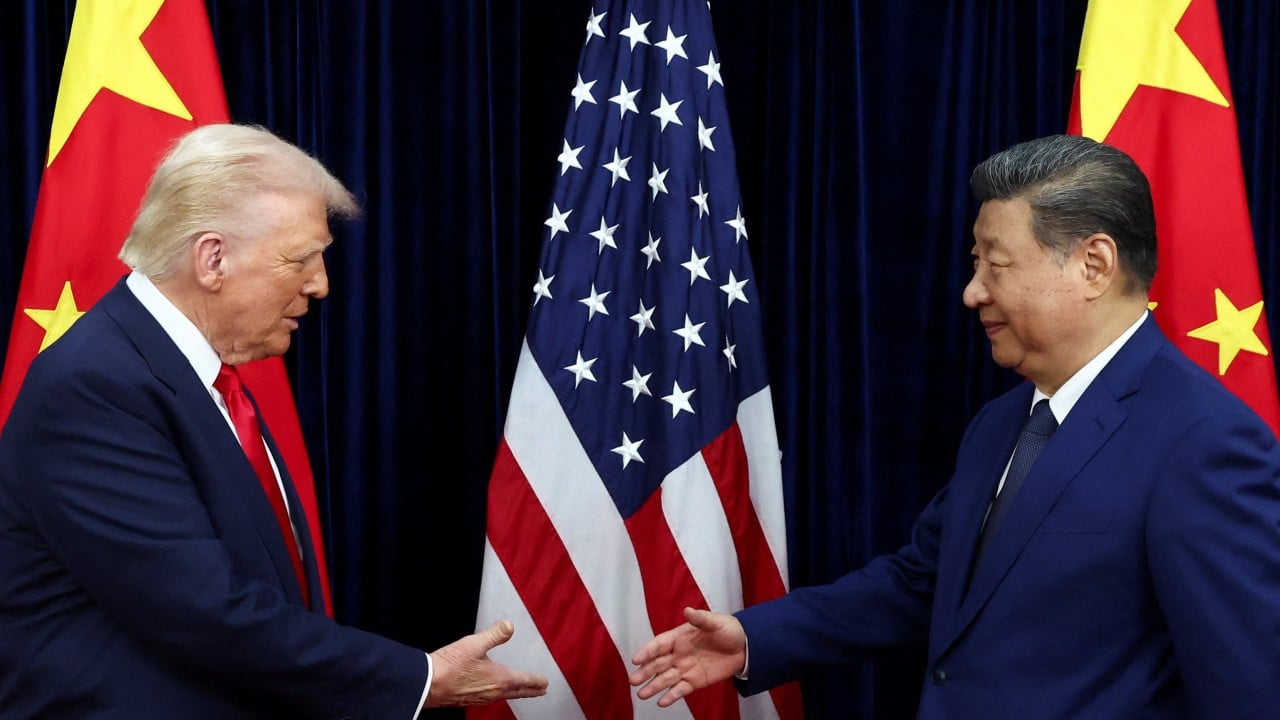
Chinese Foreign Minister Wang Yi said Sunday that 2026 can still be a 'big year' for US-China relations, signaling that President Trump's planned visit to Beijing — expected around March 31 — remains on the table despite Washington's ongoing war against Iran, one of China's key oil suppliers and strategic partners. Wang spoke at China's annual 'two sessions' political gathering, saying 'the agenda of high-level exchanges is already on the table' and urging both sides to 'manage existing differences and remove unnecessary distractions.'
China has condemned the US-Israel strikes on Iran as violations of international law, and uncertainty had been growing over whether Trump would proceed with what would be the first US presidential visit to China in nine years. Wang's remarks suggest Beijing still wants the summit, framing the relationship as too important to sacrifice over the Iran conflict.
China's 'two sessions'[1] is an annual political event where top legislators and political advisers set major national targets. Wang Yi's press conference is a centerpiece of the gathering, during which China's top diplomat outlines Beijing's foreign policy positions. Trump's China trip, if it occurs, would mark a historic diplomatic moment at a time of deep tension over Taiwan, trade, and the Iran conflict. China imports roughly 10 percent of its oil from Iran.
[1] Two sessions: the annual joint session of China's National People's Congress and the Chinese People's Political Consultative Conference, held each spring in Beijing.
Staff at Camp East Montana — the US's largest Immigration and Customs Enforcement detention facility, built inside Fort Bliss Army base near El Paso, Texas — placed bets on which detainee would be the next to die by suicide, according to an Associated Press investigation based on 911 call records and detainee testimony. One detainee, Owen Ramsingh, a legal permanent resident from the Netherlands who was brought to the US at age 5, said he overheard a guard describing a $500 betting pool on which detainee would harm themselves.
The AP reviewed 130 calls to 911 from the facility between mid-August 2025 and January 2026, finding that detainees attempted to harm themselves on at least six occasions. One death was initially described by DHS as an attempted suicide; a medical examiner later ruled it a homicide by asphyxia. The facility holds around 3,000 detainees at a time, many of whom report going without adequate food or medical care. DHS denied the gambling allegations, calling Ramsingh's account a lie; Ramsingh was deported to the Netherlands in February despite holding a green card.
Camp East Montana is a tent-based detention facility rapidly constructed at the Fort Bliss Army base in mid-2025 to support the Trump administration's expanded immigration enforcement and deportation campaign. The site was previously used as an internment camp for Japanese Americans during World War II. Human rights advocates have raised concerns about conditions at the facility since its opening. The facility is operated by a private contractor.
A team at the Beijing Academy of Quantum Information Sciences has built a device that generates pairs of light particles — photons — on demand with unprecedented purity and efficiency, reporting results described as 'international best-in-class' and published this week in Nature Materials. The device achieves 98.3 percent of emitted photons appearing in paired form, with a generation efficiency of 29.9 percent, surpassing all previous two-photon sources.
Why does this matter? Single photons are already useful for quantum communication and computing, but paired photons unlock a different class of applications: sharper medical imaging (because correlated photon pairs can beat the resolution limits of classical light), stronger encryption schemes, and more sensitive sensors. The advance builds on quantum dot technology — tiny semiconductor structures sometimes called 'artificial atoms' — solving a longstanding challenge of reliably producing matched pairs rather than solo photons.
Quantum dots are nanometer-scale semiconductor crystals that can emit light at precise wavelengths and are used as building blocks in quantum optics research. The challenge of producing entangled photon pairs on demand has been a key bottleneck for practical quantum computing and quantum communication systems. China has been significantly expanding its quantum research investment as part of a national strategy to lead in quantum technology — the field is seen as critical for future cryptography, sensing, and computing capabilities. A German scientist at Leibniz University praised the result in the same journal issue.
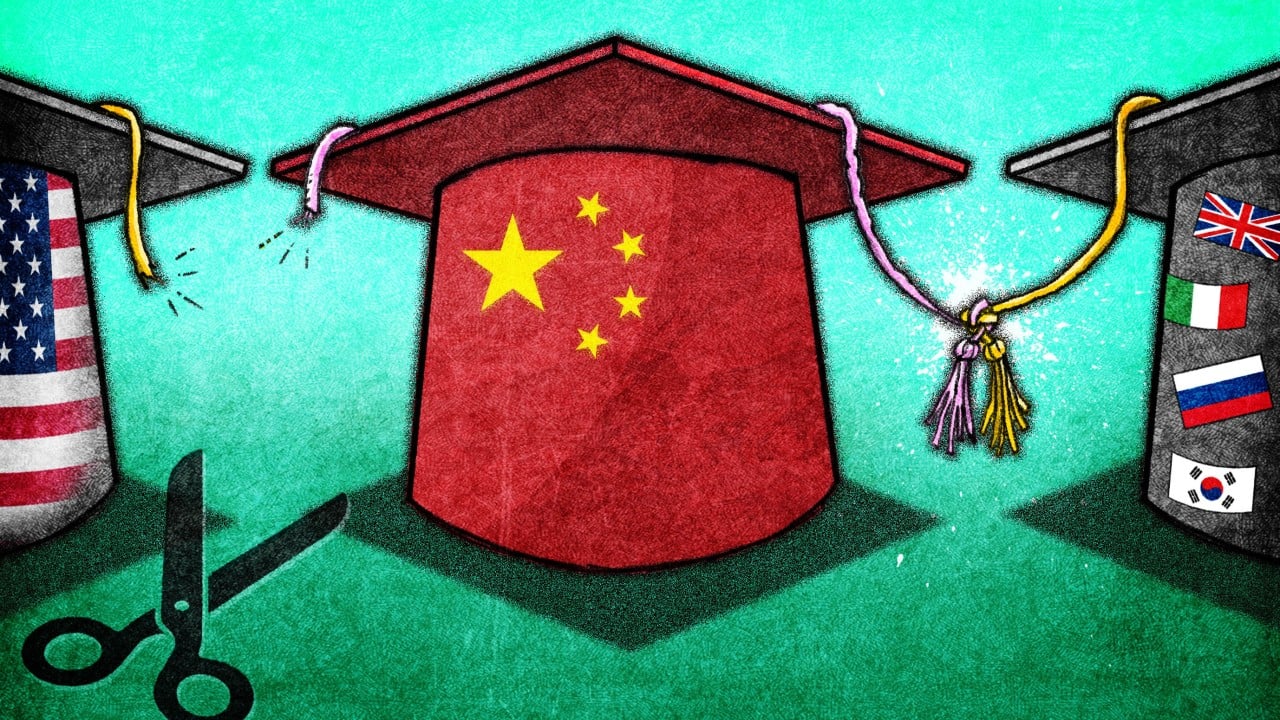
A wave of US university withdrawals from joint programs with Chinese institutions — accelerated by political pressure, funding concerns, and security reviews — is reshaping how China accesses Western academic partnerships. The most prominent recent casualty: the University of Michigan ended its four-decade joint engineering institute with Shanghai Jiao Tong University (SJTU) in early 2025 under pressure from US lawmakers. SJTU has since rebranded the institute as 'SJTU Global College' and is now partnering with Nanyang Technological University in Singapore.
The pattern is repeating across the sector. Where US institutions are pulling back — citing national security reviews, export control concerns, and domestic political pressure — European universities, Canadian institutions, and Singapore's top schools are stepping in. Analysts note that China's research universities are also becoming less dependent on Western partnerships as their own output has grown, though some fields still have meaningful gaps.
US-China academic partnerships flourished from the late 1970s through the 2010s, fueled by Deng Xiaoping's post-Cultural Revolution opening. The Trump administration's first term and the COVID-19 era accelerated scrutiny of these ties, with the Justice Department's 'China Initiative' (since discontinued) leading many universities to self-police. Export controls on dual-use technology, including chip design and AI research, have made joint programs legally complicated. The University of Michigan-SJTU partnership, which began in 2006, offered joint engineering degrees and was considered a gold standard for such collaborations.
Two data points illustrate the intensity of China's AI boom this weekend. First, according to Stripe payment data cited by 36Kr, Kimi's monthly paying user orders surged 8,280 percent month-over-month in January — rising from outside the top 100 to 22nd on Stripe's global payment rankings — then climbed further to 9th in February. The growth was driven by Kimi's K2.5 model and Kimi Claw (龙虾, the Chinese-branded OpenClaw client), with Kimi reporting that its revenue in the 20 days after late January exceeded all of 2025.
Second, Tencent announced it would install OpenClaw — the open-source AI agent platform that went viral this week — for free on its cloud servers. Within hours, hundreds of OpenClaw instances were deployed; lines formed outside Tencent's Shenzhen headquarters of people wanting installs. Tencent founder Ma Huateng reposted the news on WeChat Moments, writing he 'didn't expect it to be this popular.'
OpenClaw (open-source, released November 2025 by developer Peter Steinberger) surpassed React to become the most-starred project ever on GitHub, as covered in this morning's digest. The Chinese AI community has embraced it particularly rapidly, with Chinese-branded wrappers and integrations proliferating under the '龙虾' (lobster) nickname. Kimi is a Chinese AI assistant built by Moonshot AI, a Beijing startup backed by Alibaba and other investors. K2.5 is its latest large language model, which has been competitive with leading Western models on coding benchmarks.
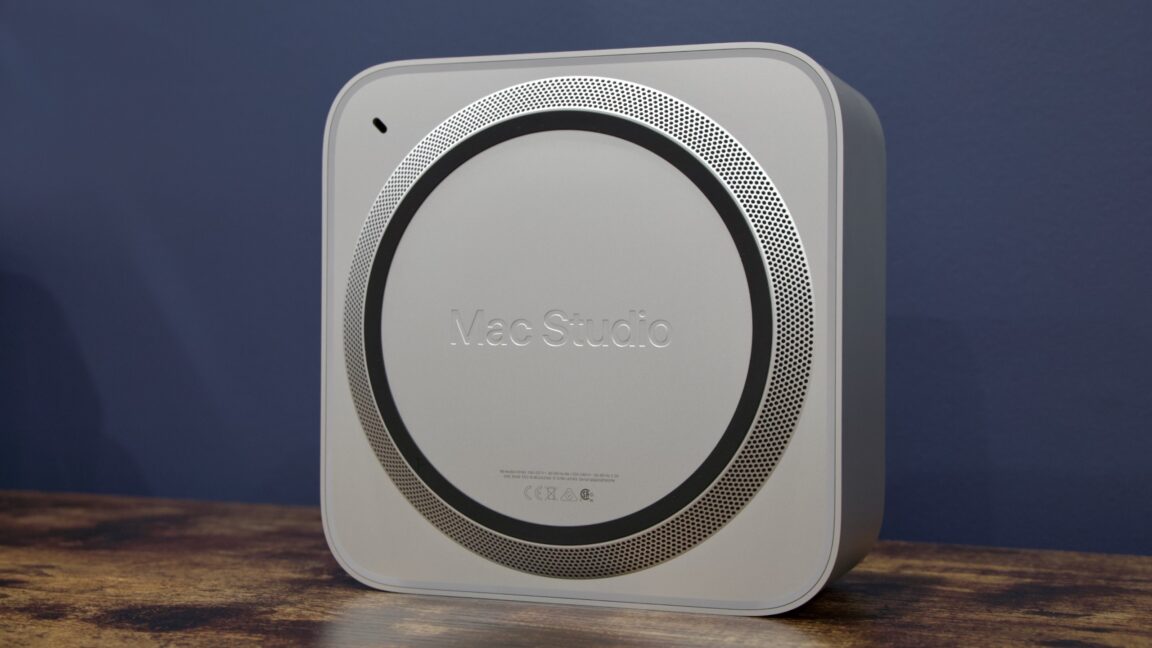
Sometime between March 4 and this week, Apple silently removed the 512GB RAM configuration of its top-tier M3 Ultra Mac Studio from the Apple Store — a rare move for a company that typically handles supply shortfalls by extending ship dates rather than delisting products. The 256GB configuration's price simultaneously rose from $1,600 to $2,000. Apple has not commented.
The Mac Studio's 512GB configuration required the most expensive M3 Ultra processor and carried a $9,499 price tag, making it a niche machine — but one targeted at exactly the AI and machine learning workloads driving the current memory crunch. The broader context: a global AI infrastructure buildout has created historic demand for high-bandwidth memory (HBM) and unified memory chips, driving prices up sharply and causing spot shortages even for well-capitalized buyers. HN commenters speculate Apple may be reserving its memory supply contracts for an upcoming M5 Ultra Mac Studio with 768GB configurations, which would support significantly larger local AI models.
The Mac Studio is Apple's high-end desktop aimed at creative professionals and, increasingly, researchers and developers running large AI models locally. The M3 Ultra variant uses two M3 Max chips fused together with Apple's UltraFusion interconnect, enabling the unusually large unified memory pools. Apple silicon's unified memory architecture makes it competitive with dedicated GPU systems for local model inference. The ongoing memory shortage is partly driven by demand for HBM (high-bandwidth memory) used in AI accelerators like Nvidia's H100 and B200 GPUs.
Researchers have released SWE-CI, a benchmark designed to test something most existing AI coding evaluations miss: whether an AI agent can maintain code quality across long stretches of real development, not just fix a single isolated bug. The existing benchmark SWE-bench asks agents to patch a single issue in a repository — a valuable but limited test. SWE-CI instead gives agents 100 tasks drawn from real repositories with an average history of 233 days and 71 consecutive commits, requiring the agent to work through dozens of rounds of analysis and iteration.
Early results show Claude Opus 4.6 leading at 0.71, well ahead of KIMI-K2.5 (0.37) and GPT-5.2 (0.23), based on community-run evaluations posted to the HN thread. The benchmark was submitted to arXiv on March 4, 2026, by researchers at a Chinese university. The shift from 'can it fix a bug' to 'can it sustain code quality over time' is meaningful for anyone evaluating AI coding tools for production use.
SWE-bench, released in 2024, became the de facto standard for evaluating AI coding agents by measuring how well they could resolve real GitHub issues. It was quickly adopted by companies including Anthropic, OpenAI, and Google as a competitive benchmark. SWE-CI extends this to the continuous integration setting — where code is regularly tested, merged, and evolved — arguing that real-world software maintenance is iterative and long-horizon, not a sequence of isolated patches. The paper uses the CI loop (automated test runs triggered by commits) as the evaluator of correctness.
Astral, the team behind uv — currently the fastest and most widely used Python package manager — merged a pull request this week adding a warning when users try to install PyPy through uv, stating the Python implementation 'is not being actively developed anymore.' The warning cites a NumPy issue thread in which a PyPy core developer acknowledged the project cannot keep up with CPython's pace of change.
In the Hacker News discussion, a PyPy developer pushed back, saying the project is 'certainly fixing bugs and occasionally improving the JIT' — but confirmed that supporting new CPython versions requires outside contributors to step up, and that Python 3.12 support is only now getting started. The practical implication: PyPy, once a popular alternative Python interpreter known for its speed on CPU-bound code, is falling behind CPython's release cycle. Libraries that follow the Scientific Python SPEC 0 standard will drop support for Python 3.12 in October 2026 — by which point PyPy may still not fully support it.
PyPy is an alternative Python interpreter that uses a just-in-time (JIT) compiler to run Python code faster than the reference interpreter (CPython), sometimes by 5-10x on CPU-intensive tasks. It was a popular choice for performance-critical Python workloads before Python's own ecosystem (including C extensions and projects like Cython) matured. uv is a Rust-based Python package and project manager built by Astral (the same team behind the Ruff linter) that has largely displaced pip and conda in new projects due to its speed. SPEC 0 is the Scientific Python community's policy on which Python versions libraries must support.