Iran's Assembly of Experts[1] — the 88-member clerical body that selects the supreme leader — chose Mojtaba Khamenei, 56, son of the slain Ayatollah Ali Khamenei[2], as the Islamic Republic's new supreme leader on Sunday. The selection came roughly ten days into the US-Israeli military campaign that killed his father, and it signals that Iran's hardline leadership intends to remain in power rather than negotiate. Mojtaba spent decades operating in the shadows — managing factions and electoral outcomes while never holding a formal government post. US diplomatic cables published by WikiLeaks described him as "the power behind the robes," capable and forceful, and deeply involved in suppressing the Green Movement protests of 2009. The transfer is historically unusual: Iran's revolutionary ideology explicitly rejects hereditary succession as monarchical, and Ali Khamenei himself reportedly opposed his son being a candidate. Mojtaba's religious rank — still a mid-level cleric — falls below the scholarly credentials normally required, though clerics loyal to him began calling him "Ayatollah" before the selection, echoing how his father was similarly promoted after taking power in 1989. Israel's defense minister stated last week that whoever was chosen as successor would be "an unequivocal target for elimination."
[1] Assembly of Experts: Iran's council of 88 senior clerics who elect and can dismiss the supreme leader.
[2] Ayatollah Ali Khamenei: Iran's supreme leader from 1989 until his death in early 2026 during the US-Israeli strikes.
The Islamic Republic has had only two supreme leaders since its 1979 founding: Ayatollah Ruhollah Khomeini[1], who led the revolution, and Ali Khamenei, who took over in 1989 and held power for 37 years. The supreme leader is simultaneously Iran's head of state, commander-in-chief, and ultimate arbiter of all political and religious questions — outranking the elected president. The succession question was one of the Islamic Republic's most closely guarded internal debates. A hereditary transition from father to son has no precedent in the republic's history and cuts against the founding ideology, which rejected monarchy precisely to end dynastic rule.
[1] Ayatollah Ruhollah Khomeini: founder of the Islamic Republic of Iran, who led the 1979 revolution that overthrew the US-backed Shah.
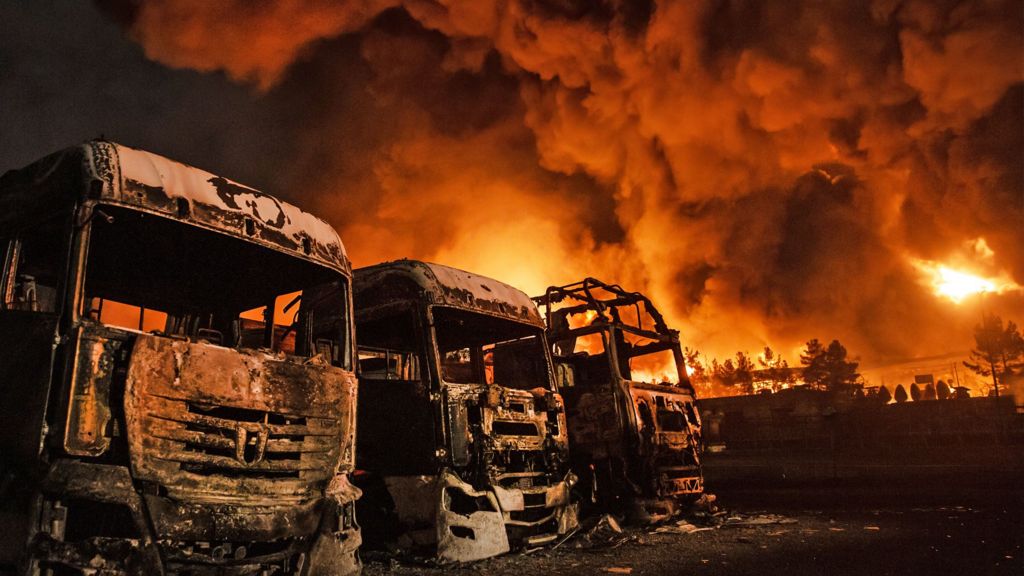
Finance ministers from the Group of Seven[1] industrialized nations held an emergency meeting Monday to coordinate a response to surging energy prices as oil briefly hit $119.50 a barrel in Asian trading — up more than 25% overnight — before easing back to around $107. The Financial Times reported the G7 is considering a coordinated release of petroleum from strategic reserves through the International Energy Agency[2], which would be the first such joint action since Russia invaded Ukraine in 2022. The Strait of Hormuz[3], through which about one-fifth of the world's oil flows, has been nearly shut since the Iran conflict began more than a week ago. European markets opened sharply lower: Germany and France each fell about 2.5%; Japan's Nikkei dropped 5.2% overnight; South Korea's stock exchange triggered its circuit breaker — a trading halt designed to stop panic selling. US gas prices rose 11% last week to $3.32 a gallon. Iran also targeted Saudi energy infrastructure over the weekend, and Riyadh said it intercepted two drone waves heading toward a major oilfield. President Trump dismissed concerns about prices, posting that rising oil is "a very small price to pay" for US safety.
[1] G7: Group of Seven — Canada, France, Germany, Italy, Japan, the United Kingdom, and the United States.
[2] International Energy Agency: intergovernmental body that coordinates energy policy and strategic oil releases among major economies.
[3] Strait of Hormuz: the narrow channel between Iran and Oman through which about 20% of the world's oil supply is shipped by tanker.
The Strategic Petroleum Reserve is the US government's emergency crude stockpile; IEA-coordinated releases involve member nations drawing down national reserves simultaneously to push prices down. In 2022, the IEA coordinated a 60-million-barrel release after Russia's invasion of Ukraine — the largest coordinated release ever — but oil prices remained elevated for months afterward. Rising oil prices feed directly into consumer inflation, which central banks respond to by keeping interest rates higher for longer, slowing economic growth. The Iran conflict has raised fears of a prolonged shock rather than a brief spike: the Hormuz closure disrupts not just crude but also liquefied natural gas (LNG) and refined petroleum products from Gulf producers.
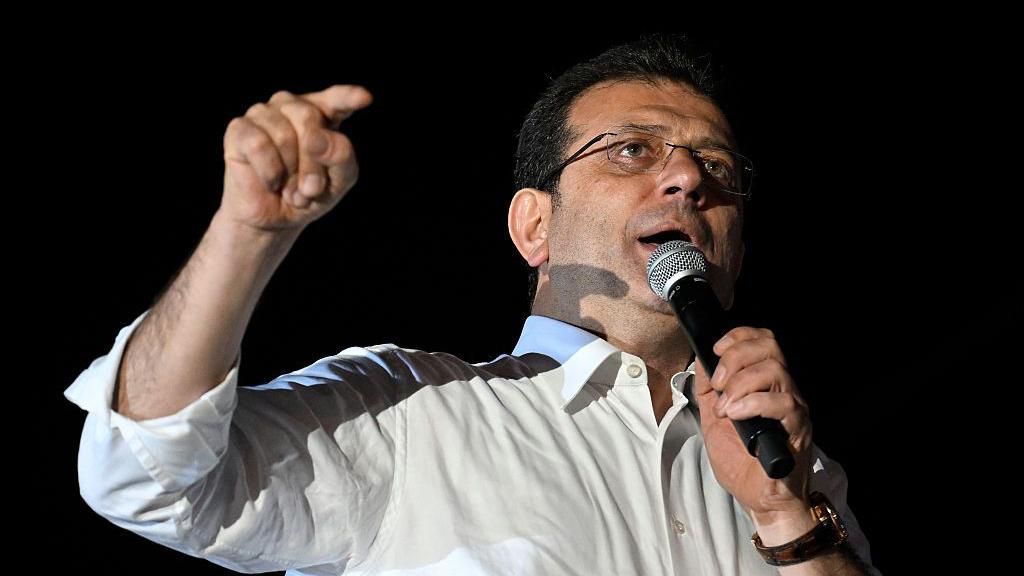
Ekrem Imamoglu, 55, the former mayor of Istanbul widely regarded as Turkish President Recep Tayyip Erdogan's most dangerous political rival, appeared Monday as the central defendant in a mass corruption trial that rights groups call a politically motivated prosecution. Prosecutors have filed more than 140 charges — including corruption and running a criminal organization — and are seeking a sentence of up to 2,430 years. Another 407 of Imamoglu's supporters are co-defendants on related charges. Imamoglu has been held at Marmara Prison since his arrest in March 2025, the same day he was named leader of the opposition Republican People's Party (CHP) and its 2028 presidential candidate — timing that his party called targeted. His detention triggered Turkey's largest street protests in more than a decade, followed by hundreds of arrests and a police crackdown on demonstrators. Human Rights Watch described the case as "weaponizing the criminal justice system." Amnesty International called the charges "absurd" and largely based on secret witness testimony. The Turkish government insists its judiciary operates independently.
Imamoglu first won Istanbul's mayoral election in 2019 in a major upset over the AK Party's candidate. After authorities annulled the result, he won the re-run by an even wider margin. He was re-elected in April 2024 by nearly a million votes — an outcome widely described as Erdogan's worst electoral defeat. Separately, Turkish authorities annulled Imamoglu's university degree, a credential required to run for president. The combination of imprisonment, degree cancellation, and criminal prosecution has led European officials and human rights organizations to accuse the Erdogan government of systematically disqualifying its most credible challenger from participating in politics.
US Ambassador to the United Nations Mike Waltz[1] urged patience Sunday as investigators examine a deadly airstrike on a girls' school in Iran last week — one of the most controversial events of the conflict so far. "Let's let the investigation play out," Waltz told NBC's Meet the Press, declining to say how many students died or assign responsibility. Neither the US nor Israel has formally claimed or denied responsibility for the strike. Iranian officials say dozens of schoolgirls were killed. Defense Secretary Pete Hegseth separately acknowledged that "there will be more casualties" in the Iran operation, telling a reporter that "things like this don't happen without casualties." Seven US service members have died since the campaign began, according to US Central Command. Separately, Centcom issued a public safety warning to Iranian civilians, urging them to move away from government and military facilities.
The strike on the girls' school emerged as the most viscerally disturbing incident of the Iran war, triggering international condemnation and calls for accountability. UN Secretary-General Antonio Guterres called for a ceasefire and independent investigation. Iran's Foreign Ministry accused Israel and the US of deliberately targeting civilian infrastructure. Both governments have declined to confirm or deny responsibility — standard practice in active military operations when potential violations of the laws of war are under scrutiny. The school strike has intensified congressional debate about whether the campaign is being conducted within the legal and moral constraints required by US law and international humanitarian standards.
A clinical trial published this week and highlighted in Nature shows that monthly injections of antiretroviral drugs can keep HIV suppressed in patients who struggle to adhere to a daily pill regimen — a meaningful advance for one of the most treatment-resistant groups. Standard HIV treatment requires patients to take medication daily without missing doses. For people with serious mental illness, housing instability, or substance use disorders, that consistency is often impossible, meaning these patients can develop drug resistance and die even when they technically have access to medication. The trial found that once-monthly injections of cabotegravir and rilpivirine[1] achieved viral suppression rates comparable to daily tablets in this high-risk population. The combination is already approved as a monthly injectable in some countries, but had not previously been studied specifically in patients for whom daily adherence is the biggest barrier to treatment. About 39 million people live with HIV worldwide; roughly 9 million have no access to any treatment, and of those who do, adherence remains the single biggest driver of treatment failure.
[1] Cabotegravir and rilpivirine: a pair of antiretroviral drugs (HIV-suppressing medications) that, in long-acting injectable form, can be given together once a month rather than requiring daily pills.
HIV treatment transformed radically in the 1990s with the advent of antiretroviral therapy, which converted HIV from a death sentence to a manageable chronic illness. The "treatment as prevention" model — viral suppression so complete that transmission becomes near-impossible — became the backbone of global HIV strategy. But the model assumes patients can take pills every day. Long-acting injectable formulations were first approved in 2021 in some countries, but clinical trials had largely enrolled patients who were already adherent. This trial is one of the first designed to test injectables specifically among patients for whom daily adherence has historically been the primary barrier to care.
Australian biotech company Cortical Labs released a video this weekend showing their CL1 device — a tabletop lab system that keeps a living cluster of about 200,000 human neurons alive on a silicon chip — responding in real time to inputs from the video game DOOM. The neurons are grown from human stem cells as a brain organoid[1] and sit on electrodes that both stimulate them and read their electrical output. The setup feeds game-state signals to the cells as electrical pulses and reads their responses as game inputs. This is not conscious gameplay: 200,000 neurons is roughly comparable to an ant's nervous system — far too small for anything resembling awareness. But the cells do learn through feedback, developing stronger response patterns when their outputs lead to favorable outcomes. Cortical Labs demonstrated a similar setup with Pong in 2022; DOOM's three-dimensional environment is orders of magnitude more complex, and the demonstration signals significant growth in the scale of task biological neurons can begin to handle. The video sparked intense ethical debate on Hacker News about whether organoids, even at this tiny scale, should be subjected to stressful environments.
[1] Brain organoid: a small cluster of brain cells grown in a lab from stem cells that self-organize into a rudimentary three-dimensional structure — not a full brain, but a fragment with some functional connections.
Cortical Labs previously demonstrated "DishBrain" in 2022, where neurons grown from mouse and human cell lines learned to play Pong after receiving feedback signals. The CL1 is a commercial product they launched to enable other researchers to run similar experiments. The broader field — called organoid intelligence — asks whether biological neurons could eventually be used as a substrate for computing, potentially with less energy than silicon chips. The ethical questions around the field are genuinely novel: at what scale of complexity does a biological system have experiences worth considering? Philosophers and bioethicists have not reached consensus, and regulatory frameworks have not kept pace with the technology.
Researchers at MIT's Computer Science and Artificial Intelligence Laboratory (CSAIL)[1] have published a new technique for making AI image-recognition models explain their own decisions in human-readable terms. The approach, presented at a major machine-learning conference, extends the concept of concept bottleneck models[2] by automatically extracting the concepts a neural network has already learned during training — rather than requiring experts to define them in advance — and forcing the model to route all predictions through those extracted concepts. In practice, this means a medical imaging model could tell a clinician not just "I think this is melanoma" but "I detected clustered brown dots and variegated pigmentation, and those features led to my prediction" — the same kind of reasoning a dermatologist might use. The method works on any pre-trained computer vision model without retraining from scratch and consistently outperforms existing explainability approaches on accuracy while producing more concise explanations.
[1] CSAIL: MIT's Computer Science and Artificial Intelligence Laboratory, one of the largest AI research groups in the US.
[2] Concept bottleneck model: an AI architecture where predictions must pass through an intermediate layer of human-interpretable concepts, making the model's reasoning auditable.
Explainability — the ability of an AI system to describe why it made a decision — has become a major research priority as neural networks are deployed in high-stakes settings like medical diagnosis, criminal justice risk scoring, and autonomous driving. Most modern deep-learning models are "black boxes": they produce accurate results but offer no human-readable account of their reasoning. Existing explainability methods either require experts to manually define concepts ahead of time (limiting generalizability) or produce post-hoc explanations that do not reflect the model's actual internal process. This work addresses both problems simultaneously by extracting concepts the model genuinely uses and requiring predictions to pass through them.
Alibaba reorganized leadership of its flagship Qwen large language model series Monday, a week after team lead Lin Junyang abruptly resigned. Alibaba Cloud's chief technology officer Zhou Jingren[1] — who also heads Tongyi Lab, Alibaba's core AI research division — will now oversee the Qwen model program. Liu Dayiheng, who previously led pre-training, takes over post-training and Coding teams simultaneously. Other Qwen team leads will report up through Zhou. The reshuffle was reported by Latepost[2], a Chinese tech news outlet with strong sourcing at major tech companies. Qwen has been one of China's most competitive open-weight model families, and Lin's departure raised questions about internal strategy and resource allocation as competition from DeepSeek, Moonshot/Kimi, and Baidu's Ernie intensifies.
[1] Zhou Jingren: Alibaba Cloud's CTO and head of Tongyi Lab, Alibaba's main AI research group.
[2] Latepost: a Chinese tech journalism outlet known for breaking corporate news at major Chinese tech companies.
Alibaba's Qwen model series has been a flagship of Chinese AI development, released in both proprietary and open-weight variants that have consistently ranked near the top of Chinese AI benchmarks. The series competes directly with international models from OpenAI, Anthropic, and Google, as well as domestic rivals including DeepSeek (backed by High-Flyer Capital) and Moonshot AI's Kimi. Lin Junyang led the team through the release of Qwen 2 and Qwen 2.5, both of which were well-regarded internationally. Management instability at this level raises questions about the pace of Alibaba's model development in a market where iteration speed matters enormously.
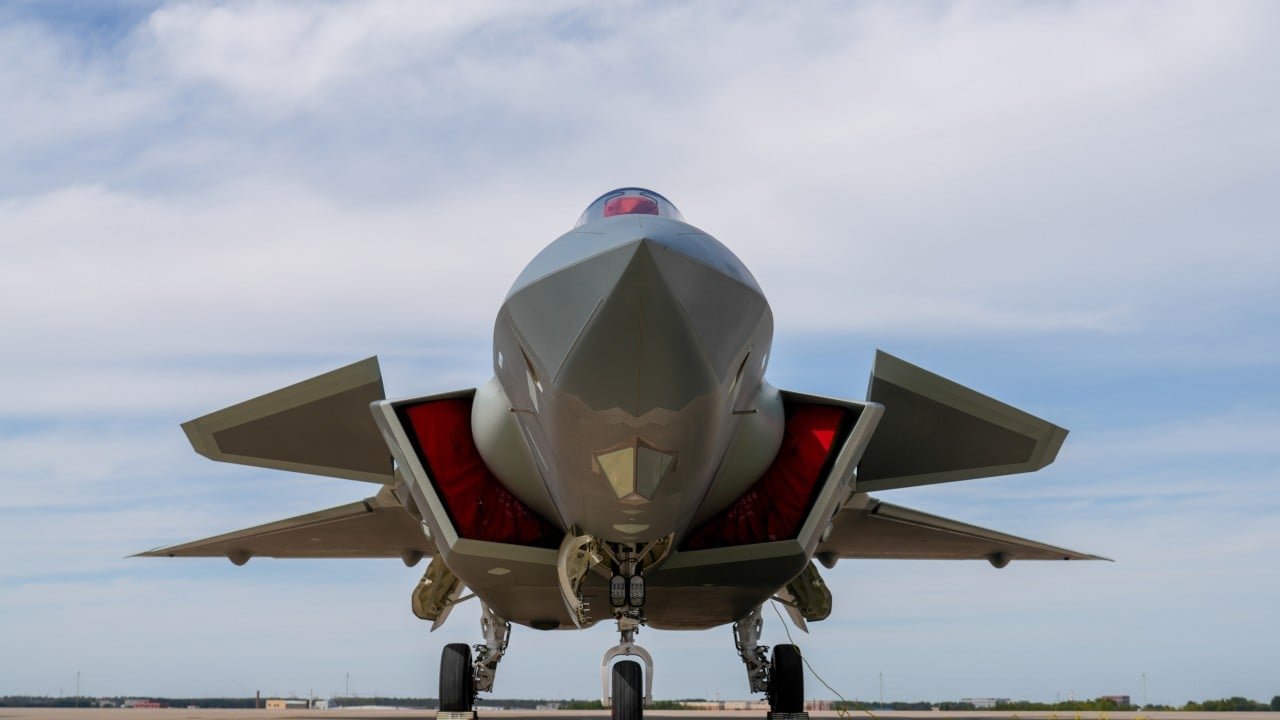
A new report from the Stockholm International Peace Research Institute (SIPRI)[1], released Monday, finds that China's arms imports fell by 72% between 2021 and 2025 compared to the previous five years — a sign of the country's growing military self-sufficiency. China now ranks 21st globally in arms imports, outside the world's top 20 for the first time since the early 1990s. Beijing has replaced foreign weapons purchases with domestically developed systems, from advanced fighters and aircraft carriers to naval vessels and ballistic missiles. The shift is not just about prestige: domestic production eliminates the sanctions and export restriction risks that come with relying on foreign suppliers. SIPRI notes that neighboring countries moved in the opposite direction — India, Japan, the Philippines, and several Southeast Asian nations all significantly increased arms imports, which the report attributed in part to "fears over China's intentions."
[1] SIPRI: Stockholm International Peace Research Institute, a Swedish think tank that publishes widely cited annual data on global military spending and arms transfers.
Through the 1990s and 2000s, China's military was heavily dependent on Russian weapons, especially aircraft engines, which domestic manufacturers could not reliably produce. A sustained decades-long investment in indigenous defense research — accelerated by high-profile technology transfers, espionage, and reverse engineering — progressively closed the gap. The People's Liberation Army now operates domestic fifth-generation fighters (the J-20), domestically designed aircraft carriers, hypersonic glide vehicles, and advanced ballistic missile systems. The 72% decline reflects not just capability growth but also a strategic decision to insulate China's military from Western sanctions of the type that have crippled Russia's defense industrial base since 2022.
Australia's new online age-verification rules took effect Monday, requiring porn sites, R-rated gaming platforms, and sexually explicit AI chatbots to verify users are over 18 — using real identity checks such as facial recognition, digital IDs, or credit card details — or face million-dollar fines from the eSafety Commission[1]. The current system of self-declaration (clicking "I confirm I am 18+") no longer meets the standard. The rules come three months after Australia introduced an under-16s social media ban and apply to search engines, app stores, and AI companion systems as well. Research cited by the eSafety Commission found one in three Australian children aged 10–17 had seen sexual content online. Major adult sites including Pornhub, RedTube, and YouPorn — operated by Canadian company Aylo — preemptively blocked all Australians from creating accounts rather than implement verification. Cybersecurity experts warn the law will drive determined minors to unregulated corners of the internet and raise adult privacy concerns about linking identity to browsing habits.
[1] eSafety Commission: Australia's online safety regulator, responsible for enforcing content standards and age restrictions.
Australia has emerged as one of the world's most aggressive regulators of online content. The under-16 social media ban enacted in late 2025 was the broadest such restriction globally, affecting Instagram, TikTok, and similar platforms. Age verification for adult content has been debated for years in the UK, US, and EU; Louisiana and Texas enacted similar US state laws, which face ongoing First Amendment legal challenges. Australia's lack of an equivalent constitutional speech protection gives its government more latitude than US states. A key unresolved question is whether sophisticated facial-recognition age checks create a national database of browsing behavior — a surveillance concern the government has not fully addressed.
In a decision issued March 3 and gaining wide attention online, the US Court of Appeals for the Ninth Circuit[1] held that a company can amend its Terms of Service by sending an email notification, and that a customer's continued use of the service after receiving that email — without clicking "accept" or doing anything else — can constitute legally binding consent to the new terms. The case involved a consumer dispute where a company had added a mandatory arbitration clause[2] to its TOS, sent email notice, and argued the plaintiff's continued use meant they agreed to arbitrate. The court agreed. The ruling means companies operating in the western US can effectively insert new terms — including provisions stripping users of class-action rights — into existing agreements through an email that users may never read. The decision is not binding in other circuits but is likely to influence courts nationwide.
Terms of Service agreements have long been criticized as "contracts of adhesion" — take-it-or-leave-it documents users can't realistically negotiate. Courts have increasingly upheld them, including mandatory arbitration provisions that route disputes to private arbiters, usually chosen and paid by the company, rather than public courts. The distinction between "clickwrap" (requires affirmative click to accept) and "browsewrap" (using a website = consent) has been contested in courts for over two decades. This ruling extends the logic further: receiving an email notification and doing nothing while continuing to use a service is now sufficient to bind you to updated terms in the Ninth Circuit, which covers California, Oregon, Washington, Nevada, Arizona, and four other western states.
[1] US Court of Appeals for the Ninth Circuit: the federal appeals court covering the western United States; its rulings on tech and consumer law are particularly influential since most major tech companies are headquartered in California.
[2] Mandatory arbitration clause: a contract term that forces disputes into private arbitration rather than public courts, typically limiting users' ability to bring class-action lawsuits.
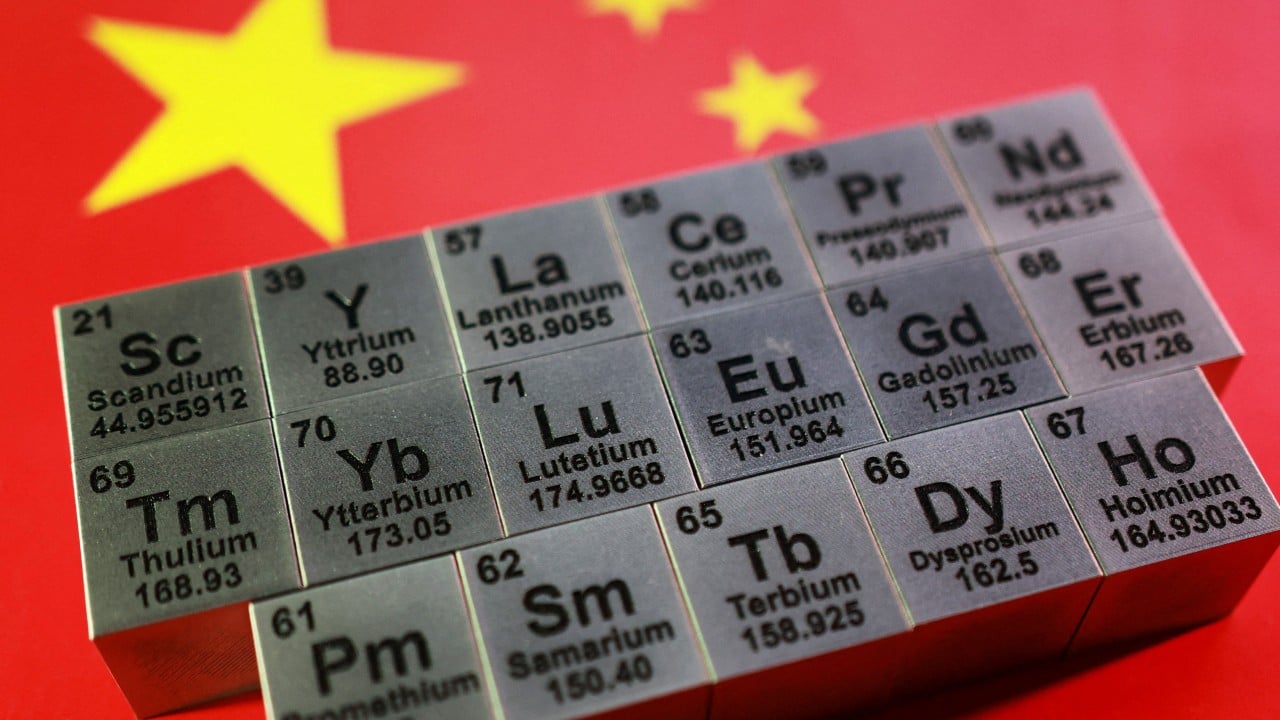
American defense and technology companies remain severely constrained by shortages of critical minerals despite a nominal US-China trade truce struck last November, according to industry insiders cited by the South China Morning Post. After agreeing to the truce, Beijing suspended a ban on exports of gallium, germanium, antimony, and some heavy rare earths[1] for one year, but US companies say an export licensing regime that China retained still creates unpredictable gaps in supply. "It's not just that materials are dear; it's that they are not getting to manufacturers," said one New York-based supply chain adviser who works specifically on critical minerals. The disruption reflects a structural asymmetry: China controls not just raw mineral extraction but also the downstream processing infrastructure — refining, purification, alloying — that takes years to decades to replicate elsewhere.
[1] Heavy rare earths: a subset of rare earth elements — including dysprosium and terbium — essential for high-performance magnets used in EV motors, missile guidance systems, radar, and wind turbines. China produces over 85% of global supply.
China began restricting critical mineral exports in mid-2023 as a response to US semiconductor export controls targeting Chinese chip companies. Gallium and germanium controls came first, followed by antimony and rare earth restrictions. These materials are inputs to the semiconductor, defense, and clean-energy supply chains. The US has pursued diversification agreements with Canada, Australia, and African nations, but mining and processing new sources takes years and billions of dollars in capital investment. The trade truce November was framed publicly as a de-escalation, but the retention of the licensing regime means China can modulate supply without formally reimposing the ban.
A federal judge in Massachusetts dismissed the civil lawsuit filed by Any Lucia Lopez Belloza, the 19-year-old Babson College freshman who was wrongfully deported to Honduras in November — a deportation the US government has acknowledged was a mistake. The judge ruled that he lost jurisdiction when Belloza declined to board a government-offered return flight, saying she feared being deported again immediately upon arrival. In the court's view, the government complied with his earlier order to offer a path back; her decision not to take it was her own. Her lawyers have filed an appeal. The case drew national attention as an example of how ICE errors can strand wrongfully removed individuals without legal recourse if they are unwilling to physically re-enter US soil to contest the deportation.
Belloza was detained by ICE at Boston's Logan Airport in November 2025 while traveling home for the holidays, apparently confused with another individual. The government acknowledged the deportation was erroneous. While held in Honduras, her lawyers fought for her return through federal court — successfully obtaining an order requiring the government to bring her back. When the government offered a flight, she declined out of fear of immediate re-deportation. Federal courts generally lose jurisdiction over immigration cases when the petitioner is not physically within the US, creating the Catch-22 at the center of this case: to contest a wrongful deportation, you may need to return to the jurisdiction whose immigration system wrongly removed you.
Georgia's legislature approved $325 million last week to fund the DREAMS Scholarship — the state's first need-based financial aid program for college students. Until now, Georgia was one of only two states (along with New Hampshire) to offer no need-based college aid, relying entirely on the merit-based HOPE Scholarship, which awards money based on academic performance regardless of family income. The program will draw from Georgia Lottery reserves, which had accumulated more than $1.7 billion in a fund earmarked for education. Governor Brian Kemp included the $325 million in his budget proposal, explicitly noting that rising costs create barriers for students who could otherwise succeed academically. Of the $325 million, $25 million goes toward scholarships for fall 2026; the remaining $300 million seeds an endowment.
The HOPE Scholarship, launched in 1993 and funded by the Georgia Lottery, became a national model for merit-based aid and substantially increased college-going rates across the state. Critics have long argued its benefits skew toward wealthier students whose high schools better prepared them to maintain the required GPA — leaving low-income students with the same tuition bills but without access to the largest source of state aid. The DREAMS program does not replace HOPE; it runs alongside it. Georgia's decision was pushed over the finish line by a coalition of educators and advocates who pointed out that a $1.7 billion pool of dedicated education funding was sitting unused while students dropped out of college for financial reasons.
Bard College's Faculty Senate formally called on its Board of Trustees Monday to develop a plan for replacing Leon Botstein, 79, who has served as the New York liberal arts college's president since 1975 — a 51-year tenure and one of the longest in American higher education. The faculty's letter stopped short of demanding immediate resignation but cited Botstein's financial ties to convicted sex offender Jeffrey Epstein and Epstein associate Leon Black[1], whose donations and relationships with the college were revealed in newly unsealed court documents in early 2026. Epstein donated $75,000 and 66 laptops to Bard; Black gave larger amounts. The faculty also asked the board to create a fund equal to the total Epstein and Black donations — plus accrued interest — to be spent on sexual violence programming. Faculty members separately called for reforms to what they described as Botstein's concentrated authority over hiring and tenure decisions at the college.
[1] Leon Black: former CEO of Apollo Global Management, a private equity firm, who paid Jeffrey Epstein $158 million in fees that have been the subject of legal and reputational scrutiny.
Leon Botstein is one of the most prominent figures in American higher education — a conductor, scholar, and longtime public intellectual who expanded Bard's reach during his five decades as president. Jeffrey Epstein cultivated ties to a wide range of elite institutions including MIT, Harvard, and Bard; revelations from newly unsealed court documents in early 2026 showed the extent of institutional relationships that were not disclosed at the time. Botstein has reportedly told faculty informally that he may retire soon. The Faculty Senate letter carefully avoids calling for his immediate removal — likely because Botstein is known to exercise broad power over tenure and hiring decisions at the college, a dynamic the letter also calls out.