The Trump administration said Friday it will issue a one-month license allowing the sale of roughly 140 million barrels of Iranian oil already sitting on tankers, a sharp tactical retreat from its own maximum-pressure campaign. Treasury Secretary Scott Bessent had previewed the move a day earlier as a way to cool energy markets after fighting around the Persian Gulf drove crude and gasoline prices sharply higher. The license is narrow: it covers cargoes already on the water, not a broader reopening of Iranian exports. Still, the decision amounts to Washington easing sanctions on an enemy it is simultaneously fighting, underscoring how badly the White House wants more supply to hit the market and avert a consumer price shock. The administration has recently used the same emergency logic on Russian barrels already at sea as it scrambles to stabilize global oil flows.
Earlier 2026 sanctions had helped strand Iranian cargoes as buyers and shippers backed away. Fears of further disruption in the Strait of Hormuz have made energy security a central front in the war.
A federal jury in San Francisco found Elon Musk liable for misleading Twitter investors during the chaotic 2022 takeover fight, concluding that some of his public claims about fake accounts and his willingness to go through with the $44 billion deal distorted the market. The suit was brought by investors who said they traded on Musk's tweets and other public statements as he alternated between pressing for more data, threatening to walk away and ultimately closing the acquisition. Musk testified that people were reading too much into his posts; the jury disagreed after two days of deliberations. The ruling does not unwind the purchase or settle every downstream dispute, but it hands investors a major win and adds another court finding that Musk's habit of governing by tweet can carry material securities consequences.
Musk first tried to terminate the deal in mid-2022, then completed it months later after Delaware litigation was already moving toward trial. He rebranded Twitter as X in 2023.
FBI Director Kash Patel said Friday that Russian intelligence services are running an ongoing phishing campaign against Americans of "high intelligence value" on encrypted messaging apps including Signal. The bureau said targets include U.S. government officials, military personnel, politicians and journalists, and that the operation has already led to unauthorized access to thousands of accounts worldwide. The warning lines up with recent Dutch intelligence alerts describing Russian operators impersonating support staff or trusted contacts to trick victims into handing over one-time codes or PINs; the attack is account takeover through social engineering, not a break of Signal's encryption itself. For people who treat these apps as their safest channel, that distinction matters: the weak point is the user and their authentication flow. The FBI is effectively telling high-risk users to treat unexpected chat requests and verification-code requests as potential espionage attempts.
Signal, WhatsApp and similar apps are common among diplomats, journalists and activists because their messages are end-to-end encrypted. That popularity also makes them attractive targets for state-backed impersonation campaigns.
The Trump administration filed a new lawsuit accusing Harvard of violating Title VI by failing to respond adequately to antisemitic harassment and discrimination, escalating a nearly year-long confrontation with the university. According to the complaint, the government wants to recover billions of dollars in federal funds awarded over the years and is using a summer HHS finding of civil-rights violations as the legal basis for the case. The move comes after an earlier federal grant freeze of more than $2 billion was blocked in court and after a separate February suit over Harvard's admissions-related compliance. Harvard has already acknowledged failures in how it handled antisemitism complaints and announced reforms, but the administration says those steps did not satisfy federal requirements. The result is that Harvard is now fighting on two fronts at once: over direct funding and over whether its campus response exposed it to sweeping civil-rights liability.
Title VI bars discrimination in federally funded programs on the basis of race, color or national origin, a category the government says includes shared ancestry and antisemitism. The case could shape how aggressively Washington uses grant leverage against universities.
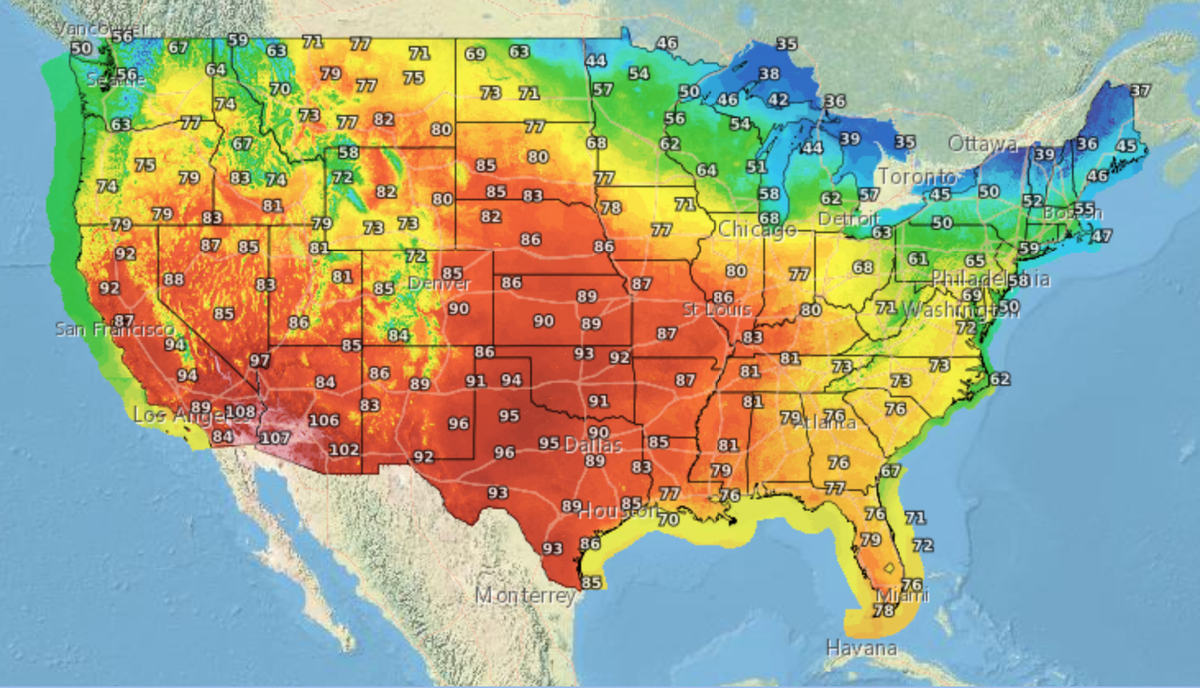
A heat wave sweeping the western United States pushed temperatures 20 to 30 degrees Fahrenheit above normal and produced what scientists say is the hottest March reading ever observed in the country. After California's North Shore hit 108F on Wednesday, a weather station near Martinez Lake, Arizona, reached 110F on Thursday, while Phoenix logged its earliest 105F on record by more than a month. Scientists cited by Scientific American said the event is being driven by the strongest March ridge ever observed over the Southwest, a high-pressure setup so intense that it is smashing not just March marks but some April ones as well. The practical story is less about one freak afternoon than the scale of the anomaly: a summerlike atmospheric pattern arriving in late March and lingering for days before much of the region has even begun its normal hot-weather season.
A ridge is a northward bulge in the jet stream that traps heat and suppresses clouds. Early-season extremes are especially disruptive because infrastructure and public behavior are not yet adapted to summer conditions.
Attackers used stolen credentials to force-push malicious code into most versions of Aqua Security's Trivy GitHub actions, turning a widely used vulnerability scanner into a potential secret-exfiltration tool inside developer pipelines. Ars Technica reports that the attackers rewired nearly all `trivy-action` tags and seven `setup-trivy` tags, so workflows pinned to common version labels could automatically run tainted dependencies. Security firms Socket and Wiz said the malware searched developer machines and CI/CD environments for GitHub tokens, cloud credentials, SSH keys, Kubernetes tokens and other secrets, then encrypted and exfiltrated what it found. Maintainer Itay Shakury told users to assume compromise and rotate all pipeline secrets if they had run an affected version. This is the nightmare supply-chain pattern in miniature: a tool installed to improve software security becoming the mechanism that silently steals the credentials used to ship software.
GitHub action tags are convenient labels like `@0.34.2` that many workflows trust automatically. When attackers can rewrite those tags, downstream builds may pull malicious code without any source change in the victim project.
A federal judge in Oregon said Health Secretary Robert F. Kennedy Jr. overreached when he issued a December declaration calling puberty blockers, hormone therapy and surgeries for minors with gender dysphoria unsafe and ineffective. Judge Mustafa Kasubhai said the declaration was issued without the required administrative process and could not be used to threaten providers with exclusion from Medicare or Medicaid, granting preliminary relief to clinicians while the case continues. A coalition of 21 states and the District of Columbia had argued that the declaration was inaccurate, unlawful and designed to intimidate hospitals and doctors even before separate rulemaking was complete. The ruling does not settle the wider national fight over transgender care for minors, but it does cut off one federal pressure tactic and clarifies that providers cannot be punished through an informal declaration alone.
The suit targets a December 2025 HHS declaration, not state bans directly. Separate proposed federal rules on reimbursement and provider participation remain part of the broader policy fight.
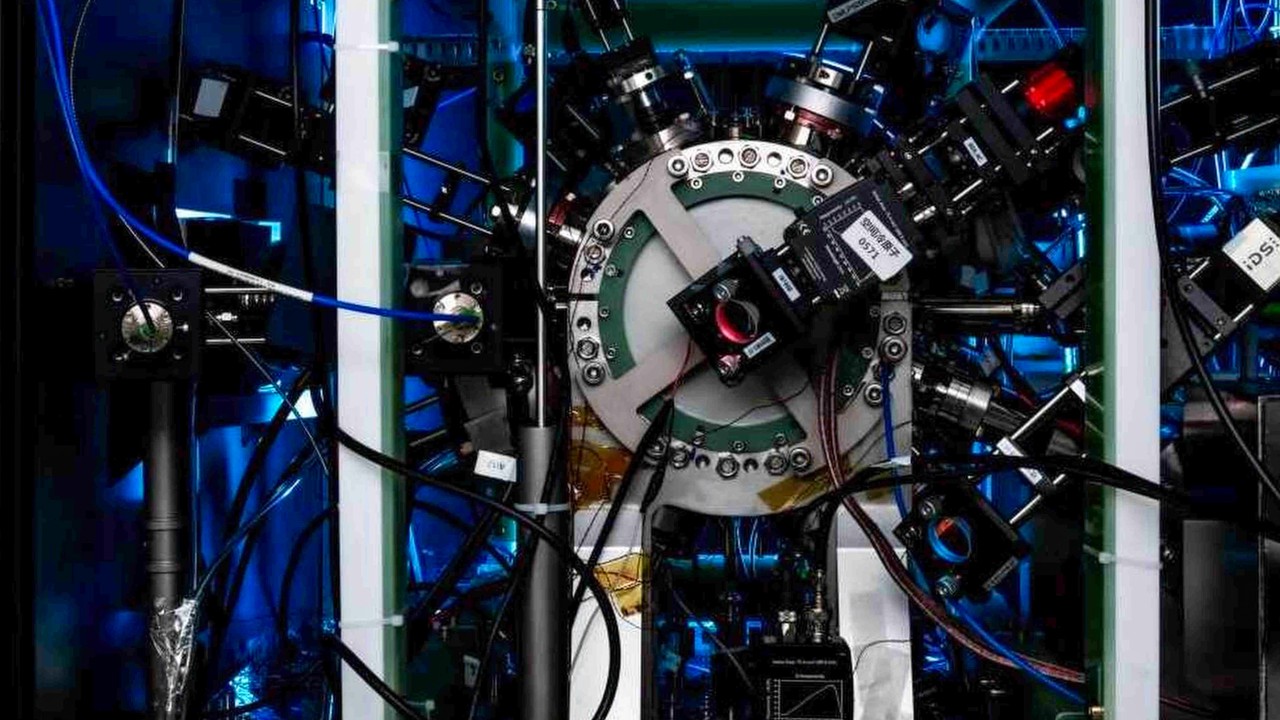
Chinese researchers say they have built a strontium optical clock accurate enough to compete with the handful of labs worldwide pushing to redefine the second. According to SCMP, the team led by Pan Jianwei at the University of Science and Technology of China achieved stability and uncertainty beyond the 10^-19 threshold, meaning the clock would drift by less than a second over roughly 30 billion years. That level matters because optical clocks are no longer just prestige instruments: they are candidates for the future definition of time and for applications in satellite navigation, fundamental-physics tests and ultra-precise global synchronization. The result also signals where China wants to compete in next-generation scientific infrastructure. The U.S. NIST and Germany have been among the leaders so far; this result suggests Beijing now wants a seat at the standards-setting table rather than only at the manufacturing end of advanced timing hardware.
Today's official second is still defined by cesium clocks. Optical clocks use higher-frequency light transitions, which can in principle deliver much finer precision.
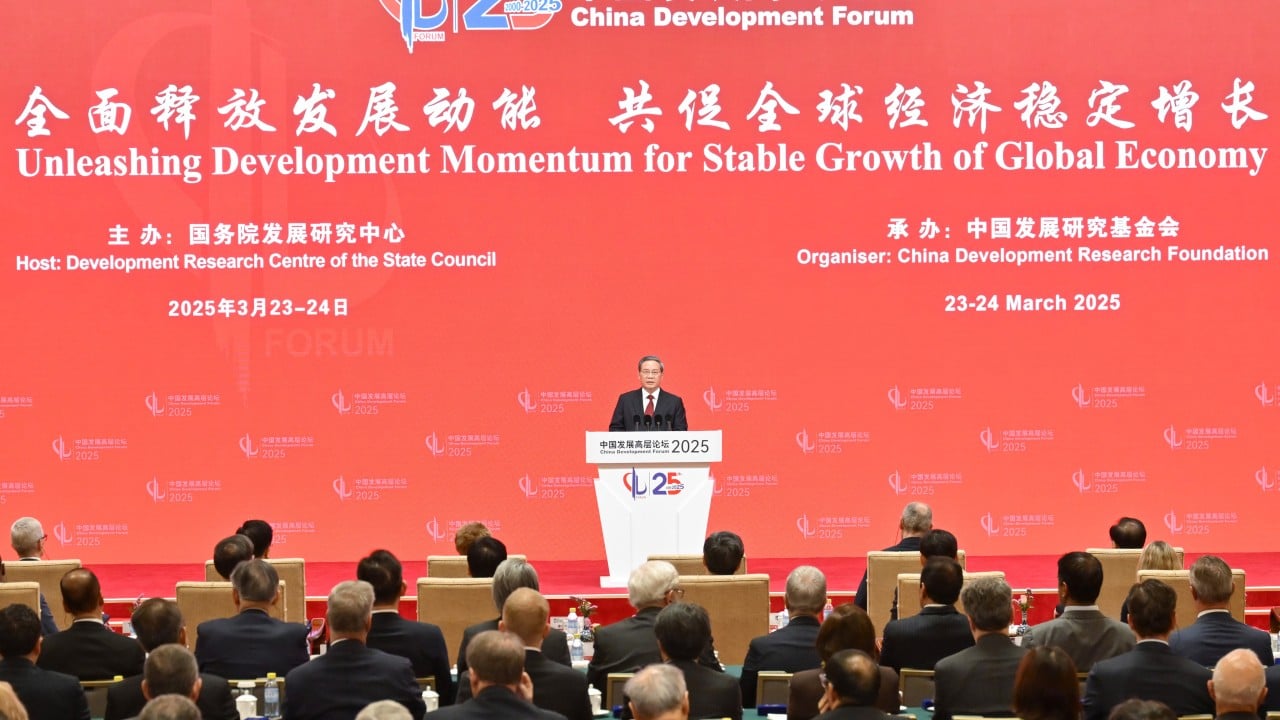
No Japanese business executives are expected at this weekend's China Development Forum in Beijing, according to an internal attendee list seen by SCMP, a conspicuous absence at one of China's flagship meetings with multinational CEOs. The list reportedly includes nearly 80 senior executives overall, with Americans forming the largest national contingent and figures such as Tim Cook, Volkswagen's Oliver Blume and Samsung's Lee Jae-yong still attending. Some invitees from the Middle East also canceled because the Iran war disrupted travel and operations, but the complete lack of Japanese representation points to a more specific political chill in China-Japan ties. For Beijing, the forum is meant to signal that foreign capital still has access and welcome at a time of slower growth and geopolitical strain. For observers, the Japanese no-show is a cleaner indicator than official rhetoric: one of China's most important regional business relationships is not operating normally.
The forum is an annual showcase where Chinese officials court foreign investors and CEOs. China-Japan relations have been strained by security frictions, business uncertainty and disputes over regional diplomacy.
Biologists studying a pea-size hydrozoan jellyfish off Japan have found evidence of a circadian system that does not use the canonical genes most animals rely on to track day and night. Quanta reports that the newly described species shows regular 20-hour rhythms even though hydrozoans appear to have lost the standard CLOCK, BMAL1 and CRY machinery found across much of the animal kingdom. The result suggests that biological timekeeping may have evolved more than once, or at least that some lineages rebuilt it after losing the usual toolkit. That makes the finding interesting beyond jellyfish: circadian rhythms help govern sleep, hormones, metabolism and DNA repair, so understanding alternative clocks could change how researchers think about the constraints of evolution. It is also a reminder that some of biology's biggest conceptual surprises still come from odd marine organisms pulled up almost by accident.
The study, published in PLOS Biology in January, centered on a newly discovered hydrozoan species. Hydrozoans are the group that includes some jellyfish, hydras and siphonophores such as the Portuguese man-of-war.