The Iran war is starting to show up in everyday logistics even without a formal closure of the Strait of Hormuz. BBC Verify counted 99 vessels moving through the waterway so far this month, showing that oil and gas are still flowing, but carriers are operating in a market where every transit now carries extra security and insurance risk. On land, United told employees it will trim about three points of off-peak flying, especially redeyes, because fuel costs tied to the conflict are squeezing margins. That is the useful signal here: the damage does not have to look like a total blockade to spread outward. A narrow shipping lane under war pressure can raise costs for airlines, shippers and consumers long before traffic falls to zero, which is why the conflict is already turning into an economic story as well as a military one.
The Strait of Hormuz is the narrow exit from the Persian Gulf, so disruptions there can quickly affect global energy pricing even if ships keep moving.
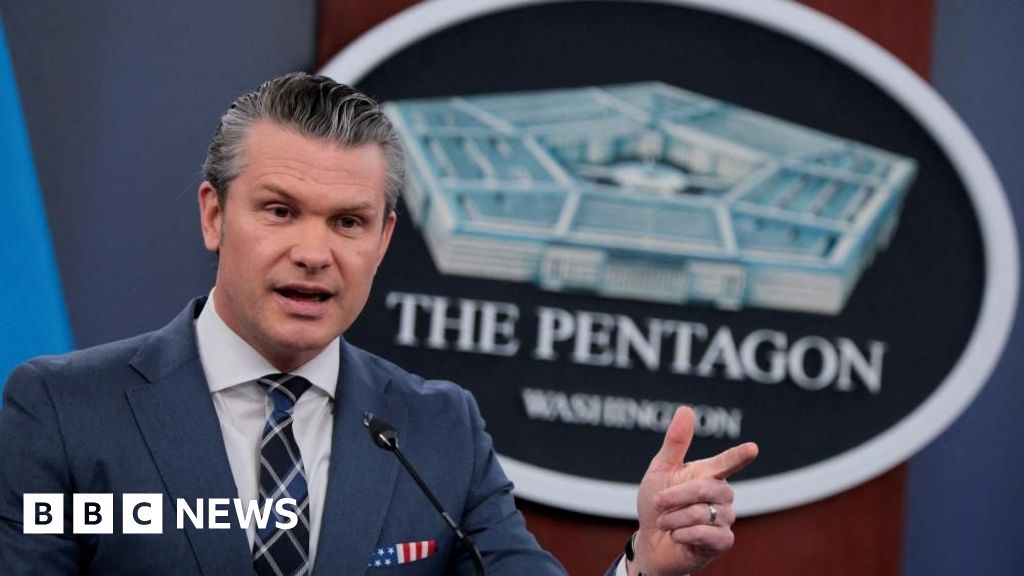
A federal judge ruled that the Pentagon overstepped when it tried to make journalists accept broad new limits on what they could gather and report in order to keep access to the building. The case was brought by The New York Times after major outlets balked at a credentialing agreement that critics said invited self-censorship during wartime by threatening reporters' access if they asked the wrong questions or observed the wrong things. AP reports that key parts of the policy were blocked as unlawful, while BBC says some narrower restrictions were left in place and the Pentagon plans to appeal. The importance goes beyond one media fight: the court is saying the government cannot use access to the military as leverage to impose vague speech rules on the press, especially while U.S. forces are actively fighting abroad.
The dispute began last year when several Pentagon reporters refused to sign a new press pledge. The administration says it disagrees with the ruling and will pursue an appeal.
Robert Mueller died Friday at 81, closing a public career that put him at the center of two defining American crises a generation apart. As FBI director, he took over just before the Sept. 11 attacks and then spent 12 years remaking the bureau around counterterrorism. Years later he returned as special counsel to investigate Russia's interference in the 2016 election and contacts with Donald Trump's campaign, producing a report that documented extensive links and obstruction episodes but did not allege a criminal conspiracy between the campaign and the Russian government. AP notes that Mueller's team charged six Trump associates during the inquiry, which made him a hero to some liberals and a villain to much of the right. Whatever one thought of the report, his death removes one of the last institutional faces of the post-9/11 national security era.
Mueller led the FBI from 2001 to 2013 and stayed beyond the usual 10-year term at President Barack Obama's request. He returned to government in 2017 as special counsel.
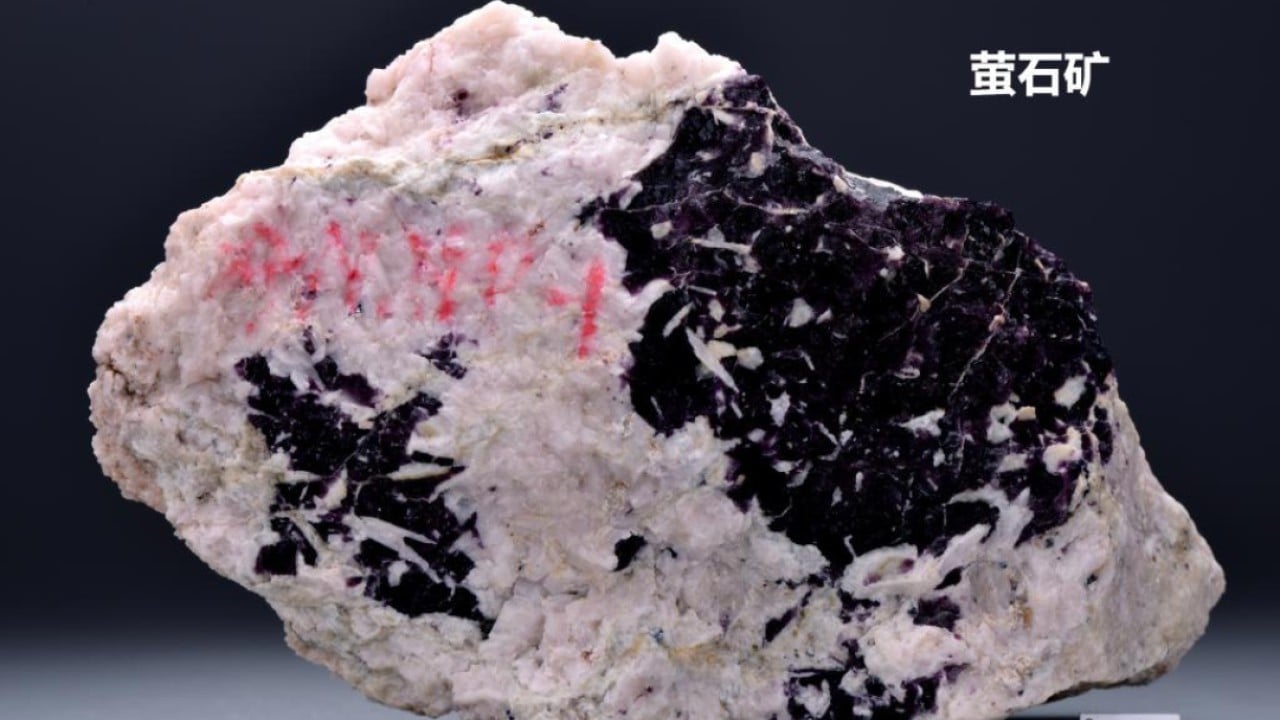
Chinese authorities say new surveys at Sichuan's Maoniuping mine have identified 9.7 million tonnes of rare-earth oxides, lifting the site's total proven reserves to 10.4 million tonnes, alongside large fluorite and baryte finds. If the numbers hold, this is not just a geology story. It strengthens Beijing's hand in the industries now trying hardest to reduce dependence on China, from electric-vehicle motors and permanent magnets to defense electronics and chemical processing. The immediate effect is political as much as industrial: reserve announcements shape export-control debates, investment plans and negotiating leverage long before all of the material is mined. At a moment when the U.S. and Europe are spending heavily to build alternative supply chains, China is still adding to the reserve base behind sectors where it already dominates processing.
Rare earths are not especially scarce in nature, but commercially useful deposits and downstream refining capacity are concentrated in relatively few places. Fluorite also matters to chemicals, batteries and metallurgy.
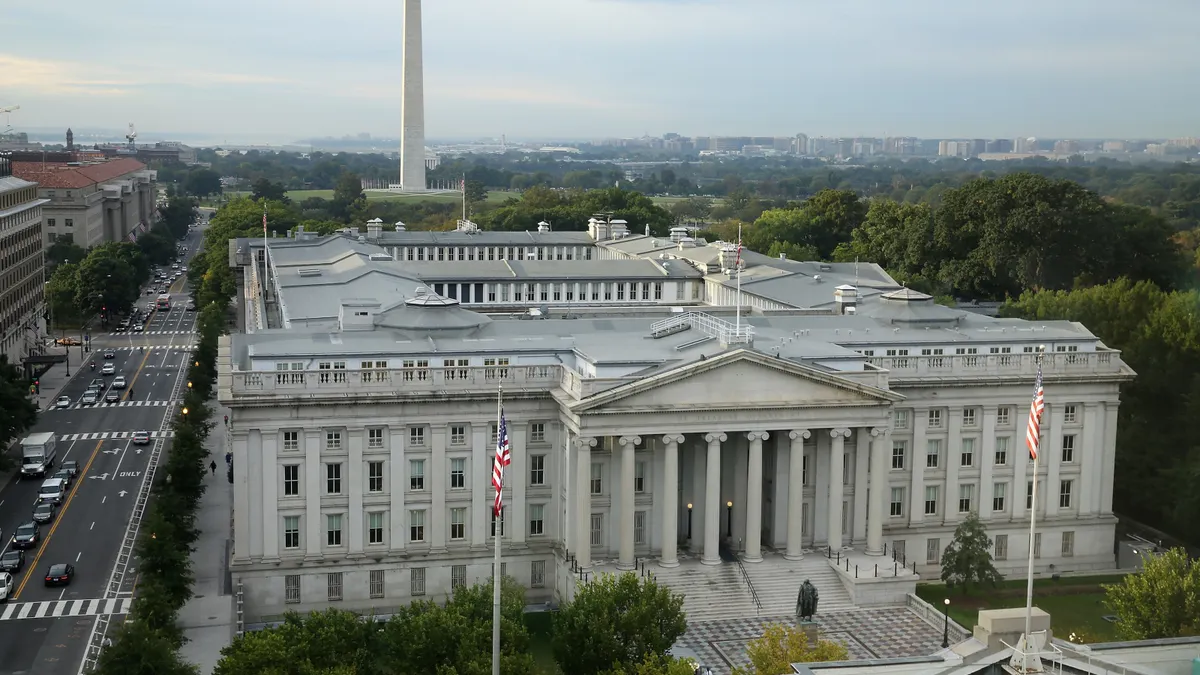
The Education Department and Treasury say Treasury will first take operational responsibility for collecting on defaulted federal student loans, with the broader plan eventually extending to the entire $1.7 trillion portfolio if the transition proves workable. About 9 million borrowers are already in default. Supporters say the handoff makes sense because Treasury already runs giant financial systems; critics say it is a high-risk fragmentation of student aid with no credible implementation plan and a lot of room for servicing errors to become harder to fix. The larger meaning is institutional. This is not just a back-office reshuffle but another step in the Trump administration's effort to hollow out the Education Department by moving its core functions elsewhere without formally abolishing it. For borrowers, the immediate question is whether collections become harsher and accountability more diffuse.
Congress would still need to approve any formal elimination of the Education Department. Lawmakers have already warned that scattering education programs across agencies could create delays and extra costs.
Roughly 3,800 workers at JBS's Swift Beef plant in Greeley, Colorado, one of the nation's largest slaughterhouses, are on strike after the union said 99% of members backed a walkout over wages, health care costs and alleged unfair labor practices. AP says it is the first strike at a U.S. beef slaughterhouse since the 1980s. JBS says its offer is fair and insists many employees are still reporting to work, but the dispute is landing in an already stressed market where U.S. cattle inventories are near a 75-year low and beef prices are already elevated. That makes the fight bigger than one plant. If output is meaningfully disrupted for more than a few days, a local labor dispute can spill quickly into supermarket prices and become a national inflation story.
The union says JBS offered annual raises below Colorado inflation. The company says it can keep operating and move production to other facilities if needed.
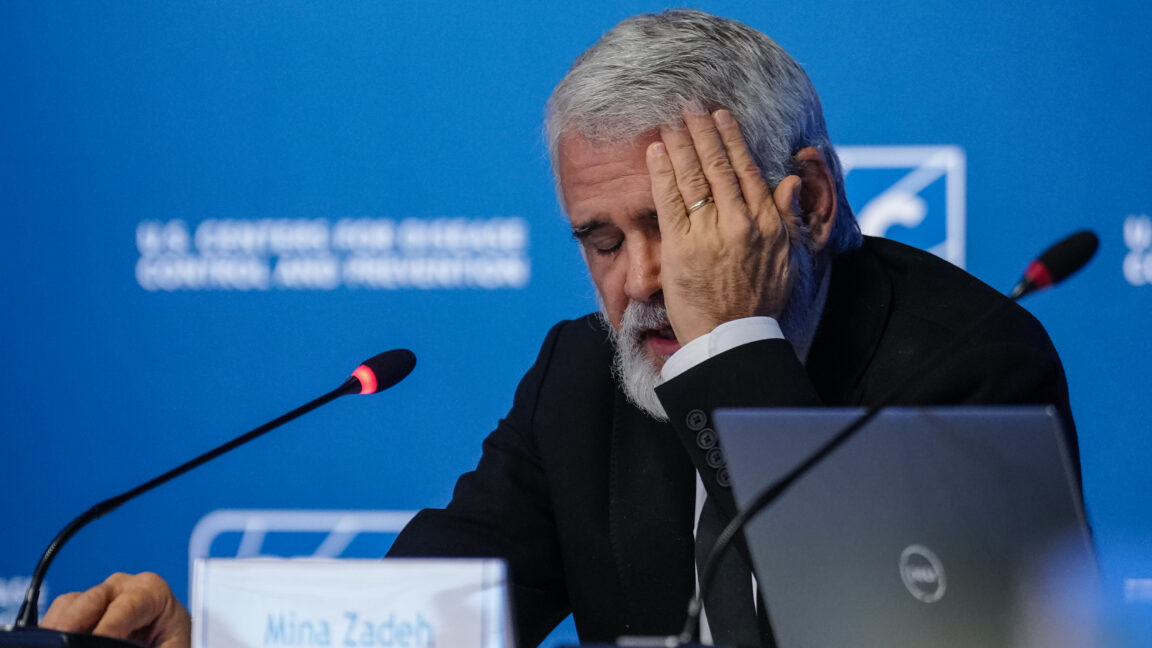
A fresh round of turmoil hit U.S. vaccine policy after Robert Malone, one of Robert F. Kennedy Jr.'s handpicked CDC vaccine advisers, suggested that the advisory panel might be disbanded and rebuilt again in response to a federal judge's order. He later walked that back, and HHS denied any immediate move, but the episode underscored how unstable the committee has become. The same judge recently stayed Kennedy's replacement appointments and paused votes taken by the reconstituted panel, saying the department likely violated required procedures. Even if nothing changes this week, the institutional damage is already visible: the committee that guides routine vaccine policy now looks politically provisional, and pediatricians, state health departments and parents are being asked to treat national immunization guidance as something that could be reworked again by fiat.
Kennedy had already fired all 17 prior members of the CDC advisory group and replaced them with a smaller panel. A federal judge has temporarily frozen that shake-up while the lawsuit continues.
BTS returned Saturday with its first full-group concert since October 2022, turning central Seoul into something closer to a secured festival zone than an ordinary public square. AP reports that 22,000 fans got seats inside the designated viewing area while tens of thousands more watched from nearby screens as the hourlong show at Gwanghwamun launched the group's new album, "ARIRANG," and a global tour. The comeback is bigger than fan service. South Korean officials treated it as a national soft-power event, shutting roads, curbing transit and deploying huge security resources because as many as 260,000 people were expected in the area. That scale says something about where K-pop sits in global culture now: BTS is not simply resuming activity after military service, but returning as a mass audience institution with enough pull to reorganize a capital city for a night.
All seven members recently completed South Korea's mandatory military service, the main reason the group had not performed together for nearly four years.
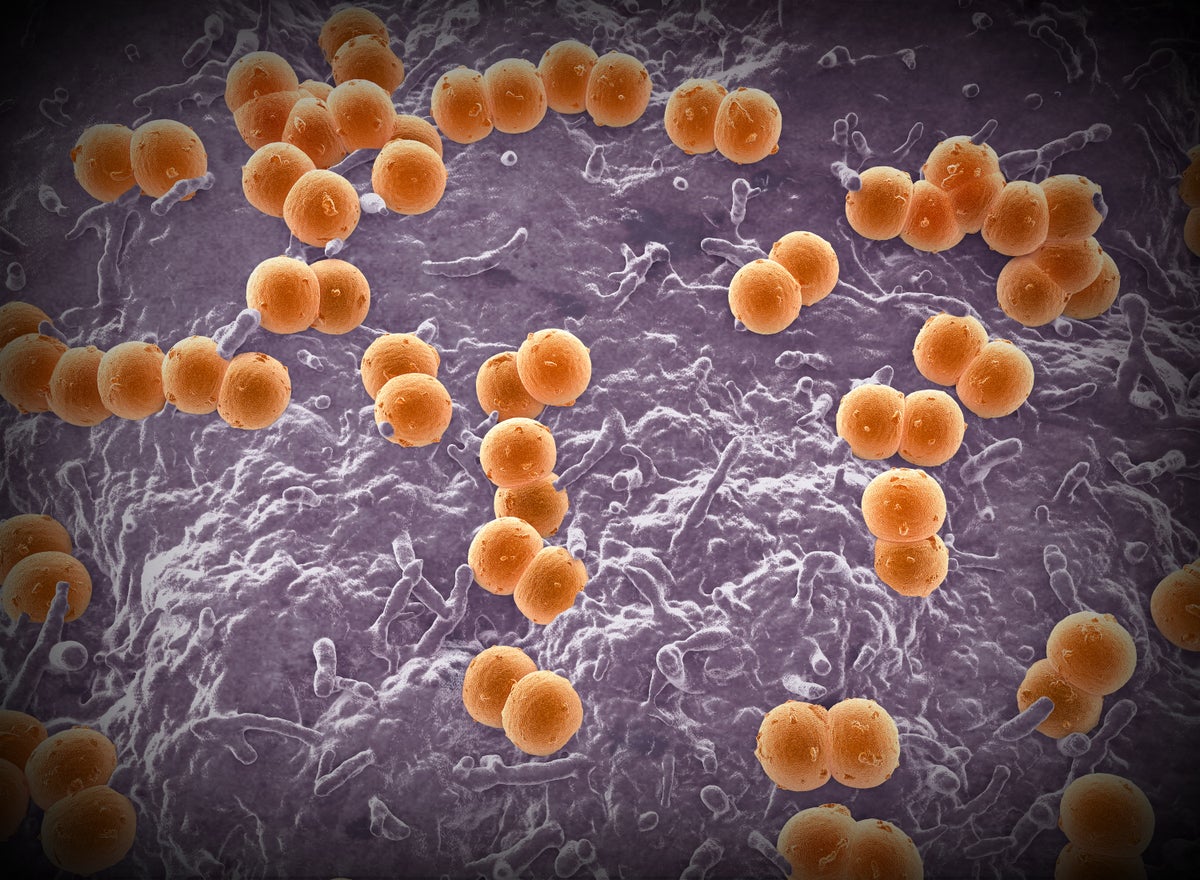
Health officials in England are racing to contain a meningococcal meningitis outbreak that began around the University of Kent and had reached at least 29 confirmed or suspected cases and two deaths by March 19. Thousands of people have been contacted about possible exposure, and the response is now running on two tracks at once: rapid antibiotics for close contacts and a targeted MenB vaccination campaign for students in the area. The story is a reminder that a disease many parents file away as a rare campus scare can turn severe with terrifying speed, particularly in dorms and other close-contact settings. Scientific American notes that the Kent outbreak involves the rarer B strain, at the same time U.S. meningitis guidance has been thrown into uncertainty by attempts to weaken routine vaccine recommendations.
Meningococcal disease can progress from fever and headache to sepsis, coma or long-term disability within hours. Some U.S. colleges require meningitis shots for students living in dorms.
Biologists studying a newly described pea-size hydrozoan jellyfish off Japan have found evidence of a biological clock built without the standard genes most animals use to track day and night. The species appears to run on a roughly 20-hour rhythm even though hydrozoans lost the canonical CLOCK, BMAL1 and CRY toolkit seen across much of the animal kingdom. That makes the result more than a marine oddity. If it holds up, it suggests circadian-style timekeeping may have evolved more than once, or that some lineages rebuilt it after losing the usual machinery. Either way, it widens the range of what biologists should consider possible when they think about how evolution solves basic problems like sleep, metabolism and reproduction. Some of biology's deepest assumptions are still being tested by weird organisms netted almost by accident.
The paper appeared in PLOS Biology in January. Hydrozoans are an old animal lineage that includes hydras, some jellyfish and siphonophores such as the Portuguese man-of-war.