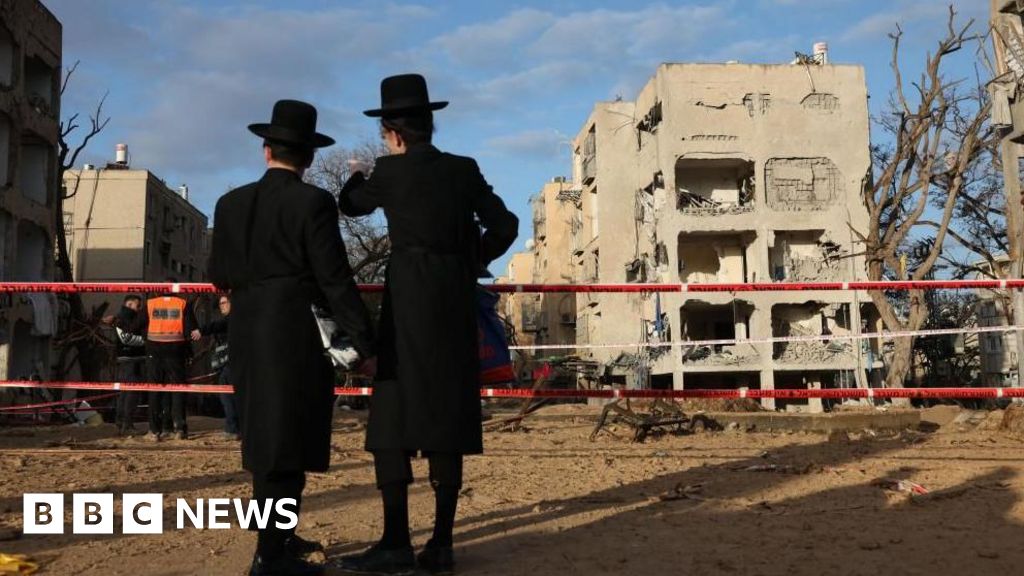
Iranian ballistic missiles broke through Israeli air defenses late Saturday and hit residential areas in Arad and Dimona, injuring about 160 people and leaving one 10-year-old boy in serious condition. Israeli firefighters said interceptors were launched in both places but failed to stop two warheads weighing hundreds of kilograms, producing direct hits and deep damage craters. The location made the strike unusually sensitive: Dimona sits beside the Dimona reactor, the desert research center long associated with Israel's undeclared nuclear arsenal. Israeli officials are now investigating whether this was a technical failure, a saturation problem or a targeting shift by Iran. In a war defined by both sides' claims about stopping the other from gaining nuclear leverage, a successful missile strike near Israel's most symbolically charged nuclear site is the kind of breach that instantly changes the political temperature.
The war began on February 28 with U.S.-Israeli strikes on Iranian targets. Israel has long kept formal ambiguity around its nuclear arsenal, but the Dimona reactor has for decades been treated as the center of that capability.
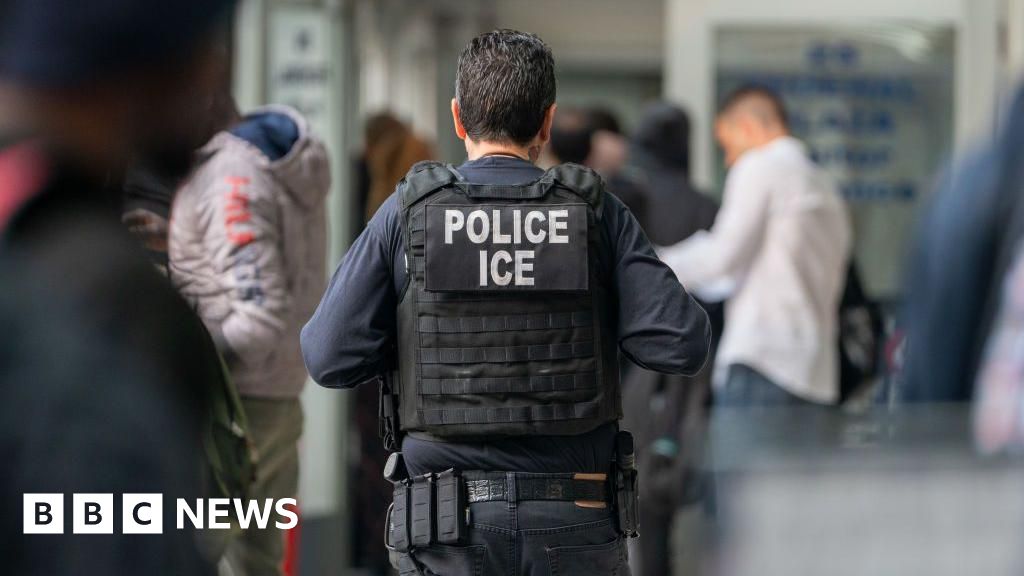
Donald Trump threatened to move ICE agents into airport security roles starting Monday unless Congress reaches a deal to fund the DHS, escalating a standoff that has already left ordinary checkpoint staff unpaid for more than a month. The immediate stress point is the TSA: a Senate funding bill failed Friday, more than 300 employees have reportedly quit, unscheduled absences have surged and some airports are collecting food parcels and gift cards for workers still showing up. Trump framed ICE as a ready-made replacement force, but the agency is not trained for standard airport screening. That mismatch is what makes the threat more than another rhetorical outburst. It suggests the White House is willing to blur immigration enforcement and civilian transport security in order to break the shutdown fight, while Democrats continue demanding ICE reforms before they agree to broader DHS funding.
Congress separately funded ICE, so the agency has not been hit the way the rest of DHS has. Democrats want immigration-enforcement reforms after fatal January raids in Minneapolis before reopening the department's wider budget.
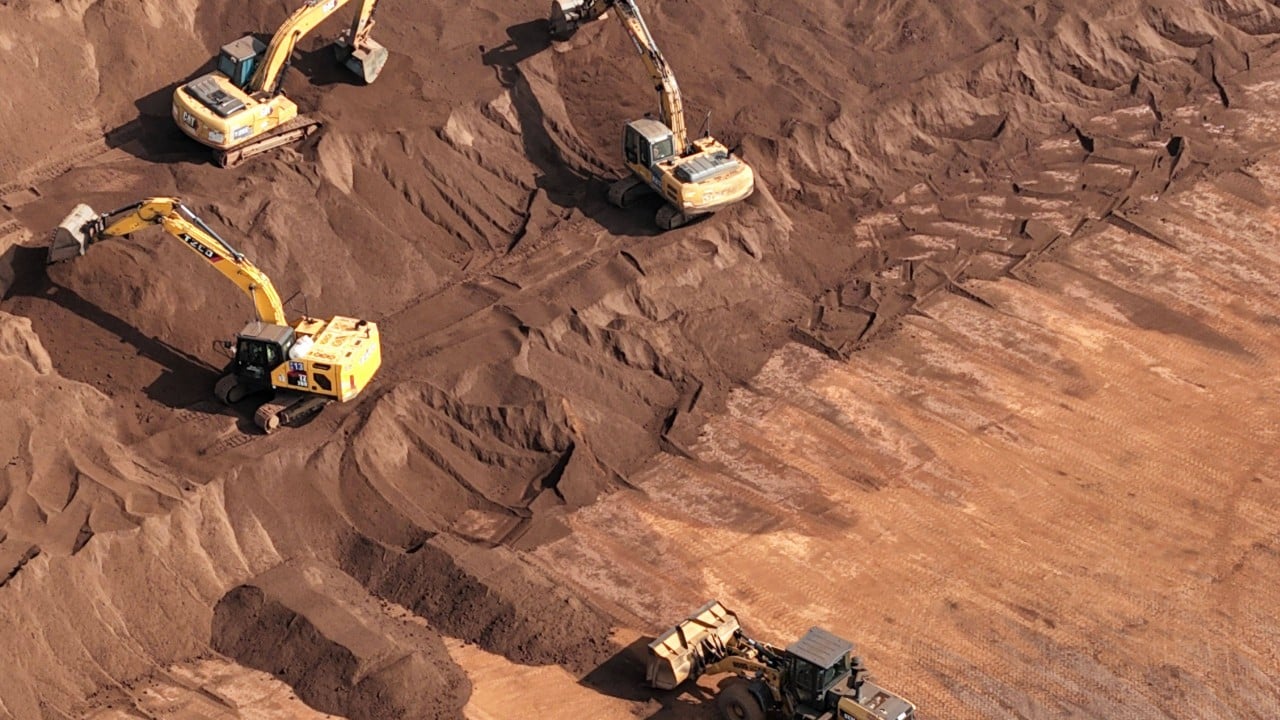
Beijing is moving critical minerals, metals and energy supplies into the same strategic category as food security under its new 15th five-year plan, treating stockpiles and supply chains as matters of national security rather than ordinary industrial policy. The idea is not just to hold more material in reserve. It is to identify the parts of the economy where China still depends too heavily on foreign technology, patented systems or export-exposed supply lines, then harden them before the next crisis hits. SCMP reports that officials and affiliated analysts are explicitly connecting this push to trade shocks, Middle East instability and U.S.-led technology restrictions in areas such as semiconductor equipment and industrial software. The bigger signal is that Beijing now sees resource security and tech self-reliance as one problem: if inputs, energy and key tools can all be disrupted from outside, they all need the same state-backed buffer.
China's five-year plans are its highest-level economic blueprints. This one lands after months of export-control friction with the U.S. and amid oil-market instability linked to the Iran war.
The Justice Department filed a new lawsuit Friday accusing Harvard of violating Title VI by failing to protect Jewish and Israeli students from antisemitic harassment, and it is asking for far more than a symbolic rebuke. The administration wants the court to freeze current grants, recover money already paid, order Harvard to call police on protesters who block campus spaces and install an independent monitor approved by the government. That turns what began as a funding and compliance fight into a direct attempt to reshape how a university governs protest, discipline and federal oversight. Harvard says it has already taken substantial steps to address antisemitism and argues the administration is weaponizing civil-rights law to force ideological control over campus life. The new suit matters because it reopens a battle the government already lost once in court, now with a broader remedy and a more explicit demand for institutional supervision.
A federal judge previously reversed the administration's earlier Harvard funding cuts, calling the antisemitism rationale a smokescreen for a broader assault on university autonomy. This new filing tries again through a fresh civil-rights lawsuit.
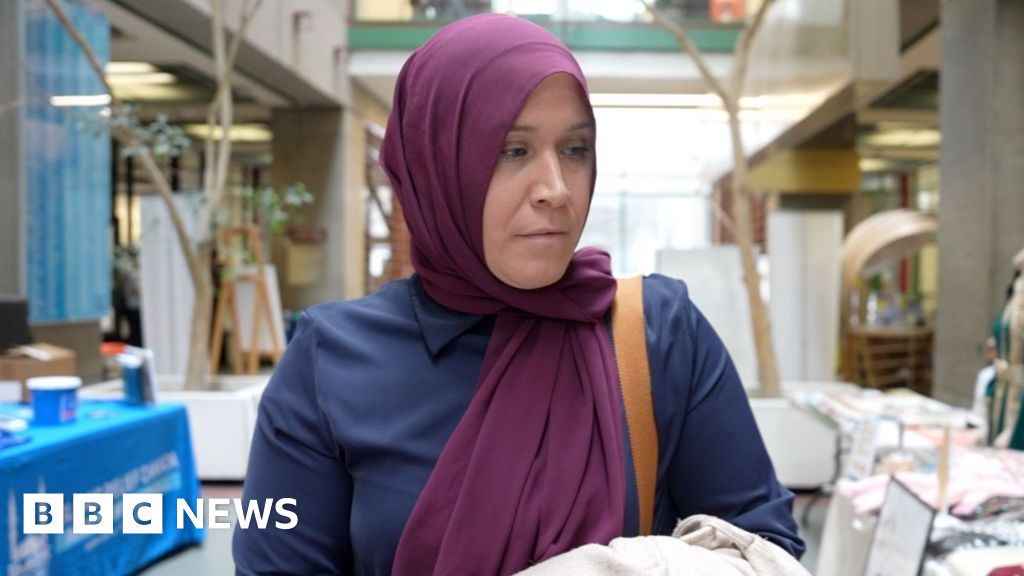
Canada's Supreme Court will finally hear the challenge to Quebec's Bill 21, a six-year-old law that bars many public-sector workers, including teachers, judges and police officers, from wearing visible religious symbols on the job. Supporters present the law as a neutral defense of state secularism. In practice, much of the public argument has centered on Muslim women who wear hijabs, some of whom say the rule has pushed them out of classrooms, public service careers or Quebec itself. Lower courts upheld the law largely because Quebec invoked the notwithstanding clause, the constitutional escape hatch that lets provinces shield legislation from some Charter-rights challenges for renewable five-year periods. That is what makes this case bigger than one province's culture war. The court is now being asked to decide how far a government can go in defining public neutrality before it starts excluding citizens from public life.
Quebec passed Bill 21 in 2019 as part of a broader provincial push for a stricter version of secular public identity than the rest of Canada usually applies.
TikTok removed 20 accounts after a BBC investigation found a network of AI-generated Black female avatars being used to funnel users toward paid explicit-content sites. The BBC, working with researchers from the independent AI publication Riddance, identified about 60 accounts, mostly on Instagram, that used highly sexualized digital personas with exaggerated features, unlabeled AI imagery and racially charged naming patterns. In some cases the operators went beyond synthetic characters and stole videos from real creators, then overlaid a fabricated face and darker artificial skin tone onto the original body and movements. One victim, Malaysian model Riya Ulan, said she had repeatedly reported the copied material before TikTok acted after the BBC sought comment. The disturbing part is not just the porn spam. It is the way generative tools are being used to merge racial caricature, identity theft and platform monetization into one scalable business model.
Most of the identified accounts were on Instagram, where Meta said it was investigating but did not say it had removed them. The synthetic personas were often presented without clear AI labels despite platform rules.
Hawaii remains under a statewide flood watch after back-to-back storms dumped extreme rain on already saturated ground, forcing evacuations, rescues and dam warnings across Oahu and Maui. Officials said about 5,500 people north of Honolulu were ordered out, more than 230 people had already been rescued and a 120-year-old dam on Oahu was at risk of failure. Governor Josh Green said some parts of the state had taken 40 to 50 inches of rain over the last 10 days, with more still forecast, and Honolulu's mayor said damage could exceed $1 billion. What makes this event different from an ordinary tropical downpour is the compounding effect: this was the second severe weather hit in a week, so the ground had no room left to absorb new water. Homes and cars were lifted by floodwaters, roads closed across the islands and emergency shelters and hotel-displacement programs were activated.
Hawaii has spent recent years moving from wildfire emergency to flood emergency with little recovery time between events. The latest storm comes less than three years after the Lahaina fire disaster on Maui.
Scientific American reports new evidence that the blood-brain barrier can remain damaged for years after people stop playing contact sports, with the lingering leak tied to immune disruption and declining cognition. That barrier is supposed to act like a filter between the brain and the bloodstream, keeping inflammatory molecules and other unwanted material out of delicate neural tissue. If it stays porous after repeated head impacts, the story of sports-related brain injury becomes broader than concussions or one dramatic collision. It starts to look like a slow vascular problem that may keep stressing the brain long after an athlete's playing days are over. The finding matters because it offers researchers a concrete biological mechanism to track instead of relying only on symptom reports or postmortem pathology. It also raises the uncomfortable possibility that some long-term cognitive harm begins with chronic barrier damage rather than with spectacularly obvious trauma.
Researchers have long suspected repeated sub-concussive hits can cause cumulative brain damage even when no single impact looks catastrophic. This work adds a vascular explanation to that broader concern.
The latest GlassWorm campaign shows how supply-chain attacks are evolving from shady downloads into attacks on the normal tools developers trust every day. Scientific American describes malware hidden with invisible Unicode tricks inside open-source code, while security firm Socket says one recent wave compromised four established Open VSX extensions with more than 22,000 downloads after attackers appear to have gained publishing access. Once installed, GlassWorm has been used to steal GitHub tokens, SSH keys, cloud credentials and cryptocurrency-wallet data, giving attackers a path into both personal machines and software-delivery pipelines. The broader danger is not the cleverness of one obfuscation method. It is the combination of trusted publisher accounts, hard-to-see payloads and developer ecosystems that auto-install updates by design. That means the compromise point can arrive through the exact channels programmers rely on to stay productive and secure.
GlassWorm first drew attention in 2025 for abusing invisible characters to conceal malicious logic. Later waves shifted toward staged loaders and compromised extension publishers, making the campaign harder to spot by eye alone.
ProPublica's close look at the Trump administration's nuclear push reads less like a standard deregulatory story than a collision between Silicon Valley speed culture and one of the world's most safety-obsessed bureaucracies. The piece centers on DOGE-aligned officials inside the Department of Energy who want far faster reactor approvals and are treating the NRC's independence as an obstacle rather than the whole point of the institution. One official, Seth Cohen, told staff to assume the NRC would do whatever the administration told it to do. Since Trump returned to office, more than 400 people have reportedly left the commission, its rules are being rewritten at speed and startup-friendly nuclear investors have gained political influence as AI power demand becomes the strategic justification for everything. Even some longtime nuclear advocates are alarmed, because a rushed buildout can discredit the industry's revival if the public stops trusting the regulator meant to keep it safe.
The NRC's authority was shaped by earlier disasters and by the belief that nuclear oversight must stay insulated from both industry pressure and political impatience. Trump's team now wants the agency aligned with its energy and AI agenda.