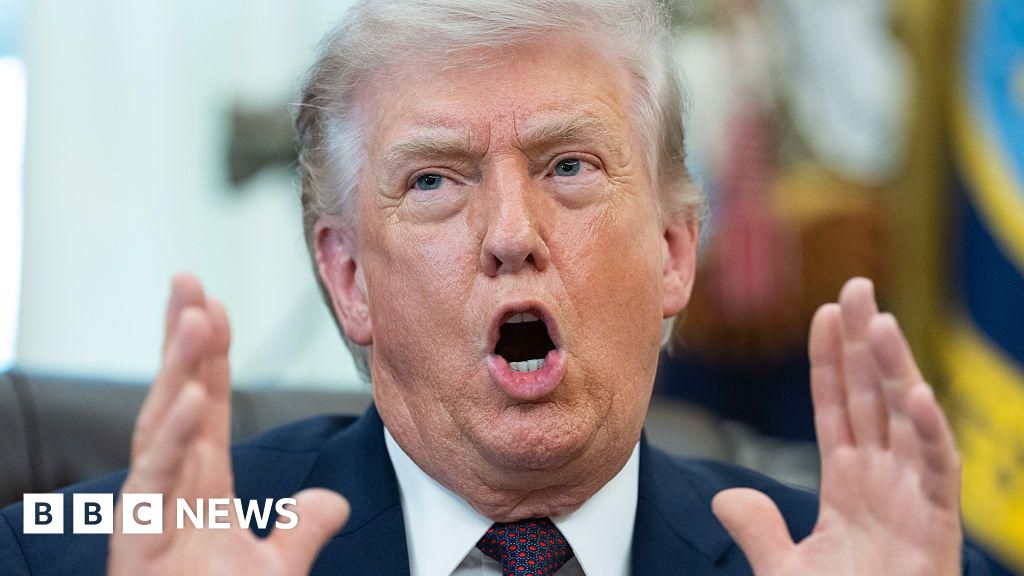
The Supreme Court spent Wednesday picking at the legal scaffolding behind Donald Trump's executive order on birthright citizenship, and early readouts suggested the administration did not have an easy day. The bigger fight in the courtroom was not only whether the Fourteenth Amendment permits the order, but whether lower-court judges should be able to block it nationwide before the merits are fully resolved. Trump showed up in person for arguments, a rare move for a sitting president, then left before the broader political spin began. The immediate story is procedural, but the stakes are not. If the Court narrows nationwide injunctions without squarely ending the citizenship order, the administration could gain room to keep testing legally shaky policies in pieces, state by state, while families, hospitals, and immigration offices try to guess which babies count as citizens where. That is a constitutional fight with ordinary paperwork attached to it.
Birthright citizenship has rested for more than a century on the Fourteenth Amendment and the 1898 Wong Kim Ark decision. The current case is also a test of how far federal judges can go when they freeze a president's policy nationwide.
Trump was set to address the nation Wednesday night with the Iran war hanging over him in two different ways at once. Abroad, Washington still has not settled whether its job is deterrence, regime damage, or some narrower end state that can actually be declared finished. At home, the pressure is coming from both directions: hawks want a clean demonstration of resolve, while parts of the MAGA coalition are openly warning against another open-ended Middle East war. BBC's framing of the moment is useful because it shows how little room the White House has left for ambiguity. A speech can calm markets and allies for a few hours, but it also locks the administration into a public story about what victory means. If Trump pitches this as nearly over, he narrows his own room to escalate later. If he sounds ready for a longer campaign, he risks splitting the coalition that helped put him back in office.
The afternoon digest already covered China's attempt to shape the postwar diplomacy. This entry is about the domestic American problem now sitting on Trump's desk: how to define an end point before the war becomes a presidency-eating commitment.
A new privacy report says government requests for user data from major tech platforms have risen 770 percent over the past decade, a jump large enough to make the surveillance state feel less like a slogan and more like a scaling problem. The Hill reports that Google, Apple, and Meta together disclosed data from more than 3 million accounts in just the first half of 2025. That does not mean every request was illegitimate; many are tied to criminal investigations or emergencies. Still, the sheer volume changes the texture of the debate. The old privacy fight was about whether platforms had too much information. Now there is a second question: once that information exists, how routinely does the state reach for it? A ten-year growth curve this steep suggests the real default may be data availability first, restraint later, with legal oversight struggling to keep up with the administrative ease of asking.
Transparency reports from large platforms were once sold as a check on overreach. They still help, but they now also reveal how normalized data requests have become, especially once cloud accounts, location history, and social graphs are treated as ordinary investigative inputs.
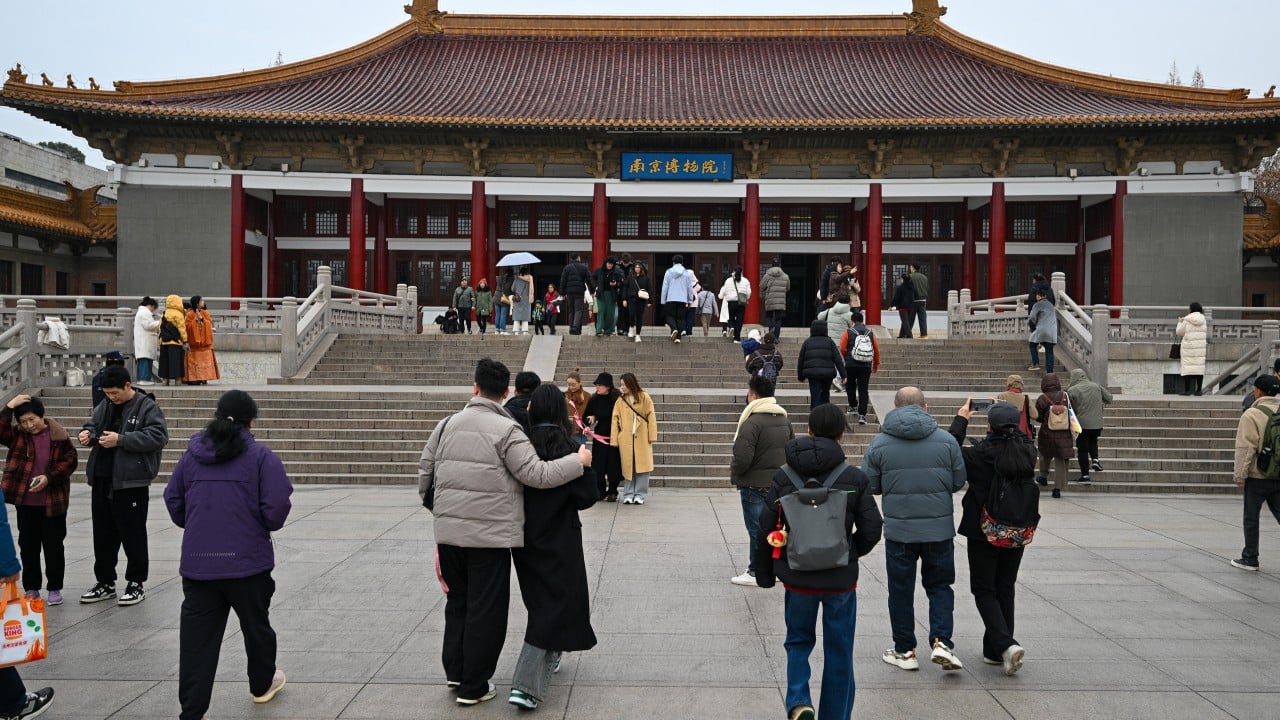
China's cultural bureaucracy has ordered every state-owned museum in the country to physically count its collection item by item after a scandal at Nanjing Museum exposed years of theft and mismanagement. SCMP reports that the trigger was the reappearance of a Ming painting, valued at about 88 million yuan, that had allegedly been sold off illegally after being donated to the museum system. The order from the National Cultural Heritage Administration is blunt: match the records to the objects, piece by piece, this year. That is not routine housekeeping. It is Beijing admitting that some of its own prestige institutions cannot be trusted to know what they hold, let alone protect it. The interesting part is the scale of the response. A local corruption story has turned into a national control problem, which usually means officials fear the same accounting rot may be sitting quietly inside other museums too.
The Nanjing case broke after a Ming work surfaced at auction in Beijing. In the Chinese system, once a scandal starts to threaten trust in the custodianship of state assets, the response often shifts quickly from local punishment to a nationwide rectification campaign.
Major higher-ed groups are warning that draft federal contracting rules tied to anti-DEI pledges could expose universities to False Claims Act liability in ways they describe as more than punitive and possibly existential. Inside Higher Ed says the proposal would force institutions to certify compliance with the administration's reading of civil-rights law, even though that reading is still being fought over in court. The real leverage here is personal and financial. If a university signs in good faith and a future enforcement action says some campus program still crossed the line, the certification itself could be treated as false, with penalties attached to federal payments made during that period. That is a powerful way to discipline institutions without passing a new higher-ed law. The administration does not need every university to agree with its theory. It only needs presidents and counsels to decide the downside of resisting is too expensive.
The False Claims Act is usually associated with fraud against the government, not campus culture fights. That is why universities are alarmed: it turns an ideological certification dispute into a liability regime with real money and personal sign-off attached.
A years-long replication effort has landed with a thud: roughly half of the tested social-science findings did not replicate. Nature says the results come from one of the most ambitious credibility checks the field has attempted, which matters because this was not a few bloggers rerunning famous papers for sport. It was a large, organized attempt to see how much of the published record survives fresh scrutiny. The headline number is sobering, but the more useful takeaway is narrower. Social science is not uniquely broken so much as painfully exposed to the incentives of modern publishing, where clean, surprising, statistically neat findings travel farther than messy ones. A 50 percent hit rate does not mean every old paper is junk. It does mean policymakers, journalists, and other researchers should stop talking about single studies as if publication were the end of the argument. Often it is just where the argument begins.
Replication projects ask whether a published result appears again when researchers rerun the study with the same design or a close variant. The replication crisis first hit psychology hardest, but the broader question has spread across economics, political science, and other social-science fields.
A new resource estimate argues that breaking widely used elliptic-curve cryptography may require tens of thousands of reconfigurable atomic qubits, not the millions that used to anchor the more comforting version of the story. Ars Technica walks through the result carefully: nobody is saying your banking app gets cracked next week, and RSA still looks harder. But the paper does narrow the gap between "theoretical someday problem" and "something engineers can start roadmapping against." The draft arXiv paper says P-256 attacks could run in a matter of days on a machine with around 26,000 physical qubits under favorable assumptions. That is still an enormous machine. It is also a much less absurd number than before. The practical lesson does not change, though it now sounds less abstract: organizations sitting on secrets that need to stay secret for years should already be moving toward post-quantum cryptography, because harvested ciphertext ages well.
Elliptic-curve cryptography underpins a large share of modern secure communication. The danger is not only the day a quantum machine arrives, but the "harvest now, decrypt later" problem: intercepted data from today may become readable once the hardware catches up.
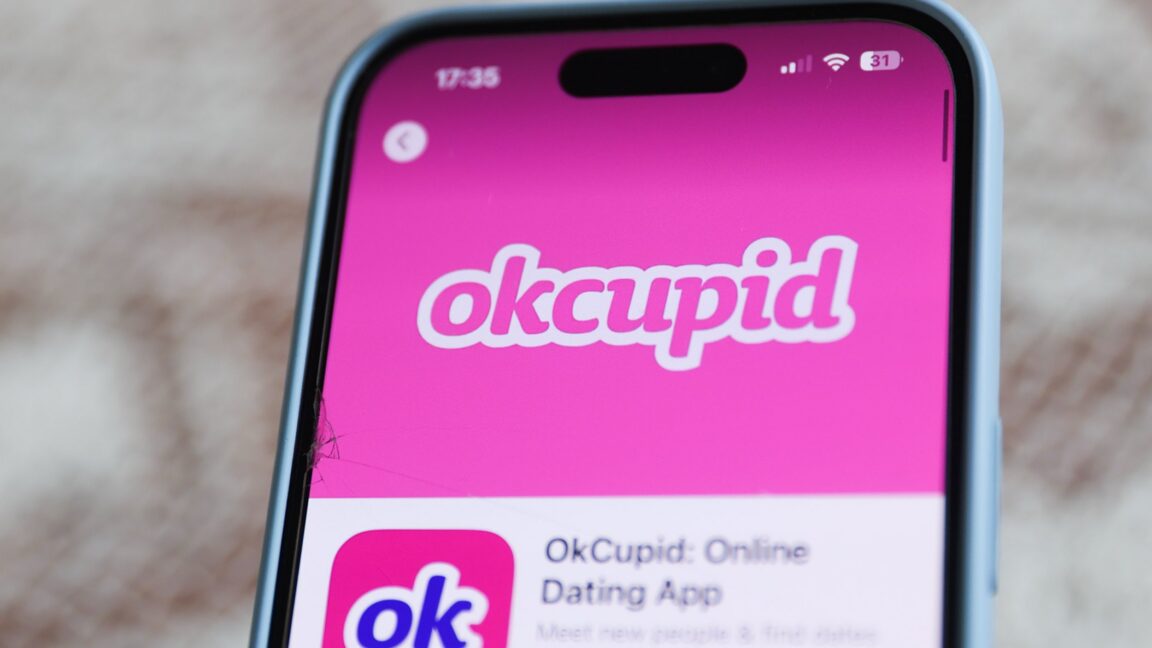
The FTC says OkCupid and parent company Match Group gave roughly 3 million user photos to a facial-recognition company so the images could help train biometric tools, turning a dating site into a quiet dataset pipeline for surveillance-adjacent software. Ars Technica reports that the case ended in a settlement without a financial penalty, which is almost as striking as the conduct itself. Users uploaded pictures to meet other people, not to help a third party teach machines how to recognize faces better. That mismatch of context is the whole story. It shows how weak privacy norms still are once a company can recast user material as an internal asset available for "product" or "research" relationships the user never actually contemplated. Even if no individual harm can be cleanly priced, the pattern is corrosive: consent becomes whatever a buried policy document can be made to sound like after the fact.
Facial-recognition systems get better when companies can acquire large, labeled image sets. Dating apps are especially tempting sources because users voluntarily upload many face-forward photos tied to identity-rich profiles.
Researchers think the Great Salt Lake basin may hold fresh-water-saturated sediment or bedrock extending three to four kilometers below the lake floor, which is a strange and surprisingly hopeful finding in a place more often discussed as an ecological emergency. Scientific American notes that the new work is still about inference, not a giant underground lake waiting for a straw. The point is geological understanding first. Even so, the idea matters because the Great Salt Lake has become a symbol of water mismanagement, dust risk, and climate stress in the American West. Discovering a deep fresh-water system underneath that basin would not magically solve any of those problems, but it would change the scientific picture of how the lake and surrounding groundwater interact. Sometimes a result matters less because it offers a fix than because it tells you the place itself is not the simple system you thought it was.
The Great Salt Lake has shrunk dramatically in recent years, raising fears about ecosystem collapse and toxic dust from exposed lakebed. Any new evidence about hidden groundwater matters because the basin's hydrology is central to both conservation and regional planning.
Renewables accounted for almost half of the world's installed electricity-generating capacity in 2025 after another surge in solar buildout, according to new figures shared with Reuters from the International Renewable Energy Agency. Capacity is not the same thing as actual electricity generated hour by hour, so this is not a claim that the world has become half renewable in day-to-day power use. Still, the number matters because capacity is where future output starts. Once enough solar and wind hardware exists, the political and grid fights shift from whether the equipment can scale to how fast storage, transmission, and dispatch systems can catch up. That makes this more than a feel-good climate milestone. It is a sign that the bottleneck is moving. The hard part is no longer persuading the world to install panels at all. The hard part is redesigning power systems so this new hardware can run without wasting its own abundance.
Installed capacity measures how much generation equipment exists, not how much electricity it actually produced over the year. Solar's rapid rise is especially visible in capacity statistics because panels are being added quickly even where grids and storage are not yet optimized around them.