Iran says new strikes hit the Bushehr nuclear power plant on Saturday, killing one worker and prompting the IAEA to issue an unusually blunt warning that nuclear sites and nearby areas must never be attacked. The agency said no rise in radiation had been detected, and Iranian officials said the plant's main systems still appeared intact, but the point of alarm is obvious: Bushehr is not a uranium site buried in a mountain. It is Iran's only operating civilian reactor, built with Russian help, and a serious accident there would spill beyond the battlefield almost immediately. Russia had already begun evacuating many of its own remaining workers from the plant. The wider war was already ugly. Hitting a live power reactor drags it into a different category, where even a technically limited strike can become a regional contamination scare.
Bushehr sits on the Persian Gulf and supplies civilian electricity. The IAEA has repeatedly tried to keep active nuclear facilities outside the war because damage to cooling or containment systems can create a crisis that outlasts any military gain.
The United States was still hunting for a missing crew member in western Iran on Saturday after an F-15E was shot down, while reports from AP and SCMP said another American combat plane was also lost near the Strait of Hormuz and its pilot rescued. Iran has treated the incidents as proof that it can still impose costs on the world's strongest air force, circulating wreckage imagery and trying to turn the rescue operation into a public contest of will. The military significance is bigger than the raw loss count. U.S. planners normally assume they can push airpower deep into an enemy's battlespace with manageable risk; losing two aircraft so quickly, and drawing fire on the recovery effort, makes that assumption look shakier. Once an air war stops feeling one-sided, every sortie carries more political weight back home and more confidence to the side absorbing the strikes.
The war widened after U.S. forces joined Israeli operations against Iran. Airpower was supposed to be Washington's safest edge, so the real shock is not just losing aircraft but losing the sense that the sky is basically under control.
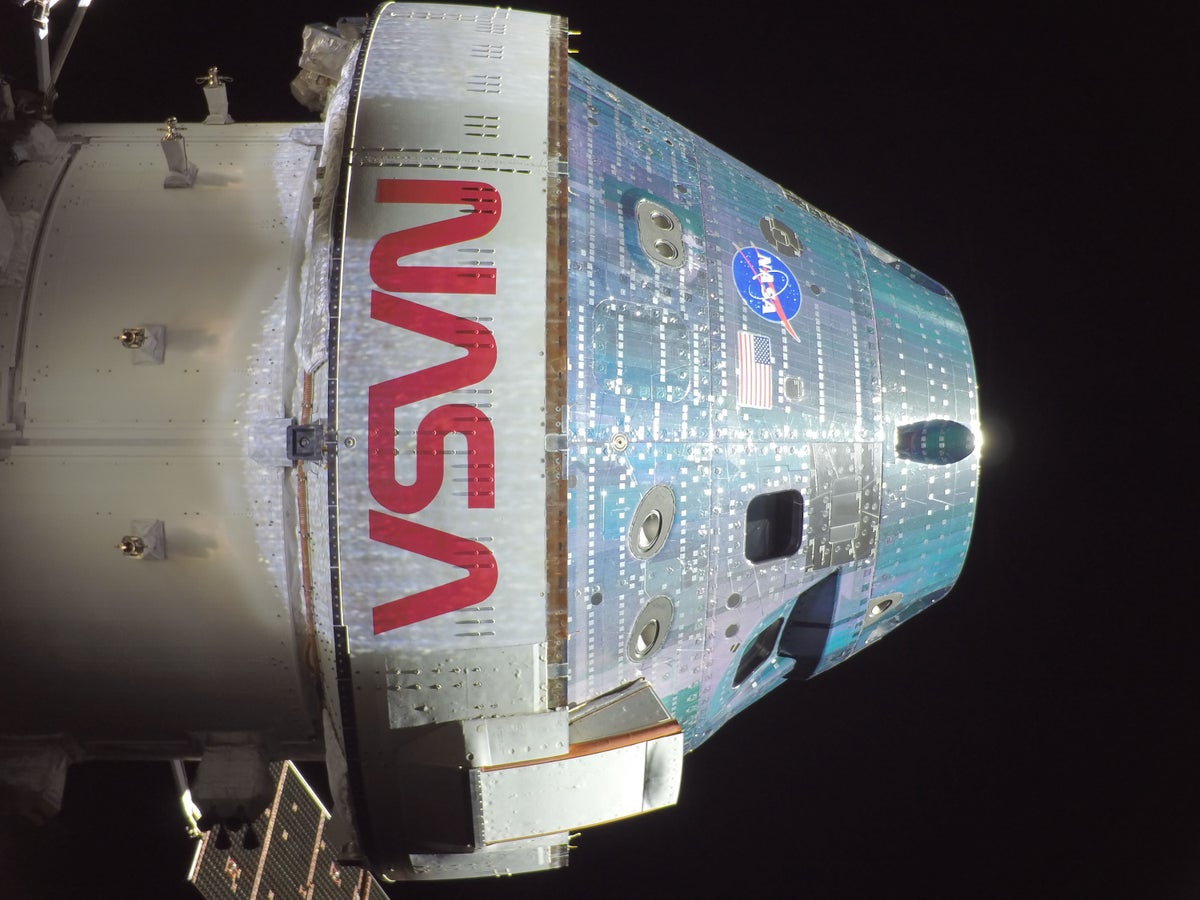
By Saturday morning, Orion had crossed the part of the trip where the numbers finally look strange: more than 160,000 miles from Earth, less than 120,000 from the Moon, and still moving at roughly 2,540 miles per hour. Reid Wiseman told mission control that waking up and seeing the full Moon out the front window left no doubt where the crew was headed. The third day was relatively quiet, which is exactly what NASA wants from a mission built to prove the boring parts as much as the dramatic ones. Artemis II is the first human flight beyond Earth orbit since 1972, so the real test is not one spectacular maneuver but whether the spacecraft, communications, routines, and people keep working day after day in deep space. So far the answer looks like yes, and each uneventful hour makes the next stage of lunar missions easier to believe.
Artemis II launched on April 1 with three NASA astronauts and one Canadian astronaut aboard. The mission is flying a free-return path around the far side of the Moon, which lets NASA test deep-space crew operations before attempting a later lunar landing.
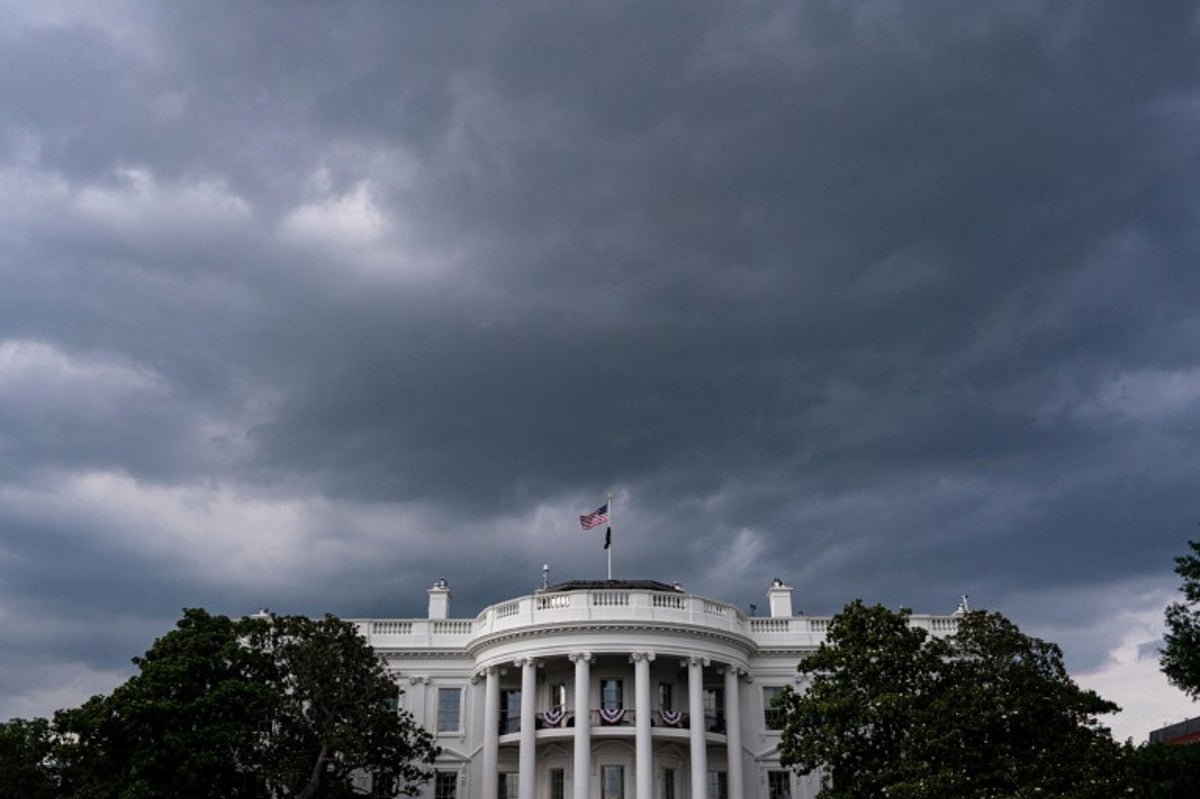
The White House's 2027 budget request again goes after the country's research system with cuts large enough to change what kind of science the federal government even tries to support. The proposal would slash the NSF and EPA by more than half and cut the NIH by 13 percent, while also barring federal money for some journal subscriptions and publishing charges. AI and quantum work still get protected lanes inside defense and energy spending, which tells you what the administration thinks science is for: near-term strategic competition, not a broad public research base. Congress blocked many similar cuts last year, so these numbers are not final. But budget requests this aggressive still matter because agencies start planning around them, universities rethink hiring and grant expectations, and whole fields end up spending months defending their existence instead of doing the work.
Presidents propose budgets, but Congress writes appropriations. Even so, requests this large shape grant planning, agency structure, and university expectations months before any final spending bill exists.
Hungary's April 12 election is no longer being covered like a ritual affirmation of Viktor Orban's rule. It now looks like a real race, with BBC-cited polling putting Tisza and Peter Magyar well ahead of Orban's Fidesz and AP finding young voters unusually energized by the chance to end a system they see as corrupt, tired, and closed. That does not mean Orban is finished. He still benefits from an electoral map his party helped shape, strong rural networks, and a media environment tilted in his favor. But the public mood has shifted from resignation to possibility, which is politically dangerous in itself. Orban built his European image on permanence, on the sense that he had already solved the problem of staying in office. Once voters stop believing that, every scandal, every economic frustration, and every clumsy campaign move starts to land harder.
Orban has ruled since 2010 and turned Hungary into the EU's main nationalist outlier, close to Donald Trump and unusually accommodating toward Russia. Magyar is a former insider whose rise became plausible once corruption fatigue and economic frustration reached past Budapest into the wider electorate.
At an AI security conference this week, Anthropic researcher Nicholas Carlini described using Claude Code to find multiple remotely exploitable Linux kernel flaws, including one in the NFS driver that had reportedly survived for 23 years. What is striking is not just the bug but the workflow. Carlini did not hand the model a tiny toy example. He pointed it at file after file in the kernel tree with a simple script and asked where the security holes were. That matters because it suggests modern coding agents are moving from autocomplete into real vulnerability discovery, including bugs that require protocol knowledge and an understanding of messy systems code. Security researchers will celebrate that. Maintainers and defenders should be less relaxed. If one skilled researcher can do this with an off-the-shelf agent, attackers will not wait politely for the tooling gap to stay on the good side forever.
The Linux kernel is one of the most scrutinized open-source codebases in the world, which is why the claim lands so hard. If an agent can still shake loose remotely exploitable memory bugs there, less-audited software is not in a comfortable position.
Claude Pro and Max subscriptions no longer cover use through OpenClaw and similar third-party agent harnesses, which means the people who had been treating a flat monthly plan like a cheap automation engine now have to pay overages or switch to API billing. Anthropic says these tools hit its systems inefficiently and were never what the bundled plans were designed to support. The users on the receiving end hear something simpler: the company let an ecosystem form around Claude, borrowed some of the ideas into its own products, and then closed the discounted route. Whether that last part is fair or not, the business direction is obvious. Anthropic wants high-intensity agent use metered, first-party, and capacity-aware. That may be defensible operationally. It is still a meaningful shift for developers who had made Claude the core of their outside tooling stack.
Anthropic had already tightened usage limits during busy periods. This move extends the same logic: keep subscription plans centered on Claude's own products and make external agent workloads pay by actual consumption.
A new report from the Institute of Development Studies says Chinese vendors and lenders have become central to the rollout of urban surveillance systems across African cities, with ZTE, Hikvision, and Huawei supplying cameras, command centers, and financing under "safe city" and "smart city" banners. The sales pitch is public safety. The concern, according to the report, is what happens after installation: weak legal oversight, broad state access to monitoring tools, and repeated use against opposition figures, activists, and peaceful protesters. That combination matters more than the hardware brand names alone. Surveillance technology is politically ordinary in many countries now; the real story is the package deal joining equipment, credit, and governance habits. Once a city adopts that package without firm rules on use, retention, and accountability, it does not just get more cameras. It gets a new default for how power watches public life.
Chinese "safe city" systems have been marketed abroad for years as bundled urban-management platforms. What is changing is the scale of financing and the growing documentation that systems sold for crime control can be repurposed for political monitoring where courts and privacy law are weak.
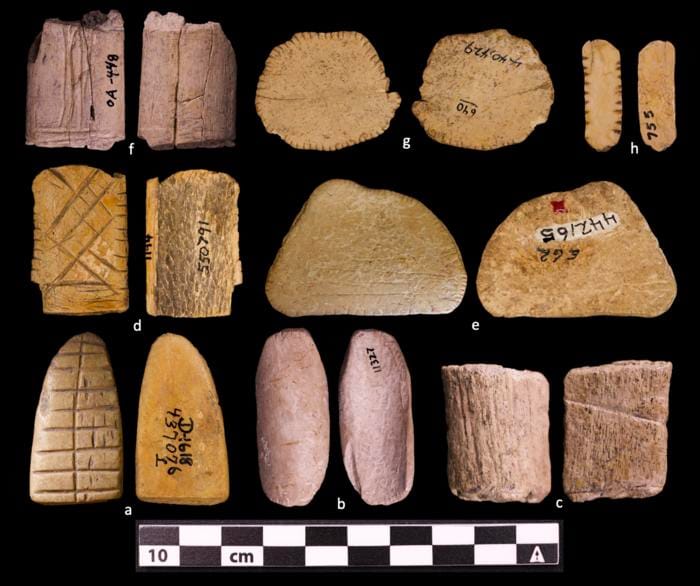
New archaeology work argues that Native American groups in western North America were using dice and other games of chance at least 12,000 years ago, thousands of years before the usual Old World timeline for the beginnings of gambling and probabilistic thinking. The study traced nearly 300 prehistoric gaming-related artifacts, especially two-sided objects known as binary lots, across sites in 12 states and linked them to a much wider tradition of scoring, turn-taking, and ceremonial play. The interesting claim is not that Ice Age hunter-gatherers were secretly doing formal probability theory. It is that people were already building social practices around controlled randomness, long before mathematicians gave that behavior a name. Once you frame it that way, gambling stops looking like a late byproduct of civilization and starts looking more like one of the early ways humans learned to organize uncertainty together.
The paper builds on museum collections and ethnographic records that had long suggested deep Indigenous gaming traditions. Its broader argument is historical as much as archaeological: scholars may have mistaken the written record for the beginning of the idea.
Murphy Campbell discovered that songs she had performed on YouTube had appeared on her Spotify profile in AI-generated form, with fake vocals and uploads she never authorized. Then the mess got worse. When she posted her own recordings of public-domain ballads to YouTube, someone else claimed the copyrights and the platform accepted the takedown claim anyway. That double failure is what makes the story stick. One side of the system is porous enough to let synthetic knockoffs attach themselves to a real artist's name; the other is rigid enough to credit the wrong claimant when the real performer objects. Campbell's case is small in scale, but it is a clean picture of what creators now face: identity spoofing, automated distribution, and copyright tools that are happy to move fast when the paperwork looks tidy and far less competent when the underlying facts are obvious to any human listener.
Campbell performs traditional material, which should make some of the ownership questions simpler, not harder. Instead the case shows how platform moderation and copyright automation can fail in opposite directions at the same time.