President Trump posted to Truth Social Tuesday morning that "a whole civilization will die tonight, never to be brought back again" as he gave Iran until 8 p.m. Eastern to cut a deal reopening the Strait of Hormuz. In follow-up statements, Trump specified the threat: every bridge in Iran will be "decimated," every power plant will be "burning, exploding and never to be used again." Iran's response has been defiant. President Pezeshkian said 14 million Iranians, including himself, have declared readiness to die in defense of their country. International law experts are flagging the threat to target civilian infrastructure as potentially violating war crimes statutes.
Trump escalated the war with Iran after the initial campaign phase stalled. The threat targets civilian infrastructure — power grids and bridges — rather than military sites, raising concerns among legal experts and international humanitarian organizations. The Strait of Hormuz, one of the world's critical chokepoints for oil shipping, is central to the demands.
The White House pushed back Tuesday against interpreting Trump's "whole civilization will die tonight" post as a nuclear threat. Vice President JD Vance said the warning was about conventional strikes on infrastructure, not atomic weapons. Critics and legal analysts have seized on the ambiguity of Trump's language — the phrase "whole civilization" coupled with the apocalyptic tone could reasonably be read as hinting at nuclear use, especially given the administration's willingness to make extreme statements. The clarification comes as human rights groups and Democratic lawmakers call the threat potentially genocidal.
Trump has hinted at nuclear weapons use against Iran before, including comments about "taking out" Iran's nuclear program "one way or another." The White House's effort to reframe the latest threat as purely conventional reflects the administration's tension between using extreme rhetoric for leverage and avoiding explicit commitment to nuclear escalation.
During a historic seven-hour lunar flyby, Artemis II astronauts Reid Wiseman, Victor Glover, Christina Koch, and Jeremy Hansen captured images and video of the moon's far side — terrain unseen by the crew on prior moon missions. The far side reveals ancient lava flows, impact craters, and surface ridges that have formed over billions of years. The crew also witnessed and photographed an "Earthset" and "Earthrise" — the planet dipping below and rising above the lunar horizon — recreating the iconic 1968 Apollo 8 photograph from the opposite side of the moon. As the spacecraft emerged from behind the moon, the crew witnessed a nearly hour-long solar eclipse and captured images of the Sun's corona reflecting around the Moon's edge. The images are among the highest-quality views of Earth and the Moon ever taken from crewed spaceflight.
Artemis II set a new distance record for crewed spaceflight: 252,756 miles from Earth, exceeding Apollo 13's 1970 record by 4,111 miles. The mission wraps up a seven-day lunar loop designed to test the Orion spacecraft and life support systems before a planned crewed lunar landing. The far-side photographs fill a gap in lunar science — no crewed mission since Apollo 8 has seen this terrain up close.
In a unanimous decision, the Supreme Court ruled March 25 that internet service providers cannot be held liable for copyright infringement by their users simply because they provide the infrastructure through which piracy occurs. Cox Communications had faced a $1 billion verdict from the music industry for allegedly failing to kick repeat infringers off its network. The Court held that contributory copyright liability requires either active inducement of infringement or offering a service "not capable of substantial or commercially significant noninfringing uses." The ruling represents a significant win for ISPs and a loss for the $17.7 billion U.S. recorded music industry, which has long sought to hold network providers responsible for piracy on their pipes.
Copyright holders have pushed ISPs to police their networks aggressively for decades. The Court's decision clarifies that mere knowledge of infringement and ability to stop it does not trigger liability — the ISP must actively encourage or be specifically tailored to facilitate infringement. This sets precedent for how platforms and service providers are held accountable in the broader digital ecosystem.
Chemistry researchers at MIT published a technique for seamlessly moving alcohol functional groups from one position to an adjacent site on a molecule, effectively "editing" a molecule's structure without rebuilding it from scratch. The process uses a light-sensitive catalyst called decatungstate to trigger a controlled migration while preserving the molecule's precise three-dimensional shape. The breakthrough, led by Professor Alison Wendlandt, matters because it lets chemists fine-tune near-complete drug molecules at the final stages of synthesis, a notoriously difficult challenge. Late-stage modifications are where many drug discovery efforts hit dead ends — making this a potentially significant shortcut for pharmaceutical development.
Drug molecules are typically built step-by-step from simple starting materials, with each step adding complexity and requiring careful planning to avoid blocking later steps. The ability to rearrange functional groups late in the process opens new pathways to molecules that would be impossibly difficult to synthesize using traditional routes. The technique was published in Nature.
The Trump administration announced Tuesday that it will rewrite federal rules governing how colleges are accredited, effectively giving Washington leverage to reshape higher education. Proposed changes would require accreditors to evaluate colleges on return on investment, completion rates, employment placement, and state licensing exam success — tying institutional funding to measurable job outcomes. The rules would also fast-track federal recognition for new accrediting bodies like the Commission for Public Higher Education, a DeSantis-backed organization created partly to audit colleges for DEI initiatives. An advisory committee will meet April 13–17 and May 18–22 to consider the proposals.
College accreditation has traditionally been a peer-review process carried out by regional and specialized bodies independent of government. The shift would politicize accreditation by tying colleges' federal funding eligibility to White House priorities, effectively making accreditors enforc administrative policy. Critics worry the changes will steer colleges away from non-technical education and toward narrower workforce preparation.
Anthropic accidentally exposed details of an unreleased AI model called Claude Mythos through a misconfigured content management system in late March. The leaked draft describes a model with capabilities far exceeding any prior system, particularly in automated cybersecurity tasks. Anthropic's own description was blunt: a single Mythos agent could scan for and exploit vulnerabilities faster than "hundreds of human hackers." The company is currently running limited testing with select cybersecurity partners and government organizations, with broader release expected later in 2026. The irony isn't lost on security researchers — the company famous for AI safety published its own safety concerns about its next model through a security misconfiguration.
The leak came after Anthropic misconfigured an internal content repository, exposing nearly 3,000 documents including internal strategy memos and unreleased research. The Mythos model represents a step change in reasoning, coding, and autonomous system control — capabilities that dual-use security researchers worry could be weaponized for cyberattacks if misused. Anthropic's disclosure of the model's cybersecurity risks suggests the company is aware of both the benefits and dangers of releasing such a capable system.
The United Nations posted Tuesday on social media: "Even wars have rules. The Geneva Conventions protect civilians in conflict and help ensure assistance reaches those in need, without discrimination." The post was timed to Trump's threats to destroy Iran's power plants and bridges — civilian infrastructure that international humanitarian law protects. The post did not name Trump or the US but was clearly a response to the rhetoric escalation. The Geneva Conventions, ratified by nearly every nation including the US, explicitly prohibit attacking civilian objects unless they make an effective contribution to military action and their destruction offers a definite military advantage.
The Fourth Geneva Convention and its protocols define protections for civilians in armed conflict. The rules were written after World War II to prevent the total-war targeting of cities and civilian populations that characterized that conflict. Targeting power grids and bridges used by civilians is generally prohibited unless they are military-dual-use facilities and their destruction provides clear military advantage.
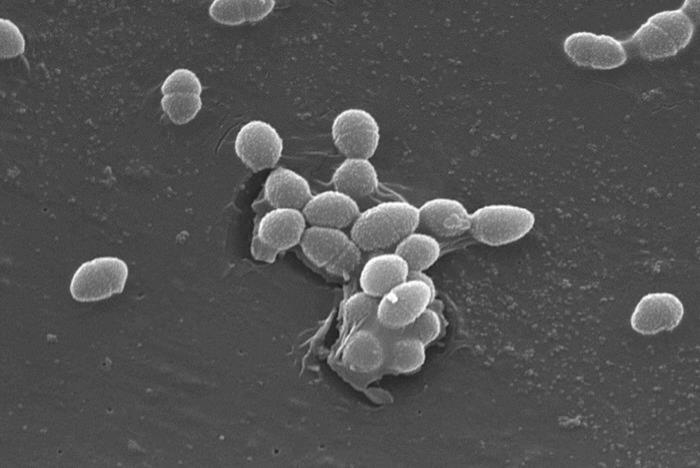
Researchers at MIT discovered how a common bacterium called Enterococcus faecalis suppresses the body's early-warning immune system in wounds, allowing infections to become chronic and hard to treat. The bacterium secretes compounds that silence immune cell communication — effectively muting the alarm system that normally triggers a strong immune response. Once this happens, the wound environment becomes permissive for other bacteria to colonize. The findings explain why some wound infections persist for months or years despite antibiotic treatment and the body's best efforts to heal. The research, published in the Proceedings of the National Academy of Sciences, opens a potential avenue for new treatments that could restore immune signaling and help patients clear stubborn infections.
Wound infections are a leading cause of hospital readmission and complicate recovery after surgery or injury. Antibiotic resistance is increasing, making immune-based treatments more important. Understanding how bacteria actively suppress immunity could lead to therapies that work alongside — rather than instead of — antibiotics.
Bill Ackman's investment firm Pershing Square made an unsolicited $64 billion cash-and-stock offer to acquire Universal Music Group, the world's largest music label controlling roughly 30% of the global recorded music market. Universal, which owns Taylor Swift's back catalog, Sabrina Carpenter, and thousands of other artists, rejected the offer as undervaluing the company. Ackman has been critical of Universal's management, particularly CEO Lucian Grainge, arguing the company has underperformed relative to its assets. The bid puts pressure on Universal to either find a higher offer or restructure its operations to convince shareholders the company is worth more than Ackman's proposal.
The music industry has consolidated significantly over the past two decades, with three major labels — Universal, Sony, and Warner — controlling roughly 80% of global recorded music. Ackman's bid suggests he sees undervalued assets or management failures at Universal, or both. The offer could trigger a bidding war if other firms see opportunity.