Hours after a US-Iran ceasefire was announced, Israel launched over 100 strikes on Lebanon in 10 minutes, hitting southern Beirut, southern Lebanon, and the Bekaa Valley. The strikes killed at least 89 people and wounded 700. Israeli officials said they targeted Hezbollah missile launchers and command centers, though media reports suggested the operation aimed at Hezbollah's leader, Naim Qassem. The Israeli government rejected the idea that the ceasefire extends to Lebanon, signaling its intention to press the offensive against the Iran-backed militia despite the broader truce.
Israel has waged a major offensive against Hezbollah in Lebanon for over a month, escalating sharply from earlier clashes. The group is backed by Iran and designated a terrorist organization by the US and Israel, making Lebanon a proxy battleground in a larger regional conflict.
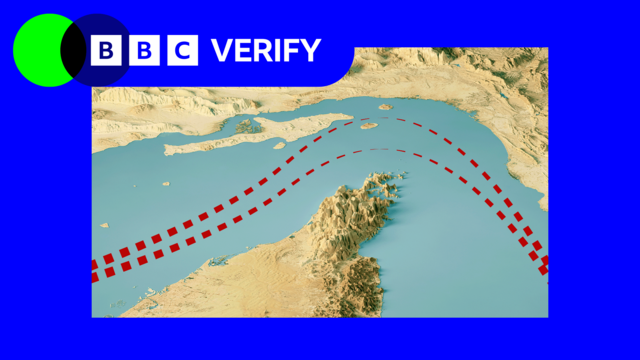
The US and Iran agreed to a two-week ceasefire after a month of escalating conflict. Under the deal, Iran pledges to allow safe passage through the Strait of Hormuz, the waterway through which roughly 20% of the world's oil supply passes. The ceasefire was negotiated under a Trump deadline—he'd threatened strikes on Iran unless it agreed by 8 p.m. on April 7. Pakistan, France, and Egypt mediated the talks. Only a handful of ships have crossed the strait since the announcement, suggesting lingering uncertainty among shippers about whether the situation will hold.
The conflict began in early March after Israel targeted Iranian military installations, prompting Iran to launch retaliatory strikes. The escalation has disrupted global shipping and commodity markets for over a month. The ceasefire is conditional and could collapse if either side views the other as breaking terms.
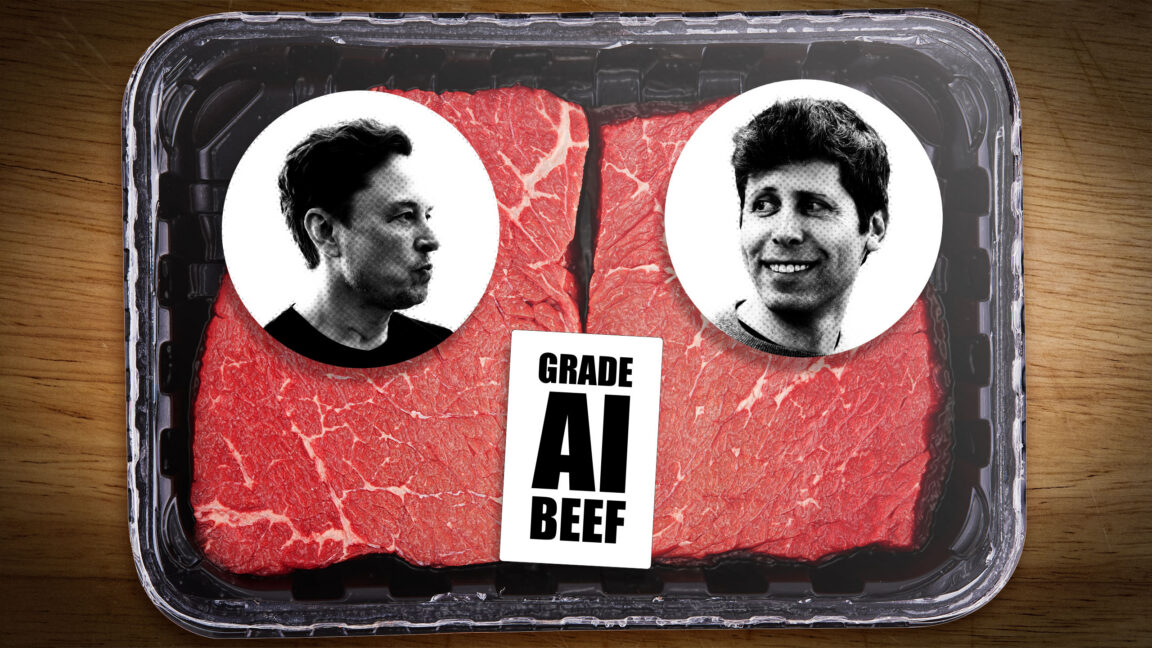
Elon Musk amended his lawsuit against OpenAI, asking that any damages awarded go to the company's nonprofit arm instead of to him personally. His legal team had sought up to $134 billion in damages, claiming the AI company defrauded him by abandoning its nonprofit mission. The shift in strategy could help Musk's credibility in court—he tweeted in March that he'd donate any legal victory to charity anyway. Jury selection begins April 27 in federal court in Oakland. The trial is expected to run through May.
Musk sued in 2024, claiming OpenAI and CEO Sam Altman deceived him into donating $38 million with promises the organization would remain a nonprofit. OpenAI converted to a for-profit structure backed by Microsoft, which Musk alleges violated his original intentions. The lawsuit also seeks to remove Altman from leadership.
Meta launched Muse Spark, its first major AI model from a newly restructured superintelligence team after Mark Zuckerberg invested billions in AI overhaul. The model accepts voice, text, and image inputs but outputs text only. It offers two reasoning modes—Instant for quick answers and Thinking for deeper analysis—plus a Contemplating mode that runs multiple AI agents in parallel for harder problems. Muse Spark is already available in Meta's AI app and website; the company plans to integrate it into Facebook, Instagram, WhatsApp, and Messenger in coming weeks. On some tasks like image understanding, it matches the latest models from other labs, though it still lags in coding.
Meta has been playing catch-up in AI for years while OpenAI and Google dominated. The company's recent reorganization aims to refocus on AI as a core business, with the restructured superintelligence team working to build models competitive with leading labs. This launch signals Meta's bet that it can compete again.
Iran is charging tankers roughly $1 per barrel to transit the Strait of Hormuz during the ceasefire, with payments collected in cryptocurrency. Tanker crews must email cargo details to Iranian authorities, who calculate the fee based on cargo weight and bill shippers in bitcoin or other digital assets. Iran says the system lets it monitor what passes through the strait to prevent weapons smuggling. The cryptocurrency approach sidesteps international sanctions and US dollar-based financial channels. The move underscores Iran's pivot to crypto for commerce while raising security concerns for Western and Gulf shipping firms operating in the region.
Iran has used cryptocurrency for years to circumvent US sanctions, which restrict its access to traditional banking. The toll system appears designed both to generate revenue and to tighten control over shipping through the strait during a fragile ceasefire.
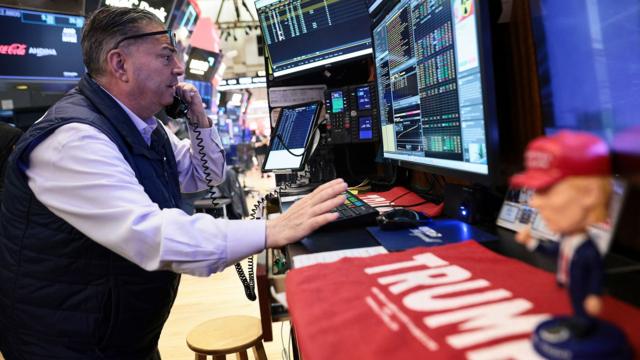
News of the ceasefire triggered a sharp rally across markets. WTI crude, the US oil benchmark, dropped 18% to $92 a barrel. Brent crude fell nearly 17% to $91. Stocks surged alongside: the Dow jumped 1,374 points (2.95%), the S&P 500 gained 2.56%, and the tech-heavy Nasdaq rose 3.46%. Yet oil remains far above pre-war levels. Before the conflict started in early March, WTI closed at $67. The relief reflects hope that tankers will resume crossing the strait, though shipping companies remain hesitant—only a few vessels have transited since the ceasefire was announced.
The month-long conflict disrupted crude shipments through the Strait of Hormuz, sending oil to its highest levels in years and sparking inflation fears globally. A lasting ceasefire could ease supply pressures, but the fragility of the deal means upside risk remains. Shipping uncertainty alone could keep prices elevated for weeks.
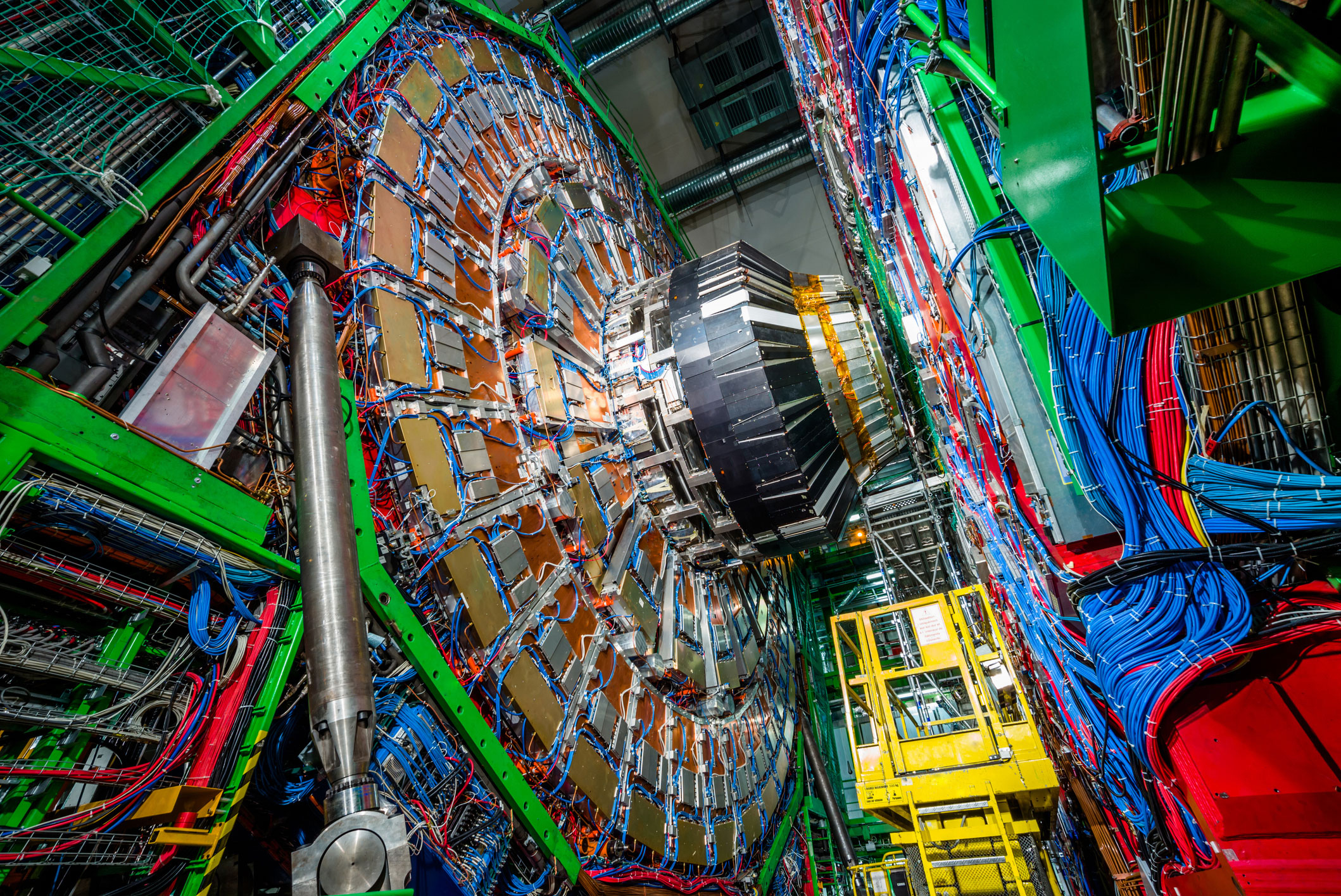
An international team of physicists, including researchers from MIT, reported the most precise measurement yet of the W boson's mass: 80360.2 ± 9.9 megaelectron volts. The result matches the Standard Model's predictions, resolving tension from a 2022 anomaly. That earlier measurement suggested the particle was heavier than theory predicted, raising hopes of discovering unknown particles or forces. The new measurement, from the CMS experiment analyzing billions of proton-proton collisions at CERN, identified 100 million W boson events. The finding effectively closes the door on the 2022 anomaly—at least for now.
The W boson is a fundamental force-carrying particle responsible for weak nuclear interactions. Precision measurements of particle masses test whether the Standard Model—physicists' best-fit rulebook for matter and forces—holds up. Anomalies like the 2022 result hint at undiscovered physics.
A whistleblower alleged that a former employee of Elon Musk's Department of Government Efficiency (DOGE) downloaded records for over 500 million Americans from the Social Security Administration and stored them on a personal thumb drive. The databases, called Numident and the Master Death File, contain Social Security numbers, dates of birth, citizenship, race, and parents' names for living and deceased Americans. The employee may still possess the data and have remote access to manipulate millions of records. In January, the Trump administration admitted DOGE shared Social Security data on Cloudflare, an unauthorized service, and attempted to hand records on about 1,000 Americans to an unnamed advocacy group seeking to overturn election results.
Social Security numbers are critical identifiers for Americans. A breach of this scale could enable identity theft, fraud, and electoral manipulation. The Social Security Administration's inspector general is investigating. House Democrats expanded their own inquiry in February after the whistleblower allegations surfaced.
Large language models like ChatGPT and Claude were trained on enormous amounts of human text—much of it academic work created by scholars. Yet universities and researchers saw no compensation or even acknowledgment as their work powered billions of dollars in AI company valuations. The argument for payment is straightforward: the expert knowledge in academic papers, textbooks, and research formed the foundation of modern AI. Without it, the models wouldn't work. Some AI leaders, notably Anthropic CEO Dario Amodei, have warned that if AI only enriches companies and investors while scholars go unpaid, America faces a rebellion. Congress is starting to take notice, with lawmakers pushing tech companies to be transparent about training data sources and compensate creators.
Higher education funding has been squeezed for decades. Universities and faculty researchers see AI's reliance on their work—often publicly funded through grants—as one more instance of corporations extracting value from the academy. The debate mirrors ongoing fights over training data rights across media, music, and publishing.
Physicists have ruled out the existence of the sterile neutrino, a hypothetical fourth type of neutrino that had tantalized researchers for years. The MicroBooNE experiment at Fermilab found no evidence for the particle. The KATRIN experiment, using ultra-precise measurements of tritium decay, also found nothing. These results contradict earlier experimental anomalies that hinted the sterile neutrino might exist. For decades, some particle physicists hoped sterile neutrinos could explain mysteries like dark matter or the mass of ordinary neutrinos. Their absence, confirmed by high-precision measurements, forces physicists back to other explanations and suggests the Standard Model may be more complete than anomalies suggested.
Neutrinos are ghostly particles produced in stars and radioactive decay. The three known types barely interact with matter, making them notoriously difficult to detect. Sterile neutrinos, if they existed, would interact only through gravity—even more elusive. Their non-detection doesn't rule out other undiscovered physics.