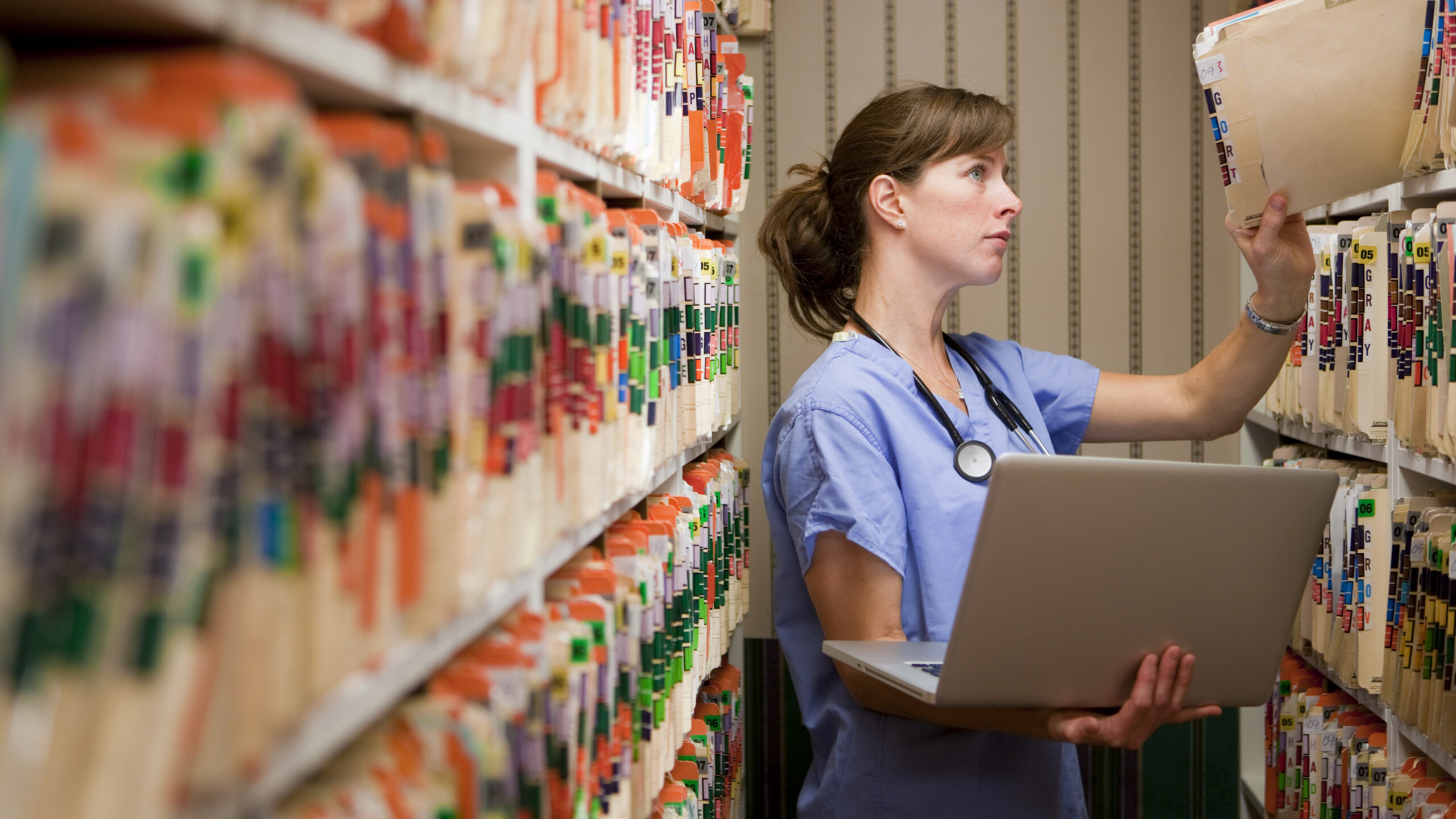
The Trump administration wants health insurers to send the federal government detailed medical data on more than 8 million federal workers, retirees, and family members every month, according to a proposal surfaced by KFF and reviewed by Ars. The Office of Personnel Management says it needs claims data, pharmacy records, encounter data, provider information, and related files to oversee federal health benefits. Privacy lawyers say the request is breathtakingly broad. In practice it could expose filled prescriptions, diagnoses, treatment histories, doctors' notes, and visit summaries, all tied to identifiable people. OPM argues that HIPAA allows the collection and says the data would help it monitor plan quality and cost. Insurers are pushing back. CVS Health told regulators the proposal goes far beyond normal audit demands and lacks clear legal limits, targeted scope, or obvious consumer protections.
The federal employee health program is one of the country's largest employer-backed insurance systems. OPM already receives some audit and pricing data, but this proposal would move from selective oversight to routine bulk collection of sensitive personal health records.
US agencies say an Iranian-affiliated hacking group has been disrupting industrial sites across the country since at least March, with victims in water and wastewater systems, energy, and local government facilities. A joint advisory from the FBI, CISA, NSA, EPA, DOE, and US Cyber Command says the attackers are going after internet-exposed PLCs, the small industrial computers that tell pumps, valves, and other machinery what to do. Some victims suffered real operating outages and financial losses. The campaign does not appear to rely on some exotic zero-day chain. Researchers say the hackers are often getting in through exposed Rockwell engineering tools, then tampering with project files and the data shown to human operators. That matters because it lowers the bar for copycats. The warning lands as the US-Iran war keeps spilling into cyber space, where retaliation is cheaper, faster, and much harder to contain.
Iran-linked groups have targeted US industrial systems before, but this advisory says the current activity is broader and more operational. The risk is highest where old control gear was left directly reachable from the public internet.
A federal appeals court in Washington refused to halt, for now, the Pentagon's designation of Anthropic as a supply chain risk, extending one of the strangest fights in the AI boom. The company has argued that the government used a national-security procurement tool to punish it for opposing military uses such as domestic surveillance and fully autonomous weapons. Earlier, a California judge blocked broader parts of the administration's campaign against Anthropic, saying the government likely overstepped. The D.C. panel still declined emergency relief, even while acknowledging the company could face business harm if the label remains in place. That leaves Anthropic in a split-screen posture: some of the crackdown is frozen, but the stigma of the designation itself is still hanging there while the case moves ahead. The practical stakes are large because contractors may avoid a company that the Pentagon has publicly tagged as risky, even before final court rulings arrive.
The dispute began after Anthropic resisted government pressure to loosen restrictions on how Claude could be used in defense work. A supply-chain-risk label is usually associated with keeping sensitive government systems away from suspect vendors, not with a public fight over AI policy speech.
After years of anger from farmers who could not fully fix machines they had already bought, John Deere agreed to a class-action settlement worth $99 million and a 10-year commitment to provide diagnostic, maintenance, and repair software tools to third parties. The money would go to farms and individuals who paid Deere's authorized dealers for large equipment repairs since January 2018, with court papers saying plaintiffs may recover 26% to 53% of alleged overcharges. The bigger change is probably the tools. Farmers have spent years hunting for workarounds, old equipment, or outright hacks because modern tractors could be stranded by locked-down software as much as by broken hardware. Deere says the settlement is not an admission of wrongdoing, and a judge still has to approve it. Even so, this looks like the clearest legal step yet in the US right to repair fight, with implications well beyond agriculture.
Manufacturers have increasingly tied repairs to proprietary software, tools, and dealer networks. In farming, that can be brutal because breakdowns during planting or harvest turn repair delays directly into lost yield and lost income.
China's banking squeeze is no longer just a rumor passed around trading desks. It is showing up in annual reports. SCMP reports that more lenders are reclaiming bonuses, deferring pay, trimming headcount, and cutting salaries even as profits recover unevenly across the sector. Bank of China alone recovered 47.18 million yuan from 4,630 employees in 2025, according to the report, and other banks are taking similar steps as Beijing keeps pressing the financial sector on discipline, risk control, and "common prosperity" politics. The story is less about one ugly earnings cycle than about a changed status hierarchy. For years, finance jobs in China signaled elite pay and soft landing spots for ambitious graduates. Now banks are being told to look less like bonus machines and more like sober policy instruments. That will matter for hiring, morale, and maybe even where top quantitative talent decides to go next.
Chinese finance salaries have been under political pressure for several years as Beijing tried to curb excess pay and reassert control over leverage, property exposure, and elite compensation. The new disclosures show that campaign has not faded.
Meta's new Superintelligence Lab has finally shipped something public: a model called Muse Spark that the company is starting to thread into its AI app and website. Ars says the system takes voice, text, and image inputs, but still answers in text, and Meta is pitching separate fast and slow reasoning modes for simple versus harder questions. On paper, the launch is less important for some single benchmark than for what it says about Meta's internal reset. Mark Zuckerberg spent the past year reshuffling teams, spending heavily, and trying to convince the market that Meta was not going to drift into second-tier status behind OpenAI, Google, and Anthropic. Muse Spark does not end that race. Even Meta admits it still lags on coding and other agent-style tasks. But it does show that the company's rebuild produced an actual frontier product instead of another promise deck.
Meta's earlier open-weight and consumer AI efforts drew plenty of attention, but its product story had started to feel scattered. This model is the first public release framed as the work of the retooled group meant to chase general-purpose frontier systems.
A team in China says it transplanted light-activated, plant-inspired nanoparticles into diseased animal tissue and got damaged cells working better again, a result that sounds like science fiction until you read the mechanism. The particles are meant to act a bit like tiny photosynthetic helpers: under light, they improve local energy production and ease the metabolic stress that comes with degeneration. SCMP says the approach was tested in rats and rabbits with degenerative conditions, where the treatment improved cell interactions and recovery. The group also paired the system with implantable wireless light sources to get around the obvious problem that deep tissue is not exactly sunlit. This is still far from a clinical therapy for people, and animal recoveries often fail to scale into medicine. Still, it is a genuinely odd and interesting direction - borrowing one of biology's most basic energy tricks and trying to smuggle a version of it into animal cells.
The work was reported as linked to researchers at Zhejiang University School of Medicine and a paper in Nature Communications. The big challenge in this kind of bioengineering is not just making the idea work once, but doing it safely and controllably inside living tissue over time.
The Artemis II crew is on the last leg home after its lunar flyby, and the case they are making is not that astronauts beat robots at collecting data point for data point. It is that people notice things, frame stories, and create public meaning in a way machines don't. The four astronauts told BBC they were returning with "so many more pictures" and "so many more stories" as Orion lines up for its April 10 splashdown. Scientific American has been following the same mission from the technical side, including the free-return path and the work NASA has put into re-entry. The mission did not land on the moon. It was a flyby. But that is part of why this leg matters: Artemis still has to prove it can run complex crewed deep-space missions cleanly before anyone starts betting on a lunar base as more than a PowerPoint ambition.
Artemis II is NASA's first crewed mission around the moon since Apollo 17 in 1972. The program's next major test is Artemis III, which is supposed to attempt a landing after years of schedule slips and hardware pressure.
One of the most common stories people tell about banking crises is also one of the most flattering to banks: that a basically healthy institution gets destroyed by panic, rumor, and bad luck. Emil Verner at MIT says the historical record points somewhere harsher. Looking across US banking data from 1863 to 2024, and across 46 countries over nearly a century and a half, he and his co-authors find that failed banks were usually already weak. Runs were often the last violent stage of a deeper solvency problem, not a random stampede that toppled sound firms. That matters because it changes what kind of rescue policy makes sense. If the core problem is liquidity, central banks can lend through the panic. If the core problem is rotten assets and overextended balance sheets, cheap liquidity alone will not save the system. You have to deal with the bad bank, not just the frightened depositor.
Verner's work cuts against the simple movie version of a bank run. It suggests supervisors should spend less time assuming markets are irrational mobs and more time asking what risks, losses, and hidden fragilities were already sitting on the books.
LinkedIn is facing two lawsuits in California after reports that the site checks users' browsers for installed extensions and uses the results in its anti-scraping defenses. The company does not deny the scanning. Instead it says the practice is disclosed in its privacy policy and is aimed at detecting extensions that harvest member data without consent. Ars reports that the controversy blew up after BrowserGate, a project tied to an Estonian software firm already fighting LinkedIn in Europe, alleged that the company was probing for thousands of extensions and sharing data with outside security vendors. The lawsuits say LinkedIn crossed the line into covert browser surveillance and failed to tell users in any clear way what it was collecting, how it was linked to their sessions, or what third parties could see. LinkedIn says the allegations are exaggerated and driven by a scraper operator angry about having its accounts shut down.
Modern websites routinely inspect browsers for security signals, but the legal line gets blurry when those checks reveal software choices that can hint at politics, religion, health needs, or which business tools a company uses. That is what makes this fight more than a routine anti-bot dispute.