Israel said it will begin direct negotiations with Lebanon even as its air campaign there kept intensifying, a combination that looks less like a peace turn than a bid to bargain from a position of force. Netanyahu said the talks would address disarming Hezbollah and broader relations, and AP reported the first round could start next week at the State Department in Washington. The problem is the timing. Wednesday's strikes across Lebanon killed more than 300 people and wounded more than 1,100, according to Lebanese officials cited by AP, while Iran and several foreign governments said those attacks violate the ceasefire framework announced after the US-Iran war. Israel and the US say Lebanon was never covered by that deal. So the diplomacy is real, but so is the message behind it: Israel is talking to Beirut while showing it can still hit hard whenever it wants.
Israel and Hezbollah have been fighting across the border since 2023. A 2024 ceasefire reduced the war without really settling it, and the latest regional fighting reopened the question of whether Lebanon would be treated as part of a wider Iran-linked truce.
The California Supreme Court ordered Riverside County Sheriff Chad Bianco to stop his election-fraud investigation and preserve the ballots he already seized while the justices review whether the whole operation was lawful. The case has turned into one of the stranger election fights of the year because Bianco is not just a sheriff. He is also a Republican candidate for governor, and his office had taken more than 650,000 ballots from a November 2025 special election after allies claimed there was a counting discrepancy. AP says the seizure covered about 1,000 boxes of election material. State officials argue Bianco had no authority to take over election records this way and that the probe itself risks eroding trust in the count. The court's order does not end the dispute. It does stop him from pushing further while the state decides whether a sheriff can use criminal warrants to relitigate an election he does not like.
Bianco's probe grew out of a local complaint about a redistricting measure from late 2025. California Attorney General Rob Bonta and voting-rights groups challenged the seizure, arguing that sheriffs do not get to supersede election officials without a clear crime and a much tighter legal basis.
An unpublished CDC study found that the latest COVID vaccines cut urgent-care visits and hospitalizations by about half in otherwise healthy adults during the last respiratory season, according to Ars Technica, but the paper was stopped before public release by a Trump administration official. That matters because the fight is no longer over whether the shots work at all. It is over whether federal health agencies will publish results that still show a measurable payoff for annual vaccination, even when the benefit is not dramatic and the politics are ugly. Blocking the report does not make the underlying season disappear. It leaves doctors, patients, and local health departments with less official evidence while vaccine advice is already getting thinner and more politicized. For a virus that still sends people to the hospital every winter, the practical effect is simple: less public data, more room for ideology to stand in where routine surveillance used to be.
The CDC usually funnels this kind of seasonal effectiveness work through its public reporting and advisory process. When those releases are delayed or buried, it gets harder to update recommendations cleanly, especially for people deciding whether another annual booster is worth it.
After weeks of testimony in Manhattan, a jury is about to decide whether Live Nation-Ticketmaster crossed the line from annoying giant to illegal monopoly. The case now belongs to state attorneys general from more than 30 states, who kept pressing after the Justice Department settled its own claims. Their argument is that Ticketmaster used its grip on concert promotion and amphitheaters to pressure venues into sticking with its ticketing system, even when rivals offered better terms. The Verge says jurors heard about alleged threats to venues, internal chats about charging fans blindly for extras like parking, and expert testimony that Ticketmaster keeps about $2.30 more per ticket than a competitor. Live Nation says that story is selective and that it wins because the product is better. The verdict will not settle everything overnight, but a loss could reopen the question fans have been asking for years: whether the company is too integrated to be left intact.
The Justice Department and 40 states sued Live Nation-Ticketmaster in 2025, but the federal government later settled. The remaining state case still carries real weight because a verdict for the plaintiffs could support structural remedies, including a breakup fight that would drag on through appeals.
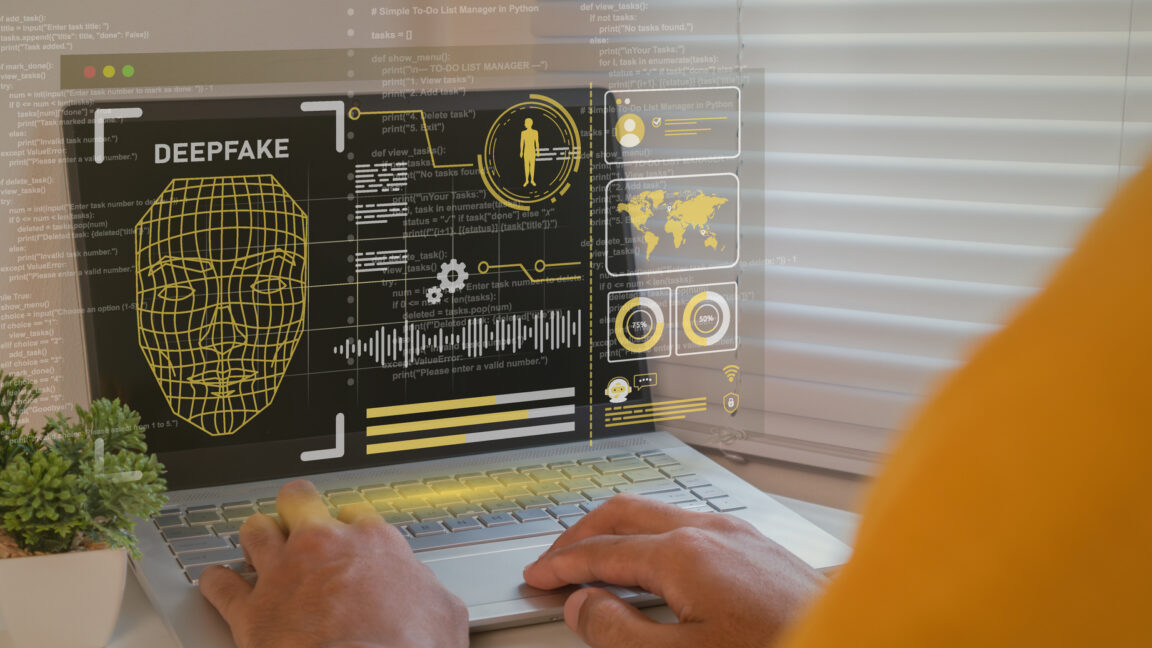
A Pennsylvania State Police corporal admitted in court that he used government databases, including the state's driver's-license photo system, to make more than 3,000 explicit AI images of women and girls who never consented to any of it. The case is ugly on two levels at once. First there is the obvious deepfake abuse. Then there is the route he used to do it: a law-enforcement officer repurposing routine state records into a private stash of synthetic sexual images. NBC10 Philadelphia reports that the victims included members of the public, public officials, and people connected to the state police itself. That turns a general fear about AI pornography into a narrower institutional warning. The danger is not just cheap image tools floating around the internet. It is also what happens when someone with trusted access to government data decides those records are raw material for abuse. Once that boundary breaks, ordinary ID systems stop feeling ordinary.
States have spent years expanding how license photos and other personal records can be searched inside government systems. This case points to a different risk: not just surveillance from above, but employees inside those systems turning administrative data into weaponized humiliation.
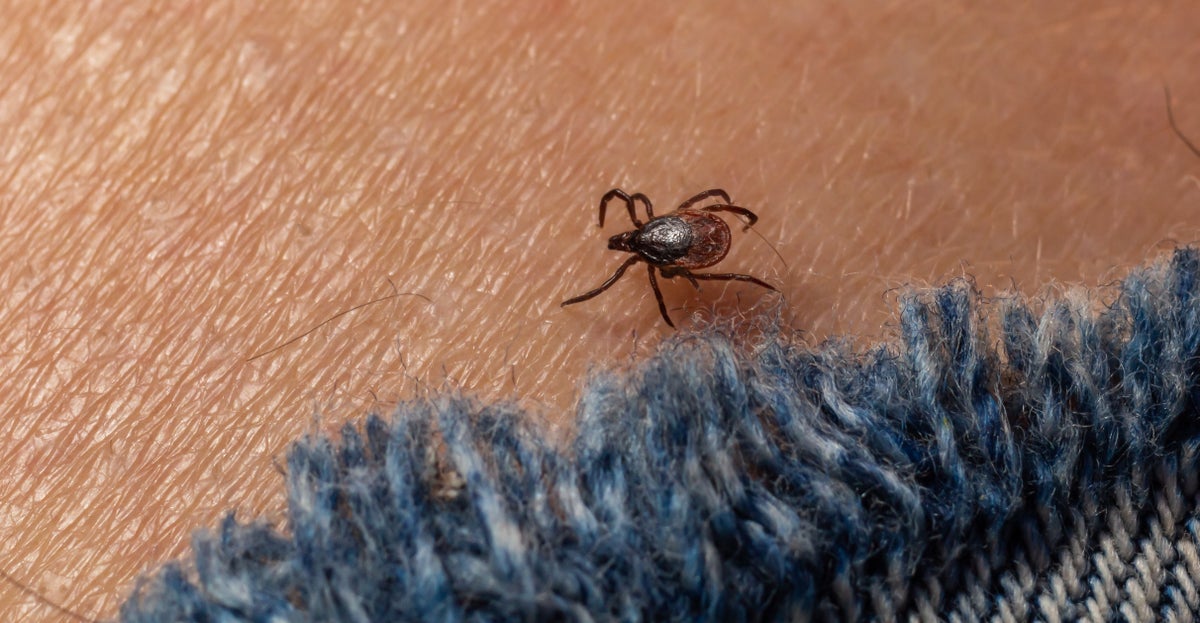
Lyme disease keeps moving into more places, and for the first time in years there is a real chance the United States could get a vaccine again. Scientific American says the candidate from Pfizer and Valneva looks strong enough to keep heading toward regulators after a large phase 3 trial, even though the study landed in the messy zone between a clear win and a statistical headache. The companies reported about 73% efficacy, but fewer people caught Lyme than expected, which made the main endpoint harder to nail down cleanly. That nuance matters to investors and regulators. It matters less to people in tick-heavy parts of the Northeast who have watched Lyme become an ordinary part of warm-weather risk. CDC estimates roughly 476,000 Americans are diagnosed and treated each year. If the shot gets approved, the real question will shift from whether one exists to who is urged to get it and how hard public health officials push.
The old Lyme vaccine for humans disappeared from the US market in 2002. Since then tick habitat has expanded, cases have climbed, and prevention has mostly meant repellents, clothing, yard management, and catching infections early enough to treat them before complications set in.
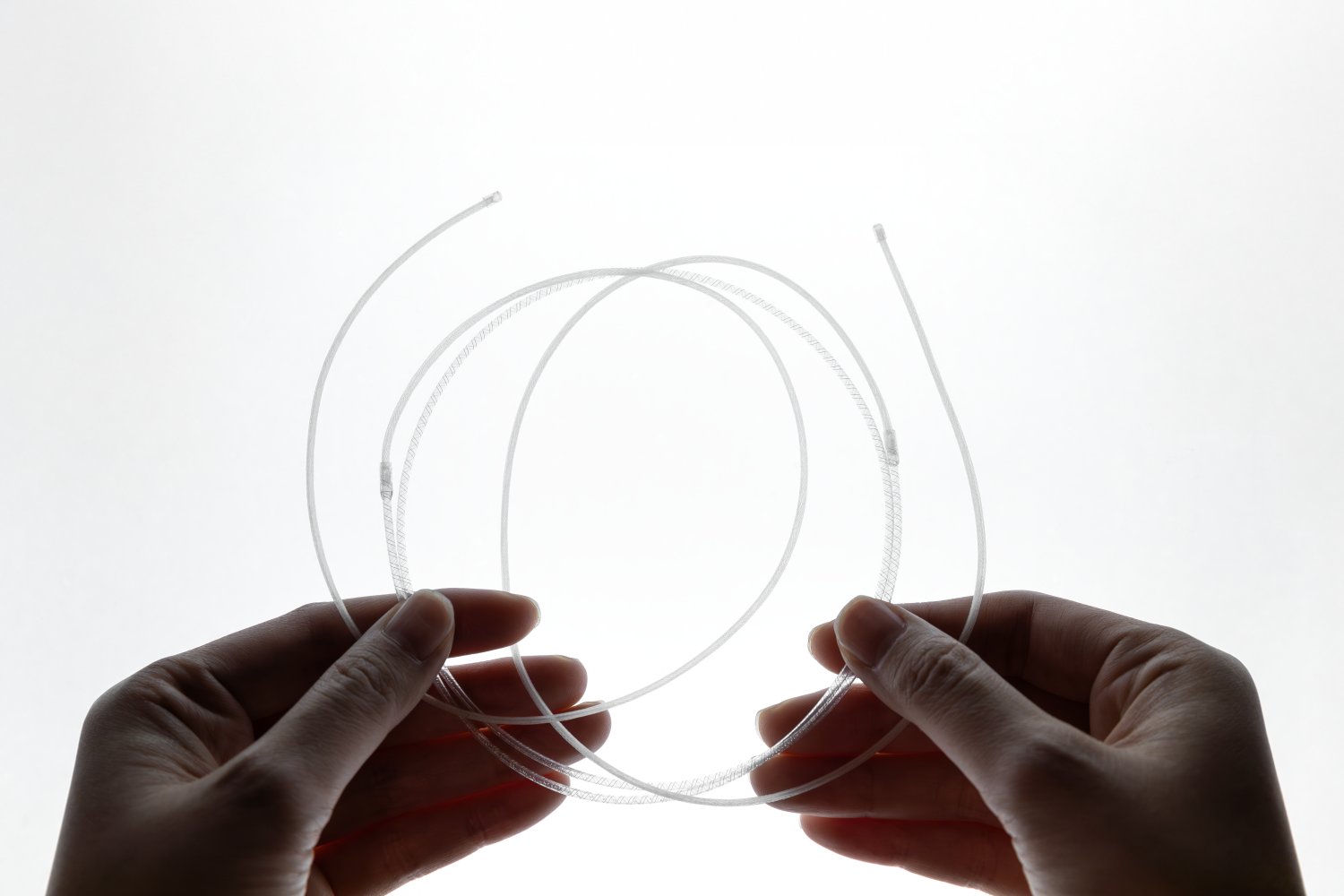
Researchers at MIT's Media Lab and Politecnico di Bari built artificial muscle fibers that are quiet, lightweight, and self-contained enough to feel more like a useful robot part than a lab demo that needs a cart of support hardware nearby. The idea is to weave tiny electrically driven pumps together with soft fluidic actuators so the system can generate pressure inside the fiber itself instead of relying on heavy external motors and tubing. MIT says the team showed versions that launched objects in 0.2 seconds, lifted 4 kilograms, and powered a robotic arm gentle enough for a handshake. That combination is the point. Soft robotics has never lacked cool motions; it has lacked practical packaging. If the actuation, pumping, and flexibility can all live inside something roughly fiber-shaped, prosthetics and wearable assistive devices start looking a lot less clumsy. Not solved. But much closer to something you'd actually want touching a human body.
Traditional soft robotic systems often need bulky compressors, pumps, or motors off to the side. That makes them hard to wear and hard to scale down. The new work tries to collapse the plumbing and the muscle into the same physical structure.
Beijing has created a new department inside SASAC to watch over state-owned companies' overseas assets and investments, another sign that China's outbound push is not being abandoned but pulled onto a shorter political leash. On paper this is about guidance and risk control. In practice it tells big state firms that foreign expansion now sits inside a more tense geopolitical frame than it did a few years ago. Chinese companies still want growth abroad, especially in energy, logistics, and industrial supply chains. The state still wants that too. What has changed is the margin for freelancing. A deal that once looked merely commercial can now carry sanctions risk, export-control exposure, or diplomatic blowback. So this is not a retreat from going global. It is a reminder that when a Chinese state firm buys, builds, or finances something overseas, Beijing increasingly wants a cleaner line of sight on the political consequences as well as the balance-sheet ones.
SASAC already supervises China's central state-owned enterprises. The new overseas-focused office suggests the leadership wants tighter visibility into cross-border projects at a moment when trade restrictions, sanctions, and strategic rivalry can all scramble a once-routine investment plan.
Public higher education got more state and local money in fiscal 2025, but not enough to keep pace with students returning. The new State Higher Education Finance report says inflation-adjusted appropriations rose 2.6% to $130.7 billion while full-time-equivalent enrollment climbed 3.6% to 10.8 million. That sounds healthy until you divide one by the other. Per-student public support fell 1%, from $12,205 to $12,082, the first drop since 2012. That does not mean colleges are back in Great Recession free fall. Funding per student is still above 2008 levels after inflation. But it is a warning that the long post-pandemic recovery story can get shakier fast if enrollment rebounds before legislatures adjust. The pressure lands most directly on public campuses that cannot print prestige or giant endowments on demand. More students walking through the door is supposed to be good news. It becomes a budget problem when the money follows too slowly.
State support per student cratered after the 2008 financial crisis and took years to rebuild. The new dip is small, but 24 states still fund public higher education below their pre-recession level, which leaves little cushion if revenue weakens or enrollment keeps rising.
Most AI compression tricks come late. You train a large model, pay the compute bill, and only then start cutting. MIT researchers want to move that surgery into training itself. Their method, CompreSSM, watches a state-space model early in training, figures out which internal dimensions are actually carrying useful signal, and discards the rest after roughly the first 10% of the run. From there the smaller model keeps learning at the speed and cost of a leaner system. MIT says compressed versions trained up to 1.5 times faster while keeping nearly the same accuracy on benchmark tasks, and a model cut to about a quarter of its original state size still beat a small model trained from scratch. That is the interesting part. This is not just pruning for deployment. It changes the economics of experimentation itself, especially for labs that want frontier-ish behavior without needing a frontier-sized training budget every single time.
The work targets state-space models, an alternative architecture now used for some language, audio, and robotics tasks. If those models can shrink themselves during training, researchers may get a cheaper path to capable systems without the usual train-big-then-prune cycle.