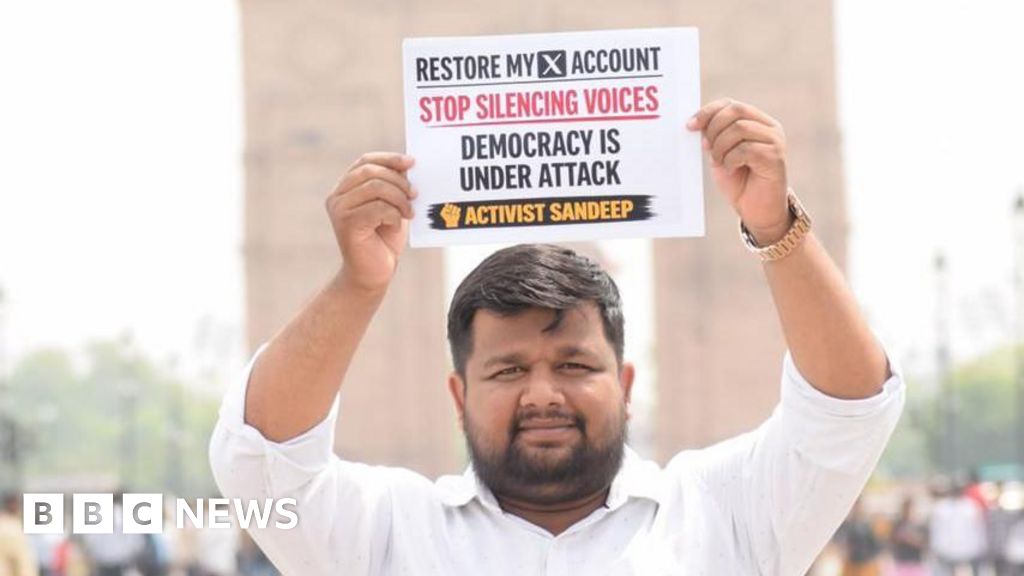
India's government has proposed new rules that would extend its online content regime far beyond registered news outlets and into the feeds of ordinary users who post about news and politics. The draft from the Ministry of Electronics and Information Technology would fold podcasters, influencers, and other "users who are not publishers" into the same code of ethics that already governs digital news publishers. Platforms would have to comply with government orders if they want to keep the legal shield that protects them from liability for user posts. Critics say that turns a censorship system that was already aggressive into something broader and faster, especially after India earlier this year cut the compliance window for blocking orders from 36 hours to three. The government says it is fighting fake news, hate speech, and deepfakes. Independent creators hear something else: a warning that political satire and criticism will get even riskier to post.
India's IT rules have expanded in stages since 2021. A 2025 change strengthened the government's centralized takedown portal, and an early-2026 amendment sharply shortened how long platforms have to obey blocking orders.
The postwar arrangement that Donald Trump has been trying to sell as a ceasefire with Iran already looks less like a clean diplomatic reset than a stack of contradictory side deals. Trump accused Tehran of doing a "very poor job" on the Strait of Hormuz after reports that Iran was threatening shipping again and possibly charging transit fees through a waterway that normally carries about a fifth of the world's oil and LNG trade. At the same time, the Lebanon front remains unsettled. Iranian officials and Pakistani mediators had said Lebanon was included in the ceasefire, while US and Israeli officials said it was not, and Israeli strikes on Hezbollah targets continued after that argument broke into public view. Netanyahu now says direct Israel-Lebanon talks will start in Washington next week, focused on disarming Hezbollah and exploring peaceful relations. That is movement, but it is movement inside a deal whose basic terms still seem disputed.
The confusion matters because Lebanon was the second active front in the wider Iran-Israel war. If the parties do not even agree on whether that front was covered, every new strike becomes a fight over whether the ceasefire ever really existed.
Vladimir Putin says Russian forces will halt fire from 16:00 local time on Saturday, April 11, through Orthodox Easter Sunday, framing the pause as a humanitarian gesture and daring Ukraine to "follow the example" of Russia. Kyiv did not reject it. Volodymyr Zelensky said Ukraine was ready for symmetrical steps and repeated his call for a real ceasefire that could survive the holiday weekend. The catch is credibility. Ukraine has heard versions of this before. Moscow earlier claimed an "energy truce" that quickly fell apart, and a unilateral halt around last year's Victory Day commemorations was followed by hundreds of alleged violations. So the announcement offers two different readings at once: tired soldiers and civilians may get a brief breathing space, but the political theatre is obvious, too. Russia gets to seize the initiative after ignoring earlier Ukrainian appeals for a holiday pause, while Ukraine has to decide whether treating the offer seriously makes it look hopeful or naive.
The US had been trying to broker wider ceasefire talks, but that process slowed as Washington shifted attention toward the Middle East. Kyiv's public line has stayed consistent: stop the shooting first, then negotiate the harder political questions.
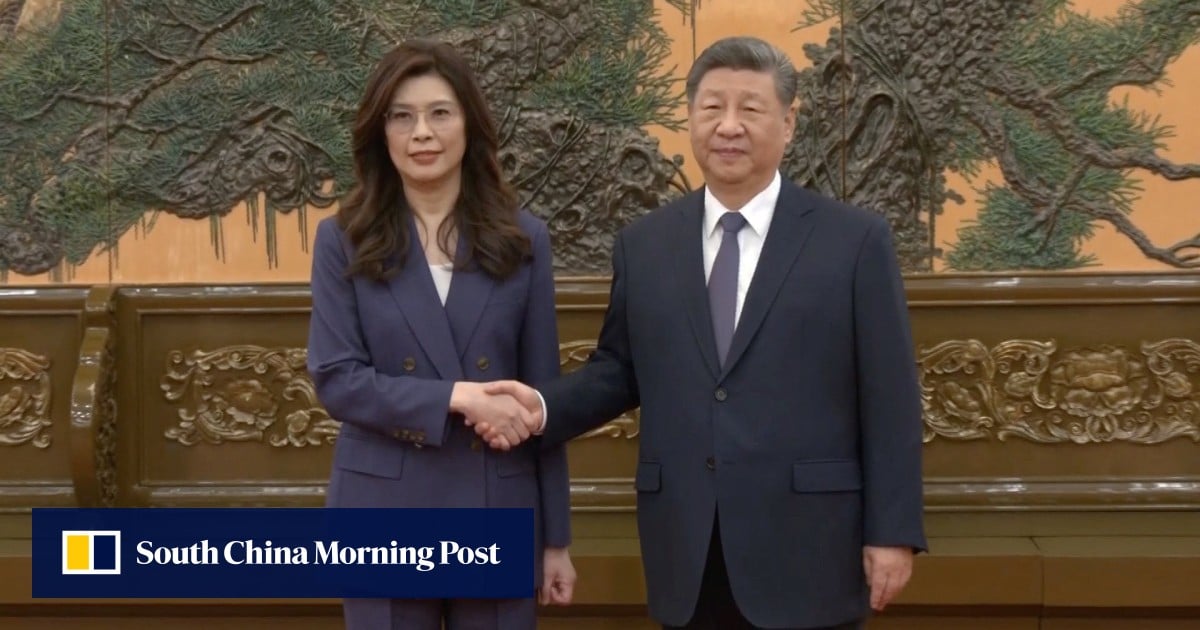
Xi Jinping used a meeting in Beijing with Kuomintang chair Cheng Li-wun to push the familiar line that people on both sides of the Taiwan Strait are Chinese and share a common wish for peace, development, communication, and cooperation. The symbolic part matters more than the wording. According to SCMP, this was the first time in more than nine years that a sitting KMT leader had met the Chinese Communist Party leadership at that level. Beijing gets a chance to show that it still has a working political channel into Taiwan outside the island's governing camp, while the KMT gets to argue that dialogue is more useful than permanent escalation. None of that changes the underlying power struggle. The ruling party in Taipei is not at the table, and Beijing's military pressure has not gone away. Still, the timing is hard to miss: with cross-strait tensions high, China is trying to keep alive the idea that Taiwan politics can still be split between negotiators and resisters.
The KMT favors closer cross-strait engagement than Taiwan's current ruling party. Beijing has often treated that difference as a strategic opening, even while refusing to renounce force against Taiwan.
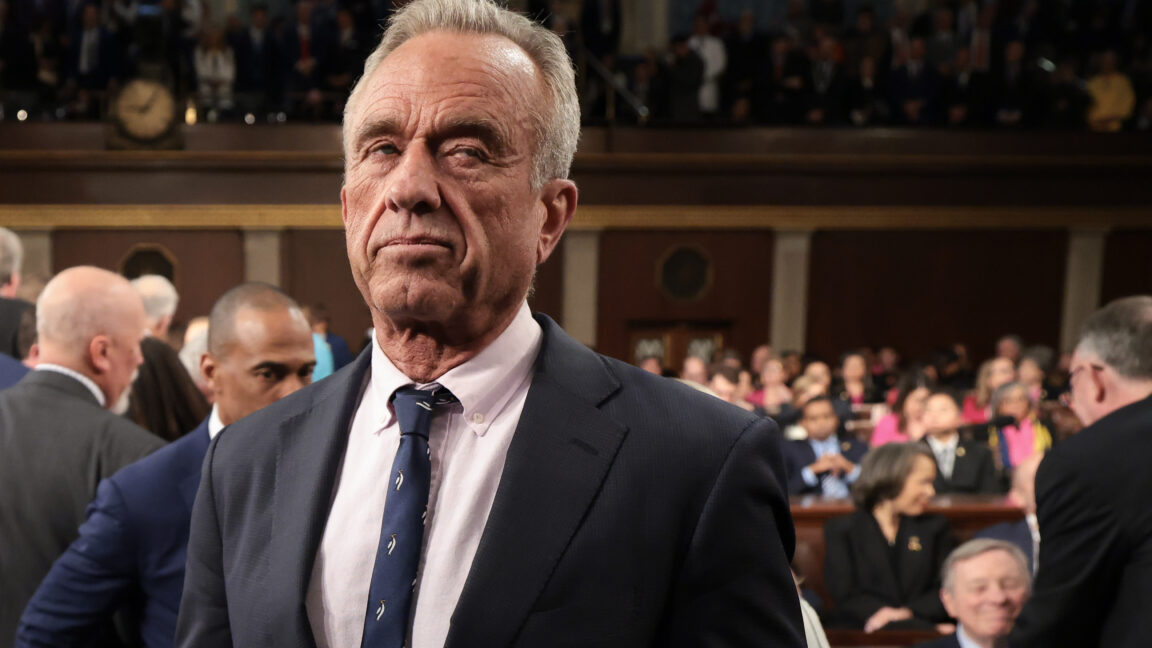
Robert F. Kennedy Jr. has rewritten the charter for the CDC's vaccine advisory committee in a way that shifts both the language and the gatekeeping. Ars reports that the new text for the Advisory Committee on Immunization Practices now leans on phrases long favored by anti-vaccine activists and explicitly invites participation from outside groups that public-health officials have historically treated as fringe. That matters because ACIP is not some symbolic panel. It helps decide which vaccines the CDC recommends and how they enter the practical machinery of US immunization policy, insurance coverage, and clinic schedules. Kennedy's allies will call this ideological balance. The likely effect is something rougher: a formal opening for activists who were previously kept at the edge of the process because their claims kept collapsing under evidence. Once those people are inside the room, they do not need to win every vote to slow policy, muddy guidance, and make routine vaccination decisions look permanently contested.
ACIP has long served as the technical body that translates vaccine trial data into public recommendations. In American health policy, changes to that process often ripple outward into insurers, school requirements, pediatric practice, and public trust.
The White House budget request would not just trim NASA science around the edges. It would carve through the portfolio. Scientific American reports that analysts count 54 missions that could be defunded or sharply damaged under the proposal, including Juno, which is still studying Jupiter, and two planned Venus missions that had been sold as a long-delayed return to one of the solar system's most interesting planets. Budget fights often turn into spreadsheets that are easy to ignore until a few program names disappear. This one is more structural. NASA has been trying to hold together expensive human spaceflight goals while also keeping a broad scientific program alive across planetary science, astrophysics, Earth science, and heliophysics. If Congress lets cuts of this size stand, the agency will be making a much blunter choice about what NASA is for: fewer instruments, fewer probes, fewer long bets on discovery, and more pressure to justify science only when it can ride alongside a flagship political mission.
NASA's science program is spread across many missions that survive by staying in a broad coalition. When that coalition breaks, even projects already in space can become vulnerable because operating money is easier to cut than a finished rocket launch is to cancel.
John Deere has agreed to a proposed $99 million settlement in the lawsuit accusing it of forcing farmers to route repairs through authorized dealers, and the money is only half the story. According to The Verge's account of the Reuters reporting and settlement terms, Deere would also make repair resources available for 10 years and start letting owners and independent shops run diagnostics and reprogram equipment offline by the end of 2026. That is a concrete concession in a fight that has usually produced promises, pilot programs, or carefully limited tool access. The case covered farmers who paid Deere dealers for repairs from January 2018 onward, with Deere still denying wrongdoing. Even so, the practical point is clear: modern farm equipment had become a software lock-in business as much as a machinery business. During planting or harvest, waiting for a dealer is not an inconvenience. It can mean missing the narrow window when a crop can still be saved.
Right-to-repair fights matter most where downtime is expensive and manufacturers control both the software and the dealer network. Agriculture is the cleanest example because repairs are tied directly to weather windows, yields, and financing pressure.
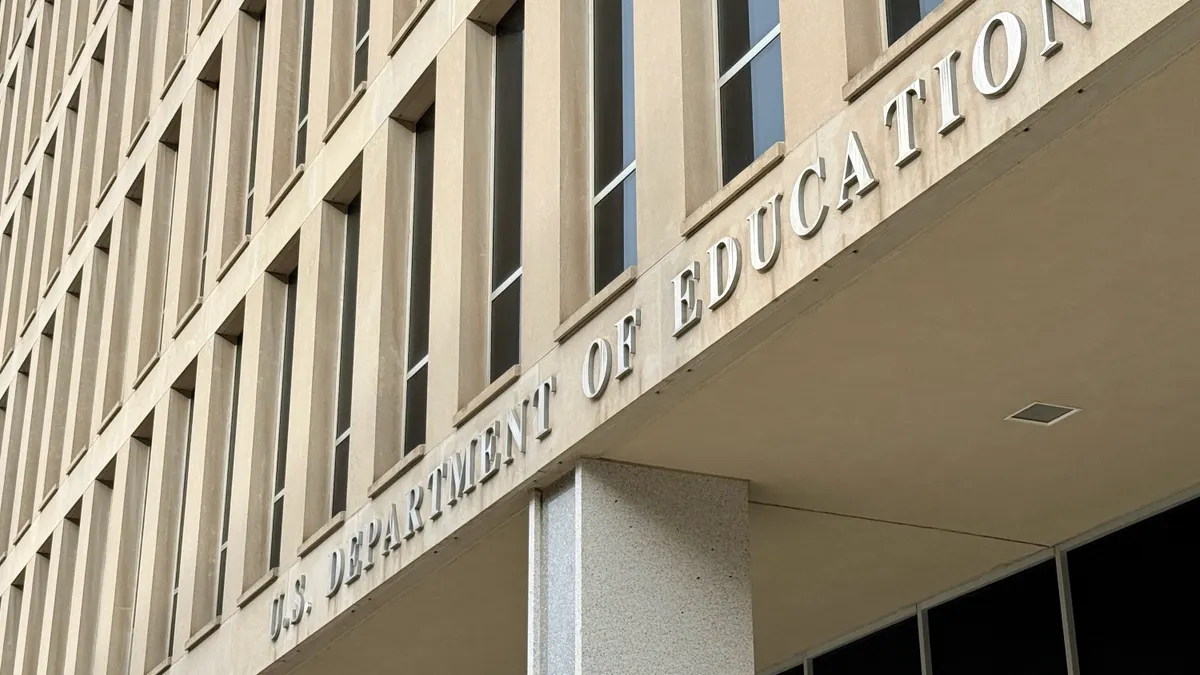
The Trump administration is moving from rhetoric about broken accreditation to draft regulations that would actually change who gets to accredit colleges and what accreditors have to police. Higher Ed Dive reports that the proposal would make it easier for new accreditors to win federal recognition, a change that could help recently created alternatives such as the Commission for Public Higher Education. At the same time, the draft would require agencies to enforce standards around "intellectual diversity" and compliance with federal and state law, including bans on preferential treatment based on protected traits. The result is not just deregulation. It is a different kind of federal pressure. Existing accreditors have already been pushed to suspend or drop DEI standards; now they are being told to embed a new political vocabulary in their oversight role. If this sticks, accreditation would move further away from a club of peer-review gatekeepers and closer to a tool Washington can use to reshape campus governance from the side.
Accreditation determines whether colleges can receive federal student aid, so changes that look procedural can reshape the whole sector. The administration has spent months attacking accreditors over DEI rules and campus politics, and this is the most detailed next step yet.
A clinical trial suggests gene editing can work against beta-thalassemia, another severe inherited blood disorder, by reviving the fetal form of hemoglobin that patients normally stop making after birth. That is the same broad trick behind some of the most promising recent blood-disease therapies, but this result matters because it points to a cleaner and apparently improved editing process in a condition where patients often spend years dependent on regular transfusions. The idea is elegant. Instead of trying to patch every broken adult hemoglobin gene directly, researchers flip part of the developmental program back on and let the body make more of the fetal version, which can still carry oxygen well enough to ease or replace chronic treatment. Early gene-editing stories sometimes feel like proof-of-concept demos in a petri dish. This one is closer to medicine. It says the technology is getting less like a one-off moonshot and more like a reusable platform for whole families of blood disorders.
Beta-thalassemia reduces the body's ability to make normal hemoglobin, the oxygen-carrying protein in red blood cells. Severe cases can mean lifelong transfusions, iron overload, and a constant search for treatments that do more than just manage damage.
For years, sterile neutrinos were the particle-physics version of a too-good theory: a hypothetical extra neutrino that could explain several nagging anomalies at once if only experiments would stop coming back inconclusive. Now the story is turning. Quanta reports that the latest generation of experiments has knocked out more of the remaining space where those particles might plausibly hide, to the point that some researchers are openly calling it the death knell for the idea. That does not mean the old anomalies were imaginary. It means physicists may have to explain them some other way, which is often the more interesting outcome. Sterile neutrinos were attractive because they looked like a neat extension to the standard picture, a hidden companion that might tidy up multiple puzzles in one move. Nature is not required to be tidy. If the signal keeps vanishing, theorists will be pushed back toward messier possibilities, experimental systematics, or entirely different new physics.
Neutrinos already come in three known types and are famous for changing identity as they travel. A sterile neutrino would interact even less than ordinary neutrinos do, which made it both a tempting explanation and an infuriating thing to try to find.