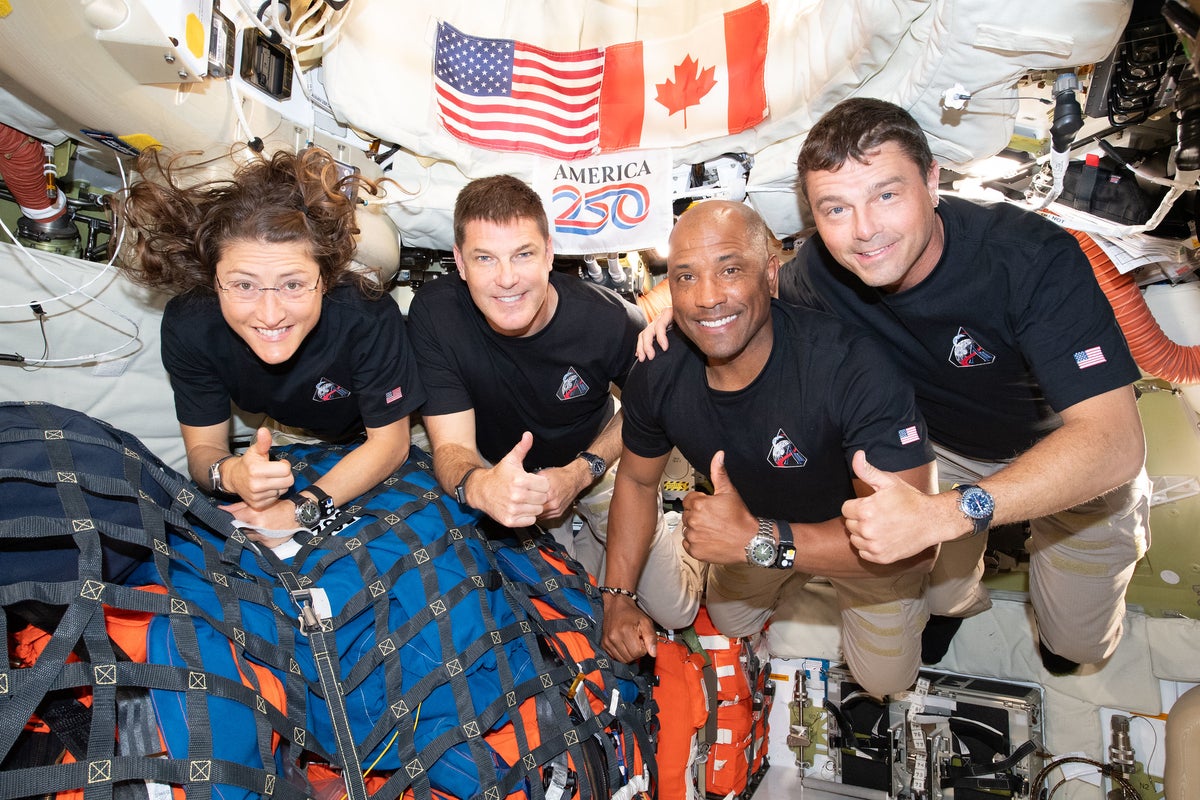
NASA's [Artemis II] crew is on course to splash down off San Diego at about 8:07 p.m. EDT on Friday, April 10, capping a roughly 10-day mission that looped around the Moon and pushed four astronauts farther from Earth than any human crew since Apollo. The home stretch is the hard part. Orion still has to hit the atmosphere at lunar-return speed, ride through a communications blackout, and survive the heat and forces of skip reentry before recovery teams can pull the capsule from the Pacific. NASA says the mission has already completed the big symbolic goals: a crewed lunar flyby, major life-support checks, and a new distance record for human spaceflight. But this last sequence matters even more than the photo ops. If Orion comes through it cleanly, NASA will have cleared the most dangerous unresolved test before trying to send astronauts back to the lunar surface on a later mission.
Artemis II is NASA's first crewed trip beyond low Earth orbit since Apollo 17 in 1972. NASA says the mission will travel about 695,000 miles and is meant to prove Orion and its recovery plan before any crewed landing attempt.
France says it will begin moving some government computers from Windows to Linux, starting with machines at the state's digital agency, as part of a longer push to rely less on American software. TechCrunch reports the government did not name a distribution or set a full migration timetable, but the policy direction is now public: open source where possible, tighter state control over core tools, and less dependence on a handful of US vendors. This is not an isolated tweak. Paris already moved away from Microsoft Teams for official video meetings in favor of a French service built on Jitsi, and the new Linux move sits inside the same "La Suite" sovereignty program. Europe's digital-sovereignty talk often sounds fuzzy until it hits the desktop. Then the trade-offs become concrete: retraining, compatibility headaches, procurement fights, and a real question about whether governments can keep basic office work running without the companies that have dominated it for decades.
France's DINUM launched "La Suite" in 2024 as a stack of interoperable open-source tools for public-sector workers. The broader goal is not just lower licensing costs. It is long-term control over government infrastructure, data handling, and vendor lock-in.
A new visa-refusal report helps explain why international enrollment sagged so badly on US campuses last fall. Inside Higher Ed writes that Shorelight, using State Department data obtained through public-records requests, found that 35 percent of F-1 student visa applications were denied worldwide in 2025, the highest rate in a decade. The pain was not evenly spread. African applicants saw a 64 percent refusal rate, India jumped from 36 percent in 2023 to 61 percent in 2025, and countries such as Sierra Leone and Somalia topped 90 percent. Shorelight argues that the pattern looks less like case-by-case screening and more like whole-country refusal clusters, which undermines the idea that applicants are being judged mainly on merit and funding. For universities, this is more than a diplomatic embarrassment. International students prop up graduate programs, research labs, and tuition-dependent budgets. When visas seize up at this scale, admissions offers stop meaning very much.
Many US colleges have become financially dependent on international tuition, especially in graduate and STEM programs. Visa bottlenecks were already a problem after the pandemic; the new report suggests denials, not just appointment delays, are now doing more of the damage.
The House is again running down the clock on Section 702, the foreign-surveillance authority that lets US intelligence agencies collect communications involving non-Americans abroad and then search those databases for Americans' messages without a traditional warrant. The law expires on April 20, and The Verge reports that leadership is still leaning toward a clean extension even as a left-right reform coalition pushes for tighter limits. Reformers want a warrant requirement and broader restrictions on the "backdoor search" practice that has repeatedly swept in domestic targets, including protesters, journalists, and government officials. The politics are especially ugly under Donald Trump's second term because the same lawmakers who used to worry about state surveillance now have to decide whether they trust this White House to police itself. That is why the deadline matters. If Congress punts again, it will not be because nobody saw the civil-liberties problem. It will be because too many members decided intelligence convenience still beats constitutional caution.
Congress last renewed Section 702 in 2024 after a chaotic late-night vote. The authority was sold as a tool for foreign intelligence, but privacy advocates have spent years attacking the FBI's ability to query the resulting database for Americans' communications.
An encrypted messaging app can delete a chat and still leave pieces of it behind at the operating-system level. According to 404 Media's reporting, summarized by 9to5Mac, the FBI recovered deleted Signal messages from a seized iPhone by extracting entries from the device's notification database, where message previews had been stored when alerts arrived. That does not mean Signal's core encryption failed. It means the phone itself had already copied useful fragments into another place for convenience, and those fragments survived long enough for forensic tools to grab them. The report also notes that things get looser once investigators have an unlocked device, and that push-notification tokens may keep working for a while even after an app is deleted. Apple recently changed how iOS 26.4 validates those tokens, though there is no public proof the update was a direct response to this case. The larger lesson is ugly but simple: secure apps inherit a lot of insecurity from the system around them.
Notification previews sit outside an app's end-to-end encryption model because the operating system needs something to display on the lock screen or in banners. Privacy settings can reduce that exposure, but many users leave previews on for convenience.
Visitors downloading hardware tools from CPUID this week were briefly playing roulette. The Register reports that attackers hijacked part of the vendor's backend for about six hours and swapped trusted installers for malicious ones, with affected links including HWMonitor and CPU-Z. One booby-trapped package reportedly arrived with a fake CRYPTBASE.dll designed to look like a normal Windows component, then reached out to a command-and-control server for more code. Researchers who inspected the sample say it tried to stay mostly in memory, leaned on PowerShell, and touched Chrome's elevation interface in ways consistent with credential theft. That is what makes this breach nastier than a garden-variety fake-download page. Users were not tricked into leaving the official site. They were served malware through the real one. PC utility software already depends on a quiet chain of trust most people never think about. When that chain snaps, even experienced users can wind up installing an attack with admin rights.
CPUID's tools are common on gaming rigs, repair benches, and enthusiast forums because they expose temperatures, voltages, and processor details that Windows does not show cleanly. That popularity makes them attractive supply-chain targets: one tampered installer can travel fast.
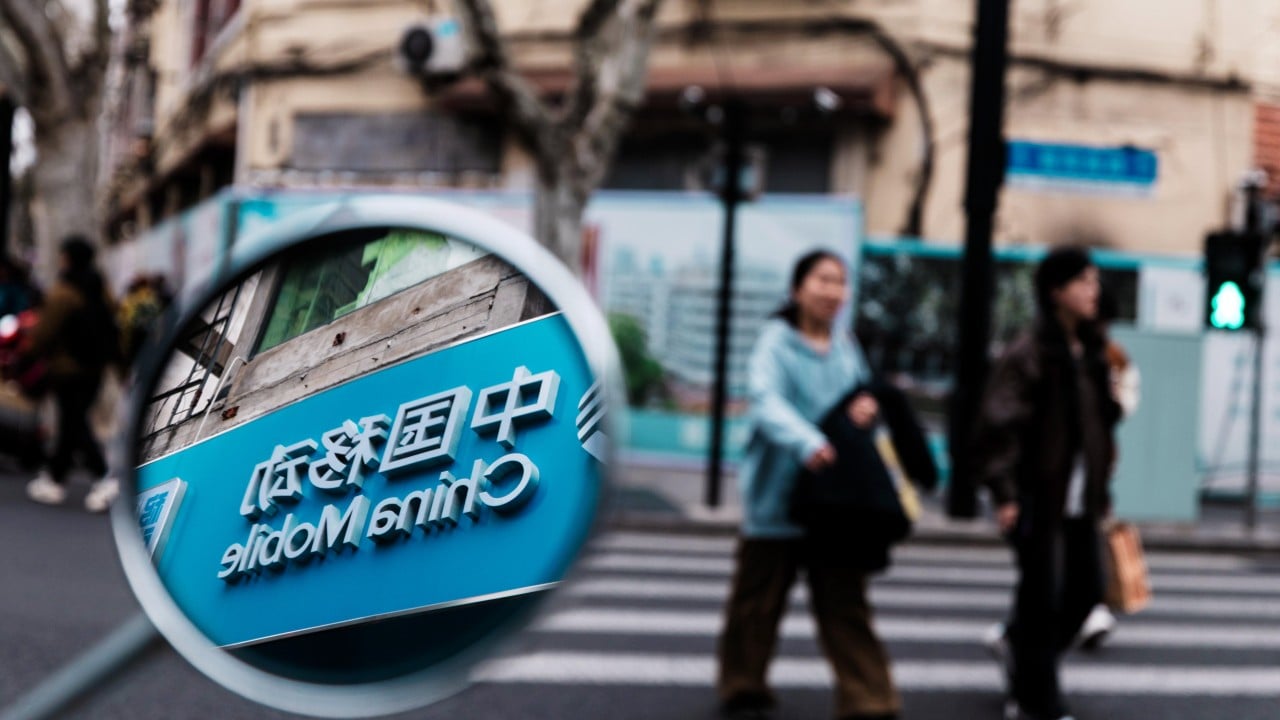
Washington's telecom crackdown on Chinese firms may be moving from network licenses to the physical infrastructure they still operate on US soil. South China Morning Post reports that the FCC is considering broader measures that could force Chinese carriers to sell, transfer, or close US-based data centers and network nodes, extending a campaign that already stripped several companies of authority to provide telecom services in America. The practical effect would be to squeeze the last useful footholds out of companies such as China Mobile, China Telecom, and China Unicom even if they no longer serve ordinary US phone customers. For Beijing, this will read as one more front in a longer technology-containment strategy. For US regulators, the argument is national-security continuity: if these firms are too risky to run telecom links, they are also too risky to sit inside sensitive data infrastructure. The move would not create a single dramatic break. It would finish a slow-motion exit that has been underway for years.
The FCC began revoking or denying operating authority for major Chinese telecom firms several years ago, citing national-security risks. Data centers matter because they still provide a foothold in the American communications stack even after consumer-facing telecom operations shrink.
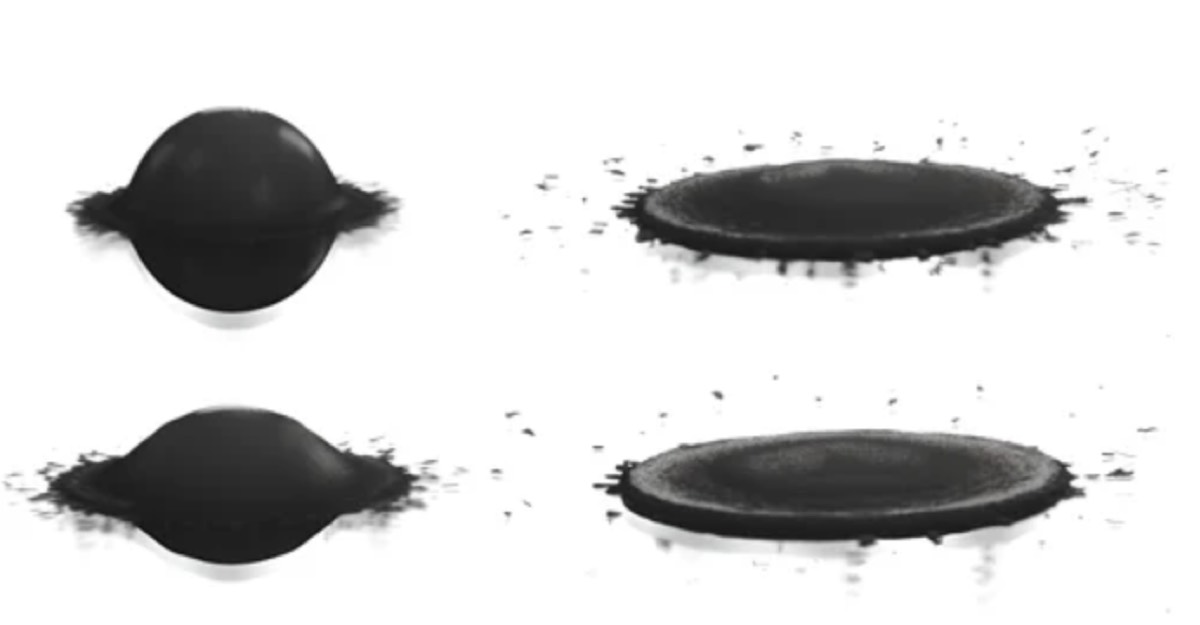
Oobleck's party trick has always seemed straightforward: hit it hard and it stiffens; leave it alone and it flows. A new drop-impact study says the real sequence is stranger. Ars reports that dense drops of the cornstarch-and-water mixture can spread out on impact like an ordinary liquid at first, then jam into a solid a moment later when the internal conditions change. The researchers describe three different regimes depending on how concentrated the mixture is and how fast it is driven, which helps explain why these suspensions can act slippery in one instant and bricklike in the next. That matters beyond kitchen-counter physics. Engineers care about materials that can absorb force, redirect stress, or switch behavior without motors or electronics. Oobleck is still messy and crude, but it remains a useful model for that broader class of shear-thickening materials. Even after years of YouTube demos and textbook examples, the fluid still has enough hidden structure to surprise people who study it for a living.
Oobleck is a non-Newtonian fluid, meaning its resistance to flow changes with stress. It became famous through classroom demos where people can slap the surface or even run across a tub of it, then sink the moment the force stops.
Researchers have pinned down the job of a long-mysterious set of neurons embedded in the heart and major vessels: they help keep blood pressure from crashing when the body suddenly changes posture. Scientific American reports that the cells sense mechanical stretch and trigger fast corrective responses, which explains how you can stand up without fainting every single time. The work was done in mice, but humans appear to have the same circuitry, and the finding gives scientists a cleaner map of the reflex machinery linking the heart, arteries, and brain. It also has clinical bite. A system like this is a prime suspect in conditions where people get dizzy on standing, pass out under stress, or struggle to recover from rapid blood loss. The headline insight is modest and big at once. The heart is not just a pump waiting for orders from the nervous system. Parts of it are active sensors, quietly measuring the body's hydraulic state and shouting when something starts going wrong.
Scientists already knew the body uses pressure-sensing reflexes to stabilize circulation, but several cardiovascular neuron types were still functionally mysterious. The new work links one of those unknown groups to the fast blood-pressure adjustments that happen when gravity suddenly shifts blood away from the brain.
A paper on space weather is not where you expect court poetry to show up, but old literary records are turning out to be useful instruments. Scientific American reports that researchers matched medieval written descriptions of auroras, including accounts tied to a Japanese noble, with tree-ring evidence and other records to pin down when major solar storms struck centuries ago. That matters because the solar cycle is patchier in the distant past than modern charts make it look. If historians can identify unusual auroras from careful descriptions of color, timing, and where in the sky they appeared, physicists get more data points for how often the Sun throws off dangerous bursts. The project is a nice reminder that premodern observers were not just superstitious witnesses to strange lights. Some were precise enough to help modern scientists recover the shape of old space-weather events. Poems are not satellites, obviously. Still, when the archive is thin, a line of verse can become a measurement.
Modern infrastructure depends on understanding severe solar storms because they can disrupt satellites, radio links, and power grids. Direct measurements only cover a short slice of history, so scientists often mine tree rings, ice cores, and historical documents for older clues.